Edition No. 14 · 8 Sep 2026
Where your writing lives
Fourteen reports. Two hundred and nineteen repositories in my records.
Refreshed on 18 October 2026. The repositories are the ones first published; any that are no longer maintained are left out.
This report is about the words on a website: where they are kept, how they are edited, how two languages stay in step, and how one piece of writing becomes several finished files. One tool near the end sends an email based on what a person did inside a product. Three more are for the inside of a product.
A blog post on a file-based website is a file on disk. Changing one word means opening a code editor. A typo cannot be fixed from a phone. There is no single list of every post, and nothing marks a post as old.
On a site published in two languages, every post exists twice. Nothing keeps the two copies in step. When the English changes, nothing marks the second language as out of date.
Two things worth knowing
The releases list page is not a reliable date, and an old release does not prove a project has stopped.
Release dates on this page come from github.com/OWNER/REPO/releases/latest, which shows one release with its date. The releases list page gave wrong answers for four projects on the day this edition was first written. For a Python package the Python package index, PyPI, is checked as well, and for a JavaScript package the npm registry.
A missing or old release still proves nothing on its own. decaporg/decap-cms has published no release since June 2024, yet the repository is not archived and carries 19.4k stars today. The honest sentence is "no release since June 2024", not "unmaintained". Some projects go years between releases while code lands every week.
Read the licence on a content platform before building on it.
directus/directus now uses the Monospace Sustainable Core License 1.0, which is not an open-source licence in the usual sense. It is free to run for an organisation's own work and needs reading before a paid product is built on top of it. strapi/strapi links a licence file from its GitHub page without naming the licence there, so that one has to be opened and read too. payloadcms/payload (#4) carries a plain MIT licence with no carved-out folders, which is why it is the entry here.
If you only do three things
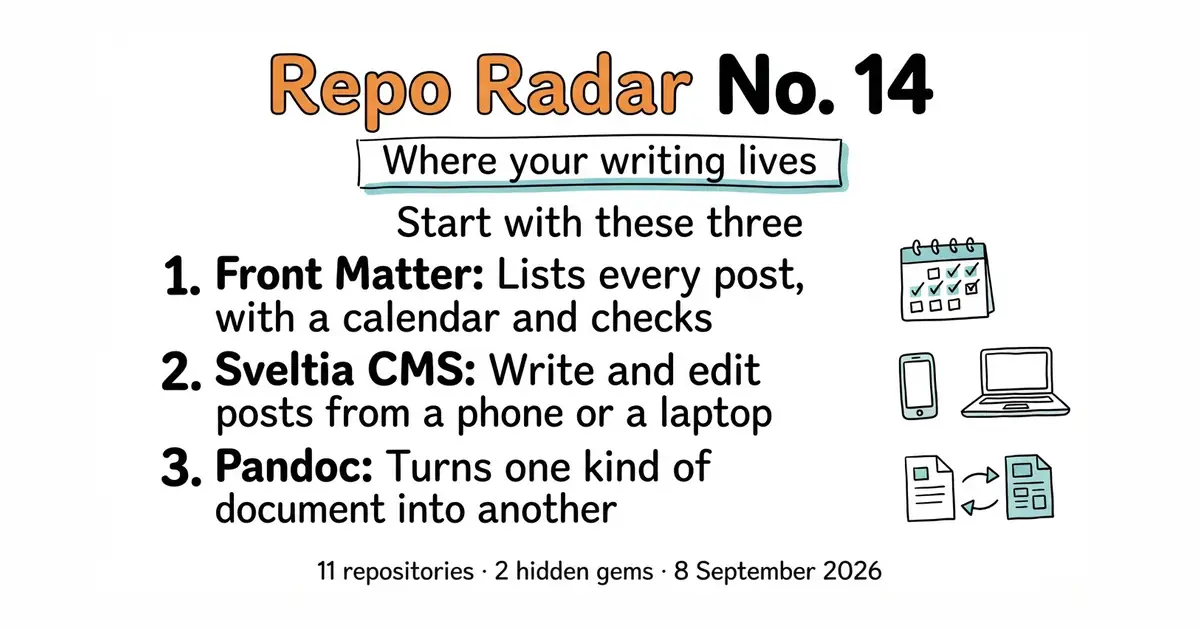
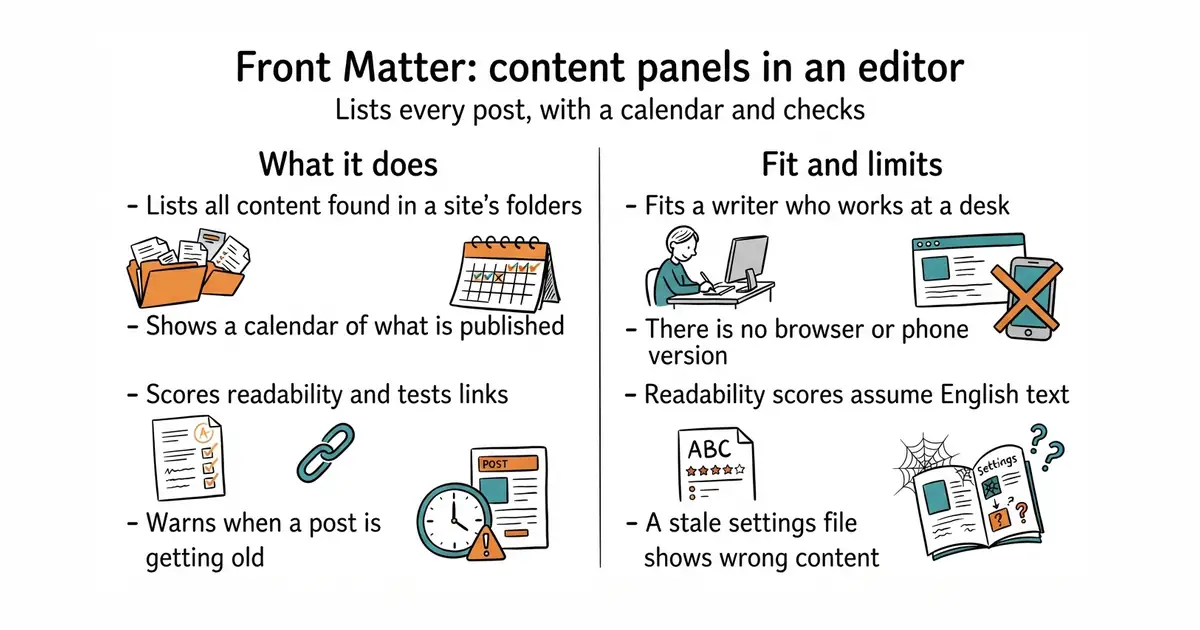
- Install estruyf/vscode-front-matter (#3). Tonight. Ten minutes. It is a one-click extension for Visual Studio Code, a free code editor. It gives a list of every post, a calendar, and a health check that scores readability, tests links, and warns when a post is getting old. It changes nothing about how the site is built, and removing it loses nothing.
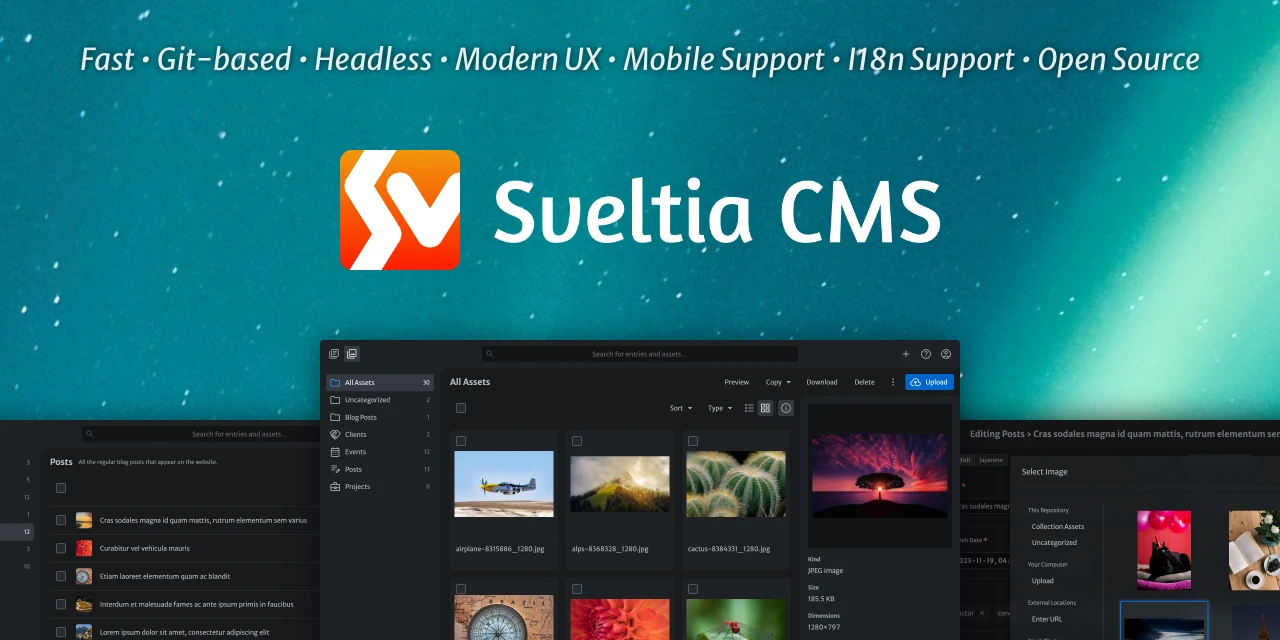
- Set up sveltia/sveltia-cms (#2). This week. About an hour. One script tag and one settings file, and the site gets a login page where posts can be written and edited from a phone. It saves straight back into the project. There is no server to run and no database.
- Install jgm/pandoc (#6). Five minutes. One command turns a Markdown post into a Word file, a Word file into a web page, or a page into a PDF. It is the smallest job on this page with the widest use, and the newest release is ten days old.
Every link in one place
| # | Repository | Home / docs | Stars | Licence |
|---|---|---|---|---|
| 1 | Thinkmill/keystatic 💎 | keystatic.com | 2,463 | MIT |
| 2 | sveltia/sveltia-cms | sveltiacms.app | 3.0k | MIT |
| 3 | estruyf/vscode-front-matter 💎 | frontmatter.codes | 2,534 | MIT |
| 4 | payloadcms/payload | payloadcms.com | 45.1k | MIT |
| 5 | WeblateOrg/weblate | weblate.org | 6,008 | GPL-3.0 |
| 6 | jgm/pandoc | pandoc.org | 46.7k | GPL-2.0 |
| 7 | quarto-dev/quarto-cli | quarto.org | 6,016 | MIT |
| 8 | dittofeed/dittofeed | dittofeed.com | 3.0k | MIT |
| 9 | microsoft/markitdown | markitdown on PyPI | 188.2k | MIT |
| 10 | explodinggradients/ragas | docs.ragas.io | 16.0k | Apache-2.0 |
| 11 | Nixtla/statsforecast | nixtlaverse.nixtla.io/statsforecast | 4,931 | Apache-2.0 |
Where your writing lives
Twelve repositories, checked and reviewed. Every version verified against the GitHub API and dated.

2.5k stars · MIT · @keystatic/core 0.6.9 on npm (2026-01-26); the GitHub releases page is empty, so npm is the only provable source · Track this in Scout · Share this tool
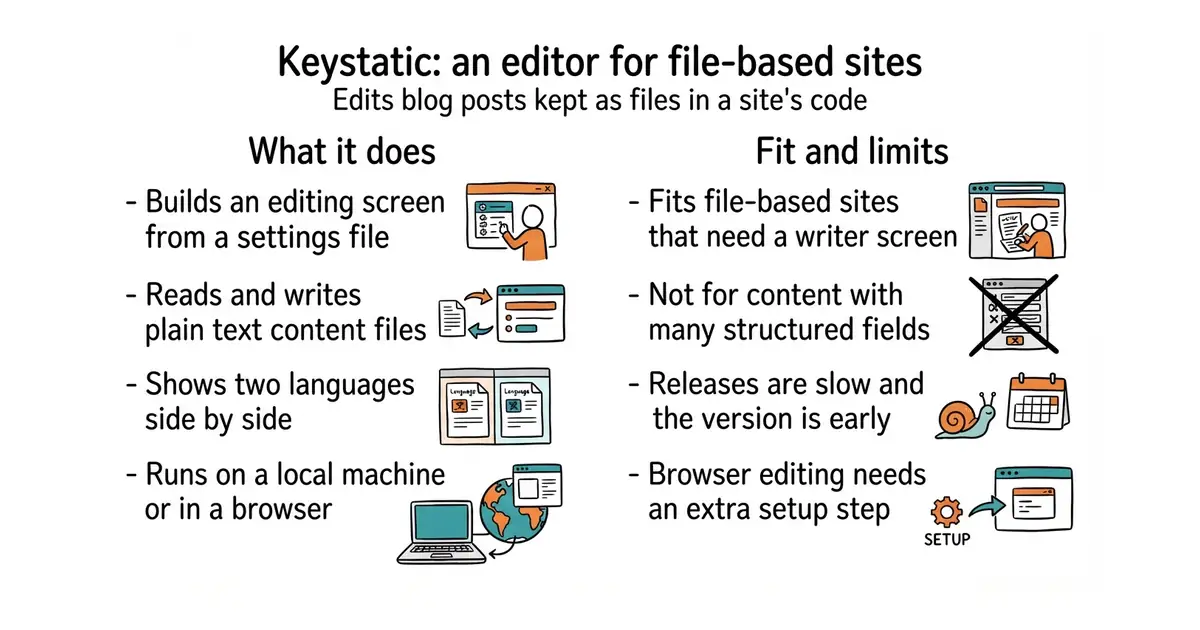
A writing screen for the Markdown blog posts that already live in the website project, saved back as files with no database.
▶Repo detailsthe review · specs · pros & cons · install
What it does
Keystatic is a content editor for websites built from files. The post fields are described once in a small settings file written in TypeScript, which is JavaScript with type checking added. Keystatic builds the editing screen from that description. It reads and writes Markdown, YAML and JSON files, which are all plain text formats. It can run on a local machine while a site is being developed, and it can run against GitHub so that posts are editable in a browser. It handles two languages side by side, one entry for each. It does not store anything in a database, and it does not build or host the website; the site generator still does that.
Why it matters
Who it suits. It suits a site built with a generator that keeps posts as files, where writing a post and fixing a typo both mean opening a code editor. It suits a two-language site, because the two entries sit side by side and a missing translation is visible. Skip it once the content has grown past posts into records with many fields, and skip it if browser editing is needed on the first day.
Verdict. Worth an hour on a file-based site, and most of that hour goes on the settings file. The npm package has sat at 0.6.9 since January 2026 while code kept landing in the repository, so expect slow releases rather than a stopped project. The project's own README still calls it experimental. For editing from a phone today, sveltia/sveltia-cms (#2) is the shorter road, and for content with many fields it is payloadcms/payload (#4).
- No database and no extra server. The posts stay as files in the project, so there is nothing new that can fail at three in the morning.
- The settings file is type checked as it is written. A misspelled field fails at once rather than in six months.
- It runs locally during development and against GitHub for browser editing, so one setup covers both.
- The repository publishes no GitHub releases, so the version has to be read from npm.
@keystatic/coreis still 0.6.9, the same version as nine months ago. - The version number starts with a zero and the README calls the project experimental. Pin the version that was tested.
- Browser editing needs a GitHub app connected to an account. That is another half hour of setup and one more thing that can break.
cd my-astro-site
npm install @keystatic/core @keystatic/astro

3k stars · MIT · v0.248.0 (2026-10-17) · Track this in Scout · Share this tool
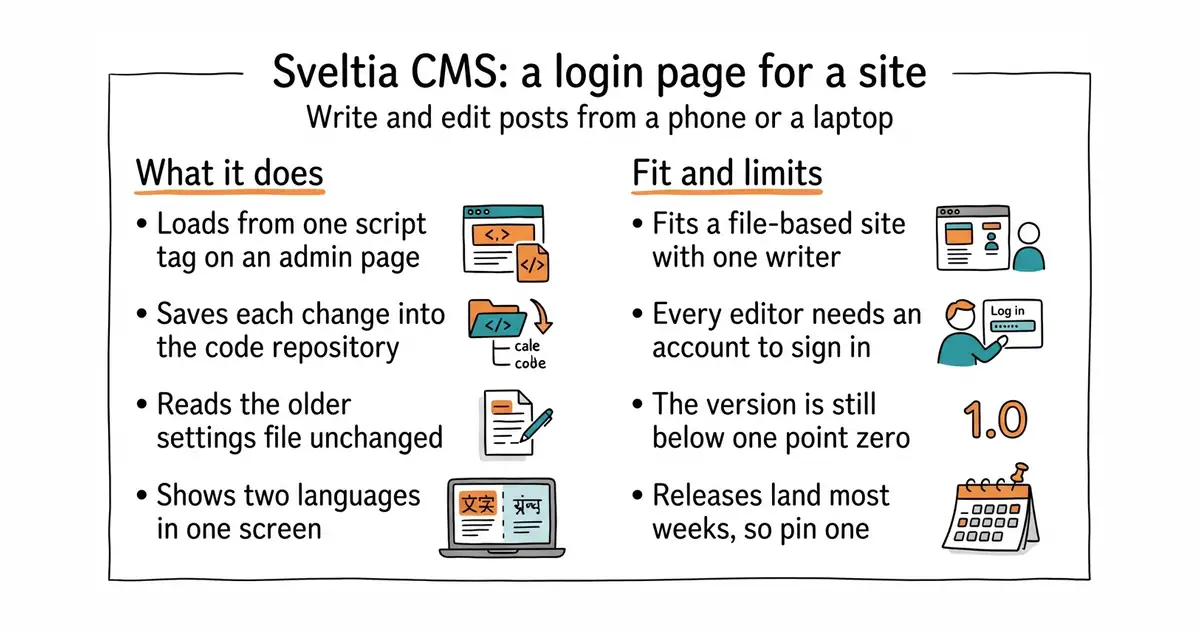
A drop-in admin page for a file-based site that works on a phone, and reads Decap CMS's own config file — Decap has not cut a release since June 2024.
▶Repo detailsthe review · specs · pros & cons · install
What it does
Sveltia CMS is a complete rewrite of Decap CMS, which was once called Netlify CMS. It reads the same config.yml settings file, so instructions written for Decap still apply. It loads from one script tag on an admin page of the site. Editors sign in with a GitHub or GitLab account, and each save becomes an ordinary commit in the repository, which is the folder of code and history that git keeps. It is built for small screens as well as large ones, and it shows two languages side by side. Releases are frequent: version 0.248.0 was published on 17 October 2026. It runs no server of its own, and it stores content nowhere except the repository.
Why it matters
Who it suits. It suits a file-based site whose writer wants to fix a paragraph from a phone. It suits anyone following an older guide that still points at Decap CMS, since the settings file carries over unchanged. Skip it when editors cannot each be given a GitHub or GitLab account, because signing in is how it saves.
Verdict. The cheapest useful hour on this page: two files added, and two files deleted again if it disappoints. The version is still below 1.0 and releases land most weeks, so pin the version that was tested and read the notes before moving up. Thinkmill/keystatic (#1) gives tighter control over field types, and hunvreus/pagescms is the hosted take on the same idea.
- One script tag and one settings file to add. Two files to delete if it does not suit.
- It works properly on a phone. Very few tools of this kind do.
- Released most weeks. The newest version is one day old, which is the strongest sign of life there is.
- The version number is 0.248.0, still below 1.0, so behaviour can change between releases.
- Releases come very often. That is good for fixes, but somebody has to decide when to stop upgrading.
- Every editor needs a GitHub or GitLab account with access to the repository. That is fine for one writer and awkward for a guest author.
mkdir -p public/admin



2.5k stars · MIT · v10.13.0 (2026-10-12) · Track this in Scout · Share this tool
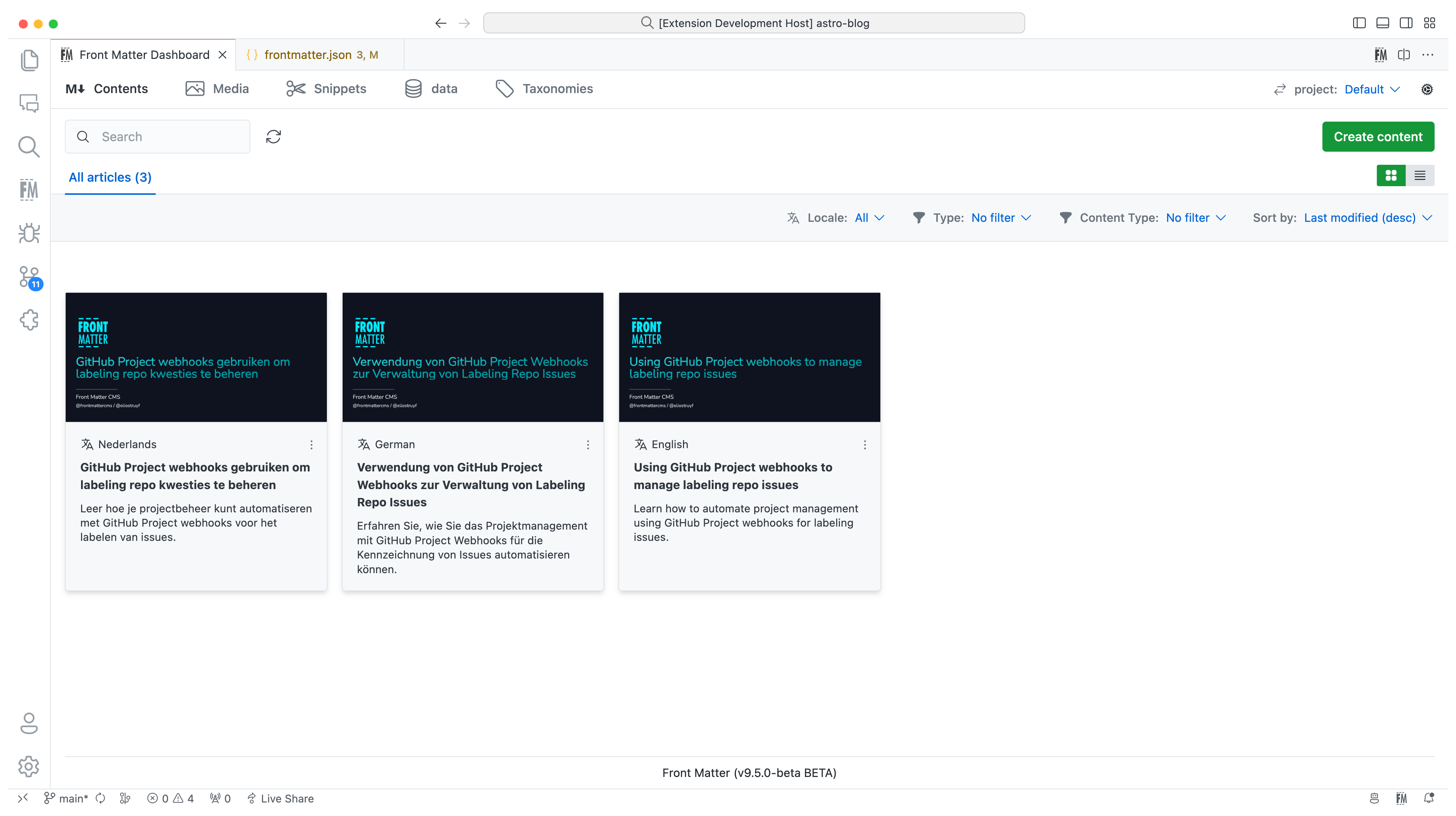
A content manager inside VS Code: every post in one list, a publishing calendar, and a health check on the post in front of you.
▶Repo detailsthe review · specs · pros & cons · install
What it does
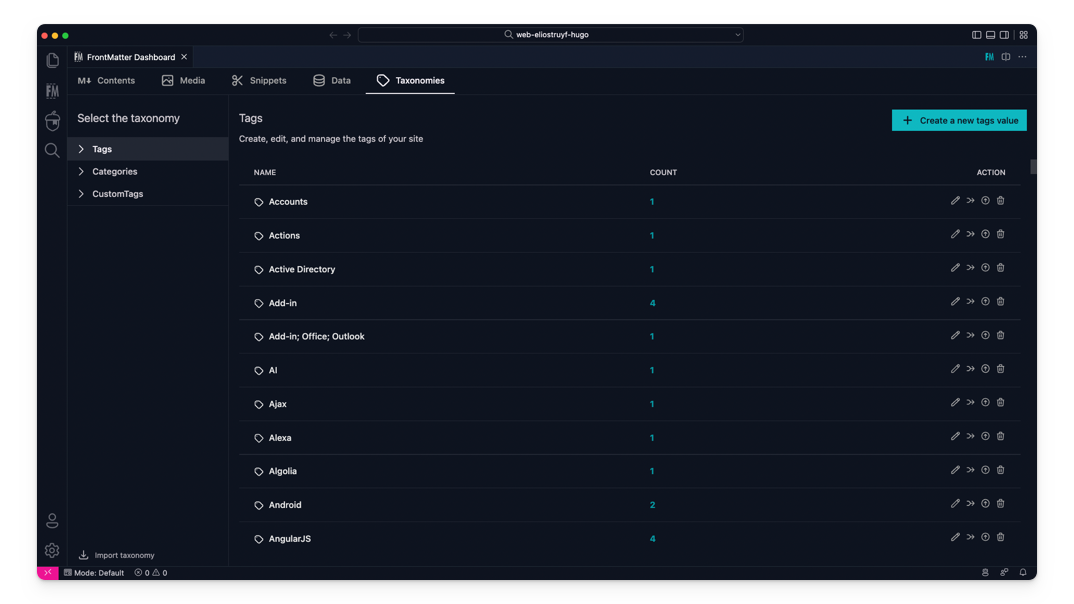
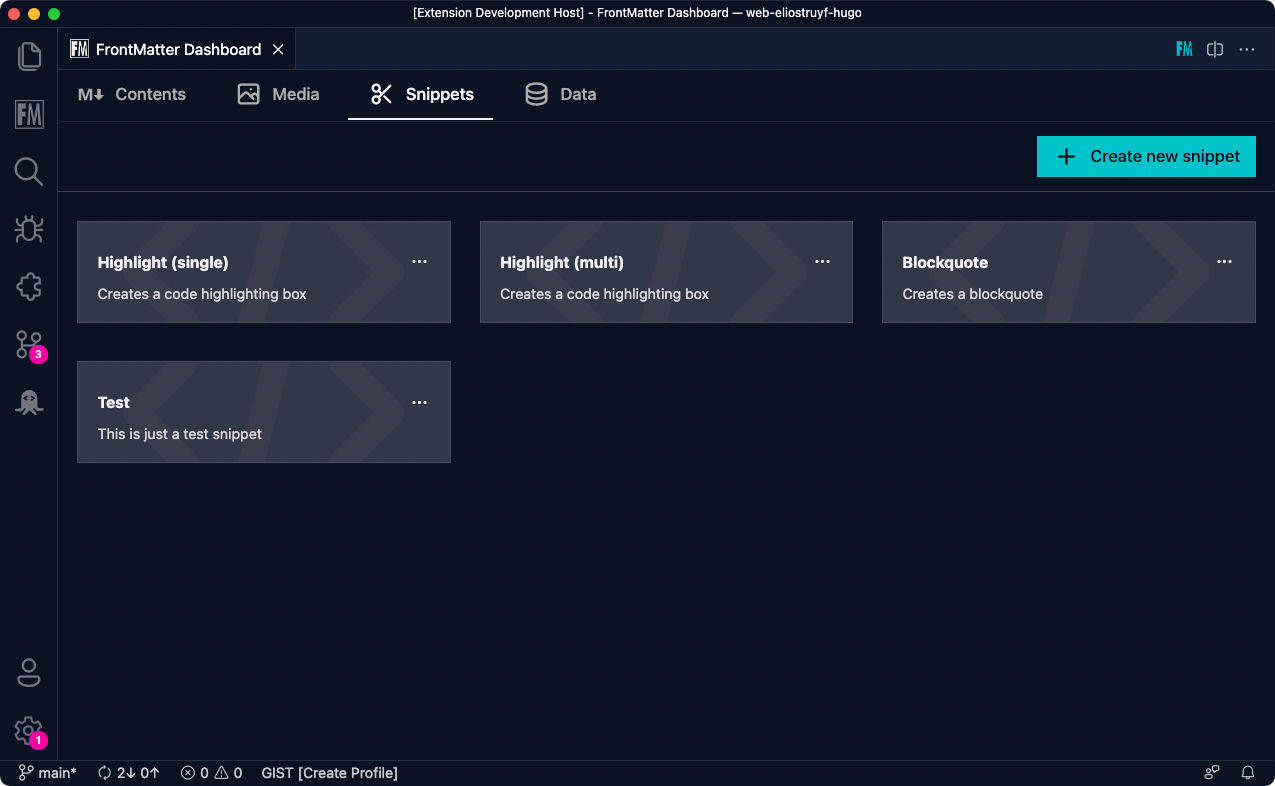
Front Matter CMS is an extension for Visual Studio Code. It reads the folders of a file-based site and lists every piece of content it finds. It works with sites built by Astro, Hugo, Jekyll, Next.js, Gatsby and Hexo. A dashboard shows posts with their dates, tags and status, and a calendar shows what is scheduled. Content health checks score readability, test links and flag posts that have not been touched for a long time. It writes its own settings into a frontmatter.json file in the project. Version 10.13.0 was published on 12 October 2026. It runs only inside the editor, so there is no web login and nothing to open on a phone.
Why it matters
Who it suits. It suits a writer who already works in Visual Studio Code and has lost track of what has been published. It suits a site with dozens of posts, where one list and one calendar replace scrolling through folders. Skip it when the writing happens away from a desk, because this is an editor extension and nothing else.
Verdict. Ten minutes, one click, and nothing to undo later, which makes it the easiest thing here to try. The readability scores are built for English, so treat the number on other languages as noise and use the link check instead. It sits alongside #2 rather than against it: one covers the desk, the other covers the phone.
- One click to install and one click to remove. It does not touch how the site builds.
- The health checks are the useful part: readability, dead links and stale posts in one panel.
- It reads the folders that already exist, so nothing has to be restructured to start.
- It exists only inside Visual Studio Code. There is no browser version and no phone.
- The readability scores assume English. The number means little on text in another language.
- It writes a settings file into the project. If folders move and that file goes stale, the panels quietly show the wrong content.
code --install-extension eliostruyf.vscode-front-matter


45.3k stars · MIT · v3.91.0 (2026-10-15) · Track this in Scout · Share this tool
A full content database with a generated admin screen and API, for content that has real structure rather than being blog posts.
▶Repo detailsthe review · specs · pros & cons · install
What it does
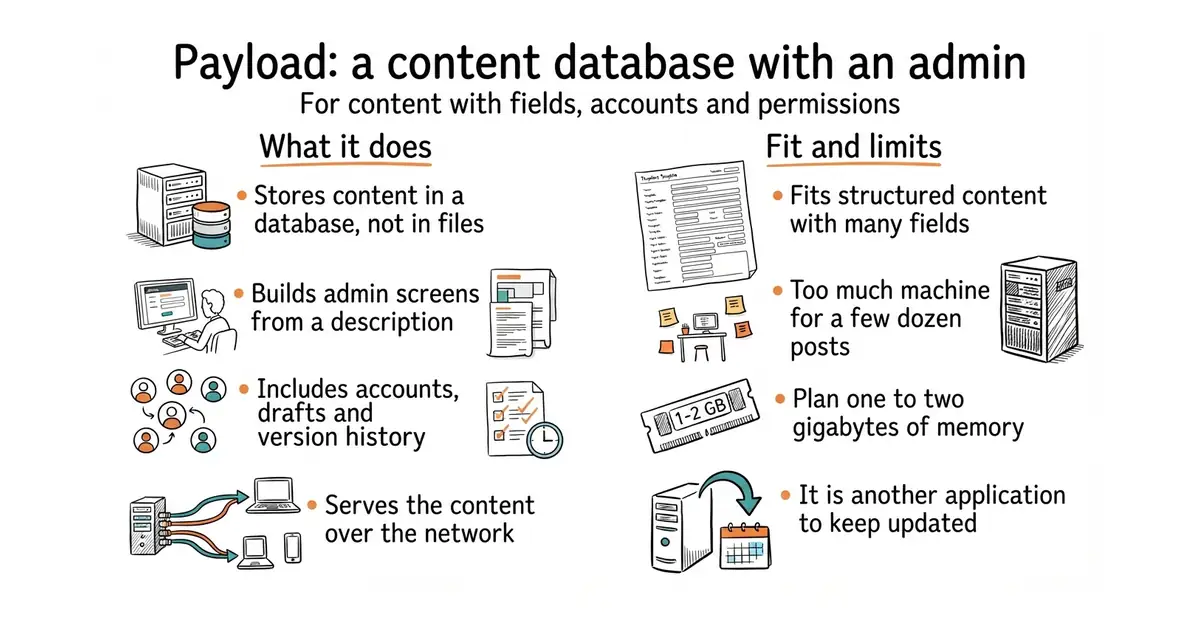
Payload is a content system that runs inside a Next.js application, and Next.js is a framework for building websites in JavaScript. Content is stored in PostgreSQL, MongoDB or SQLite, which are databases. Collections of content are described in TypeScript, and Payload builds the admin screens and the reading interface from that description. It includes user accounts, roles and permissions, file uploads, drafts and version history. Version 3.91.0 was published on 15 October 2026, and releases land most weeks. It does not keep content in files, so a site generator cannot read it off disk; the content is read over the network instead.
Why it matters
Who it suits. It suits content with structure rather than prose: a template gallery where each item has a name, a picture, a category and a difficulty, or a glossary that a website and an application both read from. It suits a team that needs separate accounts and permissions. Skip it while the content is a few dozen posts, because entries 1 to 3 do that job with no server at all.
Verdict. The honest answer once files stop fitting, and the wrong answer before that. Plan one to two gigabytes of memory, a database, and the time to keep both patched. Its MIT licence is a real MIT licence with no carved-out folders, which is worth noting beside directus/directus and strapi/strapi, the two obvious alternatives.
- MIT licence with no carved-out folders, so a paid product can be built on it without reading fine print.
- Released most weeks. Version 3.91.0 is three days old.
- It provides a reading interface over the network at no extra work, so a website and an application share one copy of the content.
- It is a Node.js application with a database behind it. That is two more things to deploy, watch and update.
- Plan one to two gigabytes of memory. Check the machine has room before installing anything.
- It assumes Next.js. On a site built with another generator it becomes a separate content store that the site reads from, which is two moving parts rather than one.
npx create-payload-app@latest


6.1k stars · GPL-3.0 · weblate-2026.10.1 (2026-10-09) · Track this in Scout · Share this tool
Translation management that works from the git repository and marks the Russian text as needing work the moment the English changes.
▶Repo detailsthe review · specs · pros & cons · install
What it does
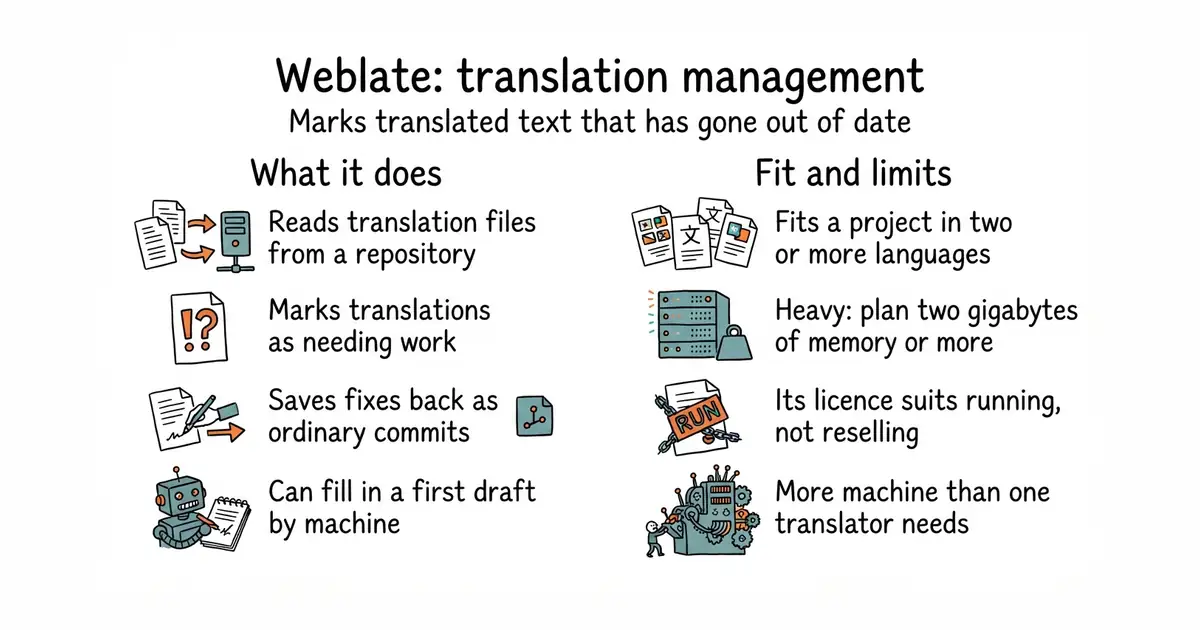
Weblate is a translation management system. It connects to a git repository, reads the translation files it finds there, and shows them in a web editor. Saved translations are written back as ordinary commits. When the source text changes, the matching translations are marked as needing work. It reads many file formats, keeps a record of who changed what, and runs checks for problems such as a missing placeholder. It can call a machine translation service to fill in a first draft that a person then corrects. Version 2026.10.1 was published on 9 October 2026. It does not translate a website's pages on its own: it manages translation files, so the text has to live in files it can read.
Why it matters
Who it suits. It suits a project in two or more languages whose translations are files in the repository, where somebody keeps forgetting which ones are stale. It suits anyone who pays a translator, because the translator gets a web screen and never touches the code. Skip it for one person handling two languages by hand, where a checklist and #3 are enough machine.
Verdict. The one feature worth the day is the automatic marking of stale translations, and nothing lighter on this page does it. Expect Django, PostgreSQL, Redis and a background worker, so plan two gigabytes of memory or more. GPL-3.0 means running it is fine and shipping a changed copy inside a closed product is not. tolgee/tolgee-platform is the lighter choice for the labels inside an application, and LibreTranslate/LibreTranslate can supply the first machine draft.
- It works from the git repository, so translations are ordinary commits and nothing lives where it cannot be backed up.
- It marks translations as needing work automatically when the source changes. That is the single feature most setups are missing.
- Actively maintained, with releases roughly monthly and the newest from 9 October 2026.
- It is heavy: Django, PostgreSQL, Redis and a worker process. Plan two gigabytes of memory or more.
- GPL-3.0 for the server. Running it is completely fine. Shipping a modified copy inside a closed product is not.
- For a single translator this is probably more machine than the job needs. Be honest about that before spending the day.
git clone https://github.com/WeblateOrg/docker-compose.git weblate-docker
cd weblate-docker
docker compose up -d

46.6k stars · GPL-2.0 · 3.12.1 (2026-10-08) · Track this in Scout · Share this tool
Converts any document format into any other in one command, including Markdown to Word and Markdown to PDF.
▶Repo detailsthe review · specs · pros & cons · install
What it does
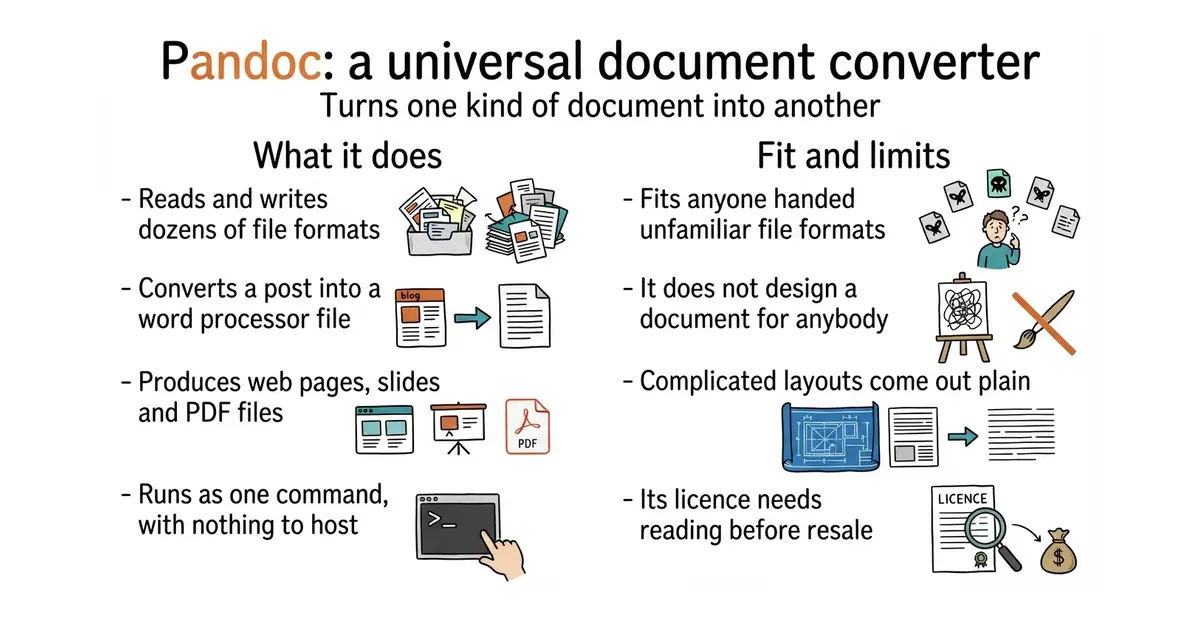
Pandoc is a document converter that runs as a command on a computer. It reads and writes Markdown, HTML, Word, LaTeX, EPUB, PowerPoint, Jupyter notebooks and dozens of other formats. Markdown is plain text with simple marks for headings and lists. One command names the input file and the output file, and the formats are taken from the file endings. Filters can change the document on the way through, and templates control how the output looks. It is sixteen years old and still releases every few weeks; version 3.12.1 was published on 8 October 2026. It does not design a document for anybody: complicated layouts come out plain, and tables and images often need tidying by hand.
Why it matters
Who it suits. It suits anyone handed documents in formats they did not choose, and anyone who writes in Markdown but has to deliver Word or PDF. It suits a one-off job, because there is no service to run and nothing to configure. Skip it when the output has to look designed, since that is a typesetting job rather than a conversion.
Verdict. Install it even with no job in hand. It costs minutes and it answers a question that comes back every few weeks. Use --pdf-engine=typst or --pdf-engine=weasyprint to avoid the very large LaTeX download. GPL-2.0 is fine for running the command and needs reading before building it into something sold. typst/typst is the choice when a document must be designed rather than converted, and #7 wraps Pandoc in a friendlier front end.
- It handles almost every document format a person is likely to be sent. Nothing else comes close.
- One command, no settings, nothing left running afterwards.
- Very stable: sixteen years of releases, and the newest one ten days old.
- GPL-2.0. Running the command is fine. Building it into a product that is sold needs the licence read carefully.
- Making a PDF the default way needs LaTeX, which is a very large download. Name another PDF engine instead.
- Complicated layout does not survive the trip. Tables and images move, so expect to tidy the result by hand.
brew install pandoc
pandoc post.md -o post.docx
pandoc post.md -o post.pdf --pdf-engine=typst


6.1k stars · MIT · v1.10.19 (2026-10-06) · Track this in Scout · Share this tool
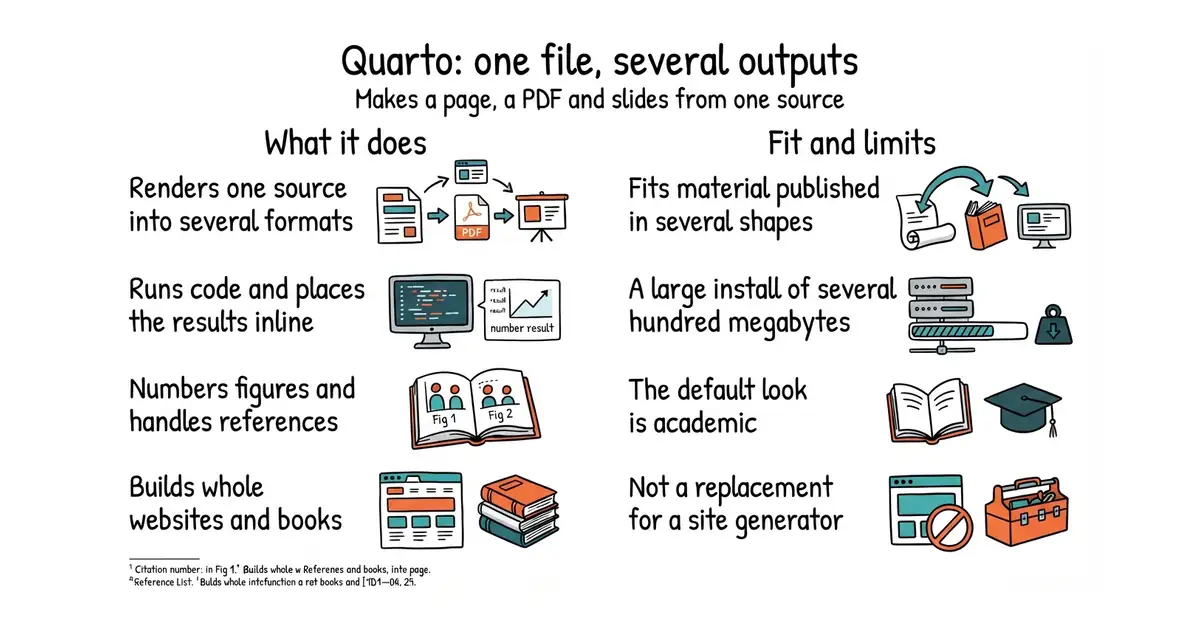
One source file rendered into a web page, a PDF and a slide deck, with Python code executed inside the document.
▶Repo detailsthe review · specs · pros & cons · install
What it does
Quarto is a publishing system built on Pandoc. One source file carries the text and a short block of settings that names the output formats. It renders to HTML, PDF, Word, slides, and whole websites or books. Code blocks written in Python, R, Julia or Observable are run while the document is rendered, and their output is placed in the finished file. Cross-references, citations and figure numbering are handled without extra work. Version 1.10.19 was published on 6 October 2026. It is a large install, several hundred megabytes, because Pandoc and a JavaScript runtime travel with it. It is not a content editor, and its default look is academic rather than branded.
Why it matters
Who it suits. It suits anyone publishing the same material in more than one shape, such as a lesson that has to become slides, an article and a download. It suits reports rebuilt from fresh numbers, because the code runs inside the document. Skip it for an ordinary marketing site, where a site generator does that job with far less weight.
Verdict. The only tool here that removes a duplicate writing job, and the saving is real as soon as the same content goes out twice. Budget an afternoon for the first document, and real CSS work to make it match a brand. slidevjs/slidev makes better-looking slides and nothing else, and jgm/pandoc (#6) is the far smaller install when one output format is enough.
- One source file, several finished formats. That is the whole reason to use it.
- Python runs inside the document, so numbers and charts in a report are never out of date.
- MIT licence, with releases every few weeks.
- A large install, several hundred megabytes, because it carries Pandoc and a JavaScript runtime with it.
- The default look is academic. Matching a brand takes real CSS work.
- Its website output overlaps ordinary site generators. Use it for documents and slides rather than rebuilding a site with it.
brew install --cask quarto
quarto render lesson.qmd --to html
quarto render lesson.qmd --to pdf
quarto render lesson.qmd --to revealjs

3k stars · MIT · v0.23.0 (2025-12-01) · Track this in Scout · Share this tool
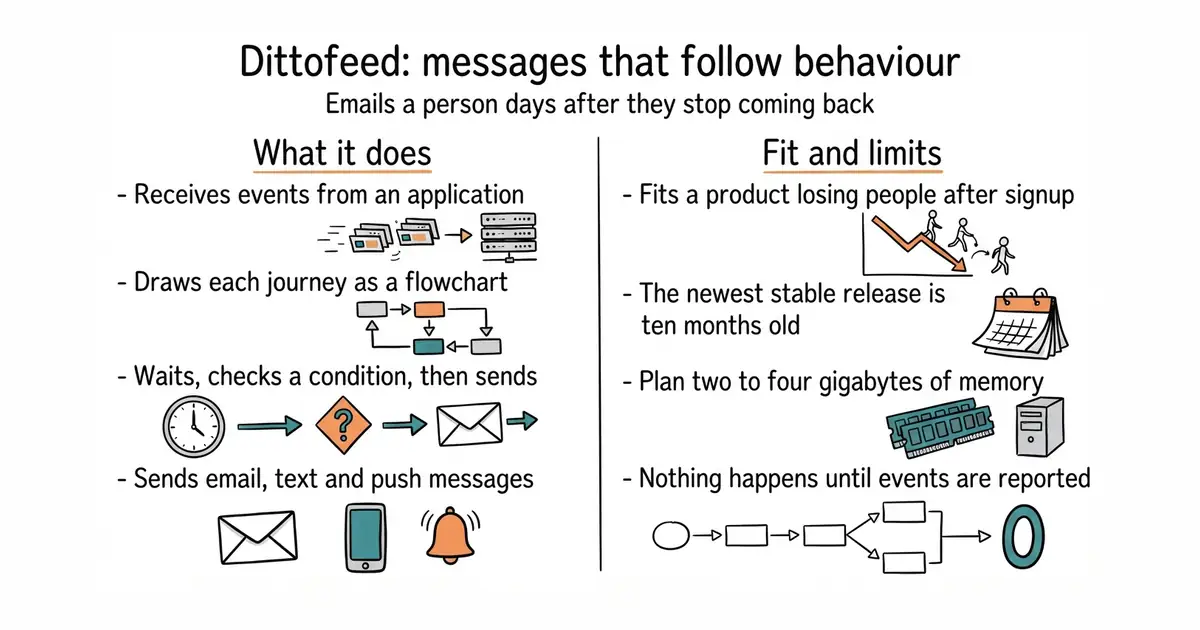
Sends an email in response to what a person did inside the product, such as three days after they stopped using it.
▶Repo detailsthe review · specs · pros & cons · install
What it does
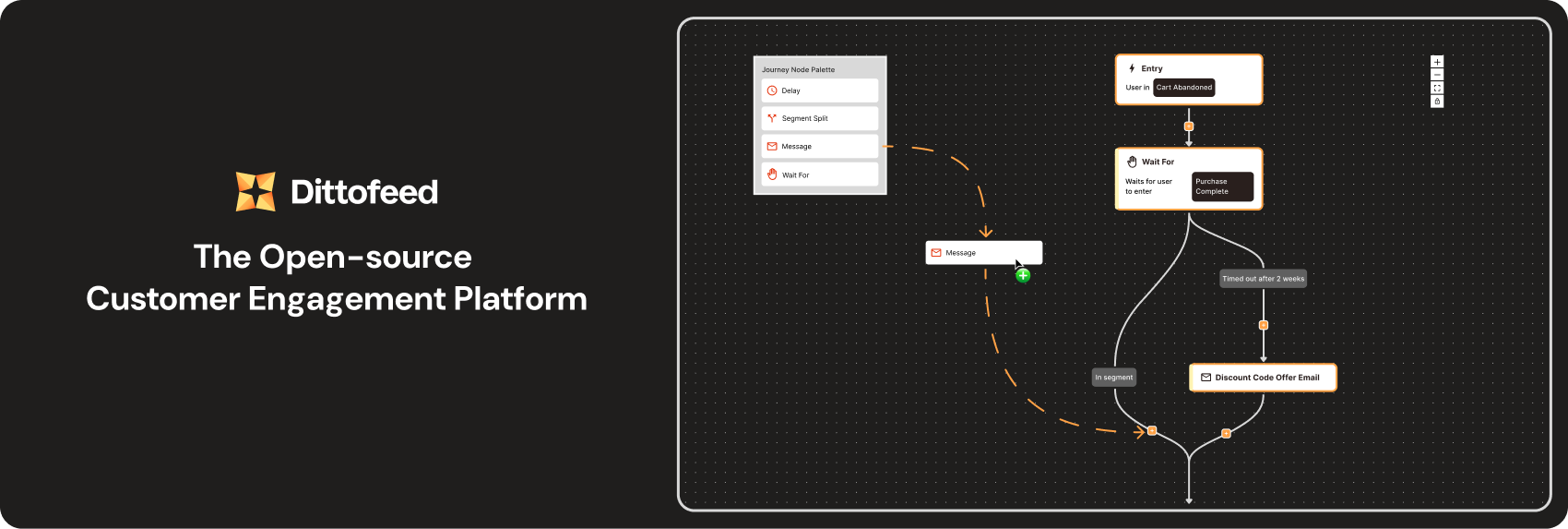
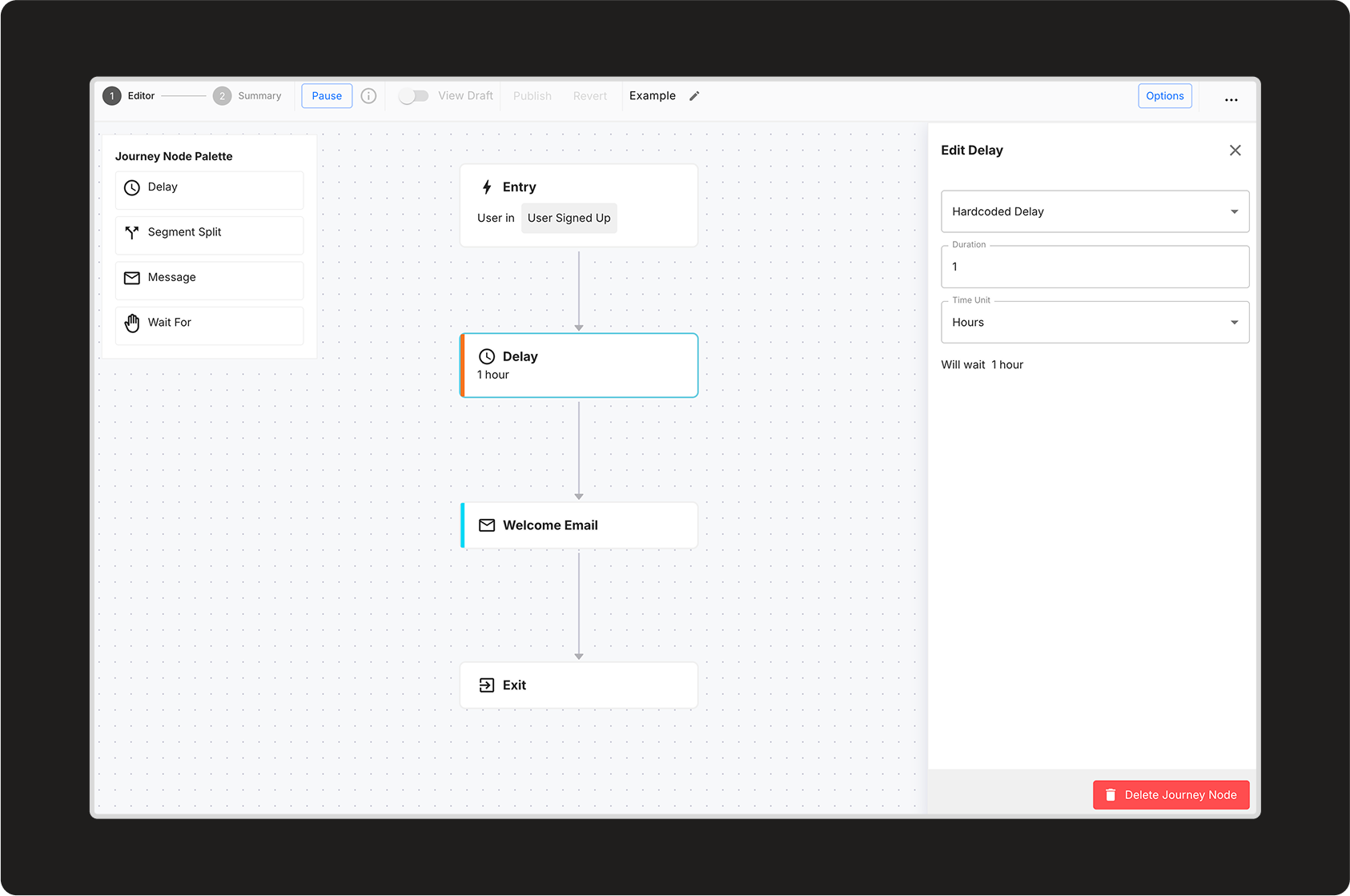
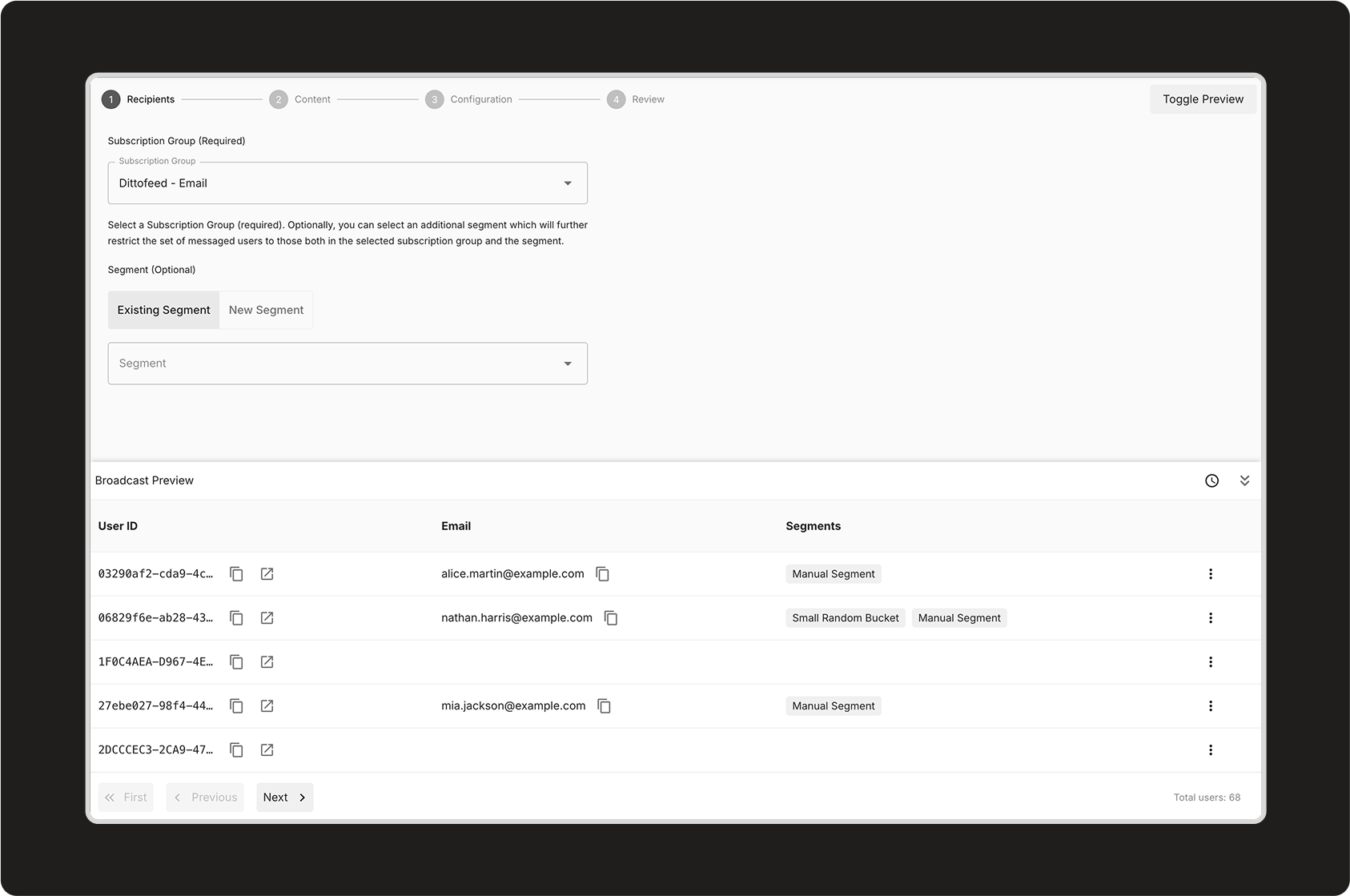
Dittofeed is a customer messaging system that reacts to events. An application sends it events, such as a person signing up or finishing a task. Journeys are drawn as a flowchart: wait three days, check a condition, then send a message or stop. It delivers email, SMS, mobile push and in-app messages through delivery providers that are configured separately. Segments group people by what they did or by traits recorded about them. It runs on Docker with PostgreSQL and ClickHouse, which is a database built for very large amounts of event data. The newest stable release is v0.23.0, published on 1 December 2025, with pre-release tags after it. It does nothing at all until the application reports events, so that code has to be written first.
Why it matters
Who it suits. It suits a product that loses people between signing up and paying, where today nobody is told and nothing happens. It suits a team that would rather draw the steps than write them. Skip it when the only need is one newsletter to everybody, which knadh/listmonk does with far less machine.
Verdict. The idea is the most valuable one on this page, and the state of the project is the thing to watch. The newest stable release is now more than ten months old, and this check could not establish the date of the newest code, so settle that before spending a weekend on it. Plan two to four gigabytes of memory for Docker, PostgreSQL and ClickHouse together. mautic/mautic is the older and heavier alternative, and PostHog/posthog shows where people drop off without doing anything about it.
- MIT licence with no carved-out folders, so it can be run and changed freely.
- The journey builder is visual. The steps are drawn rather than written in code.
- It handles the hard parts: waiting, stopping when somebody returns, and not sending the same person the same message twice.
- The newest stable release, v0.23.0, is dated 1 December 2025, and the date of the newest code could not be established in this check. Pin one version and read the notes before moving.
- It runs on Docker with PostgreSQL and ClickHouse. Plan two to four gigabytes of memory.
- Nothing happens until the application reports events. Writing that code is the real work, and it takes a few hours.
git clone https://github.com/dittofeed/dittofeed.git
cd dittofeed
docker compose up -d



190.8k stars · MIT · v0.1.8 (2026-09-21) · Track this in Scout · Share this tool
Converts PDF, Word, PowerPoint, Excel, HTML, images and audio into Markdown in one command.
▶Repo detailsthe review · specs · pros & cons · install
What it does
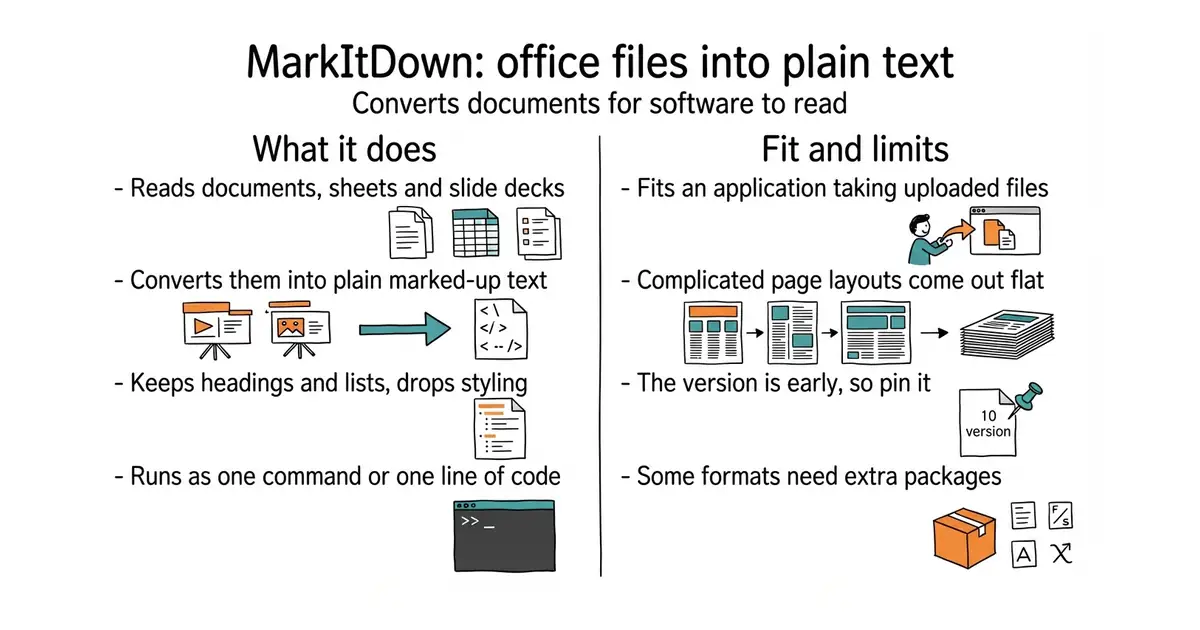
MarkItDown is a Python tool and library from Microsoft. It converts PDF, Word, PowerPoint, Excel, HTML, CSV, JSON, XML, ZIP archives, images and audio into Markdown, which is plain text with simple marks for headings and lists. It is built for feeding text to language models rather than for showing a document to a reader, so it keeps structure and drops styling. Optional extras add support for more formats, and a plug-in interface allows others to be added. Version 0.1.8 was published on 21 September 2026 on the Python package index, PyPI, and code last landed on 4 October 2026. It does not rebuild page layout: complicated PDFs come out flat, and columns can be mixed together.
Why it matters
Who it suits. It suits an application that must accept whatever file a person uploads, especially spreadsheets and slide decks that careful PDF readers do not cover. It suits a quick one-off conversion from the command line. Skip it when the PDFs are the hard kind, with columns, tables and scanned pages.
Verdict. Install it, try it first, and keep a careful reader behind it for the files it flattens. docling-project/docling and datalab-to/marker are the careful ones, and both are slower by design. Pin the version, because the output can change between releases and anything built on that text will notice.
- A very wide range of formats from one command, including spreadsheets and slide decks.
- Fast, because it is not trying to rebuild page layout.
- MIT licence, from Microsoft, with version 0.1.8 published in September 2026 and code landing this month.
- The version number is 0.1.8. The output can change between versions, so pin it and test before upgrading.
- PDFs are the weak point. Complicated layouts come out flat and columns get mixed up.
- Some formats need extra packages. Install the full set, or real user files will produce missing-feature errors.
source venv/bin/activate
pip install 'markitdown[all]'
markitdown report.pdf > report.md

15.7k stars · Apache-2.0 · v0.4.3 (2026-01-13) — GitHub and PyPI agree · Track this in Scout · Share this tool
Scores how good a retrieval-based AI answer is, so a change can be shown to have helped or hurt.
▶Repo detailsthe review · specs · pros & cons · install
What it does
Ragas is an evaluation library for applications that look up text before answering. It scores things such as whether an answer is supported by the source text, and whether the right parts of the source were found. A test set of questions, source passages and expected answers is supplied, and scores come back for each example and as an average. A language model does most of the judging, which is why each run costs money. It works with plain Python and with the common frameworks for building these applications. Version 0.4.3 was published on 13 January 2026, code last landed on 24 February 2026, and the repository now sits in the vibrantlabsai organisation, with the old address redirecting to it. It does not say how to fix a low score, and it does not watch live traffic.
Why it matters
Who it suits. It suits a team changing how text is retrieved and wanting to know whether the change helped. It suits a small, real test set of twenty to fifty examples drawn from actual use. Skip it before there is a working application to measure, and skip it when the real question is speed and cost rather than answer quality.
Verdict. Worth a day once the answers matter, and the day goes almost entirely on writing the test set, which is the part worth having anyway. Treat the numbers as a comparison between runs rather than as truth, because a language model's scores wobble. The newest code is from February 2026, eight months ago, which is older than most projects here, so check the repository before depending on it. confident-ai/deepeval is the closest alternative, and langfuse/langfuse covers the live traffic this does not.
- It turns "this feels better" into a number that can be written in a table.
- It works with plain Python, so it drops into scripts and tests that already exist.
- Apache-2.0 licence, so there is nothing to worry about in a paid product.
- Every run costs money, because a language model does the scoring. Keep the test set to twenty to fifty examples.
- The test set has to be written by hand. That is the real work and it fills most of the first day.
- Scores from a language model wobble between runs, and the newest code is dated February 2026. Compare one run with another, and never treat a single number as the truth.
source venv/bin/activate
pip install ragas

4.9k stars · Apache-2.0 · v2.1.1 (2026-07-16) · Track this in Scout · Share this tool
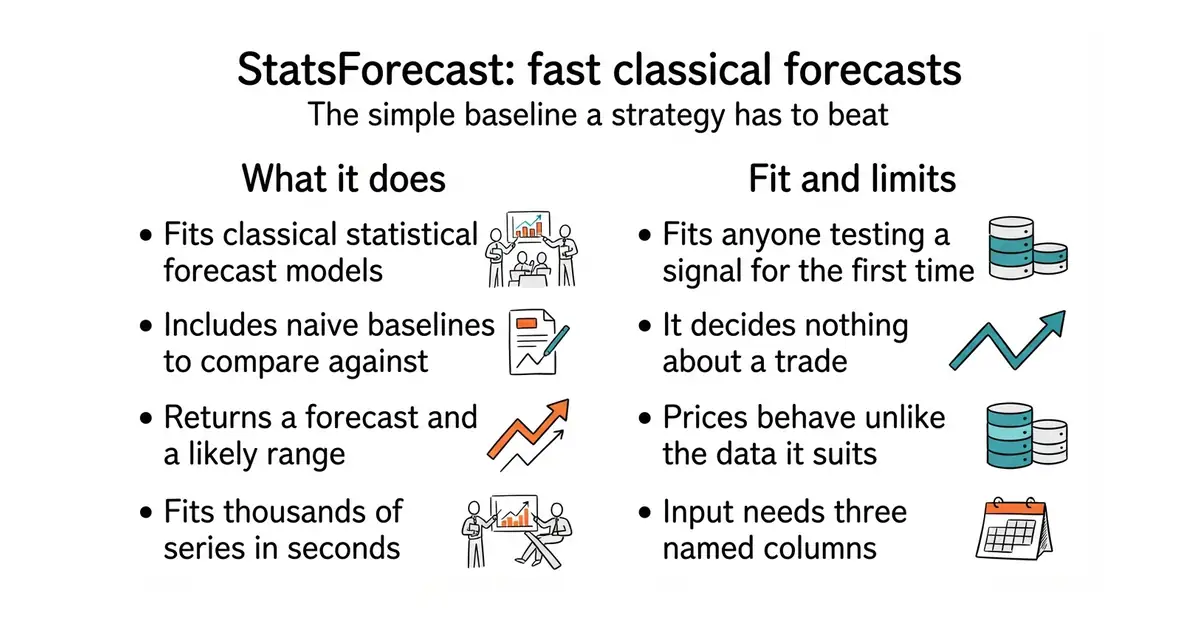
Fast classical forecasting models (ARIMA, ETS, Theta, naive) that give a strategy a floor it has to clear.
▶Repo detailsthe review · specs · pros & cons · install
What it does
StatsForecast is a Python library of classical statistical forecasting models. It includes ARIMA, exponential smoothing, Theta, and the naive baselines that simply repeat the last value or the value from a year ago. The models are compiled, so thousands of series can be fitted in the time other libraries take for a handful. It returns single-number forecasts and prediction intervals, which give a range rather than one figure. The same comparison can be run across many series at once. Data goes in as a table with columns named unique_id, ds and y. Version 2.1.1 was published on 16 July 2026 and code last landed on 13 October 2026. It is not a trading system: it predicts a number and decides nothing about a trade, a size or a stop.
Why it matters
Who it suits. It suits anyone testing a forecast or a signal who needs a floor to clear first. It suits long runs of regularly spaced data, such as daily prices or weekly sales. Skip it when the goal is a neural forecasting model, because Nixtla/neuralforecast from the same group covers that instead.
Verdict. Half an hour well spent before any strategy work, because a naive baseline is the cheapest honest test there is. Write the baseline numbers down, and delete anything that does not clear them rather than tuning it further. skforecast/skforecast is the one to add next, since it handles validating a model forward in time with ordinary machine-learning methods.
- Extremely fast, so a baseline is cheap to run again whenever the data changes.
- The models are old, well understood and boring, which is exactly what makes them a fair comparison.
- Apache-2.0 licence, version 2.1.1 from July 2026, and code landing this month.
- These are forecasting models rather than a trading system. The trade, the size and the stop are still a person's decision.
- Market prices do not behave like the sales data these models were designed for. Treat the output as a floor to beat and never as a signal to trade.
- Data must be shaped with columns named
unique_id,dsandy, which takes a little work the first time.
source venv/bin/activate
pip install statsforecast




Checked, and left out
These were opened for this edition and did not make it, with the reason.
decaporg/decap-cms
decaporg/decap-cms — Researched for Edition 14 and DELIBERATELY NOT RECOMMENDED. Last release June 2024. Recorded because the danger is not that he misses it, it is that he FINDS it: nearly every tutorial for adding an editor to a static sit
activepieces/activepieces
activepieces/activepieces — Verified as a real, popular project but DROPPED for unprovable recency: the releases LIST shows nothing after June 2024 while the code is plainly active. This is the same failure that nearly cost Sveltia CMS its place —
novuhq/novu
novuhq/novu — Same failure as Activepieces: releases list stale at mid-2024 while the project is clearly active. Dropped for unprovable recency, backlogged for re-checking via /releases/latest and npm. Would have been the second entry
makeplane/plane
makeplane/plane — Third repository in one run to fail the same way — releases list stale at 2024 while development continues. Backlogged for re-checking. The need it would serve (a publishing calendar) is now partly covered by Front Matte
directus/directus
directus/directus — Researched for Edition 14 and dropped ON LICENCE, not on health. Directus now ships under the Monospace Sustainable Core License 1.0. Free to run for your own business; not a foundation for a paid product without reading
nocodb/nocodb
nocodb/nocodb — Dropped on licence for the same reason as Directus. The Sustainable Use License is the same family as n8n's. Website: https://www.nocodb.com . The editorial-calendar need it would serve is partly met by Front Matter (Ed.
tinacms/tinacms
tinacms/tinacms — VERIFIED ALIVE and dropped only for slate fit — three git-based editors is already more than one person should have to choose between. Star count and licence were not read from the page in this run, so both need confirmi
pages-cms/pages-cms
pages-cms/pages-cms — Found while researching Edition 14 and dropped for slate fit — the fifth option on a shelf that already had four. Website: https://pagescms.org . Release recency NOT established; establish it before recommending.
mdx-js/mdx
mdx-js/mdx — Would suit Grasppy well — a blog post containing a working mini-demo of the map. DROPPED because two pages disagree on whether the newest release is August 2025 or August 2026, and an unprovable date is not printed in th
remarkjs/remark
remarkjs/remark — Dropped as noise rather than as a bad tool: it arrives as a dependency of Astro, so recommending it separately would spend a slot on something he already has. Website: https://remark.js.org . Recorded so a future run doe
Know a repository we should check?