2.9k stars · MIT · v0.23.0 stable (2025-12-01); pre-release tags run to v0.24.0-alpha.17 (2026-03-28) · Track this in Scout
Sends an email in response to what a person did inside the product, such as three days after they stopped using it.
▶Repo detailsthe review · specs · pros & cons · install
What it is
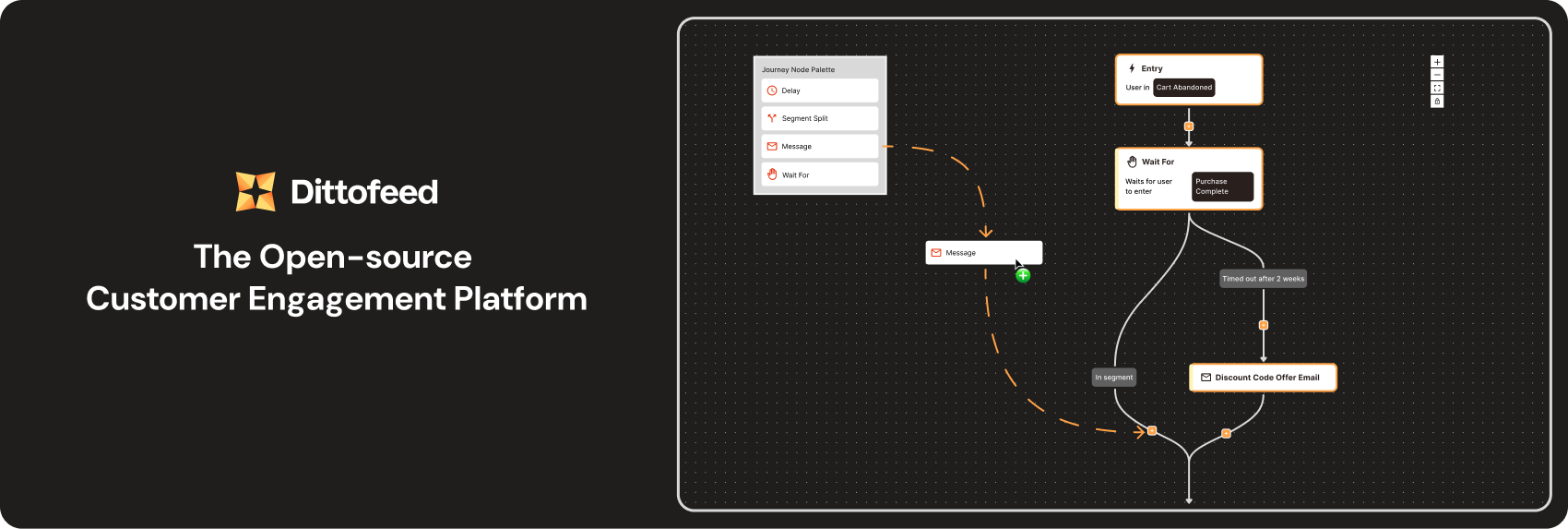
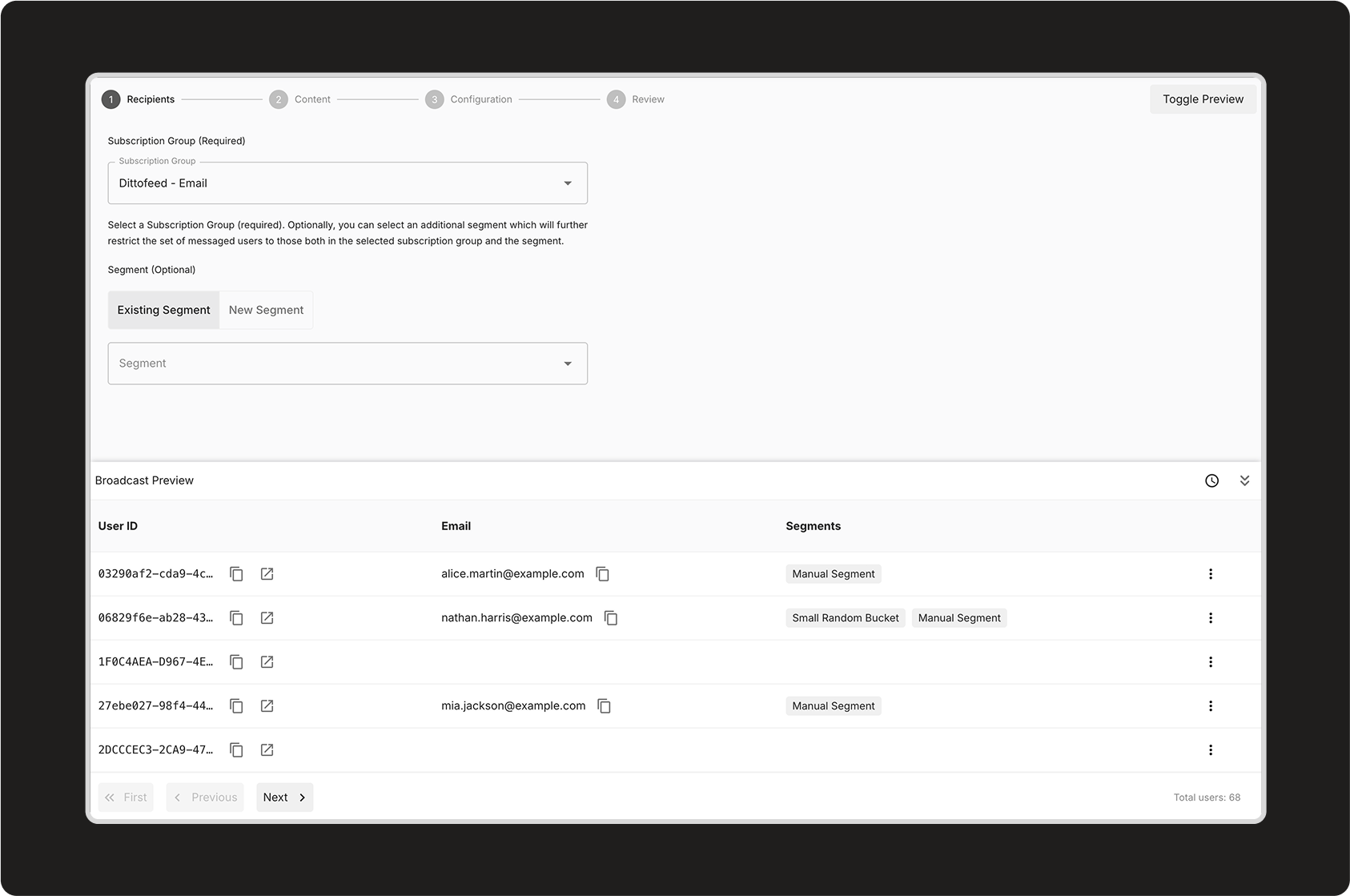
Dittofeed is an open-source customer engagement platform. You send it events from your application, then build journeys that react to those events across email, SMS and push notifications. There is also a hosted version if you do not want to run it.
What it is good for. This fills the biggest hole in fourteen reports. Listmonk (Ed. 2 #1) sends a newsletter, which is the same message to everybody. Mautic (Ed. 10 #6) can do behaviour, but it wants MySQL and it is a lot of machine. Nothing so far reacts to what one person did inside an application. That gap, between "signed up" and "paid", is where a small product loses almost everyone, and it is invisible without a tool like this. It also pairs with earlier entries. PostHog (Ed. 11 #8) tells you where people drop off. Dittofeed is what does something about it.
- MIT licence, with no carved-out directories. You can run it and change it freely.
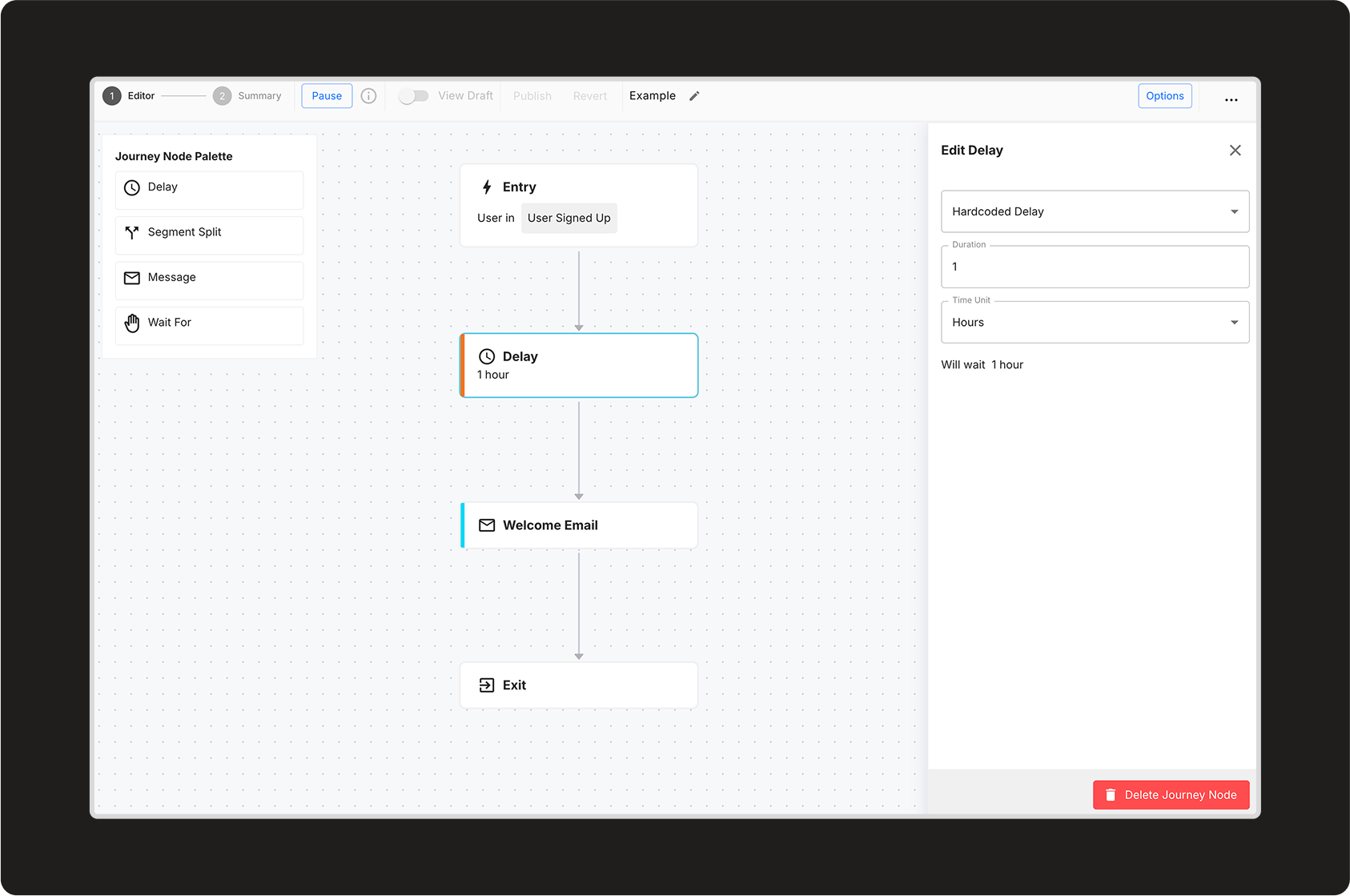
- The journey builder is visual. You draw the steps rather than write them.
- It handles the hard parts: waiting, stopping when someone returns, and not sending the same person the same thing twice.
- The last stable release is v0.23.0 from 1 December 2025. Newer tags are marked alpha, up to v0.24.0-alpha.17 on 28 March 2026. Pin one version and read the notes before you move.
- It runs on Docker with PostgreSQL and ClickHouse. ClickHouse is a database built for very large amounts of event data. Plan 2 to 4 GB of memory, so check Beszel before you start.
- Nothing happens until the application tells it something. You have to add the code that says "this person uploaded a file". That is the real work, and it is a few hours.
git clone https://github.com/dittofeed/dittofeed.git
cd dittofeed
docker compose up -d