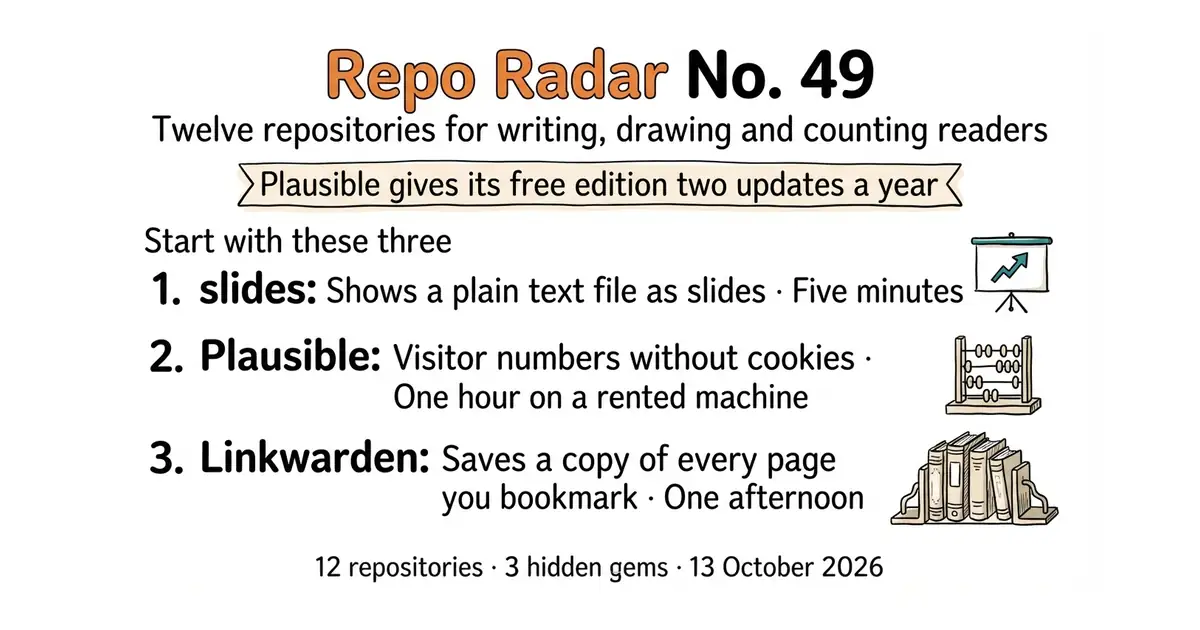
Edition No. 49 · 13 Oct 2026
Plausible gives its free edition two updates a year
A diagram skill with 52,560 stars, two ways to count visitors, and three projects under 3,000 stars.
13 October 2026. Twelve open-source repositories, opened and checked this morning. No theme. Today's mix leans towards writing things, drawing things, and counting who read them.
We aim for twelve every day. Some candidates fall out while we check them — those are listed at the end, with the reason.
Three things worth knowing, separate from the recommendations
- A free edition can be a slow edition, and the honest projects say so. Plausible publishes its self-hosted edition as a long-term release twice a year, and leaves funnels, revenue goals, single sign-on and the multi-site interface out of it entirely. All of that is written on the project's own page. OpenPanel, entry 7, includes every one of those features free and publishes no releases at all. Neither approach is wrong, and the difference is worth reading before installing either: one gives you less, slowly, and tells you exactly what; the other gives you everything and pins nothing. - The most-starred project in today's edition is not a program. cathrynlavery/diagram-design was created on 16 April 2026 and has 52,560 stars, more than the next two entries put together. It contains instructions for a coding assistant, not software you run, and it publishes no releases. Compare that with fonttools/fontspector, entry 5, which has 115 stars, tagged releases, and is the official successor to the tool most of the type industry's quality checks run through. A star count measures attention on one day. It is not a measure of what a thing is. - Two repository names changed, and one of them had already been published under the other name. distribworks/dkron now answers as dkron-io/dkron, and maputnik/editor now answers as maplibre/maputnik. The second one was checked as a candidate this morning and turned out to have run in Edition 37 under its new name — the old name in the backlog made it look like something that had never been published. GitHub redirects old addresses silently, so a rename looks exactly like a new project unless somebody writes the old name down.
If you only do three things
- maaslalani/slides (#3) — five minutes. It shows a Markdown file as a presentation inside a terminal window. Write a few paragraphs, separate them with three dashes, and that is the deck. Nothing to export and nothing to upload.
- plausible/analytics (#6) — one hour on a rented machine. It counts visitors to a website without cookies and without collecting personal data. It is the standout of the edition, and the free edition's limits are printed on the project's own page rather than hidden.
- linkwarden/linkwarden (#8) — one afternoon. Every page you save is stored as a screenshot, a PDF and a single HTML file, so a dead link still has its text. This is the one worth the most on this page. ---
Every link in one place
| # | Repository | What it is | Stars | Licence | Project site |
|---|---|---|---|---|---|
| 1 | halo-dev/halo | A self-hosted website and blog platform | 39,940 | GPL-3.0 | halo.run |
| 2 | textlint/textlint | Checks prose the way a code checker checks code | 3,200 | MIT | textlint.org |
| 3 | maaslalani/slides | Shows a Markdown file as terminal slides | 11,684 | MIT | maaslalani.com/slides |
| 4 | glyphr-studio/Glyphr-Studio-2 💎 | A font editor that runs in a browser | 306 | GPL-3.0 | glyphrstudio.com |
| 5 | fonttools/fontspector 💎 | Runs a quality checklist over a font file | 115 | Apache-2.0 | fonttools.github.io/fontspector |
| 6 | plausible/analytics | Counts website visitors without cookies | 29,373 | AGPL-3.0 | plausible.io |
| 7 | openpanel-dev/openpanel | Visitor counting plus funnels and replays | 6,228 | AGPL-3.0 | openpanel.dev |
| 8 | linkwarden/linkwarden | Saves links and keeps a copy of the page | 20,089 | AGPL-3.0 | linkwarden.app |
| 9 | cathrynlavery/diagram-design | Instructions that make a coding agent draw diagrams | 52,560 | MIT | diagramdesign.dev |
| 10 | Mintplex-Labs/anything-llm | A private assistant over your own documents | 66,977 | MIT | anythingllm.com |
| 11 | htekdev/vidpipe 💎 | Turns one recording into clips, captions and posts | 228 | ISC | none listed |
| 12 | dkron-io/dkron | Scheduled jobs that survive a machine dying | 4,737 | LGPL-3.0 | dkron.io |
Plausible gives its free edition two updates a year
Twelve repositories, checked and reviewed. Every version verified against the GitHub API and dated.

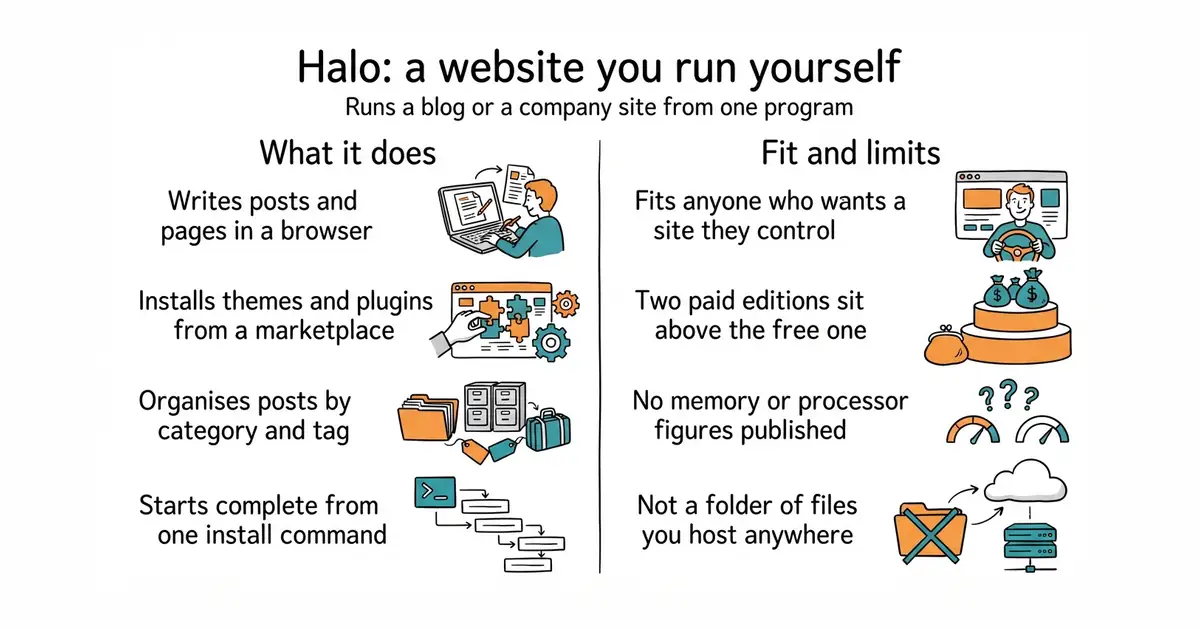
39,940 stars · GPL-3.0 from the repository sidebar, for the Community Edition. Two paid editions sit above it — Professional and Mall — so the project is open-core in practice. · v2.26.1, the release page reading '01 Sep 08:03' with no year and taken as 2026-09-01 because that date is in the past; ungh.cc gives pushedAt 2026-10-13, the morning of the run, so the project is plainly current. · Track this in Scout · Share this tool
A self-hosted website and blog platform with a marketplace of themes and plugins, written in Java.
▶Repo detailsthe review · specs · pros & cons · install
What it does
You install it, open it in a browser and create the first account. From there you write posts and pages in an editor, organise them into categories and tags, and manage comments. Themes and plugins come from the project's own marketplace, and developers can publish their own. The free Community Edition is the one in this repository, under GPLv3. Two paid editions sit above it: a Professional Edition adding a mobile application, assisted site building, login by telephone number and a paid theme and plugin marketplace, and a Mall Edition adding products, orders and payment through Chinese payment providers. The newest release is v2.26.1, from 1 September 2026, and code landed this morning. What it does not do is produce a folder of files you can host anywhere; this is a running program with a database behind it, not a site generator. Its own README also publishes no memory or processor figures, so you cannot size a machine from the documentation.
Why it matters
Who it suits. Anyone who wants a website they control, who prefers writing in a browser window to writing in files, and who is comfortable keeping one program updated on a machine. It suits a knowledge base or a company site as well as a blog, because the plugin marketplace covers more than posts. Skip it if you want the site to be plain files served from anywhere, because a static site generator will cost you less to run and nothing to patch.
Verdict. A solid, well-kept platform with an unusual amount of activity behind it, and the paid editions are the thing to understand before adopting it. The split is clearly drawn — the free edition is a complete blog and site platform, and the paid ones add commerce and convenience — but it does mean the roadmap is partly a commercial one. TryGhost/Ghost at 55,528 stars is the closer comparison for a publication with paid subscribers, and it is the better choice if memberships and newsletters are the point. wagtail/wagtail at 20,433 stars is the choice when the site has to be built by developers around a content model. Two practical notes: the README is written in Chinese first, so the English documentation site is the place to start, and the Docker command on the page is labelled as being for trying it out rather than for running it.
- One command starts a complete working site, with nothing else to install first.
- Themes and plugins install from inside the program, so a non-programmer can change the site.
- Very actively maintained, with code landing on the day this was checked.
- Two paid editions sit above the free one, so some features will always be behind a price.
- The README is Chinese first, and the deployment it recommends uses a server panel that is also a separate product.
- No memory or processor figures are published anywhere, and it is a Java program with a database, so expect a real machine rather than the smallest one.
 TryGhost/Ghost
The same job aimed at publications with paid members and newsletters, at 55,528 stars, with code on 13 October 2026.
Track this in Scout- wagtail/wagtail
A content management system built into a Python web framework, at 20,433 stars, with code on 7 August 2026; for sites a developer assembles rather than installs.
Track this in Scout
docker run -d --name halo -p 8090:8090 -v ~/.halo2:/root/.halo2 halohub/halo:2.26

3,200 stars · MIT from the repository sidebar; the earlier ledger reading of /blob/master/LICENSE found it standard and unmodified, 'Copyright (c) 2014-present azu', and the npm metadata agrees. · v15.8.0, confirmed on registry.npmjs.org as the published package on 13 October 2026. ungh.cc gives pushedAt 2026-10-13T11:00:55Z, the morning of the run. · Track this in Scout · Share this tool
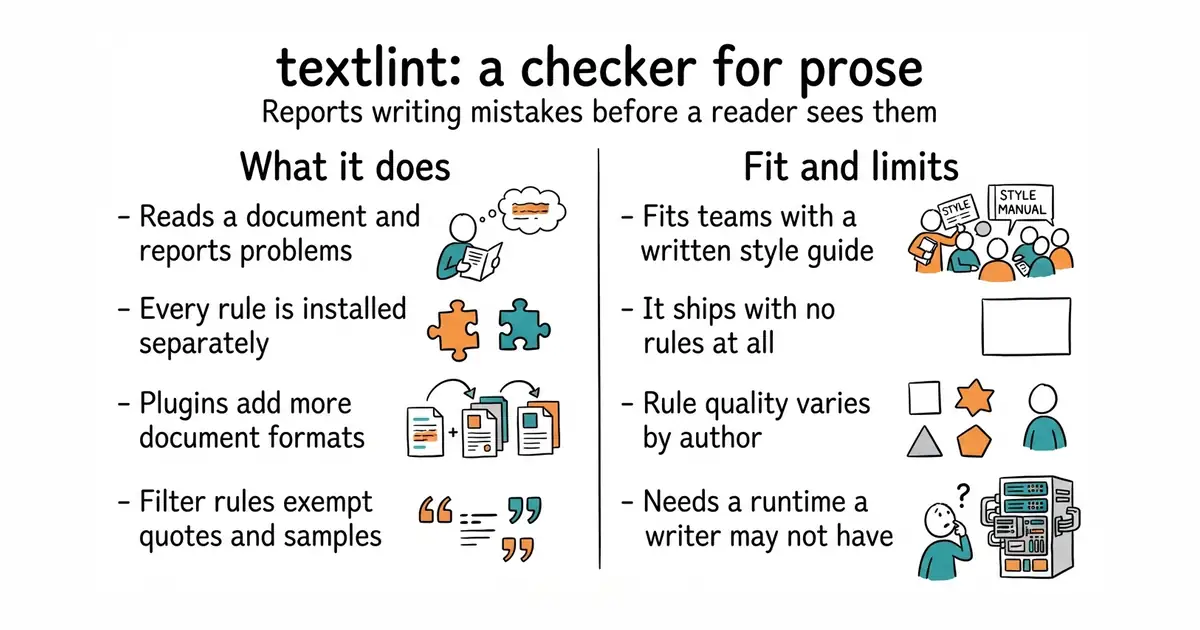
A pluggable checker for natural-language text rather than code, which ships with no rules at all until you install them.
▶Repo detailsthe review · specs · pros & cons · install
What it does
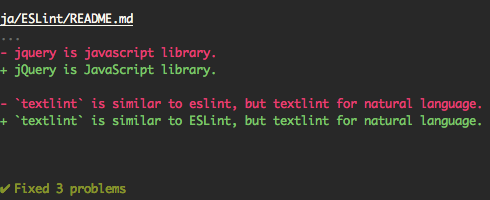
You install it next to a project, add one or more rules, and run it over a file. It reads Markdown and plain text out of the box. Other formats need a plugin, and the project names HTML, reStructuredText, AsciiDoc, Re:VIEW and Org-mode as examples. Rules are ordinary packages, named textlint-rule- and something, and you switch each one on in a small settings file. A rule can be set to true, to false, or to an object of its own options. Beyond plain rules there are presets, which bundle several rules together, filter rules, which suppress findings in parts of a document, and custom formatters, which change how the report is printed. It needs Node.js 20 or newer, the runtime that lets JavaScript programs run outside a browser. The newest version is 15.8.0. What it does not do is come with a single rule of its own. Run it before installing a rule and it will find nothing, by design.
Why it matters
Who it suits. Anyone who writes documentation, release notes or marketing copy in files and reviews it in pull requests, and who would like the same mechanical checks every time rather than whatever the reviewer noticed that day. It is also the right tool for a team that has a style guide and wants it enforced, because a rule can be written for one house rule. Skip it if you want good prose advice out of the box, because choosing and tuning the rules is most of the work here.
Verdict. Worth the evening if a style guide exists and is currently enforced by memory, and a poor choice if you want an opinion handed to you. The honest comparison is vale-cli/vale at 6,200 stars, which does the same job as a single downloaded program with no package manager involved, and which ships rule sets based on published style guides — pick Vale if you want results today, and this if you want rules written in JavaScript against the document's structure. amperser/proselint at 4,585 stars is the opposite choice again: it has strong built-in opinions and almost nothing to configure. The project itself is in good health, with code landing on the day this was checked and a release in August 2026.
- Plugins let it read HTML, AsciiDoc, reStructuredText and other formats, not just Markdown.
- Filter rules mean a quoted passage or a code sample can be exempted instead of switching a rule off everywhere.
- A rule is a small package, so a house style can be written once and shared across projects.
- It ships with no rules at all, so the first useful run is after a research session, not after the install.
- Needs Node.js 20 or newer, which is an extra thing to install for a writer who does not program.
- Rule quality varies, because rules come from many different authors rather than from the project.
 vale-cli/vale
The same job as one downloaded program with published style guides included, at 6,200 stars, under an MIT licence.
Track this in Scout amperser/proselint
Strong built-in advice with almost nothing to configure, at 4,585 stars, with code on 4 September 2026; Edition 31 covered it.
Track this in Scout
npm install textlint --save-dev
npm install textlint-rule-no-todo --save-dev
npx textlint --init
npx textlint ./README.md



11,684 stars · MIT from the repository sidebar. · v0.9.0, and THE YEAR COULD NOT BE SETTLED: the release page reads '13 Sep 14:32' with no year, which would mean 13 September 2026, but ungh.cc gives pushedAt 2026-07-08T18:44:50Z, two months EARLIER than that. A release cannot postdate the last push, the project publishes no package on any registry, and ungh's releases sub-path did not answer, so the only honest reading is that the release predates 2026 and the 8 July 2026 code date is what proves currency. The edition says so plainly. · Track this in Scout · Share this tool
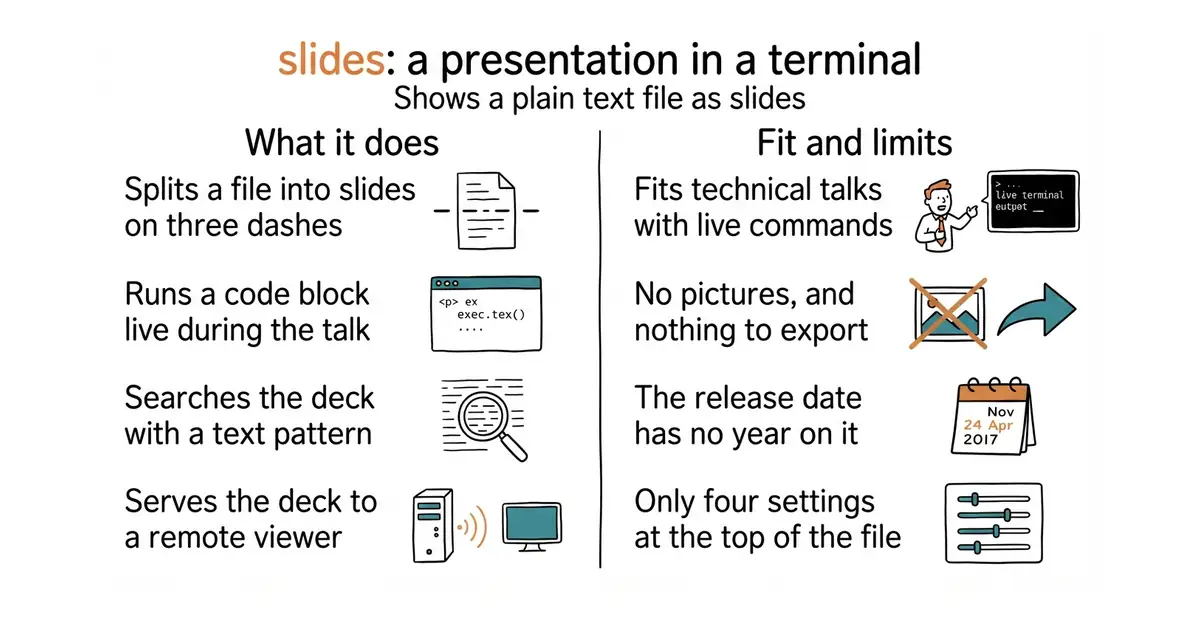
Shows a Markdown file as terminal slides and can run a code block live during the talk, with no pictures and nothing to export.
▶Repo detailsthe review · specs · pros & cons · install
What it does
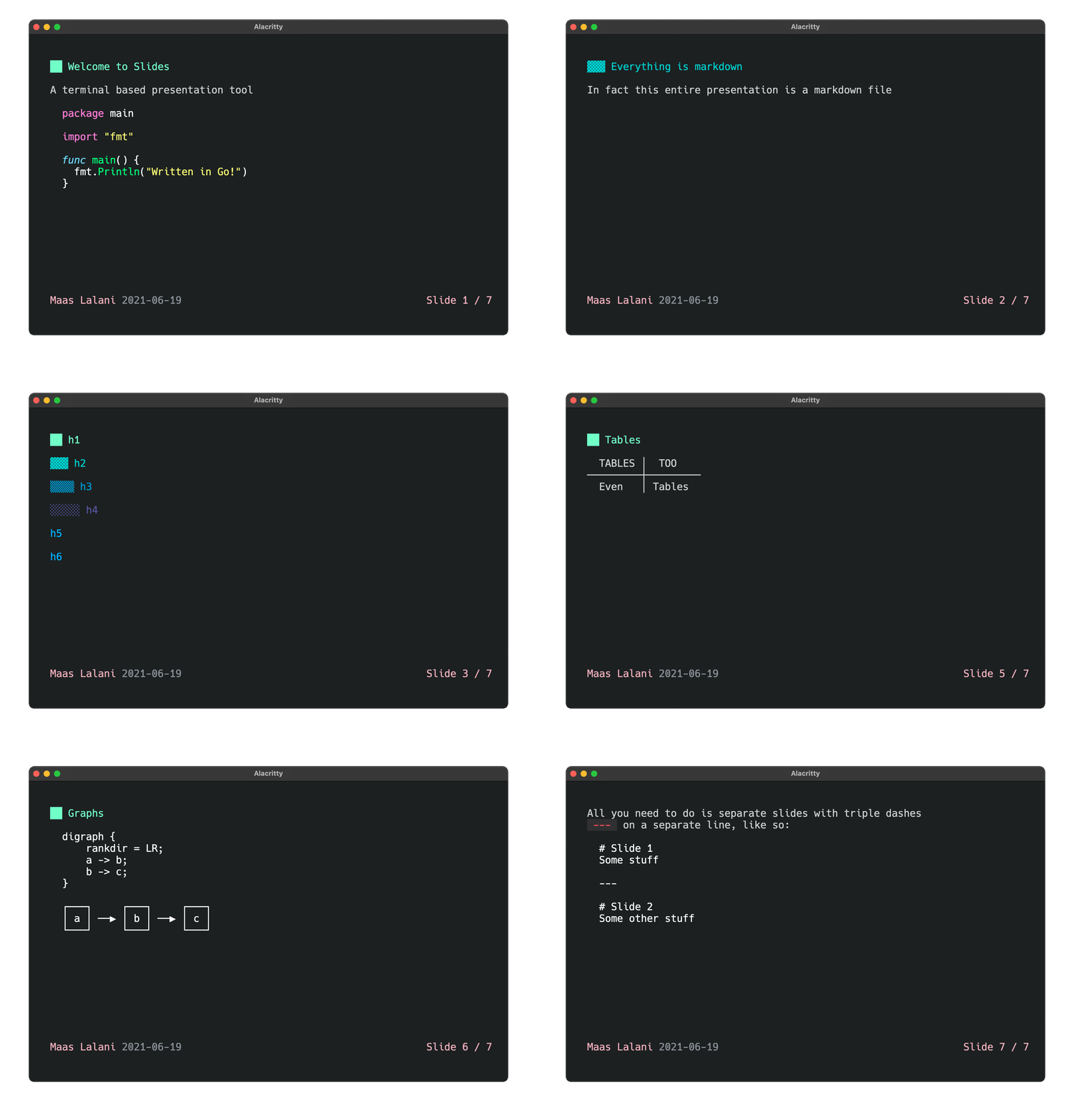
You write a file where each slide is separated by a line of three dashes. Running slides on that file starts the presentation, and the arrow keys move between slides. A short block at the top of the file sets the theme, the author, the date format and the paging text. Pressing ctrl+e on a slide runs the code block on it and prints the result on the slide, which means a live demonstration cannot fail from a typo made on stage. Blocks marked with tildes instead of backticks are run once before the presentation starts and replaced with their output, so a chart or a table can be generated fresh. A forward slash searches the deck using a regular expression, which is a short pattern language for matching text. Editing the file while it is open updates the presentation. slides serve publishes the deck over SSH, so somebody else can connect and watch. What it does not do is show pictures, and there is nothing to export: it draws text in a terminal, so there is no PDF and no slide file at the end.
Why it matters
Who it suits. Anyone who presents technical material to a technical audience and would rather write a file than arrange boxes — a conference lightning talk, an internal walkthrough, a teaching session where commands have to be run live. The code-running feature is the real reason to choose it over the alternatives, because it turns the demonstration into part of the deck. Skip it if the audience expects pictures or a file to take away, because this produces neither.
Verdict. Five minutes to install and five minutes to learn, which makes it the cheapest thing on this page to try. The limits are real though, and they are the whole trade: no images, no export, and the deck only exists while the terminal is open. mfontanini/presenterm at 8,639 stars is the better choice when the deck needs pictures and more layout, and Edition 37 covered it. marp-team/marp-cli, covered in Edition 21, is the one to use when the output has to be a PDF or a PowerPoint file that somebody else opens. One note on dates: the newest release is v0.9.0, and GitHub prints its date without a year, so the year cannot be read from the page; code last landed on 8 July 2026, which is what proves the project is alive.
- One command to install, one command to present, and the file is readable on its own.
- Running a code block live during the talk removes the risk of typing a command wrongly on stage.
slides servelets somebody watch over SSH, with no screen sharing involved.
- No pictures at all, and nothing to export: the presentation only exists inside a terminal.
- The newest release is v0.9.0 and GitHub does not print its year, so the release date cannot be read from the page.
- Only four things are configurable at the top of the file, so a deck that needs real layout will not fit.
 mfontanini/presenterm
Terminal slides with pictures and real layout, at 8,639 stars, with code on 22 May 2026; Edition 37 covered it.
Track this in Scout marp-team/marp-cli
Turns the same kind of Markdown file into a PDF or a PowerPoint file, under an MIT licence; Edition 21 covered it.
Track this in Scout
brew install slides
sudo snap install slides
yay -S slides
nix-env -iA nixpkgs.slides
go install github.com/maaslalani/slides@latest

306 stars · GPL 3.0, read from the README because THE SIDEBAR SHOWS NO LICENCE AT ALL. The README's copyright line reads 2010-2026, Matthew LaGrandeur. · 2.10.3, dated 12 July 2026 on the repository sidebar. ungh.cc gives pushedAt 2026-08-21T02:52:35Z. · Track this in Scout · Share this tool
A font editor that runs entirely in a browser page with nothing to install, aimed by its own description at hobbyists and beginners.
▶Repo detailsthe review · specs · pros & cons · install
What it does
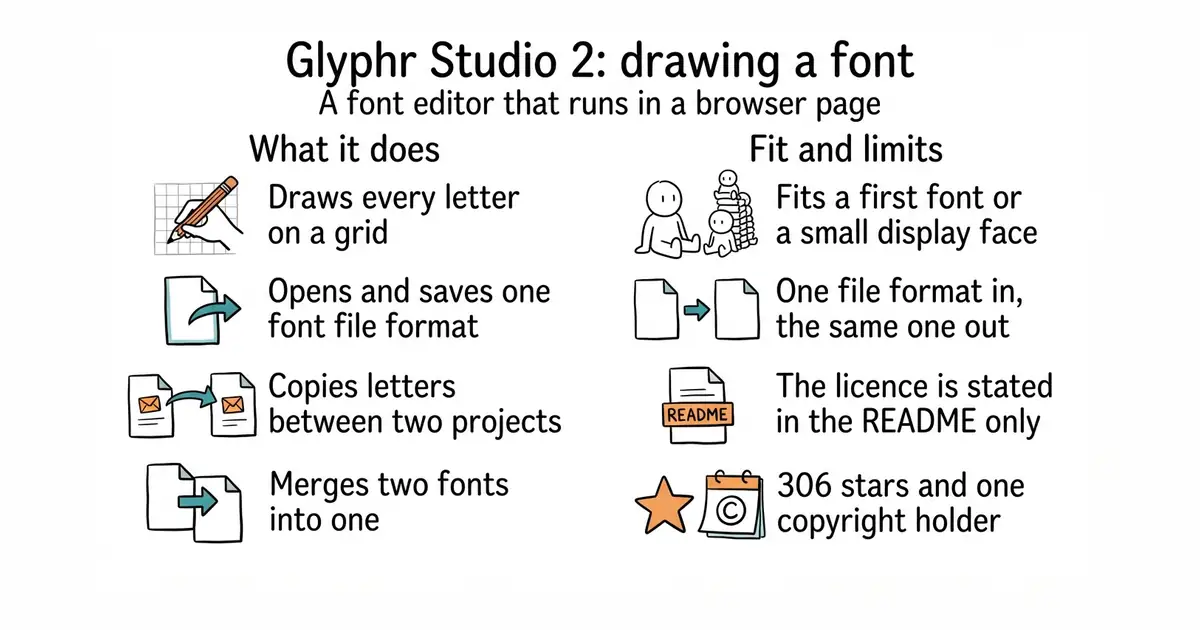
You open the web page and either start a new font or import an OTF file, one of the two common font formats. You then draw each letter on a grid, with the usual outline tools, and the editor keeps the measurements that make letters line up. Version 2's main addition over version 1 is working on several fonts at once: you can copy letters between projects, and merge two fonts into one. It exports back to OTF. There is no back-end at all — the whole thing builds to HTML, JavaScript and CSS, so a copy can be served from any plain web server or run from the hosted page. The newest release is 2.10.3, from 12 July 2026, and the project deliberately uses almost no outside libraries: just FontFlux JS for reading and writing font files and a small library for combining outlines. What it does not handle is any format other than OTF. There is no UFO or Glyphs import, which is what professional type pipelines use, and version 1 is deprecated with only very serious bugs being fixed.
Why it matters
Who it suits. Someone making their first font, or making a small display font for one project — a logo face, an icon set drawn as letters, a handwriting font traced from a scan. It also suits a classroom, because nothing has to be installed on the machines. Skip it if you work professionally in type, because the formats and the production tools are not here.
Verdict. The friendliest way into font drawing that exists, and genuinely worth an afternoon for anyone curious. Treat it as a sketching tool rather than a production one: with OTF as the only format in and out, a font drawn here cannot easily move into a professional pipeline later, and that is the thing to know before investing weeks in a design. fontforge/fontforge at 7,900 stars is the free desktop alternative with the full set of production features, and it is much harder to learn. fonttools/fonttools at 5,200 stars is the library underneath much of the professional toolchain, for anyone who would rather write code than draw. One small thing worth noting: the repository sidebar shows no licence, and the licence is stated in the README as GPL 3.0 with a copyright line running from 2010 to 2026.
- Nothing to install and no account to make, so a first font can be started in a browser tab.
- Multi-project editing means letters can be copied between fonts and two fonts merged.
- No back-end at all, so a private copy can be served from any plain web server.
- OTF is the only format it imports and exports, so there is no path into a professional type pipeline.
- The licence is in the README rather than in the sidebar, where most people look for it.
- A very small project: 306 stars, and one named copyright holder doing the work.
- fontforge/fontforge
The long-standing free desktop font editor with the full production feature set, at 7,900 stars, under GPL-3.0; far more capable and far harder to learn.
Track this in Scout - fonttools/fonttools
The Python library that reads and writes font files, at 5,200 stars, under an MIT licence; for building fonts in code rather than drawing them.
Track this in Scout
git clone https://github.com/glyphr-studio/Glyphr-Studio-2.git
cd Glyphr-Studio-2/dist
python3 -m http.server 8000

115 stars · Apache-2.0 from the repository sidebar. · fontspector-v1.9.0, the release page reading '09 Oct 13:19' with no year and taken as 2026-10-09 because that date is in the past. A SIX-DAY DISAGREEMENT WITH THE MIRROR: ungh.cc gives pushedAt 2026-10-03, which is earlier than the release it should contain. Recency is not in doubt either way; the later reading is used and the disagreement is printed in the edition rather than smoothed over. · Track this in Scout · Share this tool
A command-line tool that runs a font quality checklist over font files and reports the failures, from the same organisation as the original it reimplements.
▶Repo detailsthe review · specs · pros & cons · install
What it does
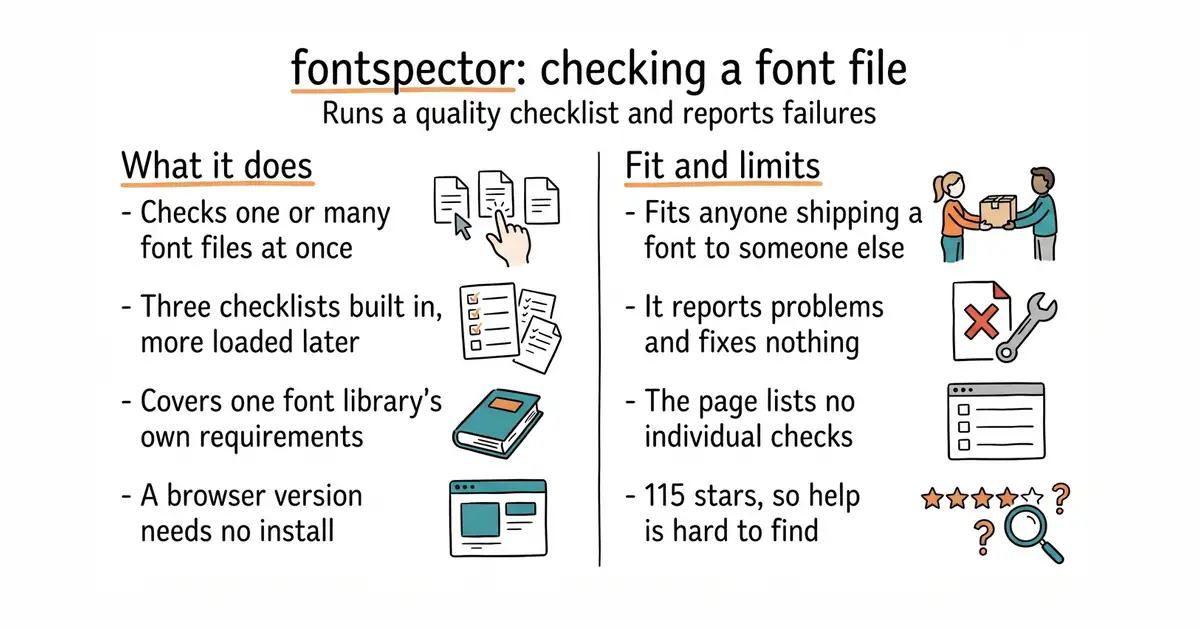
You point it at one or more font files and it runs a profile, which is a named set of checks. Three profiles are built in: one for general OpenType correctness, one general-purpose profile, and one implementing Google Fonts' own submission requirements. Several more load at run time, including Microsoft's, Adobe's, Monotype's, Fontwerk's and one for the ISO 15008 legibility standard. It is a reimplementation in Rust of fontbakery, the Python checklist the same organisation has maintained for years, and it keeps a bridge so that fontbakery's Python checks can still run inside it. There is also a version compiled for the browser, hosted on the project's own page, so a font can be checked without installing anything. The newest release is fontspector-v1.9.0. What it does not do is fix anything. It is a checker, not an editor, and the repository page does not list the individual checks, so the only way to see the full list is to run a profile.
Why it matters
Who it suits. Anyone who ships a font file to somebody else — a type designer submitting to a library, a developer bundling a font into a product, a foundry with a release checklist. It is also the practical answer for anyone submitting to Google Fonts, because that profile encodes what the reviewers will ask for. Skip it if you only ever use fonts other people made; this checks the file, not the way you use it.
Verdict. A clean, fast rewrite of a tool that was already the standard, and the sensible default for new work. The reason to take it seriously despite 115 stars is who publishes it: this sits in the same organisation as fonttools and fontbakery, the libraries most of the type toolchain is built on. That is also the useful comparison. fonttools/fontbakery at 706 stars is the original, and its last code landed on 4 November 2025, eleven months before this was checked — it is quiet rather than finished, and this project is where the work is going. Two notes on dates: the release page prints "09 Oct" without a year, and the mirror used here reported the last code change as 3 October 2026, six days earlier, so the two readings differ and the release is the later one. The web version is the fastest way to try it.
- One command checks a folder of fonts, and it changes nothing, so it is safe to run on anything.
- A Google Fonts profile that encodes the actual submission requirements, plus Microsoft, Adobe and Monotype profiles.
- A browser version is hosted by the project, so a single font can be checked with nothing installed.
- The repository page lists no individual checks, so the only way to learn what it tests is to run it.
- Installing from source needs the Rust toolchain, which is a large download for a one-off check.
- 115 stars and a narrow audience, so searching for help with a specific failure will not find much.
 fonttools/fontbakery
The Python checklist this project reimplements, at 706 stars, whose last code landed on 4 November 2025.
Track this in Scout- fonttools/fonttools
The library that reads and writes the font files both checkers inspect, at 5,200 stars, under an MIT licence.
Track this in Scout
brew install cargo-binstall
cargo-binstall fontspector
29,373 stars · AGPL-3.0 from the repository sidebar, for the Community Edition. The embedded tracker script is MIT by the README's own statement, and the project name and logo are trademarks of Plausible Insights OU. · v3.2.1, the release page reading '15 May 09:15' with no year and taken as 2026-05-15 because that date is in the past. The gap is expected rather than worrying: the README states the Community Edition is a long-term release published TWICE A YEAR. ungh.cc gives pushedAt 2026-10-12. · Track this in Scout · Share this tool
Cookie-free self-hosted visitor analytics on a single-screen report, with four features reserved for the paid service.
▶Repo detailsthe review · specs · pros & cons · install
What it does
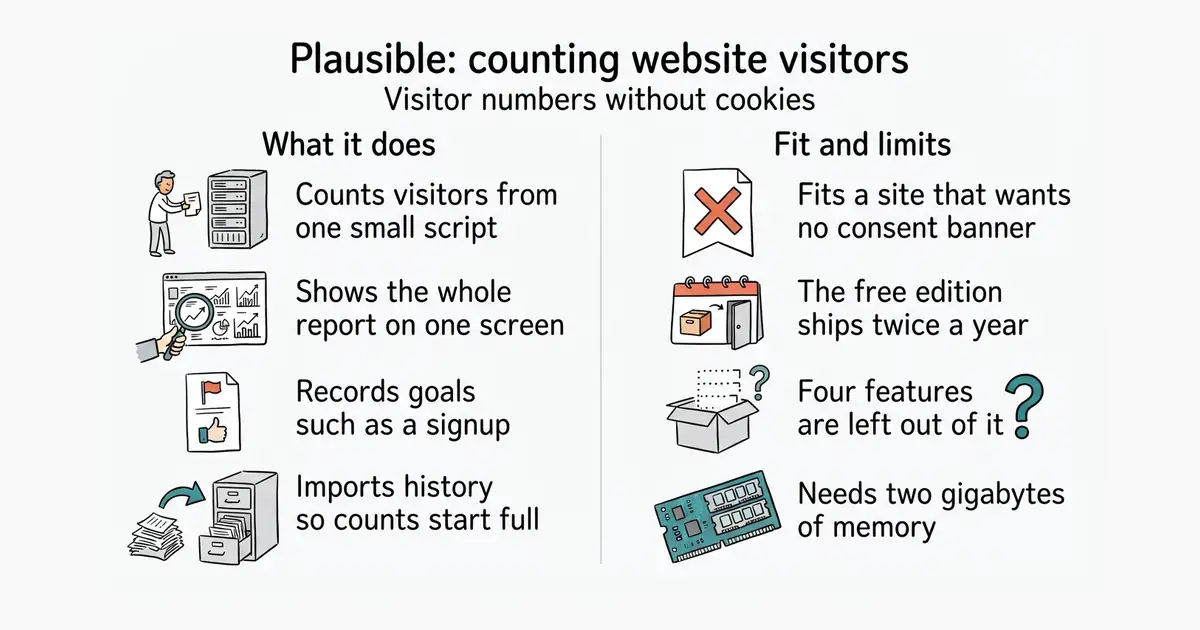
You add a small script to a website and it starts counting. The report shows visitors, pages, where they came from, which country, and which device, all on one screen. You can set goals, which are the actions that matter — a signup, a purchase, a file downloaded — and see how many visitors completed them. It sends a summary by email or to Slack every week or month. It connects to Google Search Console to show search terms, imports history out of Google Analytics so the numbers do not start from zero, and offers two programming interfaces: one to send events and one to read the statistics back out. It is built from Elixir and Phoenix with PostgreSQL and ClickHouse behind it. What the free version does not include is funnels, revenue goals for online shops, single sign-on, and the interface for managing many sites at once. It also has only basic filtering of automated traffic, no Looker Studio connector, and community-only support. The free edition is published as a long-term release twice a year, so new features arrive there later than on the paid service.
Why it matters
Who it suits. Anyone running a website in a country with strict privacy law who wants numbers without a consent banner, and anyone who finds the mainstream analytics screen too large to read. It fits a blog, a documentation site or a product page especially well, because those need visitor counts and page lists and little else. Skip it if you need funnels or revenue tracking, because those are the paid features and no amount of self-hosting unlocks them.
Verdict. The clearest win on this page, and an hour is an honest estimate for a first site. What makes it recommendable is not only the software but the honesty of the split: the project states on its own page exactly which features the free edition lacks and that the paid service is what funds the work. Two releases a year is slower than most self-hosted projects and that is a deliberate choice, not neglect — code landed the day before this was checked. umami-software/umami at 39,351 stars is the closest alternative and keeps everything in one edition with no feature split, which is the reason to prefer it; Editions 1 and 5 covered it. arp242/goatcounter at 6,029 stars is the much smaller option for one site on a small machine, covered in Edition 30. Check the processor before installing: ClickHouse requires SSE 4.2 or NEON, and 2 GB of memory is the stated minimum.
- No cookies and no personal data, so in many places no consent banner is required.
- The whole report is one screen, which makes it readable rather than a product to learn.
- It imports history out of Google Analytics, so the numbers do not start from nothing.
- The free edition leaves out funnels, revenue goals, single sign-on and the multi-site interface.
- It is published twice a year, so a feature announced on the paid service waits months to arrive.
- Needs 2 GB of memory and a processor with SSE 4.2 or NEON, because of the ClickHouse database it stores data in.
 umami-software/umami
The same job with no free-versus-paid feature split, at 39,351 stars, with code on 13 October 2026; Editions 1 and 5 covered it.
Track this in Scout arp242/goatcounter
A much smaller single-program option for one site, at 6,029 stars, with code on 27 September 2026; Edition 30 covered it.
Track this in Scout
git clone -b v3.2.1 --single-branch https://github.com/plausible/community-edition plausible-ce
cd plausible-ce

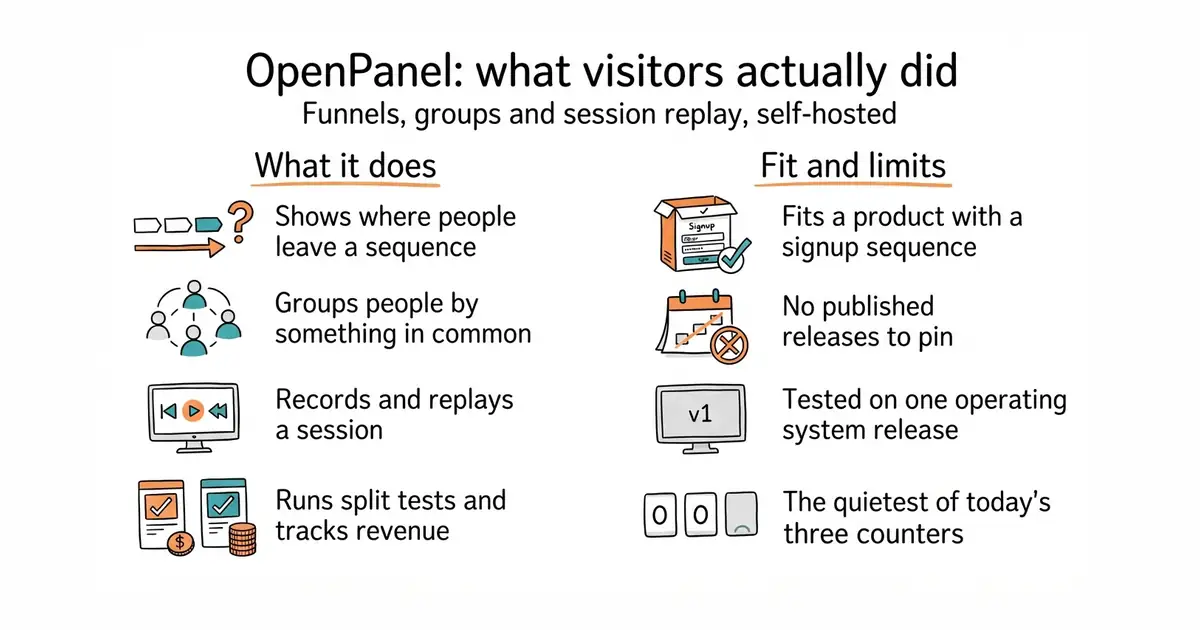
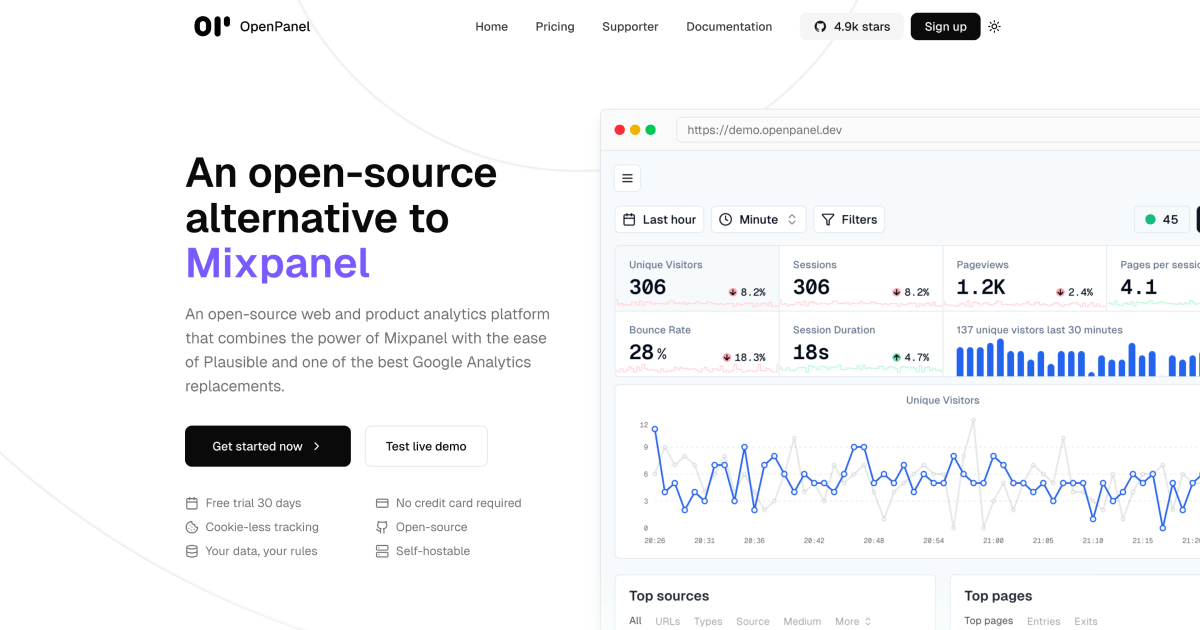
6,228 stars · AGPL-3.0 from the repository sidebar. · NO RELEASES AT ALL. The releases panel shows four tags and no published release, so there is no version to pin an installation to. ungh.cc gives pushedAt 2026-07-06T21:17:47Z, three months before this run and the quietest of today's three analytics projects. · Track this in Scout · Share this tool
Self-hosted web and product analytics with funnels, cohorts and session replay in the free version, and no published releases to pin.
▶Repo detailsthe review · specs · pros & cons · install
What it does
You add its tracking code to a site, a mobile application or a server, and events start arriving. On top of ordinary visitor counts it builds funnels, which show how many people got through each step of a sequence, and cohorts, which group people by something they have in common. It keeps a profile and a session history for each person, and it can record and replay sessions with privacy controls over what is captured. Dashboards update in real time and custom charts can be built from any event. It runs A/B tests and breaks results down by variant, sends notifications when an event or a funnel crosses a threshold, and tracks revenue. Tracking is cookieless. There are software kits for several languages, a programming interface, a connector for assistants, and a Google Search Console integration. What it does not have is a published release: the repository shows four tags and no releases at all, so there is no version to pin an installation to. The project also states no minimum machine size, and says it has only been tested on Ubuntu 24.04.
Why it matters
Who it suits. Anyone who needs to know not just how many people arrived but what they did — a product with a signup sequence, a shop with a checkout, an application where one step loses most people. It is the right choice where a hosted product analytics bill would be the alternative, because the features that usually sit behind that bill are all in the free version here. Skip it if page counts are all you need, because this is a much larger thing to run for the same answer.
Verdict. The most generous free feature set in this comparison, and the least finished packaging. The install is a shell script run from a branch rather than a release, nothing is version-pinned, and no machine size is stated, so treat the first installation as an experiment on a machine you can rebuild. The project is honest about its scope — it describes itself as combining the power of one hosted product with the simplicity of another — and the features are real. PostHog/posthog at 40,256 stars is the much larger comparison with the same ambitions and a far heavier footprint, covered in Edition 11. rybbit-io/rybbit at 13,067 stars sits in between and was covered in Edition 33. If you want the simple end of this page instead, entry 6 above is the one. Note also that code last landed on 6 July 2026, three months before this was checked, which is the quietest of today's three analytics projects.
- Funnels, cohorts, session replay, A/B tests and revenue tracking are all in the free version.
- Tracking is cookieless and works from a web page, a mobile application or a server.
- A setup script installs Docker and Node if they are missing, which shortens a first install.
- No published releases at all, so an installation tracks a branch and cannot be pinned to a version.
- No minimum machine size is stated, and it has only been tested on one Linux release.
- The quietest of today's analytics projects: code last landed on 6 July 2026.
 PostHog/posthog
The same ambitions at much larger scale, at 40,256 stars, with code on 13 October 2026; Edition 11 covered it.
Track this in Scout rybbit-io/rybbit
A middle option between simple counting and full product analytics, at 13,067 stars, with code on 27 September 2026; Edition 33 covered it.
Track this in Scout plausible/analytics
Entry 6 in this same edition, the simpler end of the same job, at 29,373 stars.
Track this in Scout
git clone -b self-hosting https://github.com/Openpanel-dev/openpanel
cd openpanel/self-hosting
./setup
./start

20,089 stars · AGPL-3.0 from the repository sidebar, linked as LICENSE.md. · v2.16.3, the release page reading '09 Sep 21:34' with no year and taken as 2026-09-09 because that date is in the past and sits before the recorded code date. ungh.cc gives pushedAt 2026-10-13T01:31:47Z, the morning of the run. · Track this in Scout · Share this tool
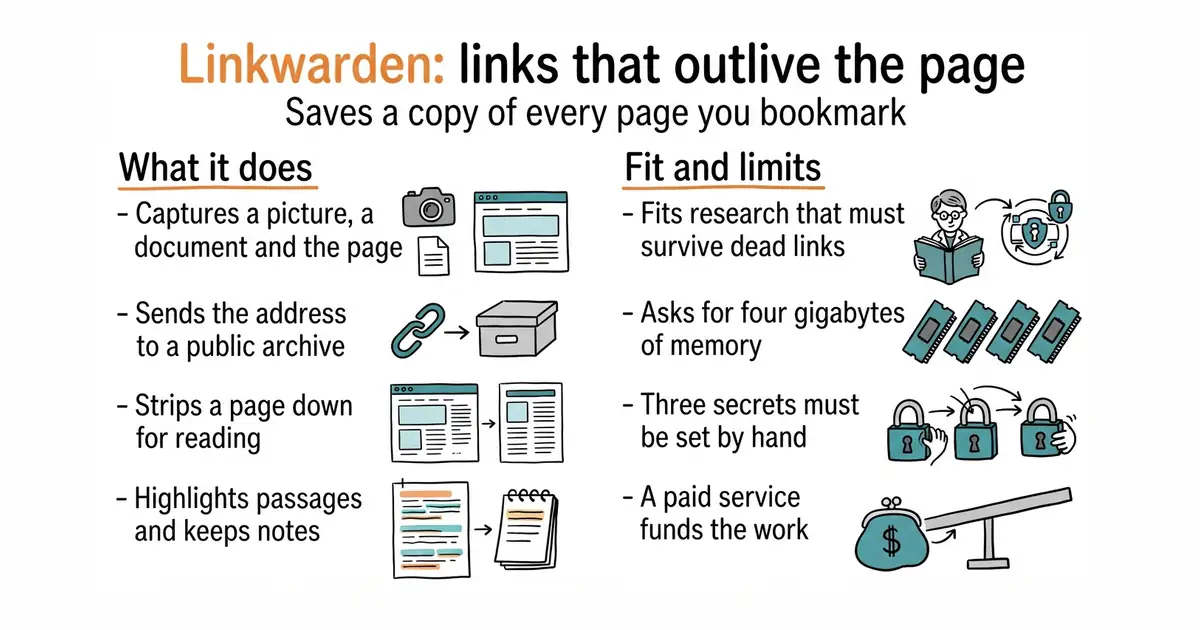
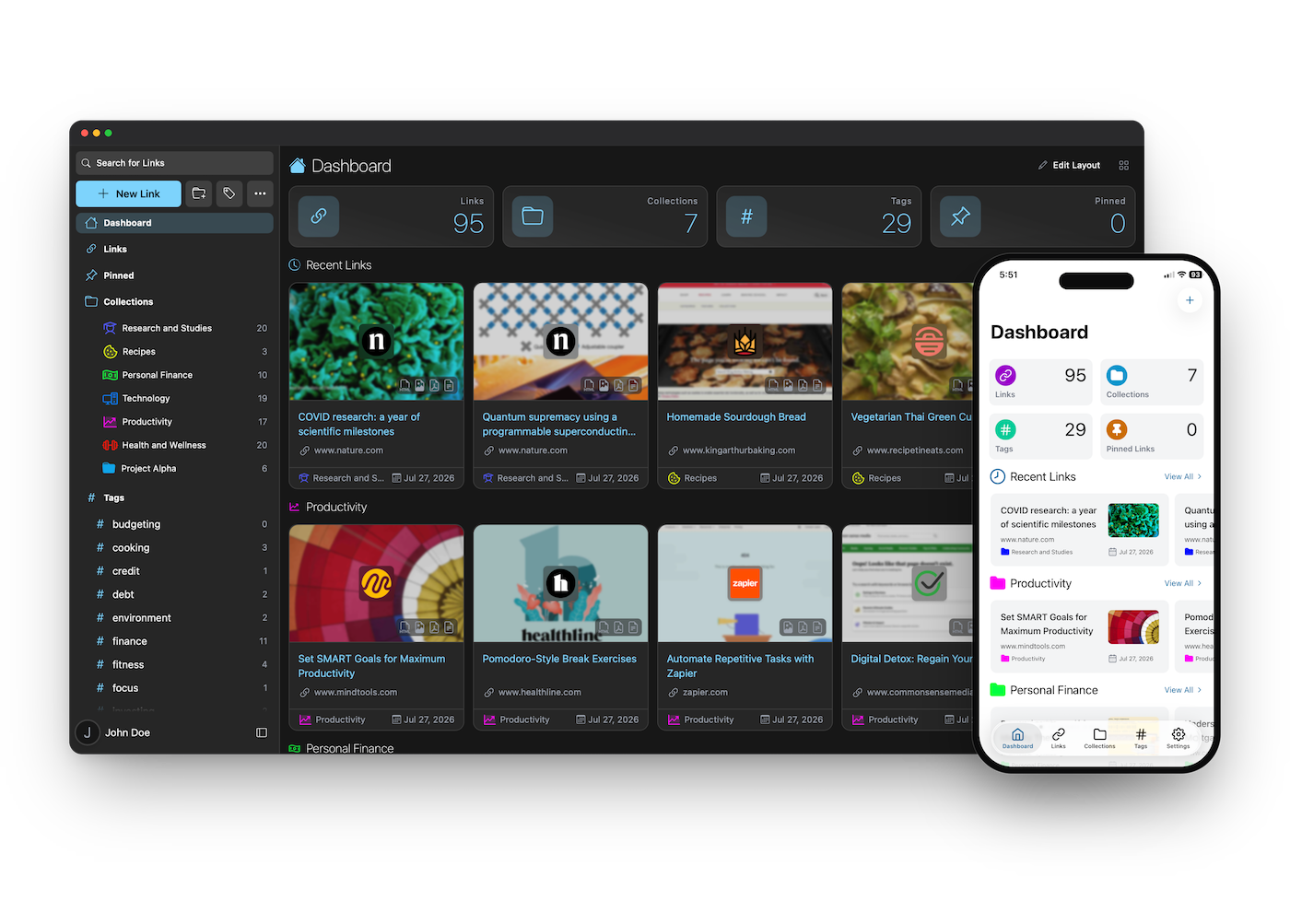
A self-hosted bookmark manager that captures a screenshot, a PDF and a single-file copy of every page it saves, so the text survives a dead link.
▶Repo detailsthe review · specs · pros & cons · install
What it does
You save a link from a browser extension, a phone application or the web interface. It immediately captures three copies of the page: a screenshot, a PDF, and a single self-contained HTML file. It can also submit the address to the Wayback Machine, the public internet archive, as a fourth copy. Links go into collections and carry tags, and a local model can suggest tags if you switch that on. A reader view strips the page down to its text, and you can highlight passages and write notes against them. Collections can be shared publicly or worked on by several people, and there are iOS and Android applications, a browser extension and a programming interface. Single sign-on is available to self-hosted installations and to paying enterprise customers only. What it does not do is run on its own: it needs PostgreSQL for the data and Meilisearch for the search, both of which come up in the same Docker Compose file. The newest release is v2.16.3, from 9 September 2026, and code landed this morning.
Why it matters
Who it suits. Anyone who does research in the browser and keeps finding that a link saved last year no longer works — a writer collecting sources, a developer keeping reference pages, anybody building a reading list that has to survive. The three-copy capture is the specific reason to choose this over a simple bookmark list, and the annotation view is the reason to keep using it. Skip it if a browser's own bookmarks are enough, because this is a program to look after rather than a list to keep.
Verdict. The most valuable thing on this page, and the one worth the afternoon. Link rot is a problem everybody has and almost nobody solves, and this solves it by default rather than as an option you have to find. Size the machine honestly first: the project asks for 4 GB of memory, any two-core processor, and about 1.5 GB of disk for the image before any saved pages, and three separate secrets have to be set and must all differ. sissbruecker/linkding at 11,100 stars is the lighter alternative and the right choice if you want bookmarks with tags and little else — it will run on a far smaller machine. Kovah/LinkAce at 3,343 stars sits in between, with link checking that tells you when a saved page has died. One thing to note about the project's shape: a paid cloud service funds the work, which is stated plainly on the page, so expect the hosted offering to lead.
- Three copies of every page are captured automatically — screenshot, PDF and a single HTML file.
- A reader view with highlights and notes, so a saved page becomes something you can work with.
- Real mobile applications and a browser extension, not just a web page.
- Asks for 4 GB of memory and brings both PostgreSQL and a search engine, so it is not a small install.
- Three secrets must be set by hand before the first start, and all three must differ.
- The paid cloud service is the project's funding, and single sign-on is limited to self-hosted and enterprise users.
- sissbruecker/linkding
A deliberately minimal bookmark manager that runs on a very small machine, at 11,100 stars, under an MIT licence.
Track this in Scout - Kovah/LinkAce
A self-hosted link archive with checking that reports dead pages, at 3,343 stars, with code on 12 October 2026.
Track this in Scout
mkdir linkwarden && cd linkwarden
curl -O https://raw.githubusercontent.com/linkwarden/linkwarden/refs/heads/main/docker-compose.yml
curl -L https://raw.githubusercontent.com/linkwarden/linkwarden/refs/heads/main/.env.sample -o ".env"
nano .env
docker compose up


52,560 stars · MIT from the repository sidebar. · NO RELEASES. The repository links a CHANGELOG.md and publishes no tagged release, so an install tracks whatever is in the repository that day. ungh.cc gives createdAt 2026-04-16T18:01:16Z and pushedAt 2026-10-12T23:28:49Z. · Track this in Scout · Share this tool
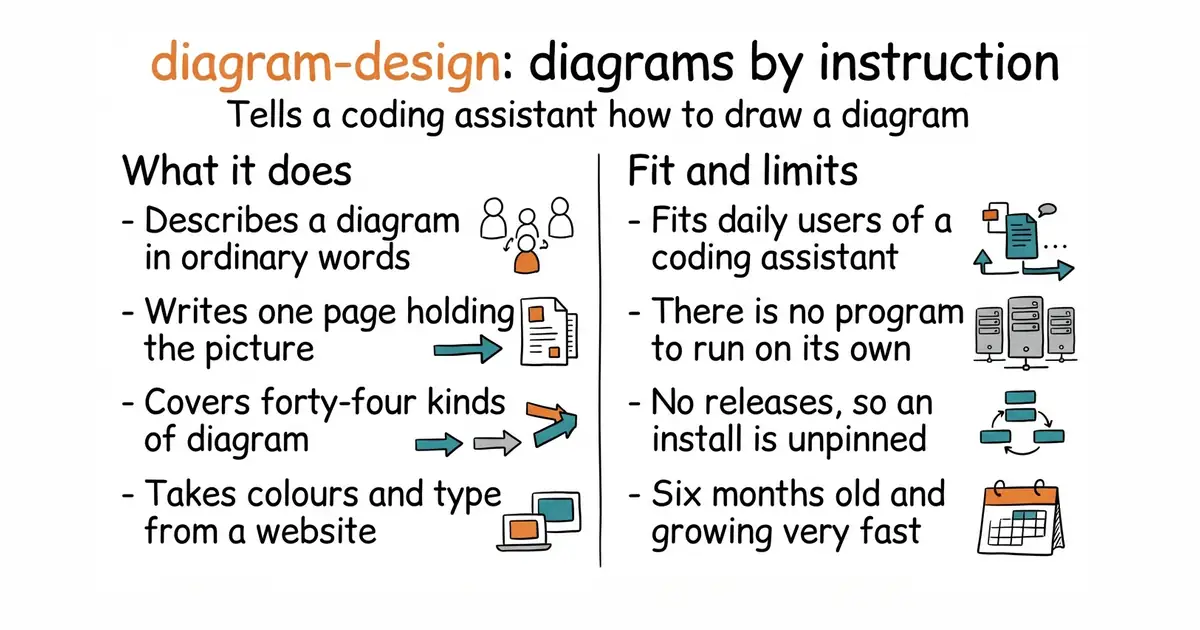
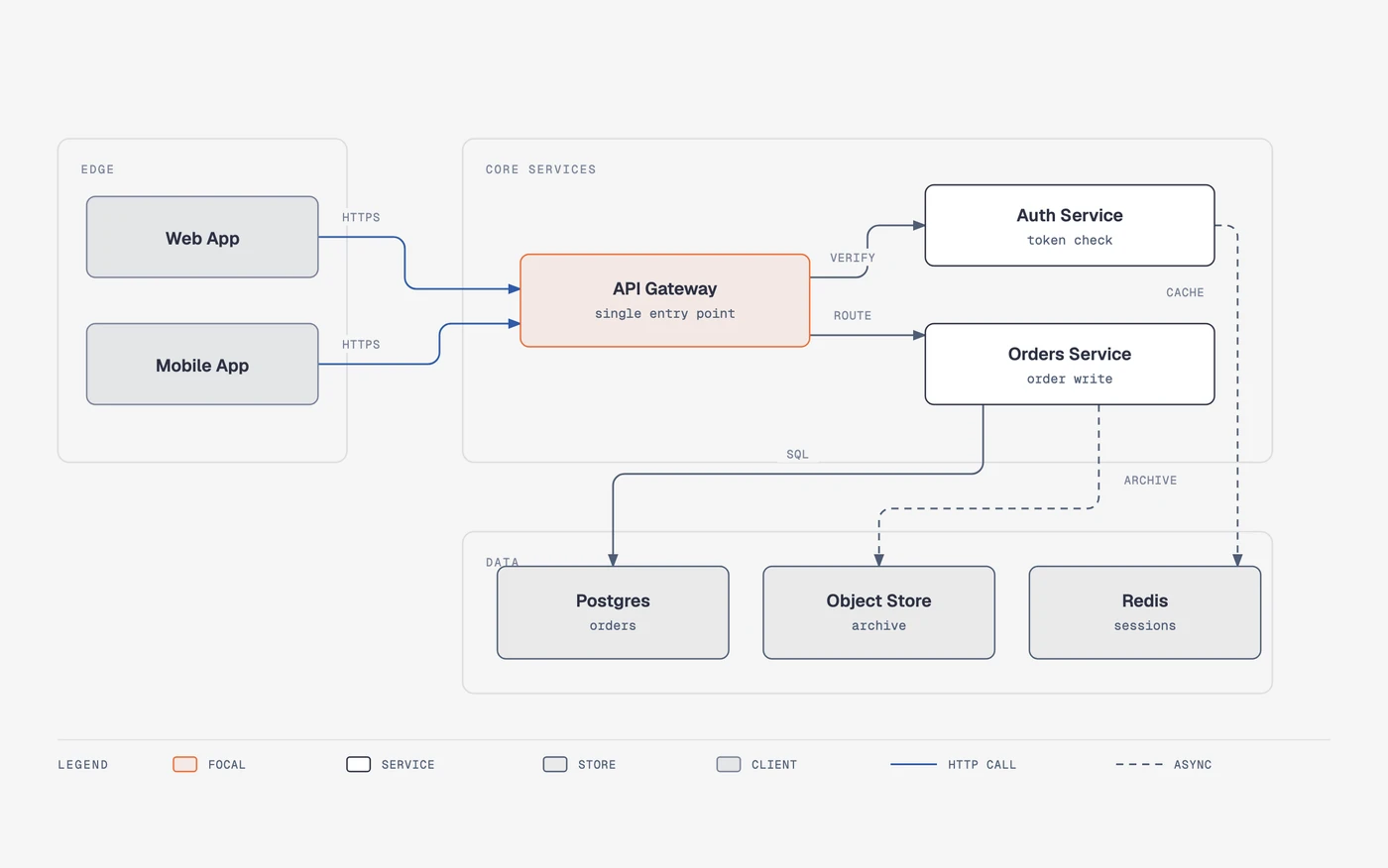
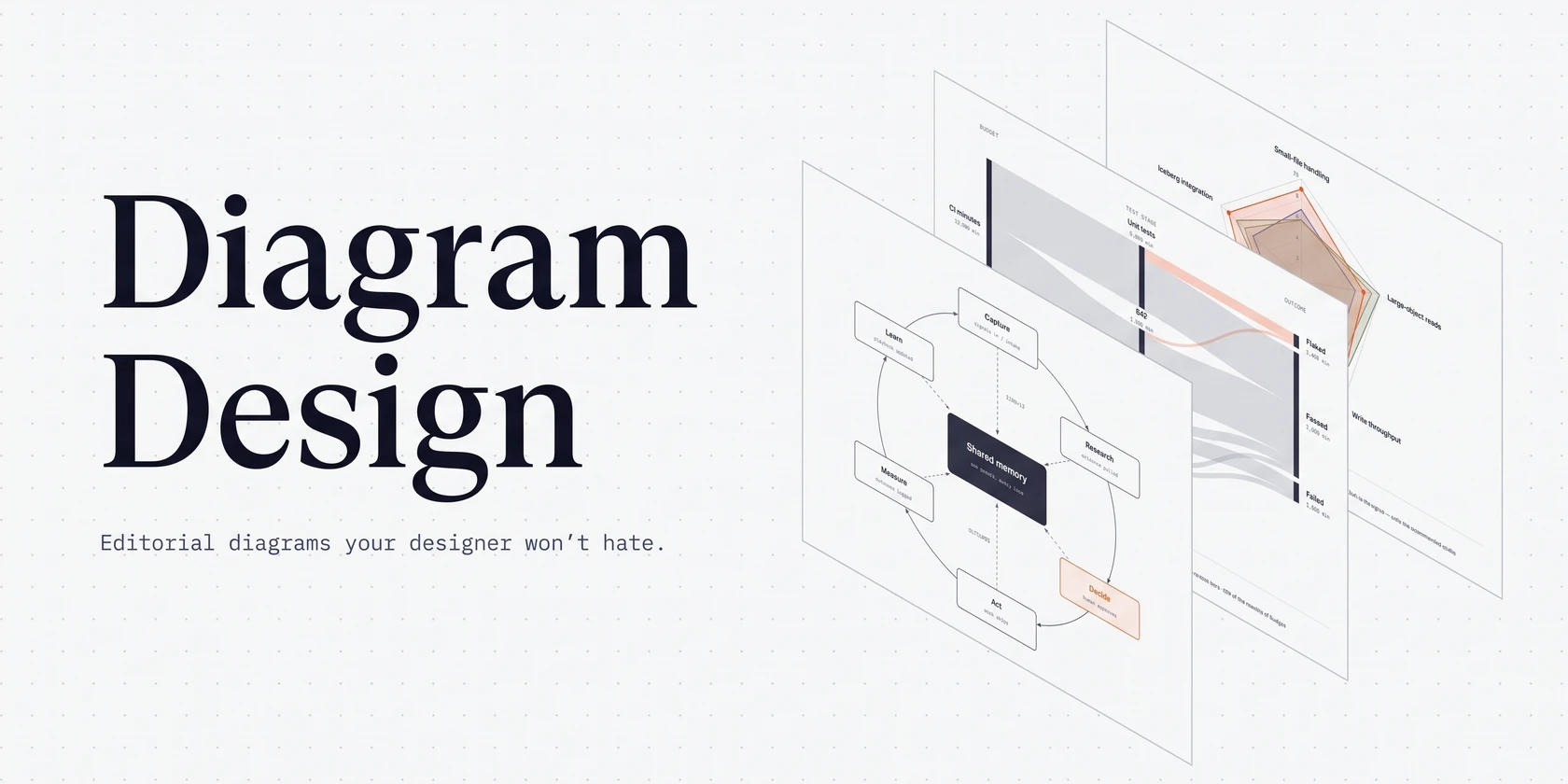
An agent skill that makes a coding assistant produce one self-contained HTML and SVG diagram from a description in ordinary words.
▶Repo detailsthe review · specs · pros & cons · install
What it does
You install it into a coding assistant with one command, then describe the diagram in plain language. The assistant writes one HTML file containing the picture as SVG, a drawing format that stays sharp at any size, and that file opens in any browser with nothing else needed. It covers 44 diagram types, each in a light version, a dark version and a fuller editorial version. It can be pointed at a website and take its colours and typefaces from there, so the picture matches. It can also read an existing draw.io, Mermaid or Excalidraw file and redraw it in the same style. Output can be exported as SVG or PNG. It supports several assistants: Claude Code, Codex, GitHub Copilot, Cursor, Factory Droid, Pi, Kiro and OpenCode, each with its own install command. The repository was created on 16 April 2026 and has 52,560 stars. What it does not include is a program. There is nothing to run on its own, there are no releases to pin a version to, and the quality of the picture depends on the assistant reading the instructions.
Why it matters
Who it suits. Anyone who uses a coding assistant daily and needs diagrams for documentation, a README or a slide — architecture pictures, sequence diagrams, state machines. It fits especially well where the diagram has to match a brand, because matching colours and typefaces by hand is the slow part. Skip it if you do not use one of the supported assistants, because there is nothing here that works without one.
Verdict. Worth installing in the five minutes it takes if an assistant is already part of the working day, and worth nothing at all otherwise. The star count is the striking fact — created in April 2026 and the most-starred project in this edition — but a star records that somebody liked a repository once, and this one has no releases and no version history to judge instead. The honest comparison is mermaid-js/mermaid at 90,620 stars, which is a real library: you write a short text description and it draws the diagram, with no assistant involved and a result that renders inside Markdown on GitHub. Choose Mermaid when the diagram should live in the document as text. Choose this when the diagram has to look designed and an assistant is doing the writing. excalidraw/excalidraw at 133,718 stars remains the answer when a person wants to draw by hand, and Edition 25 covered it.
- One file of HTML and SVG per diagram, which opens anywhere and needs no viewer.
- It can take colours and typefaces from a website, so pictures match a brand without manual work.
- It redraws existing draw.io, Mermaid and Excalidraw files rather than starting from nothing.
- Not a program: without one of the supported assistants there is nothing to use.
- No releases at all, so an install tracks whatever is in the repository that day.
- Six months old and growing very fast, so the instructions it ships will keep changing under you.
 mermaid-js/mermaid
Draws diagrams from a short text description with no assistant involved, at 90,620 stars, with code on 12 October 2026.
Track this in Scout excalidraw/excalidraw
A drawing board for diagrams made by hand, at 133,718 stars, with code on 12 October 2026; Edition 25 covered it.
Track this in Scout
npx skills add cathrynlavery/diagram-design


66,977 stars · MIT from the repository sidebar. · v1.17.0, the release page reading '01 Oct 22:17' with no year and taken as 2026-10-01 because that date is in the past. ungh.cc gives pushedAt 2026-10-12T15:45:36Z. · Track this in Scout · Share this tool
One program that reads documents you add and answers questions about them, with the model running locally or hosted.
▶Repo detailsthe review · specs · pros & cons · install
What it does
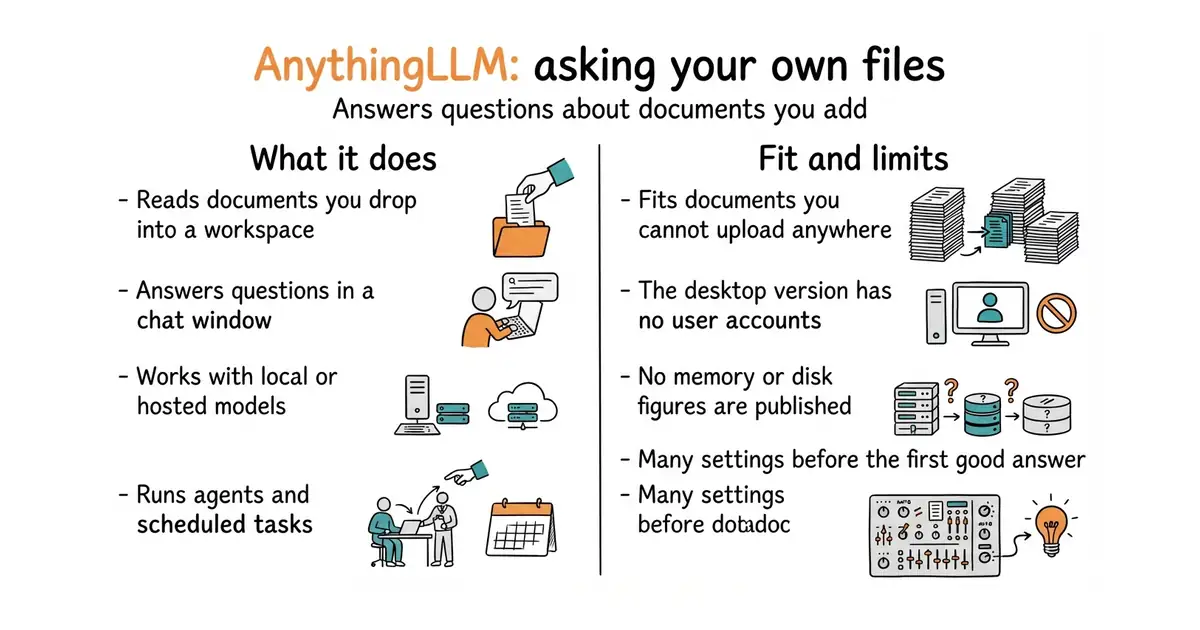
You install the desktop application or run it in Docker. You create a workspace and add documents to it — PDF, plain text, Word files and more. It splits each document, turns the pieces into number lists called embeddings, and stores them so a question can find the relevant passages. You then chat with a model, and it answers using those passages. The model can be local, through llama.cpp-compatible files, Ollama, LM Studio or LocalAI, or hosted, through OpenAI, Anthropic, AWS Bedrock, Gemini, Mistral and others. The store for embeddings is LanceDB by default, with PGVector, Pinecone, Chroma, Weaviate and Qdrant as alternatives. It also runs agents that carry out multi-step tasks, connects to tools over MCP, runs scheduled tasks, has a programming interface, and supports speech. The newest release is v1.17.0, from 1 October 2026. What the desktop version does not have is multiple users with separate permissions, or the chat widget you embed in a website. Both exist only in the Docker version.
Why it matters
Who it suits. Anyone with a pile of documents they want to ask questions of and a reason not to upload them — contracts, research papers, internal notes, anything under a confidentiality agreement. It also suits a small team, because the Docker version gives each person their own account and controls what each can see. Skip it if one hosted assistant already handles your documents and the privacy is not a concern, because this is more to run for the same answers.
Verdict. The most complete single program in this space and the fastest route from nothing to asking questions of your own files. The desktop application is genuinely a double-click install, which almost nothing else here can claim. Two things to decide up front. First, pick Docker over the desktop version if more than one person will use it, because the desktop version has no accounts. Second, a local model needs real memory, and the project gives no figures, so expect to try one and find out. open-webui/open-webui at 154,337 stars is the larger alternative, covered in Edition 23, and is the better choice when chatting with models is the main job and documents are secondary. janhq/jan at 44,930 stars is the simpler desktop-only option when you want offline chat and nothing else.
- A desktop install for Mac, Windows and Linux, which is as close to one click as this gets.
- Works with local models or hosted ones, and six different stores for embeddings.
- Multiple users with separate permissions, when run in Docker, plus an embeddable chat widget.
- Multiple users and the chat widget are missing from the desktop version, which is the version most people install first.
- No memory, disk or processor figures are published, so a machine cannot be sized from the documentation.
- The long list of supported providers means a lot of settings to understand before the first good answer.
 open-webui/open-webui
A larger interface built around chatting with models, at 154,337 stars, with code on 11 October 2026; Edition 23 covered it.
Track this in Scout- janhq/jan
A desktop application for running models entirely offline, at 44,930 stars, with code on 13 October 2026; simpler, with no document workspaces.
Track this in Scout
git clone https://github.com/Mintplex-Labs/anything-llm.git
cd anything-llm/docker
cp .env.example .env
docker compose up -d


220 stars · ISC · v1.3.37 (2026-07-06) · Track this in Scout · Share this tool
Agentic CLI that turns one recording into shorts, captions, a blog post and the social copy.
▶Repo detailsthe review · specs · pros & cons · install
What it does
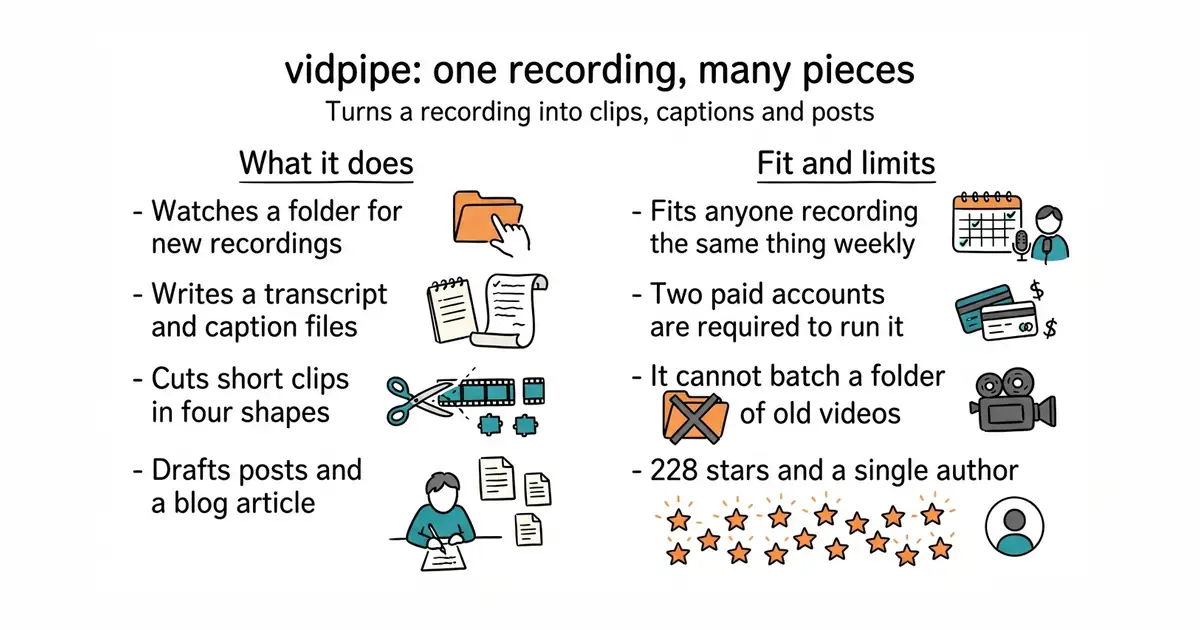
You install it and either hand it one file or point it at a folder to watch. It transcribes the audio with Whisper, a speech-to-text model, and produces a word-by-word transcript plus caption files in SRT, VTT and ASS formats. It removes silences, capped at 20 per cent of the running time. It then cuts short clips in four shapes — wide, tall for phones, square-ish for feeds, and square — and medium clips of one to three minutes. It writes chapter files in four formats, including YouTube timestamps, and a Markdown summary. Finally it drafts posts for TikTok, YouTube, Instagram, LinkedIn and X, plus a blog post. An optional part stores video ideas as GitHub issues. It needs Node.js 20 or newer and FFmpeg 6.0 or newer, a long-standing program that converts audio and video; FFmpeg comes bundled on common platforms. What it does not do yet is process a folder of existing videos in one go, transcribe anything other than English, use templates you write yourself, or make thumbnails. All four are unticked items on its own list.
Why it matters
Who it suits. Anyone who records the same kind of video repeatedly and spends more time on the packaging than the recording — a tutorial series, a weekly update, a conference talk that has to become five clips. The folder-watching is the part that changes the habit: the editing happens while you make tea rather than as a task you schedule. Skip it if you edit creatively, because this makes mechanical cuts and will not make an interesting film out of a dull one.
Verdict. The most surprising small project in this edition, and the cost is the thing to weigh. It needs an OpenAI key for the transcription and a GitHub Copilot subscription for everything written by an agent, which means the shorts, the posts, the summaries and the blog post. That is two paid accounts for a free program, and the entry would be dishonest without saying so. The newest version is 1.3.37, from 6 July 2026, and code landed on 7 September 2026, so it is alive but not busy — 228 stars and one author. For the editing half alone with no accounts at all, WyattBlue/auto-editor at 5,488 stars cuts silence out of a video and nothing else, and does it very well. For transcription alone, ggml-org/whisper.cpp at 54,300 stars runs the same model on your own machine with no key.
- One command turns a recording into captions, four shapes of clip, chapters and draft posts.
- Watching a folder means the work happens without anybody starting it.
- Caption and chapter output in several formats each, including YouTube timestamps.
- Needs an OpenAI key and a GitHub Copilot subscription, so a free program carries two running bills.
- Cannot yet process a folder of existing videos in one pass, and transcribes English only.
- 228 stars and a single author, so this is a one-person project to depend on.
 WyattBlue/auto-editor
Removes silence from a video and nothing else, with no paid account needed, at 5,488 stars, with code on 12 October 2026.
Track this in Scout ggml-org/whisper.cpp
Runs the same speech-to-text model on your own machine, at 54,300 stars, under an MIT licence.
Track this in Scout
npm install -g vidpipe
vidpipe --doctor

4,737 stars · LGPL-3.0 from the repository sidebar. A FILE NAMED COMM-LICENSE ALSO SITS IN THE REPOSITORY ROOT and the page does not say what it covers; the edition names it as something to read before building a product on this. · v4.2.1, the release page reading 'October 7 09:45' with no year and taken as 2026-10-07 because that date is in the past and sits just before the recorded code date. ungh.cc gives pushedAt 2026-10-09T19:22:54Z. · Track this in Scout · Share this tool
A distributed, fault-tolerant job scheduler with a web interface, where no single machine stopping breaks the schedule.
▶Repo detailsthe review · specs · pros & cons · install
What it does
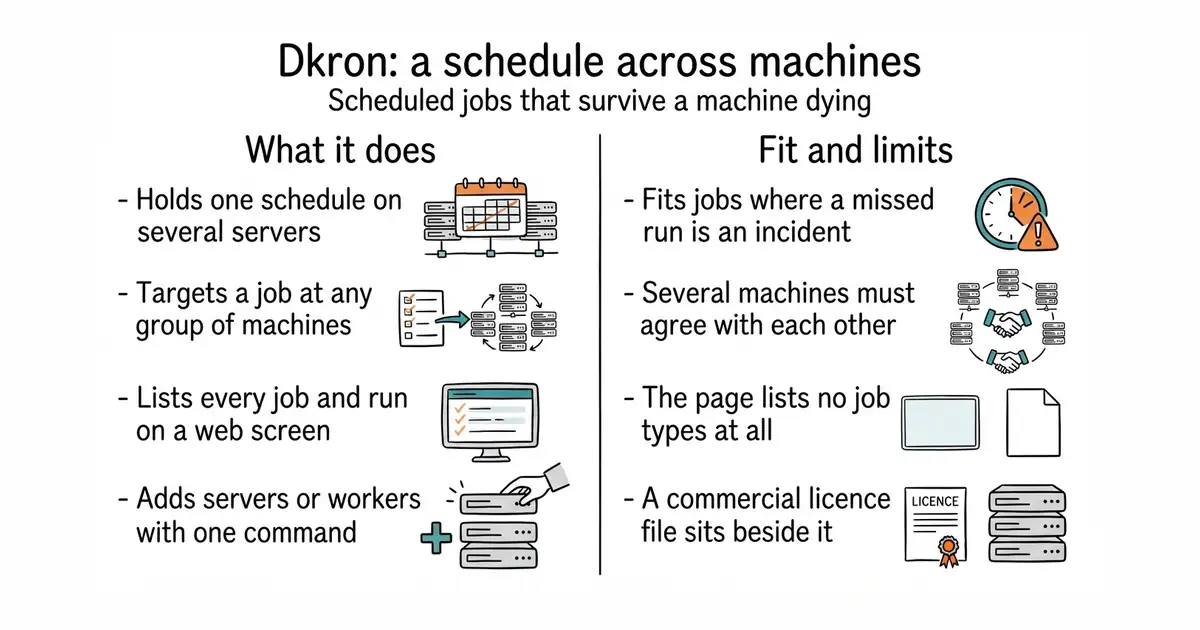
You run it as a cluster: server processes that hold the schedule and agent processes that do the work. The servers agree on the schedule using Raft, a protocol for keeping several machines consistent, and find each other using Serf, which spreads membership information between them by gossip. Each job can be pointed at any combination of machines, so a job can run on one, on all, or on everything with a particular label. A web screen built as a single-page application lists the jobs and their runs at /ui. Scaling is a single command: more server processes or more agents. It is written in Go and runs on Linux, macOS and Windows. The newest release is v4.2.1, from 7 October 2026. What the repository page does not do is explain the job types: it describes running scheduled commands on the cluster and leaves the list of executors to the documentation site. There is also a file named COMM-LICENSE in the repository alongside the LGPL-3.0 licence, and the page does not say what it covers.
Why it matters
Who it suits. Anyone whose scheduled jobs matter enough that a dead machine is an incident — nightly database dumps, billing runs, data imports that something downstream depends on. It is also the right answer when the jobs have to run on many machines at once, because targeting a group is built in rather than scripted. Skip it if one machine running one schedule has never let you down, because the clustering is the entire cost here and the entire benefit.
Verdict. A mature answer to a narrow problem, maintained since 2015, and the fourth-largest cost is understanding what you have built. Three machines agreeing about a schedule is more moving parts than most small setups need, and the honest question is whether a missed job would actually hurt. jhuckaby/Cronicle at 5,800 stars is the friendlier alternative with a much better interface and a single primary server, and Edition 45 covered it — note that its own page now announces a successor project while Cronicle itself continues to get bug and security fixes. kestra-io/kestra at 28,000 stars is the choice when the jobs form a pipeline with dependencies rather than a list of schedules, also covered in Edition 45. Two things to check before adopting it: the repository page gives no package-manager commands, so installation details live on the project's own site, and the COMM-LICENSE file sitting next to an LGPL-3.0 licence is worth reading if the plan is to build a product on this.
- No single machine whose failure stops the schedule, which is the whole point of it.
- A job can target one machine, all machines, or a labelled group, without scripting it.
- Scaling servers or agents is one command, and a web screen lists every job and run.
- Several machines that have to agree with each other, which is real operational work.
- The repository page lists no executors and no package-manager commands, so the documentation site is unavoidable.
- A
COMM-LICENSEfile sits beside the LGPL-3.0 licence and the page does not explain what it covers.
 jhuckaby/Cronicle
The same job with a friendlier interface and one primary server, at 5,800 stars, under an MIT licence; Edition 45 covered it, and its page now points at a successor project.
Track this in Scout kestra-io/kestra
Orchestration for jobs that depend on each other rather than a list of schedules, at 28,000 stars, under Apache-2.0; Edition 45 covered it.
Track this in Scout
git clone https://github.com/dkron-io/dkron.git
cd dkron
docker compose up -d

Checked, and left out
Nothing to show for this edition. Recording the repositories that were checked and rejected began with Edition No. 4, and every edition from there on has the list.
Know a repository we should check?
Coming tomorrow