2,183 stars · MIT · no GitHub releases at all — a determination, not a gap: ungh.cc/repos/azimuttapp/azimutt/releases/latest returns 404. The npm package azimutt is at 0.1.39 and carries no publish date. Code pushed 25 August 2026, proved via ungh.cc · Track this in Scout
It draws the real shape of a database so you can explore it instead of guessing.
▶Repo detailsthe review · specs · pros & cons · install
What it is
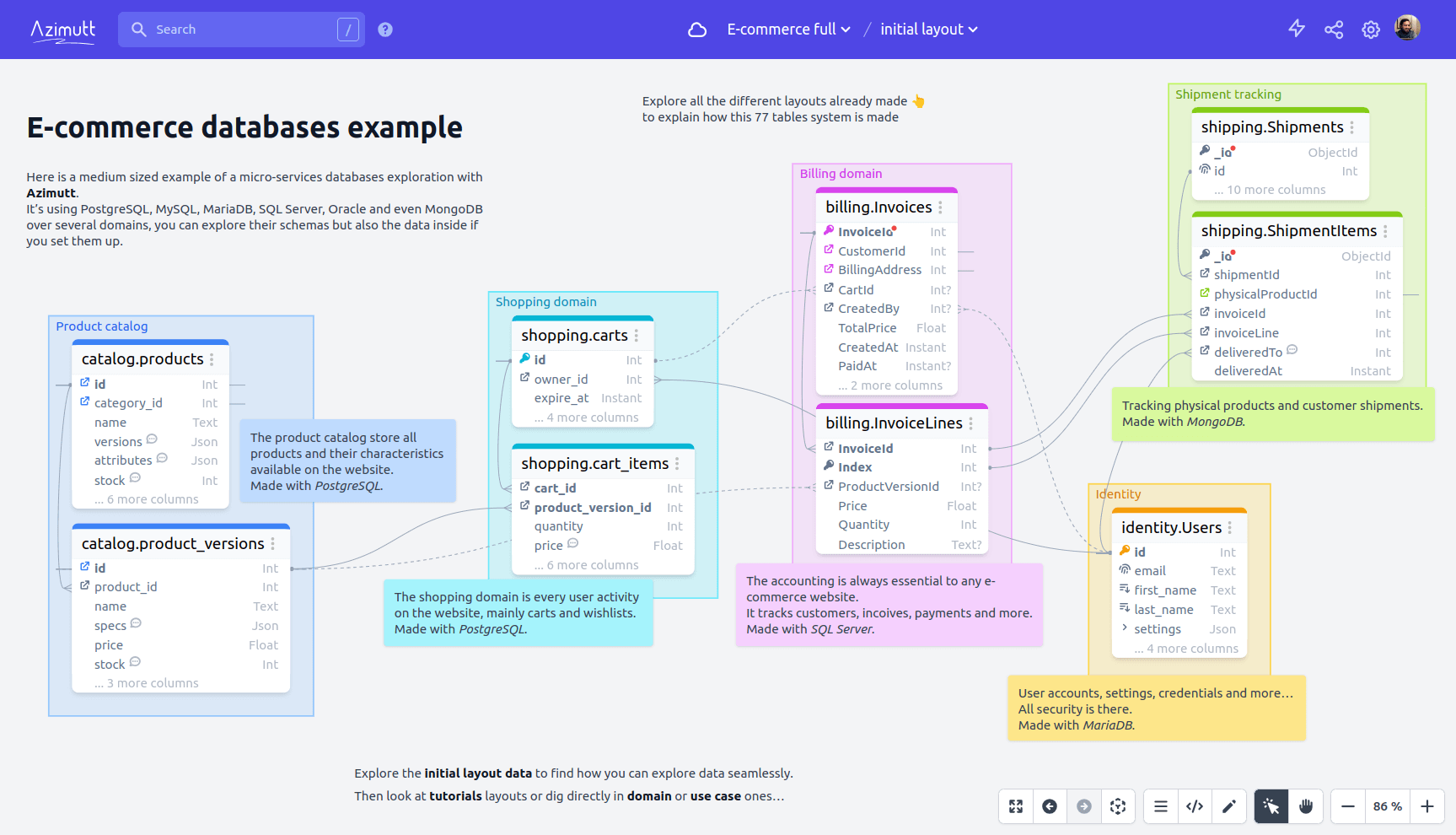
A web application that reads the structure of a database — PostgreSQL, MySQL, SQL Server, MongoDB, Couchbase and several others — and lays it out as a diagram you can search and filter. It also finds problems by itself: missing indexes, inconsistent naming, tables nobody points at.
What it is good for. Anyone who has inherited a database, or written one and then left it alone for two years. The usual alternative is reading the schema file, which shows the tables but not how they relate in practice. It is also the fastest way to write down what a database means, because you can attach notes to tables and columns and keep them beside the thing they describe.
- It reads only. There is no command in it that can change data.
- It handles a database with hundreds of tables, which is where hand-drawn diagrams give up.
- The hosted copy needs nothing installed, and a small local program lets it reach a database that is not on the public internet.
- It publishes no GitHub releases at all, so there is no version number to pin and no release page to watch. That is a deliberate choice by the project, not a sign of neglect: its code was last changed on 25 August 2026.
- Letting a hosted web application read a database means giving it credentials. Read the self-hosting instructions first if that is not acceptable.
- The diagram is a picture of the structure, not of the data. It will not tell you a column is full of nulls.
- drawdb-io/drawdb
It also draws database diagrams in a browser, but it is for designing a schema from nothing rather than exploring one that already exists.
Track this in Scout - chartdb/chartdb
It also builds a diagram from a live database with a single query, but it stays a diagram editor, where this one adds search, notes and schema analysis.
Track this in Scout - schemaspy/schemaspy
It also documents a database automatically, but it produces static HTML pages from a Java command rather than something you explore interactively.
Track this in Scout
# simplest: open https://azimutt.app in a browser
# to reach a database that is not on the public internet,
# run the small local gateway first:
npx azimutt@latest gateway
# to host the whole thing yourself:
docker run -p 4000:4000 ghcr.io/azimuttapp/azimutt:latest