11.1k stars · MIT · v1.47.0 (2026-09-13), read from /releases/latest; '13 Sep' with no year, and that date has already passed this year · Track this in Scout
A self-hosted bookmark manager that installs with one Docker command and exports in the standard browser format.
▶Repo detailsthe review · specs · pros & cons · install
What it does
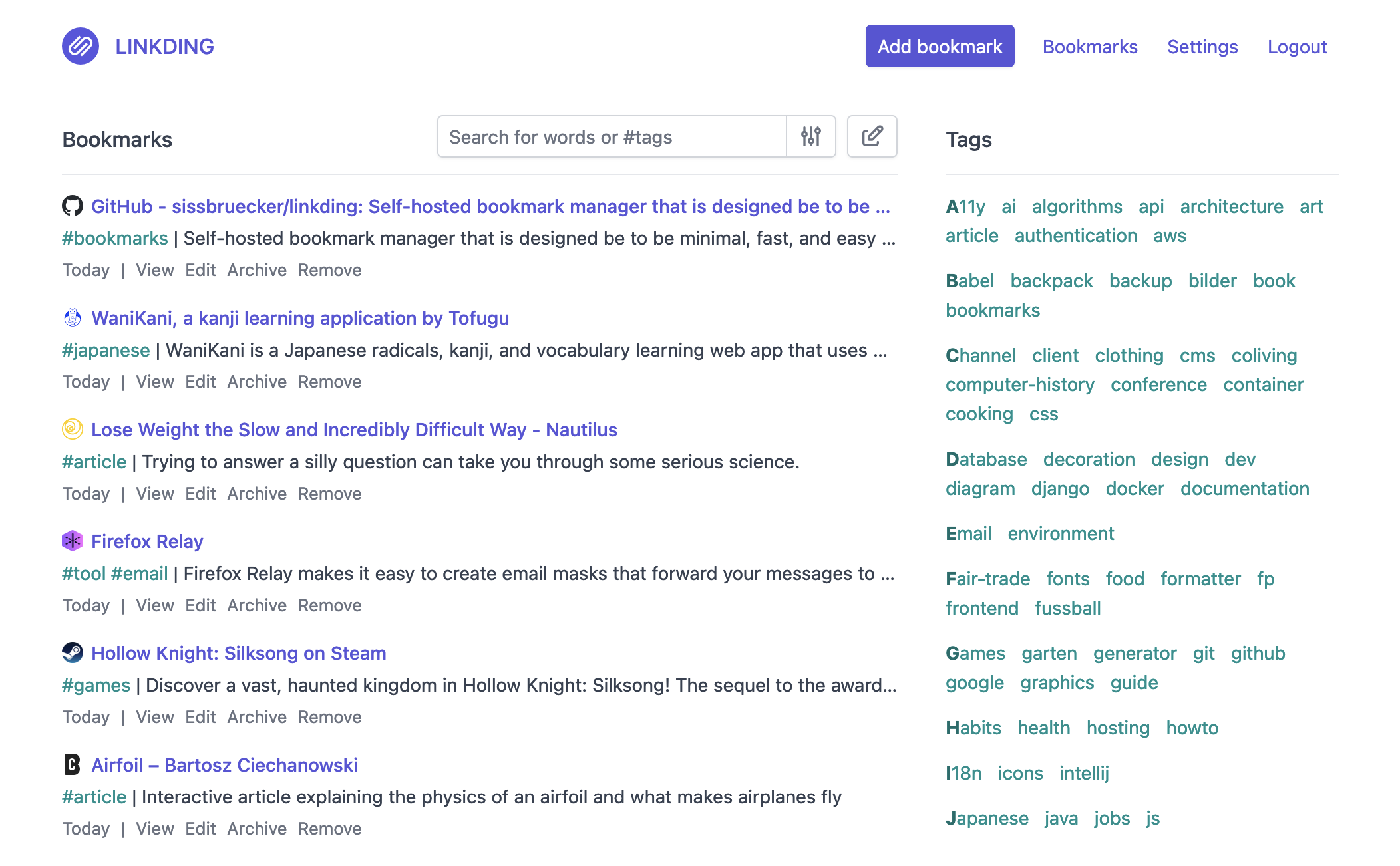
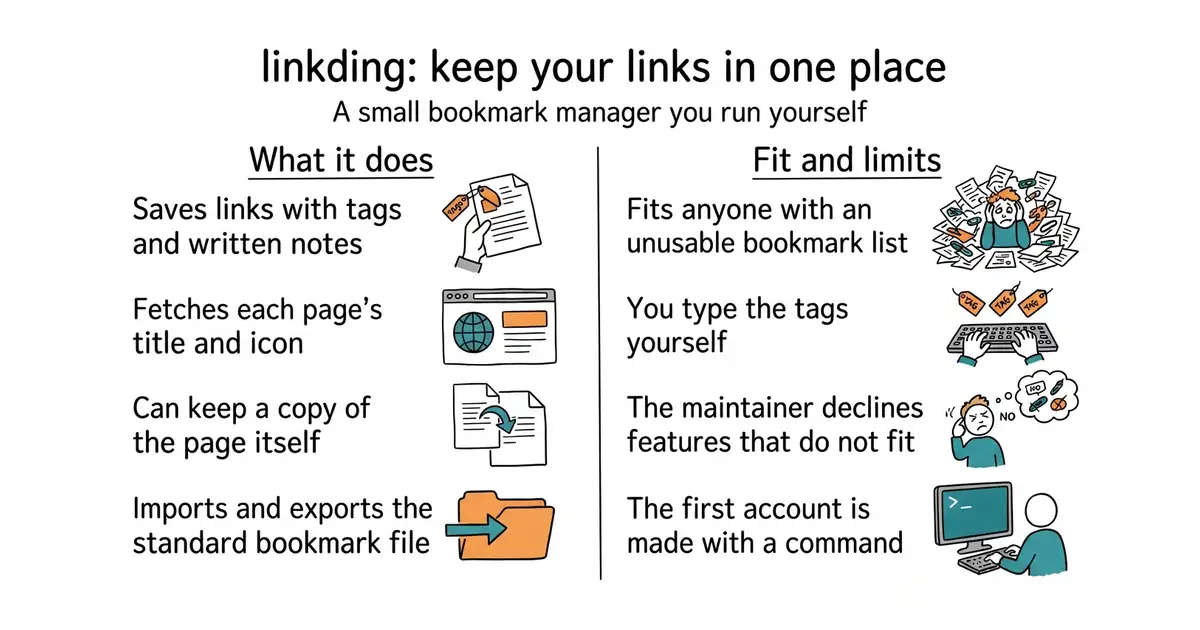
You run one container — a sealed box holding the program and everything it needs — and get a bookmark manager at a web address of your own. It fetches each page's title and icon automatically, takes tags and Markdown notes, does bulk editing, and has a read-it-later list. It can archive the page itself, so a link that dies still has readable content behind it. You can share bookmarks with other users or with guests. It imports and exports the Netscape HTML bookmark format every browser understands, installs as a phone app through the browser, has browser extensions, offers a REST interface for scripts, and supports single sign-on through OIDC or an authenticating proxy. The newest release is v1.47.0, from 13 September 2026, under the MIT licence. Its own feature list includes no automatic tagging by a language model, which is the main thing some newer tools add; and the maintainer says plainly that pull requests for features outside the project's goals will be declined.
Why it matters
Who it suits. Anyone with a browser bookmark list that has become unusable, and anyone whose read-it-later service has changed its terms once too often. The export format means you can leave again, which is the test worth applying to anything that holds your own data. Skip it if you want a research tool that summarises and tags pages on its own.
Verdict. Ten minutes, and one of the few tools in this edition that a non-technical person can run and enjoy. It is deliberately small and that is its strength: it starts instantly, it does not need a database server, and nothing about it will surprise you in a year. karakeep-app/karakeep at 29.7k stars and AGPL-3.0, which was Edition 19, is the one to compare it against if automatic tagging matters; linkwarden/linkwarden at 19.7k stars and AGPL-3.0, Edition 49, is stronger on preserving whole pages as screenshots and PDFs. Linkding wins on how little it asks of the machine.
- One Docker command, a tiny footprint, and it starts in seconds.
- Imports and exports the standard browser bookmark format, so leaving is as easy as arriving.
- MIT, with a release last month and browser extensions and a phone-installable interface already built.
- No automatic tagging or summarising; the labels are yours to type.
- The maintainer declines features that do not fit the project, so it will stay small whether or not you want more.
- You create the first user with a command in the container, which is one awkward step for a beginner.
 karakeep-app/karakeep
Saves links, notes and images with automatic tagging by a model and full-text search, AGPL-3.0, much larger to run.
Track this in Scout linkwarden/linkwarden
Saving and annotating pages with preserved screenshots and PDFs, AGPL-3.0, aimed at keeping the content rather than the address.
Track this in Scout go-shiori/shiori
A single-binary bookmark manager in Go with both a command line and a web interface, MIT, the lightest of the four.
Track this in Scout
docker run --name linkding -p 9090:9090 -v /absolute/path/to/data:/etc/linkding/data -d sissbruecker/linkding:latest
docker exec -it linkding python manage.py createsuperuser --username=me --email=me@example.com