2,557 stars · GPL-2.0 · v1.11, read from /releases/latest, shown as '12 Mar' with no year. SETTLED by ungh.cc, which dates the same tag 2023-03-12 — three and a half years, NOT March 2026. Code pushed 9 February 2026, also via ungh.cc · Track this in Scout
A shared document store with tags, permissions, full-text search and reading of scanned pages.
▶Repo detailsthe review · specs · pros & cons · install
What it is
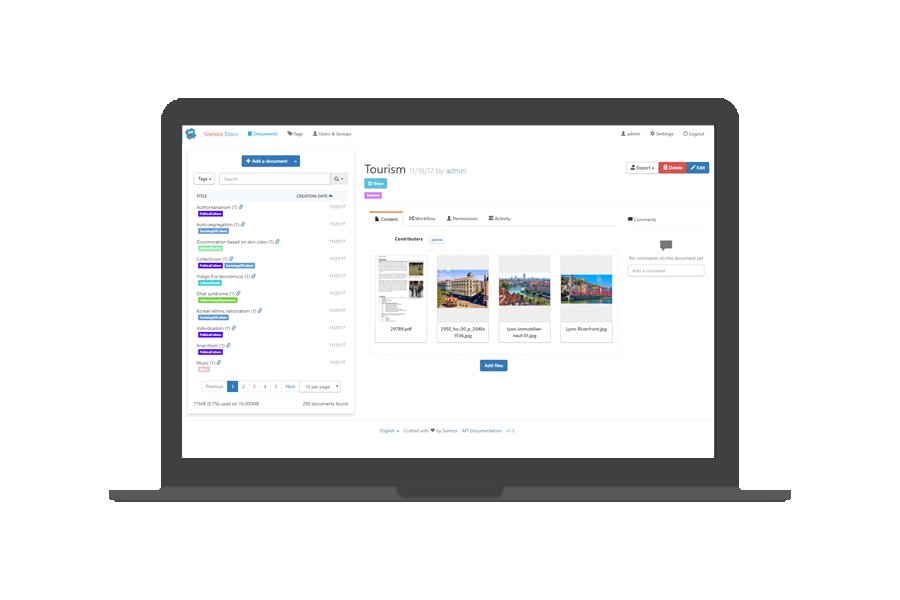
A Java web application, first published in 2013 and still in use, that keeps documents in a searchable store with hierarchical tags, per-user and per-group permissions, optical character recognition in several languages, and a simple approval workflow. It also accepts documents by email and from its own Android app.
What it is good for. A small team that needs the same documents in one place with different people allowed to see different things. Where #3 tries to work out where a document belongs, this one asks a person to say, which is the better answer when the filing follows rules that only a human knows — a client folder, a project, a contract type.
- Permissions per user and per group, which almost no personal document tool has.
- It runs from a single Docker image with no separate database to set up first, so the first version working takes minutes rather than an evening.
- Thirteen years old and still maintained. The code was last changed on 9 February 2026.
- Its newest release, v1.11, is dated 12 March 2023. Three and a half years of work since then is only available through the Docker image built from current code, not from a release you can pin.
- Filing is manual. Upload a hundred documents and you tag a hundred documents.
- GPL-2.0, which is an old licence and a stricter one than most projects here use. Read it before building anything commercial on top.
 eikek/docspell
It answers the same need by guessing where a document belongs and asking you to confirm, rather than having you file it. It is #3 in this edition.
Track this in Scout paperless-ngx/paperless-ngx
It is the best known of the three, with the largest community, and it is built around one person's archive rather than a team's shared store.
Track this in Scout- nextcloud/server
It also stores and shares files for a team with permissions, but as a whole office platform with calendars and chat, where this one does documents only.
Track this in Scout
docker run -d --name teedy \
  -p 8080:8080 \
  -v /path/to/data:/data \
  sismics/docs:latest