34,935 stars · Apache-2.0 at master/LICENSE, read from the file and PLAIN AND UNMODIFIED with NO commercial carve-out — checked specifically because the company sells a hosted service. ungh's file listing for master shows ONE licence file and no ee/ or enterprise directory anywhere. The copyright holder is NOT named: the appendix template 'Copyright [yyyy] [name of copyright owner]' is unfilled. · v1.19.1, '04 Sep 07:59' with no year, settled as 4 September 2026 TWICE — by the ungh releases/latest record and by Docker Hub. COULD NOT SETTLE: Docker Hub also publishes v1.19.2, v1.19, v1 and latest all last_updated 2026-10-05, while /releases/tag/v1.19.2 returns 404 and both GitHub and ungh still name v1.19.1 as newest, so v1.19.1 is recorded as the newest RELEASED version. · Track this in Scout
Stores the number lists that stand for meaning and finds the closest matches among millions, with ordinary data attached so a search can be narrowed.
▶Repo detailsthe review · specs · pros & cons · install
What it is
A vector database written in Rust. Vector is the name for that long list of numbers, usually called an embedding. It stores them with ordinary data attached, so a search can be narrowed — nearest matches, but only from this customer, only from this year.
What it is good for. Anyone building search over their own documents, or the memory behind an AI assistant that must answer from a particular set of material. The filtering is what sets it apart from a plain library: real questions almost always come with conditions attached.
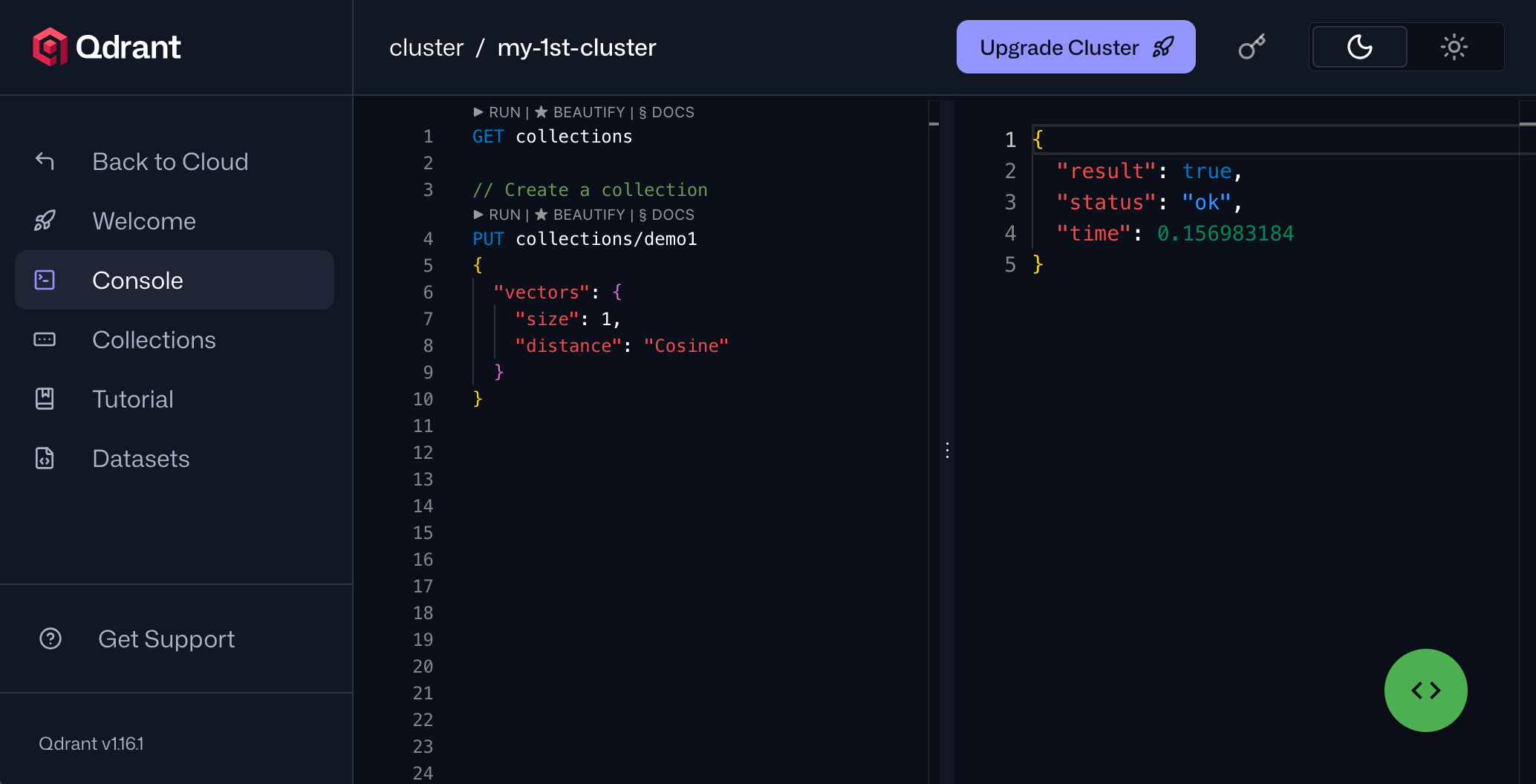
- One command starts it, with a web screen at
http://localhost:6333/dashboard. - Apache-2.0, read from the file and plain, with no commercial carve-out at all — checked on purpose, because the company sells a hosted service, and because this report has found eight licences that were narrower than their summary. There is no enterprise directory in the repository either.
- Code was pushed on 5 October 2026, the morning this edition was written, and the project started in May 2020.
- The documented first command starts it with no password, in the project's own words an "insecure deployment without authentication". Anyone who opens port 6333 to the internet has published their data.
- No minimum memory is published, only formulas for working it out. A million entries at 768 numbers each takes roughly 3 GB before the index and the attached data, and getting it wrong shows up as the program being killed rather than as slowness.
- It is infrastructure, not an application. You still need a program to put things into it and a model to make the number lists in the first place. 488 open issues and 202 open pull requests.
- Its Apache-2.0 file leaves the copyright holder as the unfilled template.
- milvus-io/milvus
The largest of these, built for very big collections spread over several machines, and correspondingly heavier to run.
Track this in Scout - chroma-core/chroma
The easiest to start with, because it can run inside a Python program with no server at all, and the least suited to a large production load.
Track this in Scout - weaviate/weaviate
Similar in shape, with built-in modules that create the number lists themselves, so there is less to assemble and more opinions to live with.
Track this in Scout
# Prerequisite: Docker installed and running.
docker run -p 6333:6333 \
  -v "$(pwd)/qdrant_storage:/qdrant/storage" \
  qdrant/qdrant
# The web screen is then at http://localhost:6333/dashboard
# This starts with NO password. Do not expose port 6333 to the internet.