1,500 stars · MIT, read from /blob/main/LICENSE on 2026-09-27 and confirmed on 2026-09-29; plain, copyright 2025 Coder Technologies, Inc., no added conditions · v0.12.2 (2026-05-27), read from /releases/latest; the code moved on 2026-09-13, so a pinned release tag is four months behind the branch · Track this in Scout
Puts one HTTP interface in front of eleven terminal coding assistants, so other software can drive them instead of pretending to be a keyboard.
▶Repo detailsthe review · specs · pros & cons · install
What it is
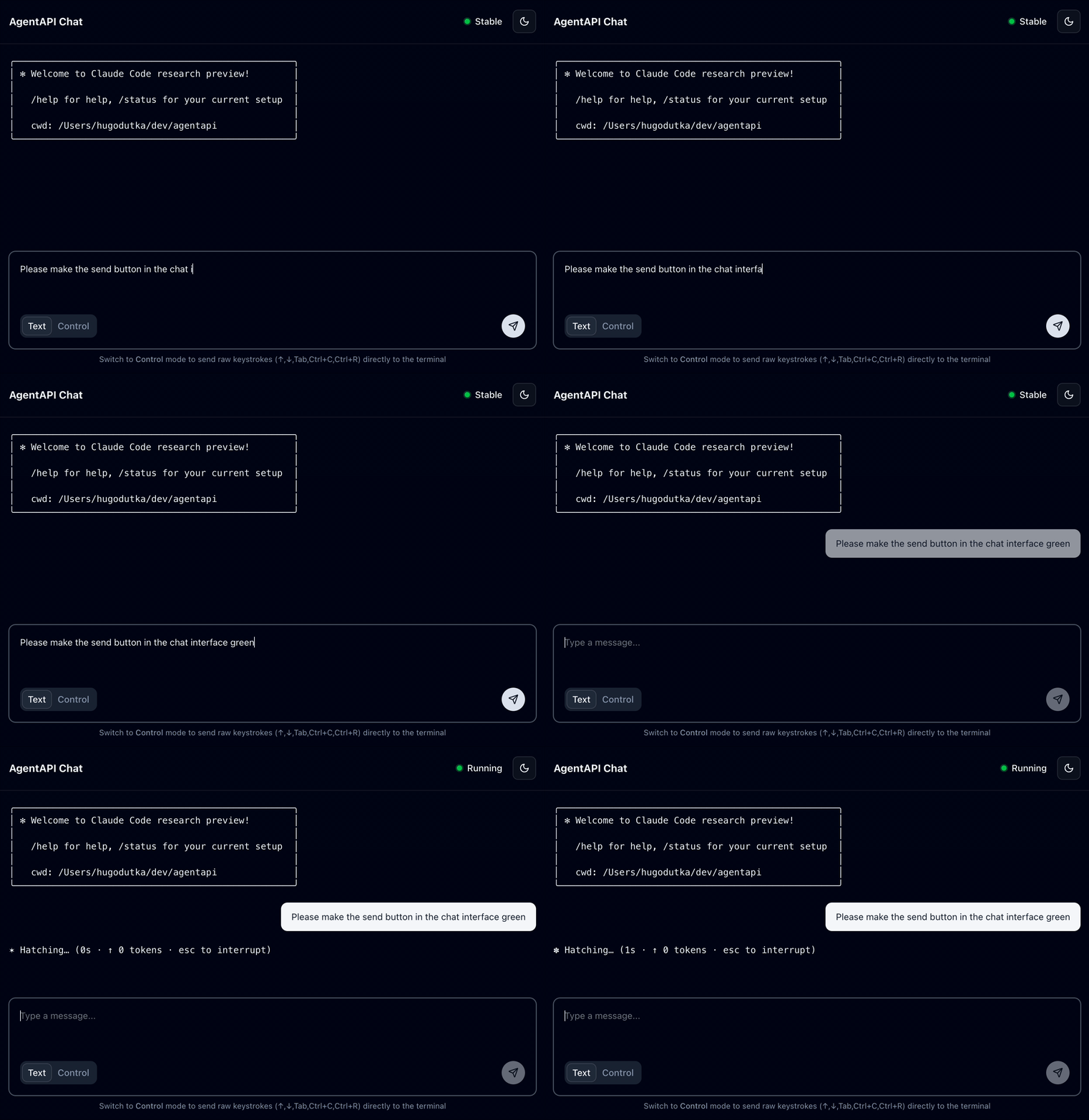
A small Go program, at 1,500 stars, from the company behind Coder. It starts a chosen assistant, runs an in-memory terminal emulator around it, and turns web requests into keystrokes and the assistant's screen output back into separate messages.
What it is good for. Anyone writing automation around a coding assistant: a web page that shows what an agent is doing, a scheduled job that asks one to fix a failing test, or a system that runs the same request through several assistants and compares the answers. It removes the ugly part of that job, which is pretending to be a keyboard.
- Eleven assistants behind one interface: Claude Code, AmazonQ, Opencode, Goose, Aider, Gemini, GitHub Copilot, Sourcegraph Amp, Codex, Auggie and Cursor CLI.
- Four plain endpoints and nothing else to learn:
GET /messages,POST /message,GET /status, andGET /eventsfor a live stream. It also publishes its own OpenAPI description at/openapi.jsonand a documentation page at/docs. - MIT licensed, read from the licence file, copyright Coder Technologies, Inc., with no added conditions. It refuses connections from anywhere but the same machine unless you explicitly allow more.
- The mechanism is fragile by design. It reads an assistant's terminal screen and splits it into messages. When an assistant redesigns its screen, the splitting can need fixing, and the project says so itself.
- The newest release, v0.12.2, is dated 27 May 2026, while the code moved on 13 September 2026. Anyone pinning to a release tag is four months behind the branch.
- You have to name the assistant explicitly, for example
agentapi server --type=codex -- codex. Leave it out and the message formatting can break quietly.
 OpenHands/OpenHands
Entry 2 in this edition, 89,500 stars; it gives you a finished screen, where this gives you an interface to build your own screen on.
Track this in Scout aaif-goose/goose
54,600 stars, Apache-2.0, covered in Edition 29; it is one of the assistants this program drives, not a way of driving assistants.
Track this in Scout anomalyco/opencode
196,600 stars, MIT; also one of the eleven it supports, and it has its own server mode, so for that one assistant alone you may not need this.
Track this in Scout
OS=$(uname -s | tr "[:upper:]" "[:lower:]")
ARCH=$(uname -m | sed "s/x86_64/amd64/;s/aarch64/arm64/")
curl -fsSL "https://github.com/coder/agentapi/releases/latest/download/agentapi-${OS}-${ARCH}" -o agentapi
chmod +x agentapi
./agentapi --help