
Edition No. 35 · 29 Sep 2026
Twelve repositories for checking your code, your files and your bills
A file manager with 35,900 stars was archived last month and will get no more security patches.
Twelve open-source repositories, opened and checked this morning. There is no theme. The spread is deliberate, the quality bar is not negotiable.
We aim for twelve every day. Some candidates fall out while we check them — those are listed at the end, with the reason.
The thing to read first. While checking alternatives to entry 9, we opened filebrowser/filebrowser. It has 35,900 stars. Its own README says: "File Browser is being archived on 2026-09-01. On that date this repository becomes read-only." The repository page shows the archive happened on 31 August 2026. After that date there are no further releases and no security fixes, though the existing downloads and container images stay online. File Browser puts a web page in front of a folder so people can upload, edit and delete files in a browser. A very large number of copies are reachable from the internet. If one of them is yours, that is today's most useful sentence on this page.
Three things worth knowing, separate from the recommendations
- A project can end quietly and stay installed everywhere. File Browser has 35,900 stars and was archived on 31 August 2026. Its README announces the date as 2026-09-01, one day apart from the banner, and states that there will be no further releases and no security fixes. The downloads and container images remain available, which means new installations will keep happening for years. - The author of a tool is the best source on what replaced it. xsv has 10,800 stars, was archived on 24 April 2025, and its last release is dated May 2018. Its README names two successors, and one of them is entry 7. Entry 7's own licence file carries the original author's copyright line from 2015 beside the current company's from 2026, which the README never mentions. - A date with no year is not a date. Five of today's twelve had their newest release misread by exactly this: the year was missing from the page and got filled in wrongly. Four were read as two years old, and one as nine. Every one was settled against a second source, and the table is in the appendix.
If you only do three things
- restish (entry 5) — five minutes, one command, nothing to configure. It reads an API's own description file and turns it into short commands with readable, coloured output. It replaces long, fiddly
curllines you retype every day. - qsv (entry 7) — twenty minutes, on CSV files that already exist. One downloaded program that sorts, joins, de-duplicates, validates and describes a table of data, at speeds a spreadsheet cannot reach.
- TruffleHog (entry 4) — half an hour, on a code repository that already exists, and the strongest thing on this page. It reads the whole history for passwords and keys, and then it checks whether each one still works.
Every link in one place
| # | Repository | Website | Stars | Licence |
|---|---|---|---|---|
| 1 | awesome-selfhosted/awesome-selfhosted | awesome-selfhosted.net | 322,645 | CC-BY-SA-3.0 |
| 2 | OpenHands/OpenHands | openhands.dev | 89,500 | MIT |
| 3 | coder/agentapi 💎 | — | 1,500 | MIT |
| 4 | trufflesecurity/trufflehog | trufflesecurity.com | 27,600 | AGPL-3.0 |
| 5 | rest-sh/restish 💎 | rest.sh | 1,400 | MIT |
| 6 | dottxt-ai/outlines | dottxt-ai.github.io/outlines | 15,882 | Apache-2.0 |
| 7 | dathere/qsv | qsv.dathere.com | 3,798 | MIT |
| 8 | pikepdf/pikepdf 💎 | pikepdf.readthedocs.io | 2,774 | MPL-2.0 |
| 9 | veeso/termscp | termscp.rs | 3,105 | MIT |
| 10 | ellite/Wallos | wallosapp.com | 8,600 | GPL-3.0 |
| 11 | tinacms/tinacms | tina.io | 13,813 | Apache-2.0 |
| 12 | TA-Lib/ta-lib-python | ta-lib.org | 12,159 | BSD-2-Clause |
A file manager with 35,900 stars has stopped getting security patches
Twelve repositories, checked and reviewed. Every version verified against the GitHub API and dated.

322,645 stars · CC-BY-SA-3.0, read from /blob/master/LICENSE on 2026-09-29. A content licence rather than a software licence: attribution required, share-alike on any adaptation, no sublicensing, and adaptations must be marked as changed. · 1.0.0, dated 22 August with no year readable from here; the release note records the move to awesome-selfhosted.net and the split of the raw data into awesome-selfhosted-data. Currency rests on the code date, 2026-09-29, the morning of the run. · Track this in Scout · Share this tool
A hand-curated list of free software that can be run on a computer of your own, sorted by what the software does.
▶Repo detailsthe review · specs · pros & cons · install
What it is
A Markdown file in a public repository, maintained since June 2015 by more than 1,200 contributors, with a searchable website built from the same data. It is one of the most-starred repositories on GitHub, at 322,645 stars, and it took new code on the morning this edition was written.
What it is good for. Anyone about to pay for a hosted tool and wondering whether a free one exists that they could run themselves. It is also useful in the other direction: if you have an unusual need and assume nothing exists, this is the fastest place to find out that something does. The website at awesome-selfhosted.net gives search and filters that the plain text file cannot.
- Enormous coverage across dozens of categories, and it has been maintained for over eleven years.
- Each entry carries a short description, a licence and the language it is written in, so you can rule things out before opening anything.
- The list itself is a plain text file in a repository, so it can be read, searched or copied without an account.
- It is a list, not a review. An entry means somebody proposed it and a maintainer accepted it. It does not mean the software is good, popular or currently maintained.
- The licence is CC-BY-SA-3.0, which is a licence for writing rather than for software. If you republish the list or a large part of it, your copy has to carry the same terms and the same credit.
- Its size works against you. Twenty entries in a category is not obviously more helpful than five, and the list does not rank.
- sindresorhus/awesome
510,300 stars, CC0-1.0, and it is the index of lists rather than a list of software; you would use it to find this one, not instead of it.
Track this in Scout - awesome-foss/awesome-sysadmin
34,900 stars, CC-BY-SA-4.0, the same idea aimed at people running servers, so it leans towards infrastructure rather than applications a person opens.
Track this in Scout - mikeroyal/Self-Hosting-Guide
21,900 stars, and it explains how to run things rather than cataloguing what to run, which makes it the companion to this list rather than a replacement.
Track this in Scout
https://awesome-selfhosted.net/
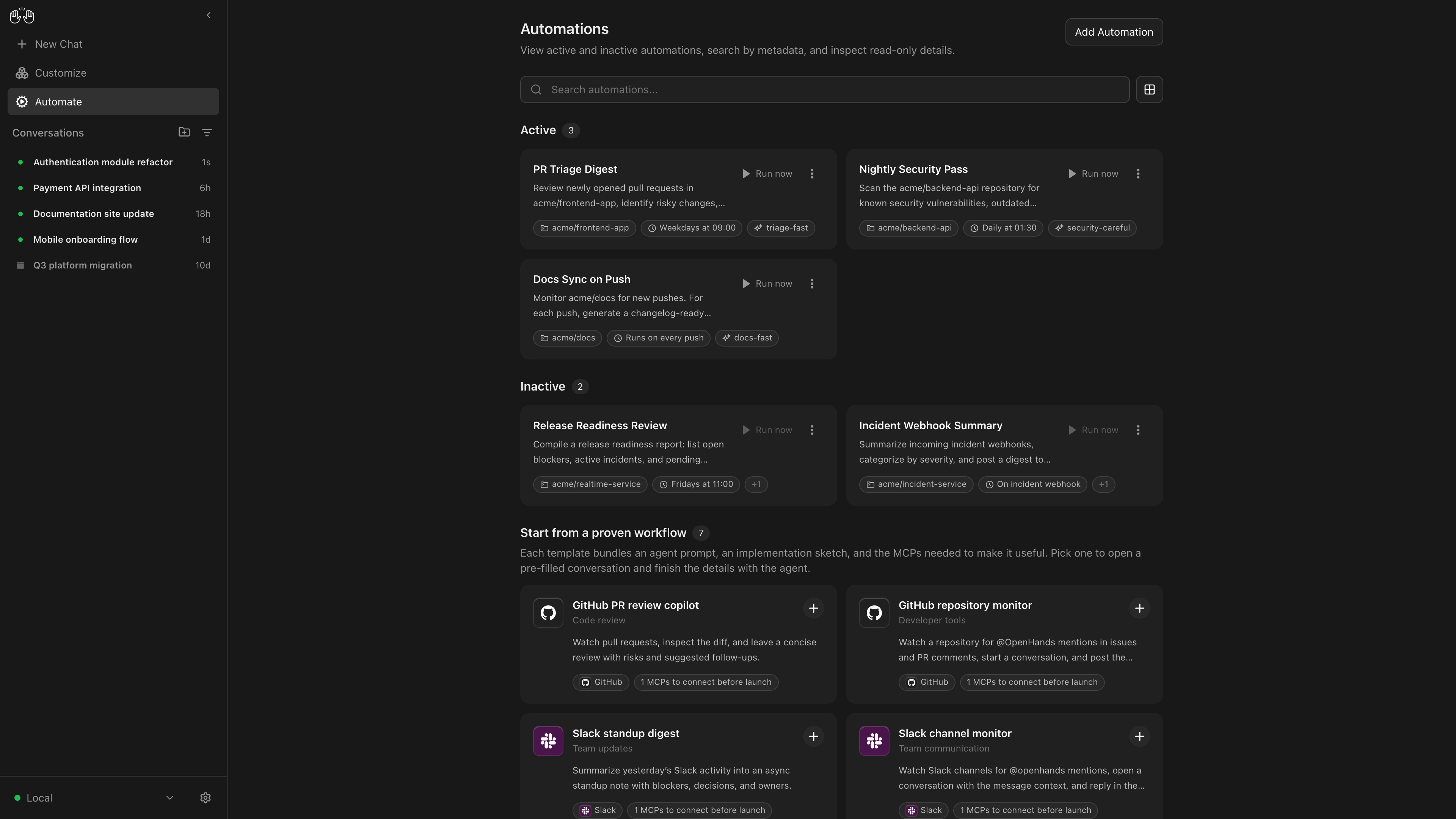
89,500 stars · MIT, read from /blob/main/LICENSE on 2026-09-29; plain, copyright 2025 OpenHands contributors, no added conditions and no paid key · v1.24.0 (2026-09-25), read from /releases/latest. ungh's pushedAt of 2026-09-20 on the OLD name is stale, because it predates that release. · Track this in Scout · Share this tool
A self-hosted control screen that runs several coding assistants and shows what each one is doing.
▶Repo detailsthe review · specs · pros & cons · install
What it is
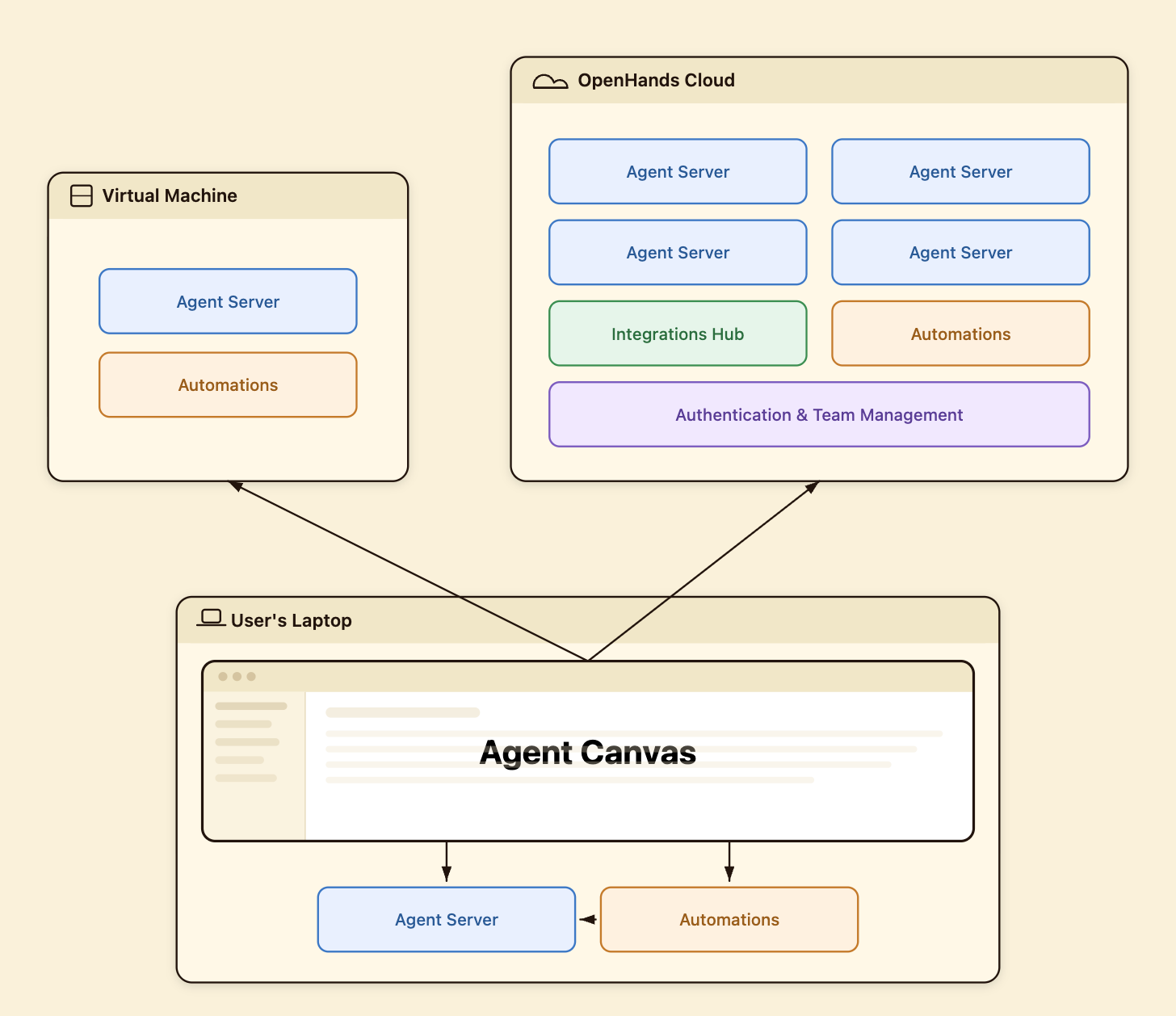
A large open-source project, at 89,500 stars, that began as a single coding agent and has become a console for several. Its own README now describes the product as Agent Canvas, a self-hosted control centre that can drive OpenHands, Claude Code, Codex and Gemini, locally or on a remote machine.
What it is good for. Someone who already uses one coding assistant from a terminal and wants a screen instead: a list of running jobs, the files each one touched, and the ability to start another without opening a new window. It also suits anyone who wants those jobs to run inside a container rather than directly on the machine they work on.
- MIT licensed, read from the licence file and completely unmodified, so there is no paid key and no restriction on commercial use.
- It runs several different assistants, so you are not tied to one vendor's tool.
- Active: version 1.24.0 was published on 25 September 2026, four days before this edition.
- The repository changed owner and the product changed shape, and the names no longer line up. The command you install is
@openhands/agent-canvas, notopenhands, and the container image isghcr.io/openhands/agent-canvas. A search for the repository name does not find the package. - 452 open issues and 429 open pull requests. That is a lot of unfinished business for one project, and it tells you the pace of change is high.
- It runs commands and edits files. Without the container option it is doing that directly on the machine you are sitting at, and a mistaken instruction is a real mistake.
 anomalyco/opencode
196,600 stars, MIT, a coding agent for the terminal; far more popular, but it is the agent itself rather than a console for running several.
Track this in Scout cline/cline
67,600 stars, Apache-2.0, an agent available as a library, an editor extension or a command-line assistant; it lives inside an editor rather than giving you a separate screen.
Track this in Scout Aider-AI/aider
49,200 stars, Apache-2.0, covered in Edition 25; it commits every change to git as it goes, which is a different and smaller promise.
Track this in Scout
npm install -g @openhands/agent-canvas
agent-canvas


1,500 stars · MIT, read from /blob/main/LICENSE on 2026-09-27 and confirmed on 2026-09-29; plain, copyright 2025 Coder Technologies, Inc., no added conditions · v0.12.2 (2026-05-27), read from /releases/latest; the code moved on 2026-09-13, so a pinned release tag is four months behind the branch · Track this in Scout · Share this tool
Puts one HTTP interface in front of eleven terminal coding assistants, so other software can drive them instead of pretending to be a keyboard.
▶Repo detailsthe review · specs · pros & cons · install
What it is
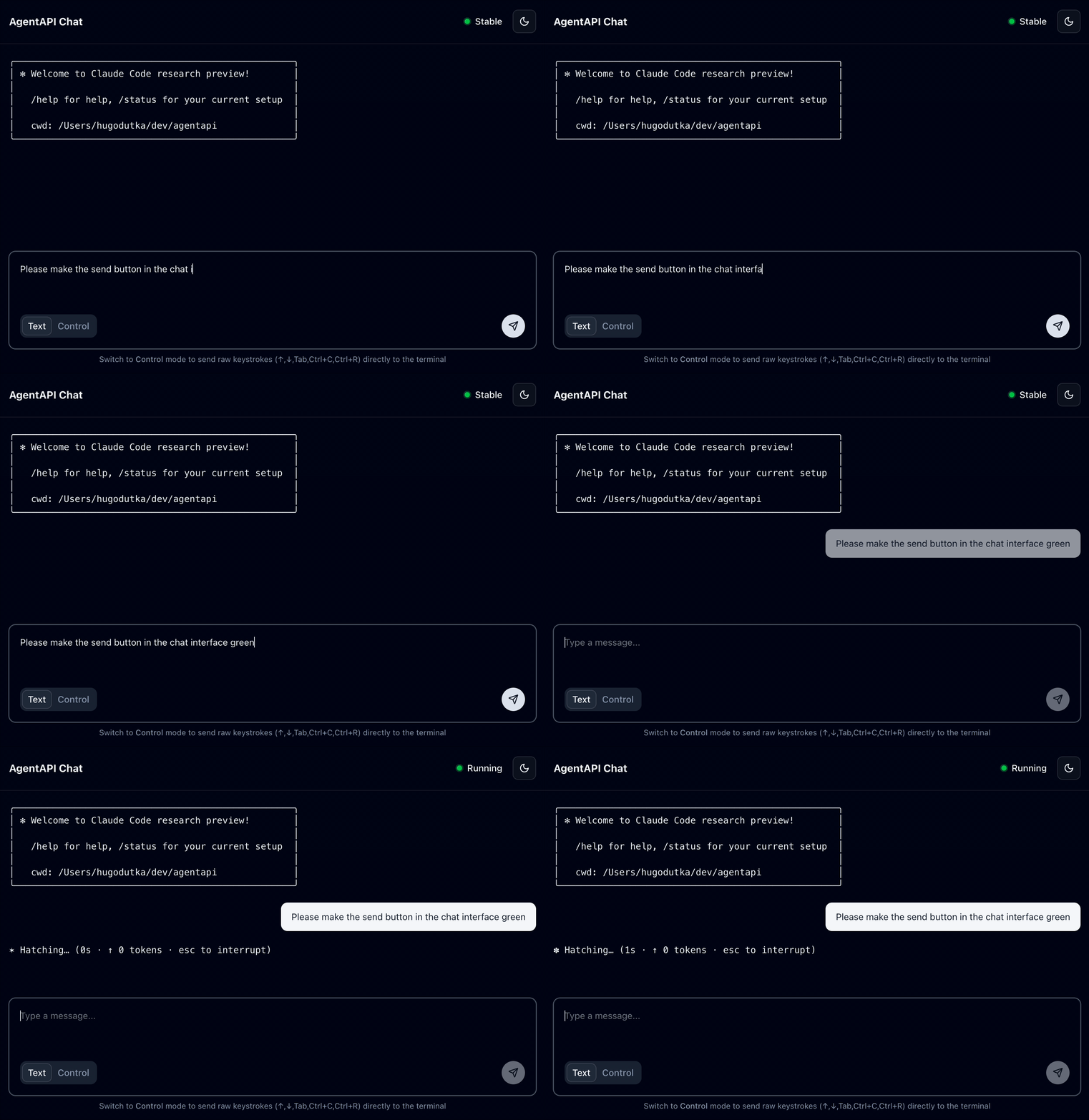
A small Go program, at 1,500 stars, from the company behind Coder. It starts a chosen assistant, runs an in-memory terminal emulator around it, and turns web requests into keystrokes and the assistant's screen output back into separate messages.
What it is good for. Anyone writing automation around a coding assistant: a web page that shows what an agent is doing, a scheduled job that asks one to fix a failing test, or a system that runs the same request through several assistants and compares the answers. It removes the ugly part of that job, which is pretending to be a keyboard.
- Eleven assistants behind one interface: Claude Code, AmazonQ, Opencode, Goose, Aider, Gemini, GitHub Copilot, Sourcegraph Amp, Codex, Auggie and Cursor CLI.
- Four plain endpoints and nothing else to learn:
GET /messages,POST /message,GET /status, andGET /eventsfor a live stream. It also publishes its own OpenAPI description at/openapi.jsonand a documentation page at/docs. - MIT licensed, read from the licence file, copyright Coder Technologies, Inc., with no added conditions. It refuses connections from anywhere but the same machine unless you explicitly allow more.
- The mechanism is fragile by design. It reads an assistant's terminal screen and splits it into messages. When an assistant redesigns its screen, the splitting can need fixing, and the project says so itself.
- The newest release, v0.12.2, is dated 27 May 2026, while the code moved on 13 September 2026. Anyone pinning to a release tag is four months behind the branch.
- You have to name the assistant explicitly, for example
agentapi server --type=codex -- codex. Leave it out and the message formatting can break quietly.
 OpenHands/OpenHands
Entry 2 in this edition, 89,500 stars; it gives you a finished screen, where this gives you an interface to build your own screen on.
Track this in Scout aaif-goose/goose
54,600 stars, Apache-2.0, covered in Edition 29; it is one of the assistants this program drives, not a way of driving assistants.
Track this in Scout- anomalyco/opencode
196,600 stars, MIT; also one of the eleven it supports, and it has its own server mode, so for that one assistant alone you may not need this.
Track this in Scout
OS=$(uname -s | tr "[:upper:]" "[:lower:]")
ARCH=$(uname -m | sed "s/x86_64/amd64/;s/aarch64/arm64/")
curl -fsSL "https://github.com/coder/agentapi/releases/latest/download/agentapi-${OS}-${ARCH}" -o agentapi
chmod +x agentapi
./agentapi --help

27,600 stars · AGPL-3.0, read from /blob/main/LICENSE on 2026-09-29 and PLAIN AND UNMODIFIED, with no enterprise carve-out, which was checked specifically because the company behind it sells an enterprise product · v3.97.9 (2026-09-24). THE YEAR TRAP, settled by contradiction rather than by a second date: /releases/latest prints "24 Sep" with no year and it was read as 2024, while ungh's releases endpoint gives v3.97.4 published 2026-09-03; a lower version cannot be published after a higher one, so v3.97.9 postdates 3 September 2026. ungh was stale on both fields for this row, with pushedAt 2026-08-23. · Track this in Scout · Share this tool
Finds passwords and keys in a code history, container images and storage buckets, and then checks which of them still work.
▶Repo detailsthe review · specs · pros & cons · install
What it is
A Go program at 27,600 stars with more than 800 detectors for different kinds of credential. It scans git history, container images, cloud storage buckets, and plain folders, and reports each finding with the place it came from.
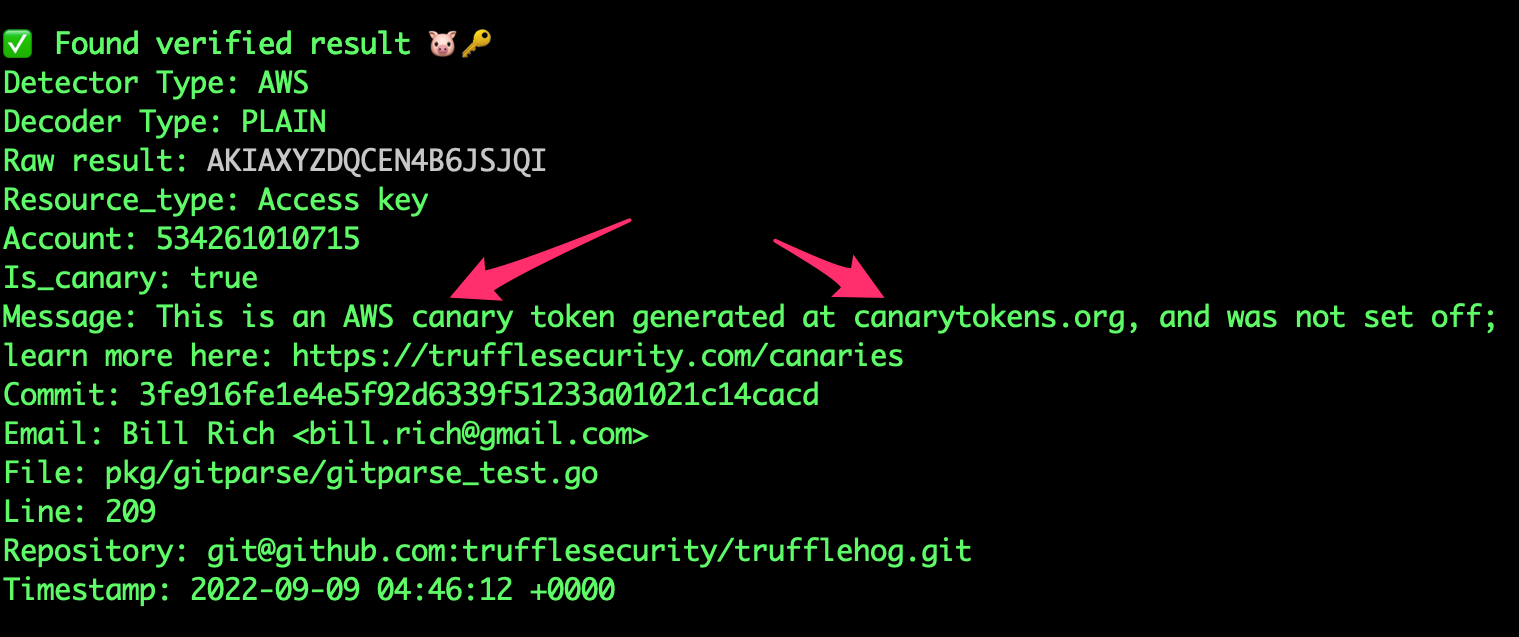
What it is good for. Anyone who writes code without a colleague reviewing every change, and anyone who inherited a code repository and does not know what is in its past. Verification is the part that changes the day: a list of two hundred possible secrets is noise, and a list of four that still open a live account is a morning's work.
- Verification. It calls the provider to test the credential, so you get a short list of real problems instead of a long list of maybe.
- It reads history, not just the current files, which is where the dangerous ones live.
- AGPL-3.0 read from the licence file on 29 September 2026, and it is the plain, unmodified text. The company behind it sells an enterprise product, and there is no carve-out for it in this file.
- AGPL-3.0 is the strongest common open-source licence. Running it is free and unconditional. Building a service on top of it and offering that service to other people obliges you to publish your own source.
- Verification means the program sends a found credential to the service it belongs to in order to test it. That is the right behaviour and it is also a network call you should understand before pointing this at somebody else's code.
- It finds and stops. Rotating the key, revoking it and rewriting the history are three separate manual jobs, and the last one is risky.
 gitleaks/gitleaks
29,400 stars, MIT, covered in Edition 28 as that edition's strongest entry; its README now states the project is feature complete and that future releases will be security patches only.
Track this in Scout Yelp/detect-secrets
4,600 stars, Apache-2.0, aimed at stopping new secrets from being committed rather than digging through the past, and it does not verify what it finds.
Track this in Scout GitGuardian/ggshield
2,000 stars, MIT, v1.52.2 of 17 June 2026; over 500 kinds of secret, but detection runs on the vendor's service, so it needs an account and it sends your content away.
Track this in Scout
brew install trufflehog


1,400 stars · MIT, read from /blob/main/LICENSE.md on 2026-09-29 after both /blob/main/LICENSE and /blob/master/LICENSE returned 404; plain, copyright 2020 Daniel G. Taylor · v2.3.0 (2026-06-30). THE YEAR TRAP: /releases/latest prints "June 30" with no year and it was read as 2024; pkg.go.dev settles it as 2026. No code date could be read for this row, because ungh returned HTTP 429 all morning; currency rests on a release three months old, which is comfortably inside the eighteen-month bar. · Track this in Scout · Share this tool
A command-line tool for calling web APIs that builds short commands from the API's own description and remembers a login for each service.
▶Repo detailsthe review · specs · pros & cons · install
What it is
A small Go program at 1,400 stars, written by one author since 2020 and now in its second major version. It discovers an OpenAPI description, which is the machine-readable file that says what an API can do, and builds commands from it.
What it is good for. Anyone who calls the same handful of APIs every week and has a text file of half-remembered curl lines. Named authentication profiles are the quiet win: you set up a service once and then never paste a token again. Readable, structured output is the other one, because a wall of unformatted JSON is not something a person can scan.
- Short commands derived from the API's own description, so there is nothing to keep in step by hand.
- Saved authentication profiles, including the common token flows, so credentials stop living in shell history.
- MIT licensed, read from
LICENSE.md, copyright 2020 Daniel G. Taylor, with no added conditions.
- The repository moved. It is now
rest-sh/restish, and the old address still redirects. The install command from the README already points at the new name, which is how the move was noticed. - Most of the value depends on the API publishing an OpenAPI description. Plenty do not, and against those it is a nicer HTTP client and little more.
- Authentication profiles live in a file on the machine. That file is now worth protecting, and the project does not encrypt it for you.
- httpie/cli
38,600 stars, BSD-3-Clause, the best-known friendly HTTP client; more popular and simpler, but it does not read API descriptions and has no profile system of this kind.
Track this in Scout  Orange-OpenSource/hurl
19,200 stars, Apache-2.0, version 8.0.1; it runs and tests requests written in a plain text file, which makes it better for repeatable checks and worse for exploring.
Track this in Scout ducaale/xh
8,100 stars, MIT, a fast Rust rewrite of the HTTPie style of command; quick and small, with no API discovery.
Track this in Scout
brew install restish
restish --version


15,882 stars · Apache-2.0, read from /blob/main/LICENSE on 2026-09-29; plain, copyright "2023- The Outlines developers", no added conditions · v1.3.3 (2026-08-06). THE YEAR TRAP: /releases/latest prints the date without a year and it was read as 2024; PyPI settles it as 2026. Code on 2026-09-21. · Track this in Scout · Share this tool
It makes a model return valid structured output by constraining what the model is allowed to generate.
▶Repo detailsthe review · specs · pros & cons · install
What it is
A Python library at 15,882 stars from the .txt team, in version 1.3.3 since 6 August 2026, with code landing on 21 September 2026. You describe the shape you want, as a list of choices, a JSON schema or a Python class, and it restricts generation to match.
What it is good for. Any program that has to turn a model's answer into a record: pulling fields out of an invoice, tagging a support message, or filling a form from free text. The habit it replaces is asking politely in the prompt and then writing repair code for the times the model ignores you.
- It works with models you run yourself through vLLM, Ollama, transformers or llama.cpp, and with hosted services from OpenAI, Gemini and Dottxt.
- The shape can be as small as a list of three words or as large as a nested schema, and the code looks the same either way.
- Apache-2.0 read from the licence file, copyright "2023- The Outlines developers", with no added conditions.
- The real guarantee only exists where the library can see and limit each next word, which means a model you run yourself. Against a hosted API it can ask for a shape, not enforce one.
- It requires Python 3.10, 3.11, 3.12 or 3.13. Python 3.14 is excluded by the package's own metadata, which will catch out anyone on a very new system.
- Constraining a model costs some speed, and forcing a shape can push a model into stilted wording in order to satisfy it. The output is valid; it is not always good.
 BoundaryML/baml
9,174 stars, Apache-2.0, covered in Edition 32; it asks you to learn a small new language for the same job, where this is a library you import.
Track this in Scout 567-labs/instructor
14,000 stars, MIT; it validates the answer after the model has written it and retries on failure, which is simpler to adopt and weaker as a guarantee.
Track this in Scout guardrails-ai/guardrails
7,300 stars, Apache-2.0; broader in scope, covering content checks as well as shape, and correspondingly heavier.
Track this in Scout
python3 -m venv venv
source venv/bin/activate
pip install outlines



3,798 stars · MIT, read from /blob/master/LICENSE-MIT on 2026-09-29; it carries TWO copyright lines, "(c) 2015 Andrew Gallant" and "(c) 2026 datHere, Inc.", which is the xsv lineage the README never states · 23.0.1 (2026-09-13), the "Context is King" release, 270 commits since 22.0.1. Code on 2026-09-28. · Track this in Scout · Share this tool
A fast command-line toolkit for sorting, joining, checking and describing CSV files, with around 140 commands.
▶Repo detailsthe review · specs · pros & cons · install
What it is
A Rust program at 3,798 stars with around 140 commands and subcommands, at version 23.0.1 since 13 September 2026 and taking code the day before this edition. Its licence file is the detail worth reading: it carries two copyright lines, "© 2015 Andrew Gallant" and "© 2026 datHere, Inc."
What it is good for. Anyone who receives data as CSV files from someone else, which is most people who receive data at all. The commands that pay for themselves first are stats, which describes every column in one pass, and validate, which checks a file against rules before you load it anywhere.
- Very fast, and most commands stream, so a file larger than the machine's memory is still workable.
statson an unfamiliar file immediately answers the questions you were about to ask by hand: types, ranges, empties, cardinality.- MIT licensed, read from
LICENSE-MITon themasterbranch, plain and unconditional.
- Some commands load the whole file into memory, and the documentation marks them. On a very large file you need the streaming alternatives, and knowing which is which is on you.
- There are three prebuilt binaries with different feature sets, called
qsv,qsvliteandqsvdp, plus variants built with a different Rust compiler. You have to choose before you download. - The same company sells a paid graphical product called qsv pro. The command-line tool is genuinely MIT and complete, but it is one half of a commercial offering, and that shapes where effort goes.
- BurntSushi/xsv
10,800 stars, Unlicense and MIT, and archived by its owner on 24 April 2025; its README now recommends qsv or xan in its place, which is the author of the original naming its successors.
Track this in Scout  medialab/xan
4,500 stars, the other project named in that sentence; it leans towards exploring and drawing data in the terminal, where qsv leans towards processing pipelines.
Track this in Scout johnkerl/miller
10,000 stars, BSD-2-Clause; it handles CSV, TSV and line-by-line JSON with a small query language of its own, which is more expressive and slower to learn.
Track this in Scout
https://github.com/dathere/qsv/releases/latest





2,774 stars · MPL-2.0, read from /blob/main/LICENSE.txt on 2026-09-29, NOT the MIT most Python libraries carry; file-level copyleft, so modifications to pikepdf's own files must be published while combining it with closed software is free · 10.15.0 (2026-09-28), from PyPI. THE YEAR TRAP: /releases/latest prints "28 Sep" without a year and it was read as 2024. ungh's pushedAt of 2026-07-31 also cannot be right, because that release shipped on 28 September 2026. · Track this in Scout · Share this tool
A Python library for reading and writing PDF files, built on the QPDF engine, that preserves structure rather than redrawing the file.
▶Repo detailsthe review · specs · pros & cons · install
What it is
A Python wrapper around QPDF, a long-established C++ library for PDF structure, at 2,774 stars on GitHub. Version 10.15.0 was published to PyPI on 28 September 2026, the day before this edition. It needs Python 3.11 or later.
What it is good for. Any job where PDFs arrive in a steady stream and have to be reshaped the same way each time: splitting a scanned batch into one file per document, stripping passwords from statements before filing them, or merging a cover page onto every report. It is also what several bigger document tools use underneath, including OCRmyPDF from Edition 27.
- It preserves PDF structure properly rather than re-drawing the file, so bookmarks, attachments and form fields survive a round trip.
- QPDF underneath is mature and fast, and the Python layer is pleasant to use rather than a thin translation of C++.
- 19 open issues and 3 open pull requests at 2,774 stars, which is an unusually clean board for a library of this age.
- The licence is MPL-2.0, not MIT. You may combine it with closed software freely, but if you modify pikepdf's own files and distribute the result, those changes have to be published.
- There is nothing to run. This is a library for people who write Python, and a person who wants to merge two PDFs today should use a command-line tool instead.
- It reshapes PDFs and does not read them. It does no text recognition on scans, does not render pages to images, and will not work out reading order for you.
 pdfcpu/pdfcpu
8,746 stars, Apache-2.0, covered in Edition 34 as that edition's strongest entry; it is a single downloaded command as well as a library, so it needs no programming for the common jobs.
Track this in Scout py-pdf/pypdf
10,168 stars, BSD, code on 21 August 2026; pure Python with no compiled dependency, which makes it easier to install and slower on large files.
Track this in Scout pymupdf/PyMuPDF
10,797 stars, code on 28 September 2026, and the licence is the difference: AGPL-3.0 with a paid commercial option, where this one is MPL-2.0.
Track this in Scout
python3 -m venv venv
source venv/bin/activate
pip install pikepdf

3,105 stars · MIT, read from /blob/main/LICENSE on 2026-09-29; plain, copyright 2020-2022 Christian Visintin · v1.2.0 (2026-09-03), read from /releases/latest. Code on 2026-09-16. · Track this in Scout · Share this tool
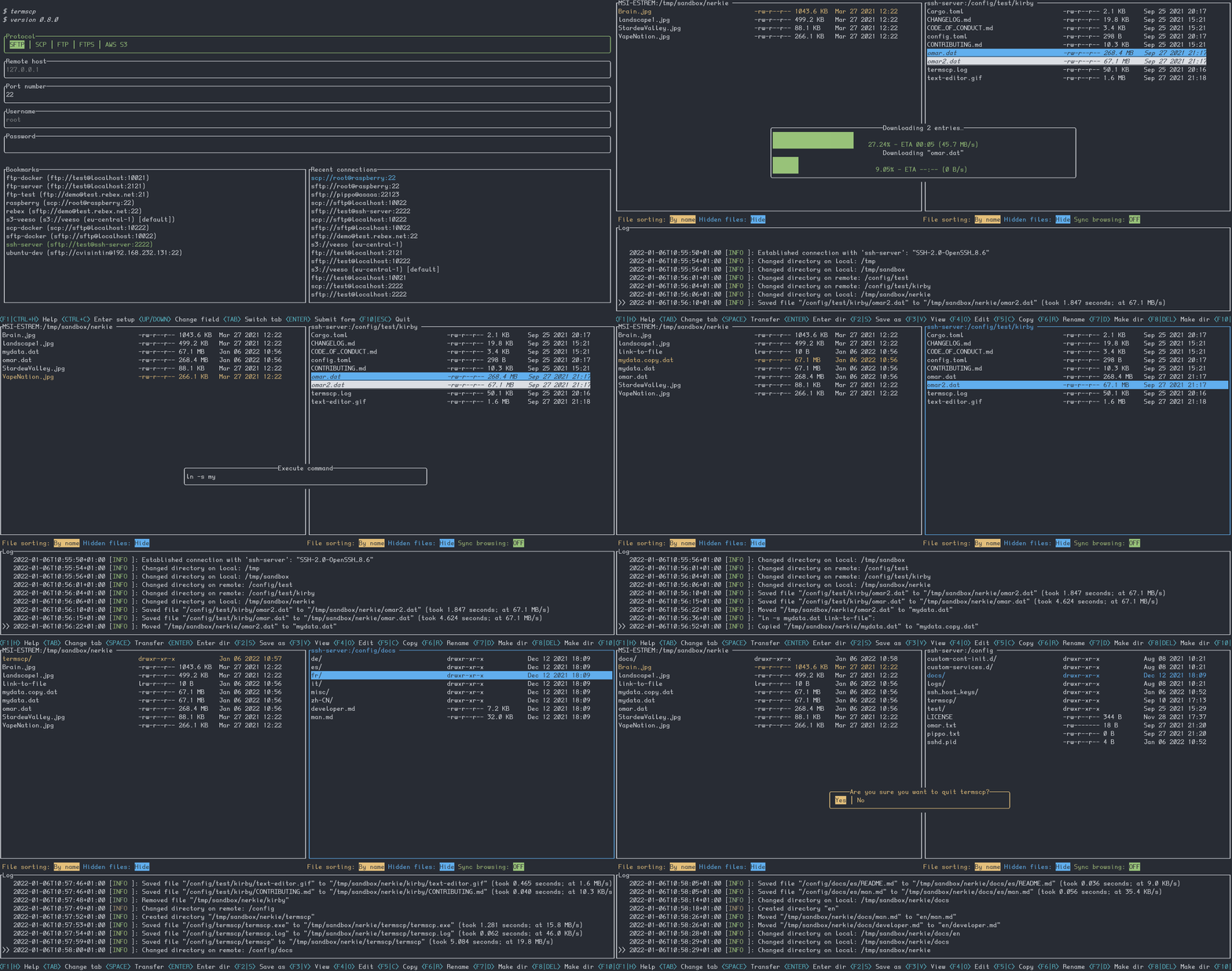
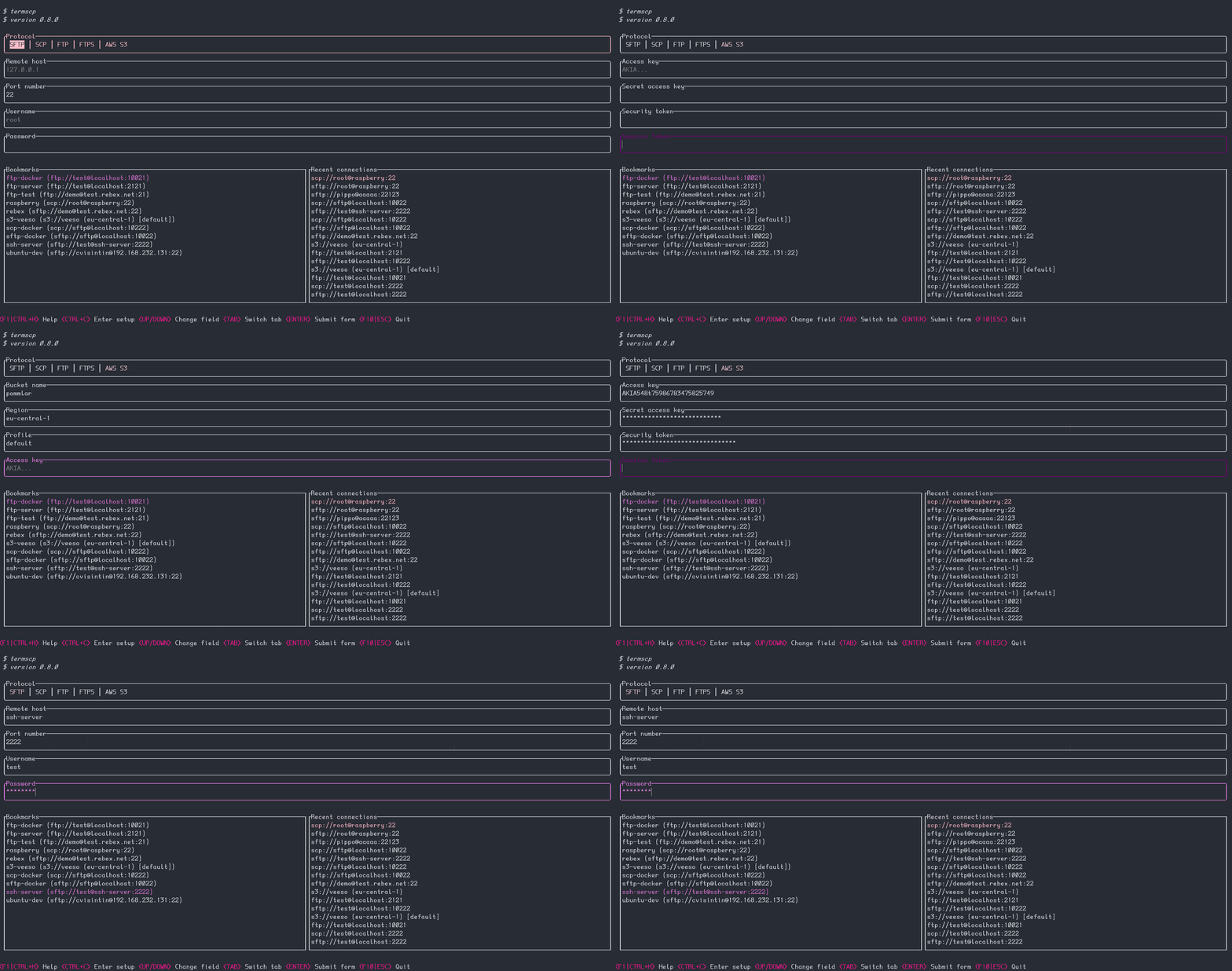
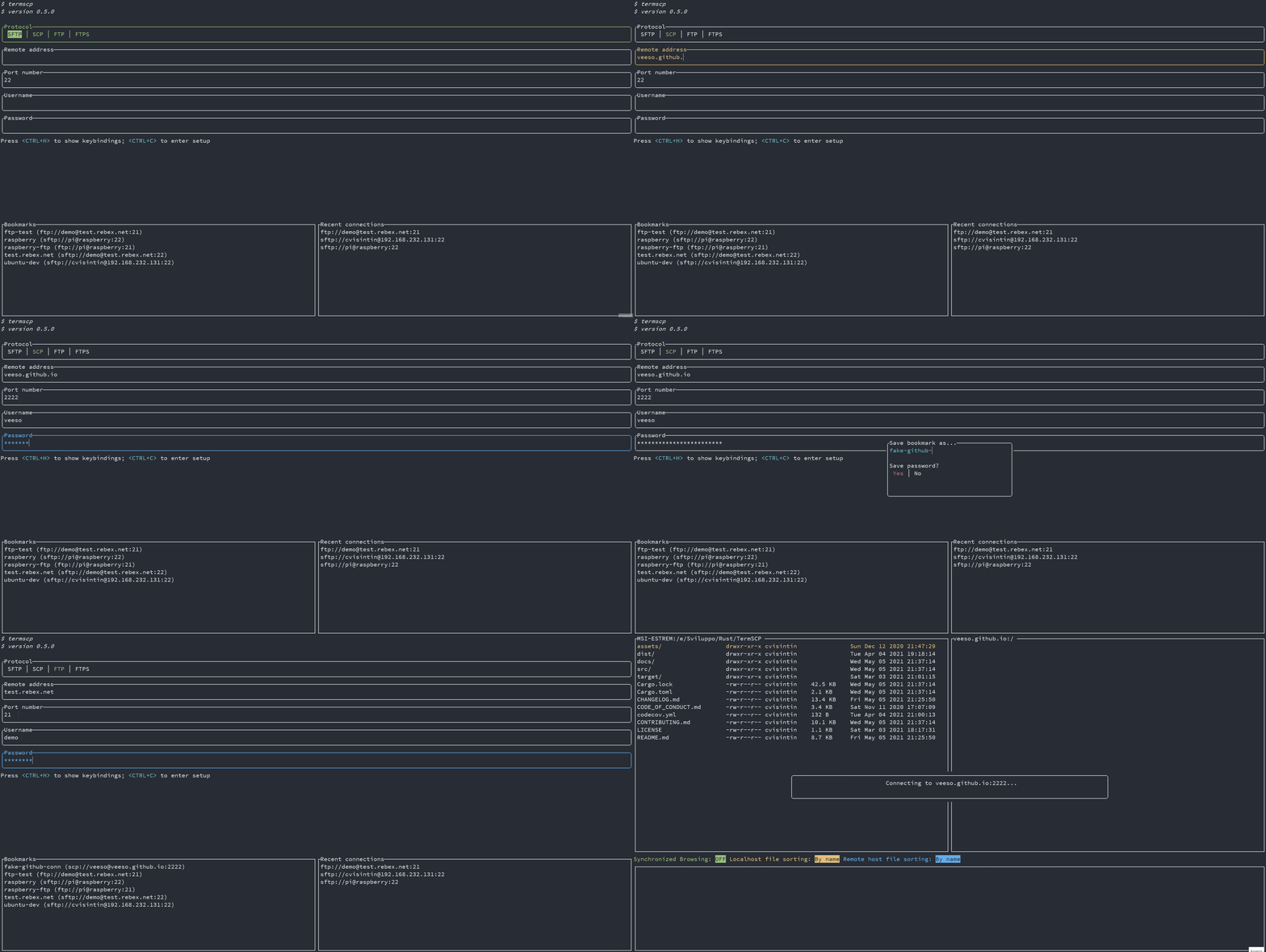
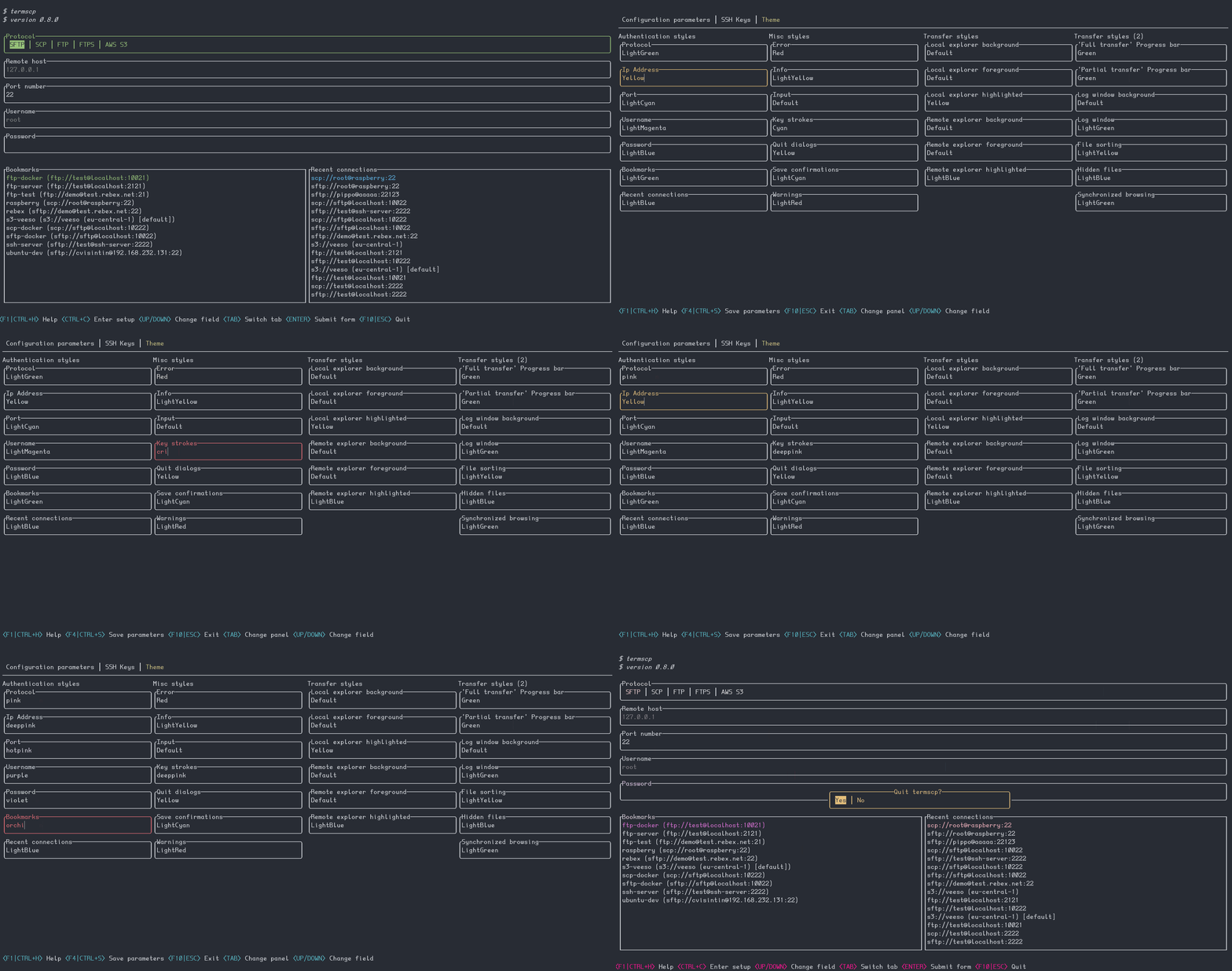
A two-panel terminal file explorer that connects to remote machines over eight protocols, with saved connections.
▶Repo detailsthe review · specs · pros & cons · install
What it is
A Rust program at 3,105 stars, at version 1.2.0 since 3 September 2026, with code landing on 16 September 2026. It speaks SFTP, SCP, FTP and FTPS, Kube, S3, Google Cloud Storage, SMB and WebDAV, all through the same two-panel screen.
What it is good for. Anyone who moves files between a laptop and a remote machine often enough to resent typing the path each time, and who does not want a graphical client running just for that. The saved connections, which it calls bookmarks, are the feature that makes it stick.
- Eight protocols in one screen, including cloud storage buckets, which most terminal file managers do not touch.
- It can open a remote file in your usual editor, save it, and send it back without a manual download and upload.
- MIT licensed, read from the licence file, copyright 2020 to 2022 Christian Visintin, plain and unconditional.
- The documented install downloads a script from the internet and runs it immediately. That is normal and it is still worth reading the script first.
- Building from source on Linux needs three system packages installed first:
libdbus-1,pkg-configandlibsmbclient. On FreeBSD and NetBSD the equivalents aredbus,pkgconfandlibsmbclient. - Bookmarks store connection details, and optionally passwords, on the machine you run it from. That makes the machine itself part of your security, which is fine as long as it is a decision rather than a surprise.
 sxyazi/yazi
42,300 stars, MIT, covered in Edition 28; a much more popular terminal file manager, but it is built for local files and previews rather than remote transfer.
Track this in Scout rclone/rclone
59,300 stars, MIT, over 150 storage providers; it is the right answer for scripted and scheduled syncing, and it gives you no interactive screen.
Track this in Scout- filebrowser/filebrowser
35,900 stars, Apache-2.0, and archived on 31 August 2026 with no further releases and no security fixes, although the existing downloads and container images stay online.
Track this in Scout
curl --proto '=https' --tlsv1.2 -sSLf https://termscp.rs/install.sh | sh
termscp --version

8,600 stars · GPL-3.0, read from /blob/main/LICENSE.md on 2026-09-29 after the plain /blob/main/LICENSE path returned 404; unmodified Free Software Foundation text · v5.8.2 (2026-09-27), and it is A SECURITY RELEASE: it enforced server-side authentication restrictions and added foreign-key ownership validation for subscription records. Code the same day. · Track this in Scout · Share this tool
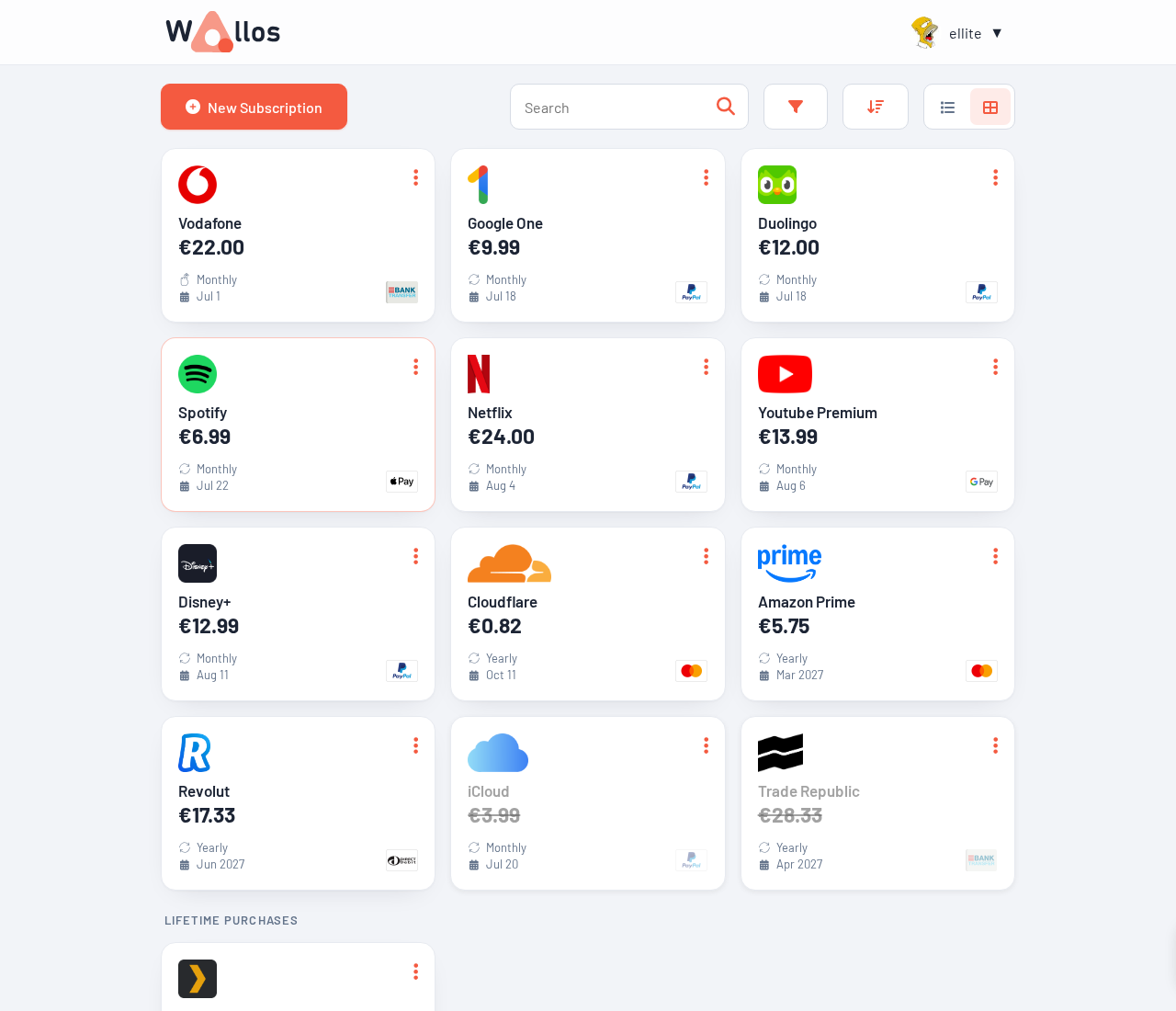
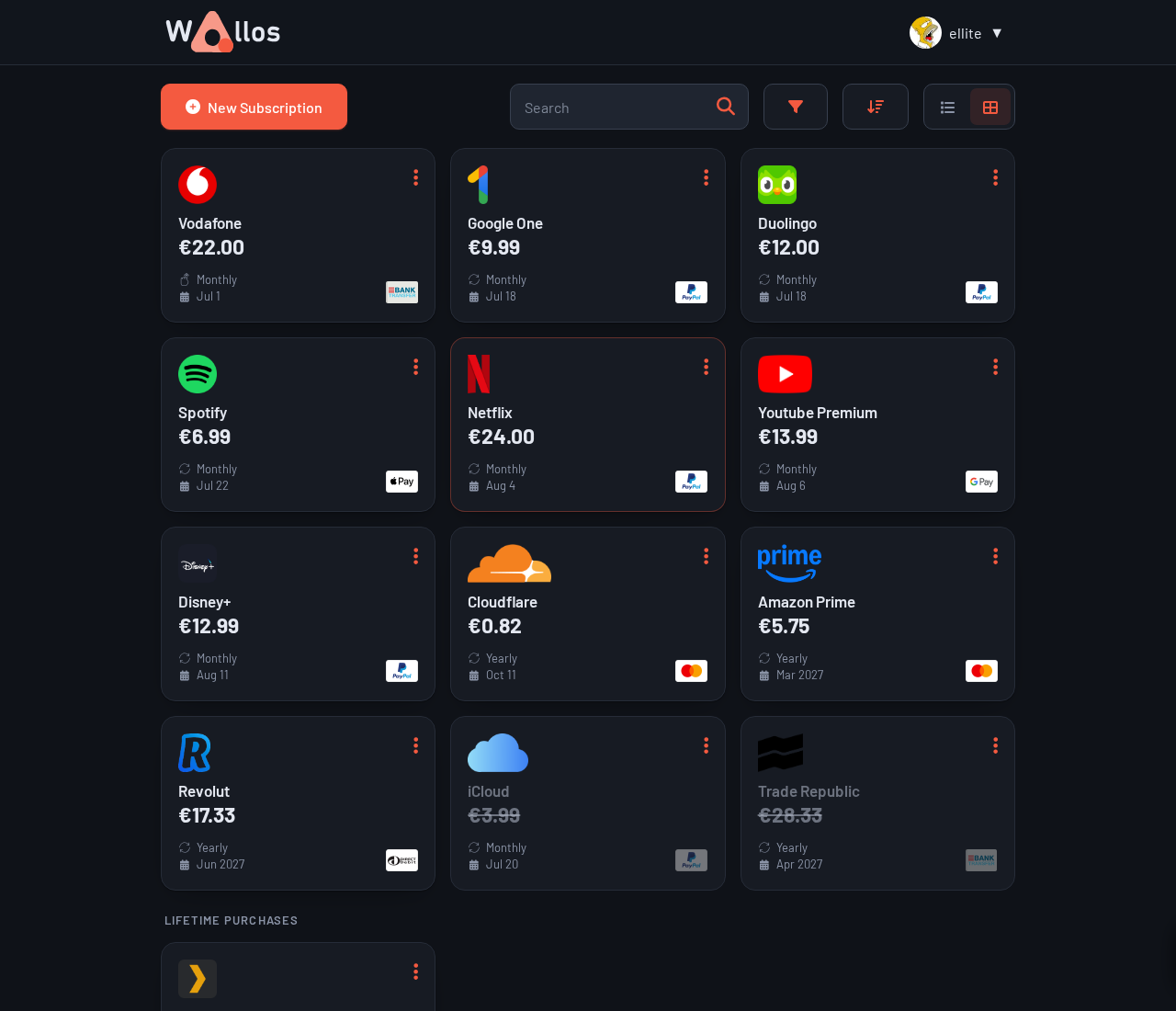
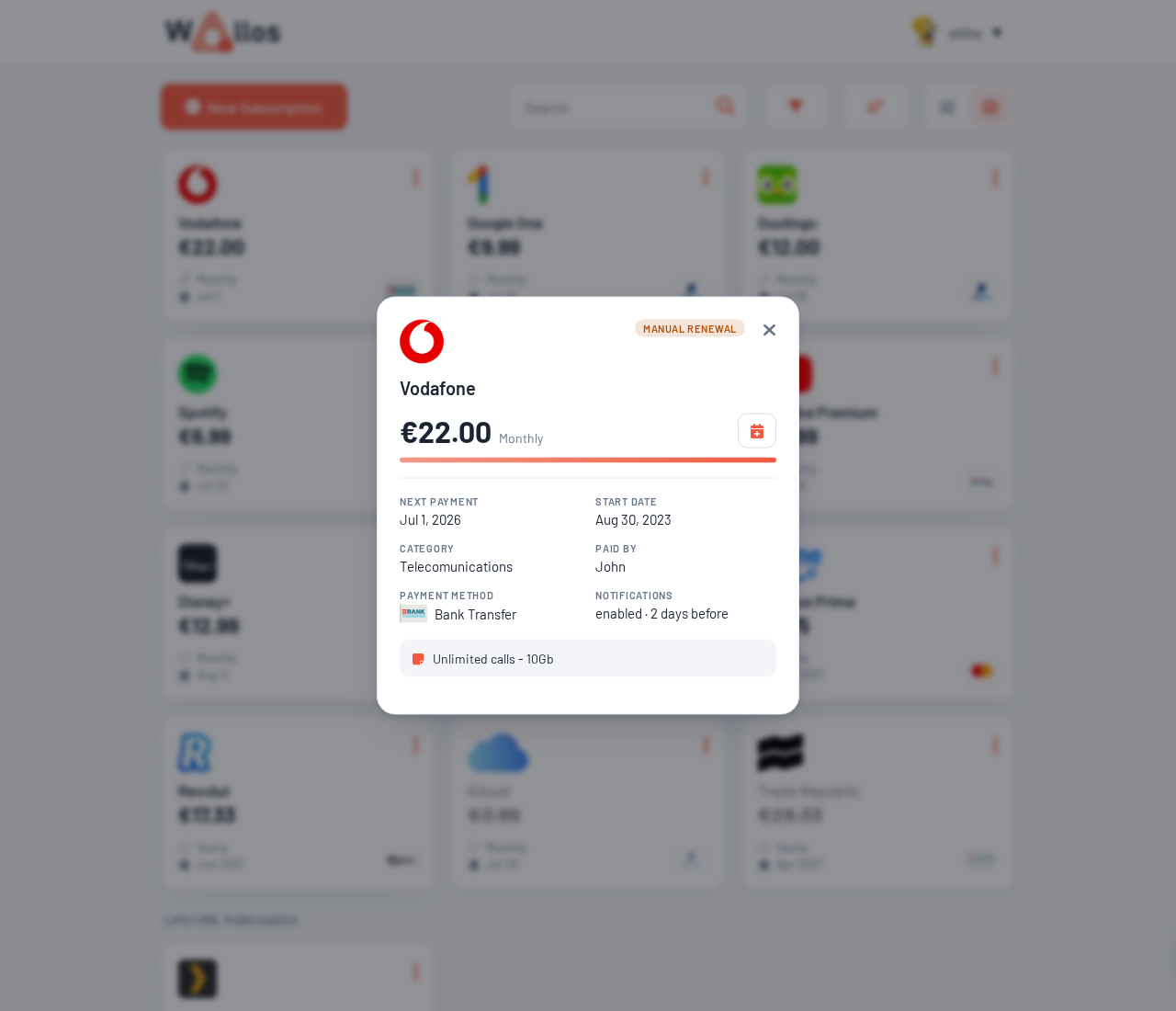
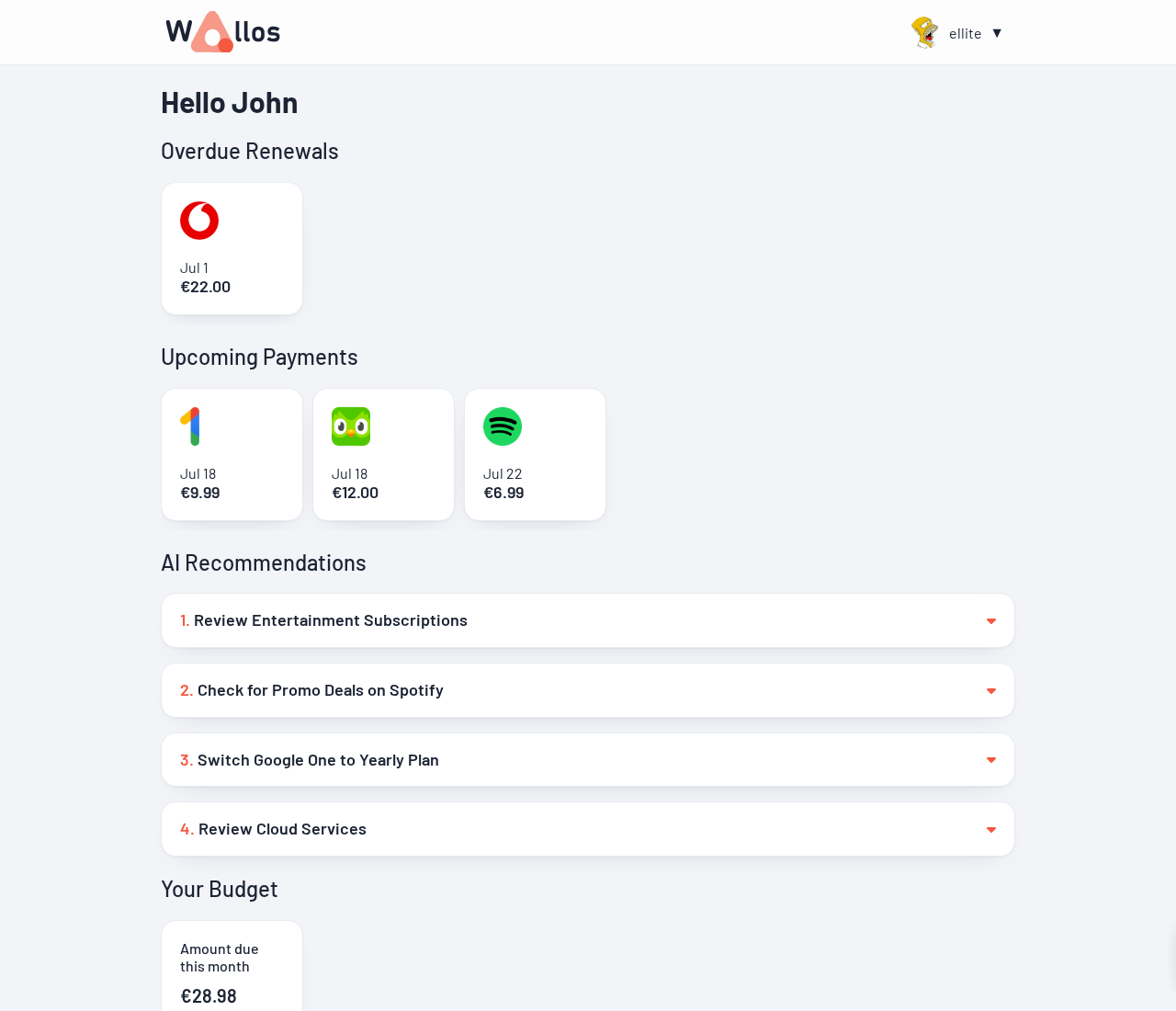
A self-hosted tracker for recurring subscriptions, with renewal dates, several currencies, totals and reminders.
▶Repo detailsthe review · specs · pros & cons · install
What it is
A PHP application at about 8,600 stars, at version 5.8.2 since 27 September 2026, with code landing the same day. It stores everything in a SQLite file, which is a database that is just one file on disk.
What it is good for. Anyone paying for a spread of small services and unable to say what the total is. It handles several currencies, several payment methods and several household members, and it can warn you by email, Discord, Pushover, Telegram, Gotify or a webhook before something renews.
- One container and a folder, with no separate database to install or back up.
- Real accounts and optional sign-in through an external identity provider using OIDC, so it is not a page sitting open to anyone who finds it.
- GPL-3.0, read from
LICENSE.mdafter the plainLICENSEpath returned a 404, and it is the unmodified Free Software Foundation text.
- Version 5.8.2, published two days before this edition, is a security release. It enforced authentication checks on the server side and added ownership validation on subscription records. Anything installed before 27 September 2026 should be updated before it is reachable from the internet.
- Converting between currencies needs a free API key from a third party called Fixer, entered in the settings. Without it the totals only work in one currency.
- It depends on scheduled jobs to advance payment dates, refresh exchange rates and send notifications. If the schedule silently stops, the numbers quietly go stale and nothing tells you.
 firefly-iii/firefly-iii
24,700 stars, AGPL-3.0, covered in Edition 28; a full personal finance manager, so it does far more and takes far longer to set up.
Track this in Scout actualbudget/actual
29,100 stars, MIT; envelope budgeting that works offline first and syncs between devices, which is a different discipline from tracking recurring charges.
Track this in Scout moneymanagerex/moneymanagerex
2,236 stars, a desktop program rather than a web page, and aimed at household accounts as a whole.
Track this in Scout
docker run -d --name wallos \
  -v /path/to/config/wallos/db:/var/www/html/db \
  -v /path/to/config/wallos/logos:/var/www/html/images/uploads/logos \
  -e TZ=Europe/Berlin \
  -p 8282:80 \
  --restart unless-stopped \
  bellamy/wallos:latest

13,813 stars · Apache-2.0, read from /blob/main/LICENSE on 2026-09-29, plain and unmodified; the published npm package reports the same licence · tinacms@3.14.1, read from /releases/latest as "23 Sep" with no year and confirmed current by npm; the code landed on 2026-09-29, the morning of the run, so the release is 2026 · Track this in Scout · Share this tool
An editing panel that sits on the rendered page of a site whose content lives as files in a code repository.
▶Repo detailsthe review · specs · pros & cons · install
What it is
A JavaScript and React project at 13,813 stars, at package version 3.14.1 and taking code on the morning this edition was written. Content stays as Markdown files in a repository, and it edits those files rather than a database.
What it is good for. A small site where one person writes the code and somebody else writes the words. The visual editing is the point: the editor sees the page as visitors will see it, not a form full of field names. Because content stays in the repository, history, review and rollback are the ones you already have.
- Content remains plain files in a repository, so there is no database to back up and no content locked inside an application.
- Editing happens on the rendered page, which is the part that persuades non-technical people to use it at all.
- Apache-2.0, read from the licence file and unmodified, and the published package reports the same licence.
- The signposted path is TinaCloud, a paid hosted backend. Self-hosting the backend is supported and it is a genuine project of its own, not a configuration switch.
- 422 open issues and 48 open pull requests. For a project of this age that is a large backlog, and it is worth searching it for anything your site depends on.
- It is React only. The editing panel needs React 16.14 or later as a peer dependency, so a site built on something else cannot use it.
 decaporg/decap-cms
19,400 stars, MIT, the long-established option in this category and still taking code; it edits through forms rather than on the page itself.
Track this in Scout sveltia/sveltia-cms
2,900 stars, MIT, covered in Edition 14; a modern rewrite of the same configuration format, much lighter, with strong support for several languages on one site.
Track this in Scout hunvreus/pagescms
4,000 stars, MIT; deliberately the simplest of the four, editing content straight in a GitHub repository with almost nothing to configure.
Track this in Scout
npx create-tina-app@latest

12,159 stars · BSD-2-Clause, read from /blob/master/LICENSE on 2026-09-29; short and permissive, and the file carries no named copyright holder · 0.8.1 (2026-09-21), from PyPI. THE LARGEST YEAR-TRAP ERROR IN THIS ARCHIVE: /releases/latest prints "21 Sep" with no year and it was read as 2017, a NINE-YEAR error where the previous record was two years. ungh's pushedAt of 2026-07-29 is also stale, because that release shipped on 21 September 2026. · Track this in Scout · Share this tool
More than 150 standard chart indicators for Python, computed by the long-established TA-Lib engine.
▶Repo detailsthe review · specs · pros & cons · install
What it is
A Python wrapper at 12,159 stars around TA-Lib, a C library that has been the reference implementation of technical indicators since the late 1990s. Version 0.8.1 was published to PyPI on 21 September 2026, and it supports Python 3.9 through 3.14.
What it is good for. Anyone testing a trading idea, drawing a chart that a reader recognises, or building features for a model from price history. The value is agreement rather than cleverness: when your RSI matches everybody else's RSI, an argument about results is about the idea instead of about the arithmetic.
- More than 150 indicators including ADX, MACD, RSI, Stochastic and Bollinger Bands, plus a large set of candlestick pattern recognisers.
- Prebuilt packages now include the C library. From version 0.6.5 onwards the project builds binary wheels for Linux, macOS and Windows across several processor types, so the old dependency fight is gone on common machines.
- BSD-2-Clause, read from the licence file on the
masterbranch. It is a short permissive licence with no conditions beyond keeping the notice.
- The README still states plainly that TA-Lib itself must be installed to use it, and the wheels are the exception rather than the rule. On an unusual platform or an old Python you are back to compiling C by hand.
- The interface is terse because it mirrors the C library. Functions are called things like
CDLEVENINGDOJISTAR, arguments are positional arrays, and nothing is named the way a Python library written today would name it. - An indicator is a description of the past. Having 150 of them makes it easy to test many combinations and find one that fits history by accident.
 bukosabino/ta
5,100 stars, MIT, 43 indicators in pure Python with pandas and numpy; far easier to install everywhere and a much smaller set, with 122 open issues.
Track this in Scout jealous/stockstats
1,500 stars, BSD-3-Clause, covered in Edition 10; indicators appear as columns on a DataFrame when you ask for them, which is the friendliest of the three to read.
Track this in Scout nardew/talipp
536 stars, MIT; it recomputes incrementally as each new value arrives, which suits live data and is the wrong shape for bulk history.
Track this in Scout
python3 -m venv venv
source venv/bin/activate
python -m pip install TA-Lib
Checked, and left out
These were opened for this edition and did not make it, with the reason.
filebrowser/filebrowser - not-qualified. 35,900 stars, archived by its owner on 31 August 2026 while its README announces the date as 2026-09-01, and it states there will be no further releases and no security fixes although the existing downloads and container images stay online. Found in the comparison list under entry 9, and it is the Edition 35 title.
filebrowser/filebrowser - not-qualified. 35,900 stars, archived by its owner on 31 August 2026 while its README announces the date as 2026-09-01, and it states there will be no further releases and no security fixes although the existing downloads and container images stay online. Found in the comparison list under entry 9, and it is the Edition 35 title.
BurntSushi/xsv - not-qualified. 10,800 stars, archived by its owner on 24 April 2025, last release 0.13.0 of May 2018. Its README now recommends qsv or xan in its place, which is the author of the original naming its successors. Found in the comparison list under entry 7.
BurntSushi/xsv - not-qualified. 10,800 stars, archived by its owner on 24 April 2025, last release 0.13.0 of May 2018. Its README now recommends qsv or xan in its place, which is the author of the original naming its successors. Found in the comparison list under entry 7.
omkarcloud/botasaurus - unverified. 5,700 stars, MIT read from the LICENSE file, PyPI package at 4.0.97. It was researched in full as the automation-and-scraping entry and pulled at the last step because no code date could be read: it publishes no GitHub releases at all, its commits page is robots-disallowed, and ungh returned HTTP 429 on every attempt. Explicitly not called dead. Replaced in the edition by tinacms.
omkarcloud/botasaurus - unverified. 5,700 stars, MIT read from the LICENSE file, PyPI package at 4.0.97. It was researched in full as the automation-and-scraping entry and pulled at the last step because no code date could be read: it publishes no GitHub releases at all, its commits page is robots-disallowed, and ungh returned HTTP 429 on every attempt. Explicitly not called dead. Replaced in the edition by tinacms.
medialab/xan - queued. 4,500 stars, the second project named by xsv's author. Listed as a comparison under entry 7.
medialab/xan - queued. 4,500 stars, the second project named by xsv's author. Listed as a comparison under entry 7.
johnkerl/miller - queued. 10,000 stars, BSD-2-Clause. Listed as a comparison under entry 7; it has its own query language, which is more expressive and slower to learn than qsv.
johnkerl/miller - queued. 10,000 stars, BSD-2-Clause. Listed as a comparison under entry 7; it has its own query language, which is more expressive and slower to learn than qsv.
guardrails-ai/guardrails - queued. 7,300 stars, Apache-2.0. Listed as a comparison under entry 6; broader than outlines, covering content checks as well as shape.
guardrails-ai/guardrails - queued. 7,300 stars, Apache-2.0. Listed as a comparison under entry 6; broader than outlines, covering content checks as well as shape.
cline/cline - queued. 67,600 stars, Apache-2.0. Listed as a comparison under entry 2; it lives inside an editor rather than giving a separate screen.
cline/cline - queued. 67,600 stars, Apache-2.0. Listed as a comparison under entry 2; it lives inside an editor rather than giving a separate screen.
anomalyco/opencode - queued. 196,600 stars, MIT, and the page figure is lower than the 209,494 recorded on 27 September. Listed as a comparison under entries 2 and 3.
anomalyco/opencode - queued. 196,600 stars, MIT, and the page figure is lower than the 209,494 recorded on 27 September. Listed as a comparison under entries 2 and 3.
Orange-OpenSource/hurl - queued. 19,200 stars, Apache-2.0, version 8.0.1. Listed as a comparison under entry 5; it runs requests written in a plain text file.
Orange-OpenSource/hurl - queued. 19,200 stars, Apache-2.0, version 8.0.1. Listed as a comparison under entry 5; it runs requests written in a plain text file.
py-pdf/pypdf - queued. 10,168 stars, BSD, code 21 August 2026. Listed as a comparison under entry 8; pure Python, easier to install and slower on large files.
py-pdf/pypdf - queued. 10,168 stars, BSD, code 21 August 2026. Listed as a comparison under entry 8; pure Python, easier to install and slower on large files.
pymupdf/PyMuPDF - queued. 10,797 stars, code 28 September 2026. Listed as a comparison under entry 8, and the licence is the difference: AGPL-3.0 with a paid commercial option.
pymupdf/PyMuPDF - queued. 10,797 stars, code 28 September 2026. Listed as a comparison under entry 8, and the licence is the difference: AGPL-3.0 with a paid commercial option.
GitGuardian/ggshield - queued. 2,000 stars, MIT, v1.52.2 of 17 June 2026. Listed as a comparison under entry 4; detection runs on the vendor's service, so it needs an account.
GitGuardian/ggshield - queued. 2,000 stars, MIT, v1.52.2 of 17 June 2026. Listed as a comparison under entry 4; detection runs on the vendor's service, so it needs an account.
nardew/talipp - queued. 536 stars, MIT, a hidden-gem candidate. Listed as a comparison under entry 12; it recomputes incrementally as each value arrives, which suits live data.
nardew/talipp - queued. 536 stars, MIT, a hidden-gem candidate. Listed as a comparison under entry 12; it recomputes incrementally as each value arrives, which suits live data.
jhspetersson/fselect - queued, unchanged from 25 September. 4,467 stars, code 5 September 2026. The-workshop already carried two entries.
jhspetersson/fselect - queued, unchanged from 25 September. 4,467 stars, code 5 September 2026. The-workshop already carried two entries.
ynqa/jnv - queued, unchanged from 25 September. 6,117 stars, code 24 September 2026. Overlaps jqp, published in Edition 33.
ynqa/jnv - queued, unchanged from 25 September. 6,117 stars, code 24 September 2026. Overlaps jqp, published in Edition 33.