3,343 stars · GPL-3.0 · v2.6.2, titled 'Security Update' (2026-10-07), read from /releases/latest; the page omits the year and the code date of 2026-10-12 settles it · Track this in Scout
A self-hosted archive of links that tags them, searches them, and notices when one stops working.
▶Repo detailsthe review · specs · pros & cons · install
What it does
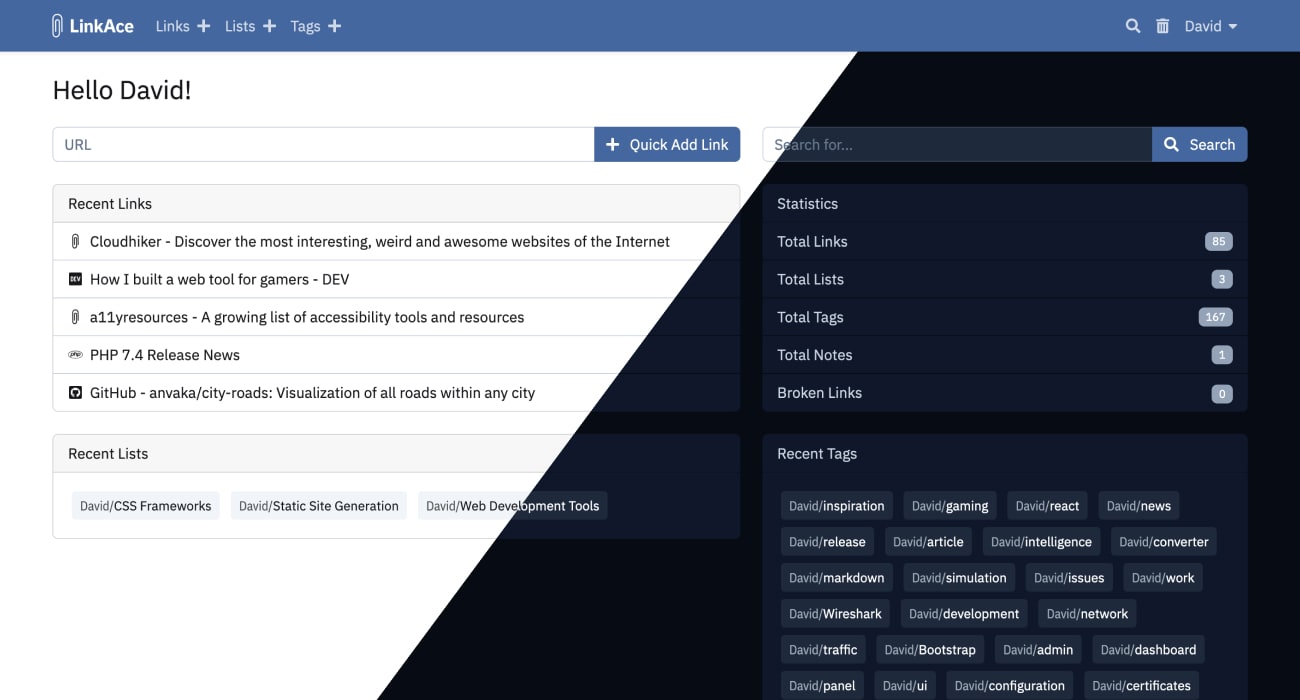
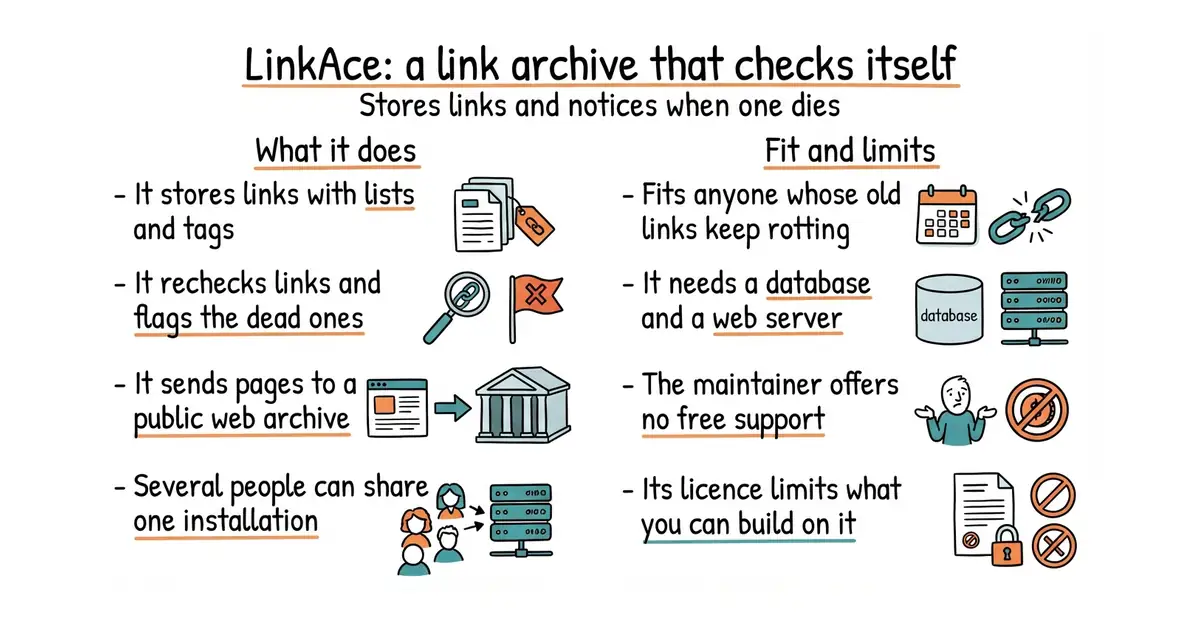
LinkAce stores links with lists and tags, and fetches each page's title and description automatically. Its distinguishing feature is link monitoring: it rechecks saved links and flags the ones that have become unavailable or have moved, which is the problem every other bookmark tool ignores. It also sends pages to the Internet Archive automatically, so there is a copy when the original goes. It supports several users with internal sharing and single sign-on through OAuth and OIDC, which is unusual at this size. Links can be private or public, and any list can be published as a feed. There is a REST interface, a Zapier connection, a browser bookmarklet, HTML import and export, and backups to S3-compatible storage. It installs with Docker, without Docker on plain PHP, through a one-click cloud deployment, or on Kubernetes, which is marked as a beta. Two things it says about itself are worth repeating. It is not meant to replace the bookmarks in your browser. And the maintainer offers no free personal support, customisation or installation help: questions go to community discussions, and direct help is a paid arrangement.
Why it matters
Who it suits. Anyone who has collected links for years and watched a quarter of them rot. The monitoring and the automatic Internet Archive copies are the whole argument, and nothing else in this category does both as plainly. It suits a small team, because multiple users and single sign-on are built in rather than bolted on. Skip it if a handful of browser bookmarks is genuinely enough: this is a web application with PHP and a database behind it, and that is a lot of machinery for fifty links.
Verdict. Worth an hour if link rot is a real problem, and not otherwise. Version 2.6.2 is from 7 October 2026 and is titled "Security Update", with code committed on 12 October, so it is being looked after. The licence is GPL-3.0, which is fine for running it and restrictive if you plan to build a product on top. The support position is the thing to weigh honestly: a one-maintainer project that says up front it will not help you install it is being fair, and it also means a failed upgrade is your problem. If you want something lighter, sissbruecker/linkding is the smallest sensible option in this category. If you want the saved copy to live on your own disk rather than at the Internet Archive, linkwarden/linkwarden takes its own screenshots and PDFs.
- It checks saved links and tells you which have died or moved, which almost no other bookmark tool does.
- Automatic archiving to the Internet Archive, so a dead link still leads somewhere.
- Several users, internal sharing and single sign-on through OAuth and OIDC, built in.
- PHP, a database and Docker. This is a web application to look after, not a file to run.
- The maintainer states that there is no free personal support, customisation or installation help.
- GPL-3.0, which constrains what you can build on top of it and distribute.
 linkwarden/linkwarden
At 19,700 stars and AGPL-3.0, saves its own screenshots and PDFs of each page rather than relying on the Internet Archive, and adds annotation.
Track this in Scout- sissbruecker/linkding
At 11,100 stars and MIT, a much smaller bookmark manager designed to be quick to deploy with Docker, without monitoring or archiving.
Track this in Scout
unzip linkace-docker.zip
cd linkace-docker
docker compose up -d