2,866 stars · MIT · v3.7.1 (27 Sep 2026) · Track this in Scout
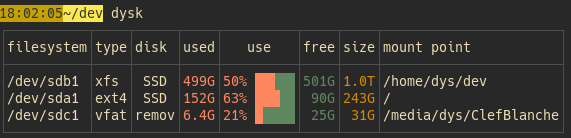
Lists every mounted disk and how full it is, as a readable table.
▶Repo detailsthe review · specs · pros & cons · install
What it is
dysk is a small command-line tool written in Rust that replaces df. It was previously called lfs, and its author also writes the file browser broot.
What it is good for. Anyone who has run df -h, squinted at the output, and still not been sure which line is the real disk. It is the two-minute check before a backup, before a large download, or when something is quietly filling up and nobody knows what.
- MIT, plain and unmodified, with the holder named: "Copyright (c) 2018 Denys Séguret".
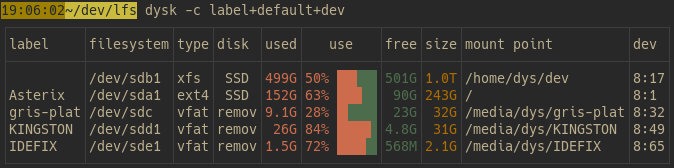
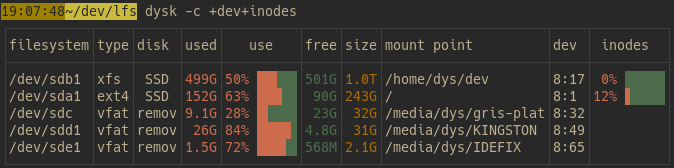
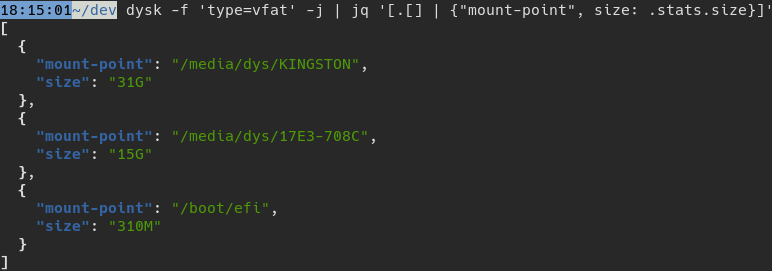
- A filter and sort expression language, so one command can show only the disks that matter instead of every temporary mount the system invents.
- Twenty open issues and zero open pull requests, with code landing eight days before this edition.
- The old package name still works and is years behind.
cargo install lfsfetches version 2.10.0 of January 2025 instead of 3.7.1, and nothing warns about it. - Three statements of which systems it supports, all different. GitHub's own description calls it "A linux utility", the README says "Linux, Mac, and Windows (experimental)", and the install page says Linux and Mac with Windows experimental.
- The published release is one commit behind the branch, no minimum Rust version is stated anywhere, and at 2,866 stars it is only 134 short of this report's 3,000-star gem line, so it may not count as a gem for long.
- muesli/duf
A df replacement that draws mounted filesystems as a formatted table, written in Go and without a filter expression language.
Track this in Scout - bootandy/dust
A Rust tool answering the other question, which folders are using the space, by walking a tree.
Track this in Scout - imsnif/diskonaut
An interactive terminal treemap that can also delete files; last code 7 March 2024.
Track this in Scout
cargo install --locked dysk # needs a Rust toolchain from rustup