
Edition No. 44 · 8 Oct 2026
Twelve repositories for writing things down, keeping references and checking code
A coding assistant with 36,054 stars declares itself read-only in its own README while GitHub shows no archived banner and its documentation still reads as live.
Today's edition reaches deliberately into the four subject areas the previous two editions did not touch at all: writing and publishing, documents and references, coding assistants, and the tools used to build software. Nine of the twelve sit in those areas. All twelve are new to this archive.
We aim for twelve every day. Some candidates fall out while we check them — those are listed at the end, with the reason.
Three things worth knowing, separate from the recommendations
- A project can be finished while GitHub still shows it as live. continuedev/continue has 36,054 stars, code pushed ten days ago, 469 open issues and 475 open pull requests, and no archived banner of any kind. Its own README says the repository "is no longer actively maintained and is read-only for all users", and its own site says the project was acquired by Cursor. Its documentation site, meanwhile, still presents it as a live product with ordinary install instructions and no notice at all. Three sources from one project, telling three different stories. - A licence badge is not a licence, and sometimes there is no badge. Two of the twelve carry terms narrower than they appear. charmbracelet/crush ships the Functional Source License, which forbids a "Competing Use" and converts to MIT two years after each release. TabbyML/tabby is Apache-2.0 everywhere except its ee/ folder, which needs a paid seat licence for production use. GitHub shows no licence label for either repository, so a reader skimming the sidebar learns nothing in both cases. - A README can install the wrong version of its own program. sharkdp/hyperfine shipped a breaking version 2.0.0 on 7 October and its Ubuntu instructions still hardcode the 1.20.0 package. pdfarranger/pdfarranger's own pip command installs the development branch rather than the release, and the resulting build reports the release's version number anyway. Canop/dysk's old package name still resolves and is twenty months behind.
If you only do three things
- sharkdp/hyperfine (#11) — two minutes, one install. It measures how long a command really takes, by running it many times and reporting an average with a margin. It settles "that feels slower now" with a number. One caution: version 2.0.0 landed on 7 October, the day before this edition, and it is a breaking release.
- astral-sh/ty (#9) — ten minutes, read-only, on Python code that already exists.
uvx ty checkinstalls nothing permanently and lists the type mistakes it finds. It is beta by its own description, so treat the list as advice rather than law. - rust-lang/mdBook (#2) — twenty minutes. A folder of plain text chapters becomes a website that reads like a book, with a contents list and a working search box, and the output is ordinary files that cost nothing to host.
Every link in one place
| # | Repository | Project site | Stars | Licence |
|---|---|---|---|---|
| 1 | gohugoio/hugo | gohugo.io | 90,061 | Apache-2.0 |
| 2 | rust-lang/mdBook | rust-lang.github.io/mdBook | 22,032 | MPL-2.0 |
| 3 | mkdocstrings/mkdocstrings 💎 | mkdocstrings.github.io | 2,098 | ISC |
| 4 | zotero/zotero | zotero.org | 15,501 | AGPL-3.0 |
| 5 | pdfarranger/pdfarranger | none published | 5,805 | GPL-3.0 |
| 6 | papis/papis 💎 | papis.readthedocs.io | 1,788 | GPL-3.0 |
| 7 | charmbracelet/crush | none published | 28,545 | FSL-1.1-MIT, not open source |
| 8 | TabbyML/tabby | tabbyml.com | 33,906 | Apache-2.0 with a paid ee/ carve-out |
| 9 | astral-sh/ty | docs.astral.sh/ty | 19,818 | MIT |
| 10 | tursodatabase/turso | none published | 24,695 | MIT |
| 11 | sharkdp/hyperfine | none published | 28,969 | MIT and Apache-2.0 |
| 12 | Canop/dysk 💎 | dystroy.org/dysk | 2,866 | MIT |
A coding assistant with 36,000 stars is read-only, and GitHub does not say so
Twelve repositories, checked and reviewed. Every version verified against the GitHub API and dated.

90,061 stars · Apache-2.0 · v0.167.0 (28 Sep 2026) · Track this in Scout
Turns a folder of Markdown files into a complete website in seconds.
▶Repo detailsthe review · specs · pros & cons · install
What it is
Hugo is a static site generator: a program that turns text files into finished web pages, with no database sitting behind the site. It is a single downloaded program written in Go, and it builds very large sites in a few seconds.
What it is good for. Anyone who wants a blog, a documentation site or a company site that loads quickly, costs almost nothing to host, and has no database or web application to keep patched. If a website currently needs monthly security updates just to stay online, this removes that job entirely.
- One program. No database, no runtime to install on the hosting side, nothing to keep updated in production.
- Genuinely fast. Thousands of pages build in seconds, so previewing a change is instant.
- Thirteen years of themes, tutorials and answers. The repository was created in July 2013 and code landed on the morning of this edition.
- The template language is the real cost. A simple layout change can take an afternoon the first time.
- The README and the documentation disagree about Go. The README asks for "Go version 1.26.0 or later" while the documentation site and the project's own
go.modboth require 1.27.0, so following the README alone leaves the toolchain a full release too old. - No memory, disk or processor figure is published anywhere, and every documented source build ends in
@latest, so the install command is not repeatable.
- jekyll/jekyll
The same job of building a site from Markdown and templates, in Ruby with a large plugin ecosystem and much slower builds.
Track this in Scout  getzola/zola
Also a single program with nothing to install on the server, written in Rust with Tera templates.
Track this in Scout 11ty/eleventy
Builds static sites from Markdown and data files, runs on Node.js, and supports many template languages at once.
Track this in Scout
brew install hugo          # macOS
sudo apt install hugo      # Debian or Ubuntu
sudo dnf install hugo      # Fedora


22,032 stars · MPL-2.0 · v0.5.4 (6 Jul 2026) · Track this in Scout
Turns a folder of Markdown chapters into a searchable book-style website.
▶Repo detailsthe review · specs · pros & cons · install
What it is
mdBook is the program the Rust language project uses to publish its own manuals. It reads a list of chapters and a folder of Markdown files, then writes a static website with navigation, built-in search and printable output.
What it is good for. Anyone with a manual, a handbook, an internal runbook or a training course that has outgrown a single long document. It also suits a team that wants documentation kept beside the code in version control rather than inside a separate web application that somebody has to administer.
- Search is built in and works with no service behind it, because the index ships as part of the site.
- The output is plain files. Any static hosting will serve it, and there is nothing to keep patched.
- It publishes the Rust language's own books, so the format is exercised hard every day.
- The licence is MPL-2.0, the Mozilla Public License, which is file-level copyleft: changes to mdBook's own files must be published if the modified program is distributed. The licence file carries no copyright line at all, only the unfilled template.
- The README has no install instructions whatsoever. It points at the documentation site, so a reader who stops at GitHub gets no commands.
- 565 open issues against 96 open pull requests, a high ratio for a project this size. The documented
cargo install --gitroute builds an unpinned tip of branch rather than a release.
- squidfunk/mkdocs-material
Makes a polished searchable documentation site from Markdown, as a theme on MkDocs rather than a standalone builder, with a sponsor-only Insiders edition.
Track this in Scout - facebook/docusaurus
Turns Markdown documents into a site with search and versioning, as a React application much heavier than plain HTML output.
Track this in Scout - mkdocs/mkdocs
The same job in Python with a very large theme and plugin ecosystem; last code 20 October 2025, the quietest of the three.
Track this in Scout
cargo install mdbook
mdbook init my-book
cd my-book
mdbook serve

2,098 stars · ISC · 1.0.6 (11 Jul 2026) · Track this in Scout
Pulls the explanation notes out of Python code and renders them on a documentation site.
▶Repo detailsthe review · specs · pros & cons · install
What it is
mkdocstrings is a plugin for MkDocs, a documentation site builder. It reads docstrings, which are the explanatory sentences written inside Python source files, and turns them into reference pages inside an ordinary Markdown site.
What it is good for. Anyone publishing a Python library who does not want to maintain two copies of the same explanation. Reference pages are generated at build time, so they cannot quietly drift away from the code they describe. At 2,098 stars it is the smallest documentation tool in this edition and the only hidden gem in part one.
- The ISC licence, read from the file, with a real named holder and no condition beyond keeping the notice.
- Six open issues and zero open pull requests. That is among the tidiest boards this report has opened.
- The sponsor-only Insiders edition ships under the same ISC terms, which the project states on its own page rather than leaving ambiguous.
pip install mkdocstringson its own does nothing useful. The README says plainly that the package "doesn't provide support for any language", so the command to use ispip install 'mkdocstrings[python]'. PyPI's own suggested command is the broken one.- The minimum Python version appears nowhere in the README. It is 3.10 or later, stated only in
pyproject.tomland on the PyPI page. - The Insiders page asks readers not to redistribute its source, which the ISC licence that same page says it ships under does not support. That is a request, not a term, and the two do not agree.
- sphinx-doc/sphinx
Also builds reference pages by importing Python source and reading its notes, as a complete system centred on reStructuredText.
Track this in Scout - mitmproxy/pdoc
Makes API documentation from Python notes with no configuration, emitting its own standalone site.
Track this in Scout - NiklasRosenstein/pydoc-markdown
Converts Python notes into Markdown files as a separate step any site builder can consume.
Track this in Scout
python3 -m venv venv
source venv/bin/activate
pip install mkdocs 'mkdocstrings[python]'




15,501 stars · AGPL-3.0 · 10.0.6 (7 Oct 2026, from the project's own changelog) · Track this in Scout
Collects references and builds the citation list automatically.
▶Repo detailsthe review · specs · pros & cons · install
What it is
Zotero is a desktop program for collecting, organising, annotating and citing research sources. It is published by the Corporation for Digital Scholarship, a non-profit, and it plugs into Word, LibreOffice and Google Docs.
What it is good for. Anyone who writes with sources: a thesis, a market report, a legal brief, a grant application, a long article with citations. Commercial reference managers charge a monthly fee for the same work, and the switching cost later is high, which is the argument for starting on an open one.
- AGPL-3.0, read from the
COPYINGfile, with no commercial restriction whatsoever. The text explicitly permits charging any price or no price for a copy, and section 10 forbids imposing a licence fee on the rights it grants. - Fifteen years in this repository and still shipping weekly. Code landed on 6 October 2026 and version 10.0.6 is dated 7 October 2026, the day before this edition.
- It reads PDFs in its own window, saves the page currently open in the browser, and stores highlights and notes beside the item rather than inside a separate file.
- There are no GitHub releases at all. The page says "There aren't any releases here", so the version number exists only on the project's own site. That is a determination about publishing habits, not a sign of trouble.
- GitHub shows no licence label in the sidebar, because a trademark notice placed above the licence text defeats the automatic detector. A reader skimming the sidebar learns nothing about the terms.
- Free online storage is small. Syncing a large library of attached files means paying for storage or wiring up a third-party service, and the licence covers the Zotero tree only: fifteen components arrive as submodules under their own terms.
- JabRef/jabref
The same job of storing and citing a reference library, as a Java desktop program around a plain .bib file with no sync service.
Track this in Scout  papis/papis
The keyboard-driven answer to the same problem, keeping the library as ordinary folders on disk.
Track this in Scout- Future-Scholars/paperlib
A lighter program aimed at reading and organising papers rather than citation styles and word-processor plugins.
Track this in Scout
git clone --recursive https://github.com/zotero/zotero zotero-client
cd zotero-client
app/scripts/check_requirements
npm i
app/scripts/build_and_run -r

5,805 stars · GPL-3.0 · 1.14.0 (23 May 2026) · Track this in Scout
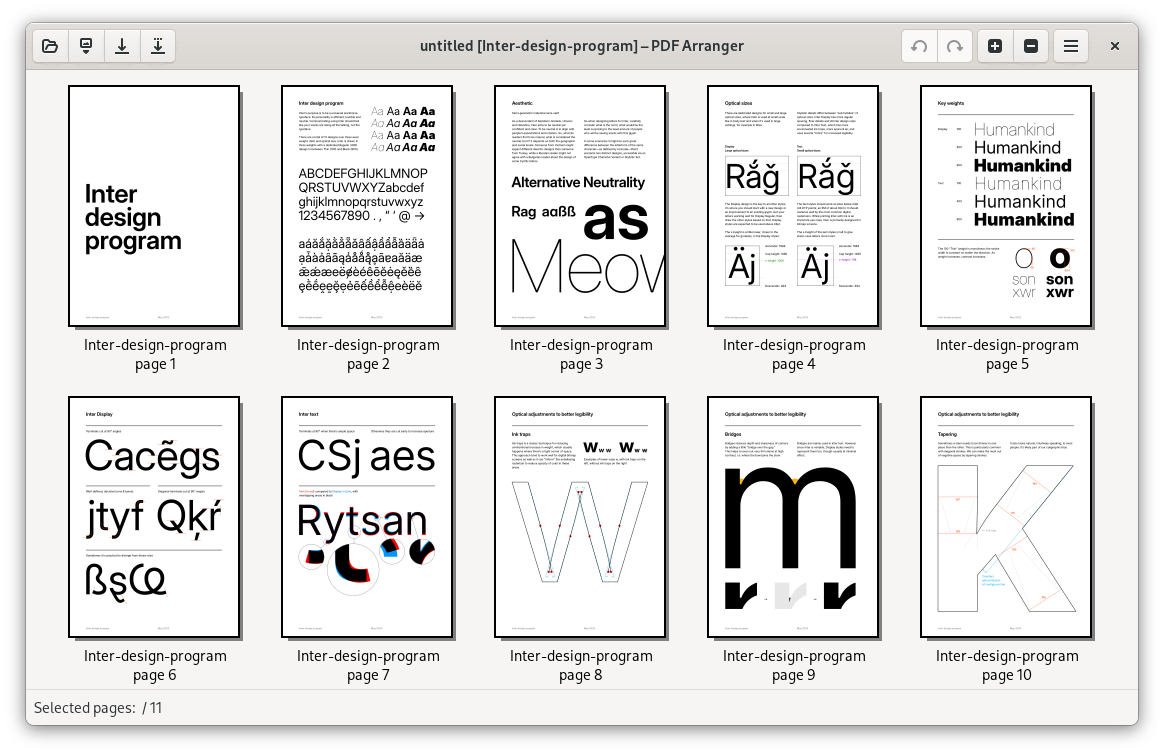
Shows every page of a PDF as a thumbnail that can be dragged, rotated, cropped or deleted.
▶Repo detailsthe review · specs · pros & cons · install
What it is
PDF Arranger is a small desktop window for rearranging the pages of a PDF. It continues the abandoned PDF-Shuffler project, and it does page-level work only: it never edits the text inside a page.
What it is good for. Anyone who scans paper and ends up with pages upside down, in the wrong order, or split across three files. It is the quickest way to fix a document before sending it, with no account and no upload, which matters for contracts, invoices and medical paperwork.
- Entirely local. The file never leaves the machine, so confidential documents stay confidential by construction rather than by policy.
- Packaged in Debian, Ubuntu, Fedora, Arch and FreeBSD, plus Flathub and Snap, so most people can install it without compiling anything.
- Plain unmodified GPL-3.0, read from the
COPYINGfile.
- The README's own pip command installs the development tip of the main branch rather than the 1.14.0 release, and that development build still reports its version as 1.14.0, so the two are indistinguishable afterwards.
- It is not on PyPI at all, so there is no
pip install pdfarrangerfrom a package index. The install goes through a distribution package or a zip file of the branch. - The macOS instructions pipe a remote script into a shell to install Nix, no minimum Python version is published anywhere, and Windows is 64-bit only despite those instructions living in a file named
Win32.md. The licence file names no project copyright holder, only the Free Software Foundation's own line.
- torakiki/pdfsam
A desktop program for the same split, merge, mix and rotate operations, in Java and task-driven rather than a canvas of page thumbnails.
Track this in Scout  Stirling-Tools/Stirling-PDF
A self-hosted web application covering a far wider set of PDF jobs.
Track this in Scout pdfcpu/pdfcpu
The same page operations as a command-line program and a Go library, suited to scripting rather than hand-arranging.
Track this in Scout
sudo apt-get install python3-pip python3-wheel python3-gi python3-gi-cairo \
  gir1.2-gtk-3.0 gir1.2-poppler-0.18 gir1.2-handy-1 python3-setuptools \
  gettext python3-dateutil python3-venv
python3 -m venv --system-site-packages ~/myenv
~/myenv/bin/pip3 install --upgrade https://github.com/pdfarranger/pdfarranger/zipball/main
~/myenv/bin/pdfarranger
1,788 stars · GPL-3.0 · v0.16.1 (13 Sep 2026) · Track this in Scout
A keyboard-driven library of papers kept as ordinary folders on disk.
▶Repo detailsthe review · specs · pros & cons · install
What it is
Papis is a command-line document and bibliography manager. Every document is a folder holding the file plus a small text record beside it, so the library stays readable even with Papis uninstalled.
What it is good for. Anyone who prefers the keyboard to a window, who wants the library to live in a folder they back up and sync themselves, and who already works through scripts. It is the opposite trade-off from Zotero above, and the two are worth comparing before committing a few thousand references to either.
- The library is plain folders and plain text files. Nothing is locked inside an application database, so any backup tool already covers it.
- It fetches details from DOI, arXiv, Crossref and several other sources, so adding a paper is one command rather than a form.
- Nine and a half years old, with 71 open issues against only 12 open pull requests, and code landing five days before this edition.
- The licence file is plain GPL-3.0 but names no project copyright holder, only the Free Software Foundation's own line, while PyPI claims GPL-3.0-or-later. Nothing in the file itself elects the "or later" option.
- The install documentation covers GNU/Linux-like systems only and never states the minimum Python version, which is 3.10 and appears only on PyPI. Its Guix section still targets version 0.13 while the current release is 0.16.1.
- It offers
sudo pip install papisas a route without saying why installing into the system Python is a bad idea. The saferpip install --user papisis given alongside it with no explanation of the difference.

- JabRef/jabref
BibTeX-centred reference management as a Java desktop program with a graphical interface.
Track this in Scout - pubs/pubs
The closest match in shape, a command-line bibliography manager over a local folder; last code 1 June 2024.
Track this in Scout
python3 -m venv venv
source venv/bin/activate
pip install papis
papis add --from doi 10.1103/PhysRev.47.777
papis list
papis open

28,545 stars · FSL-1.1-MIT (not open source) · v0.97.1 (29 Sep 2026) · Track this in Scout
A terminal program that drives an AI model over the code in the current folder.
▶Repo detailsthe review · specs · pros & cons · install
What it is
Crush is an agentic coding tool from Charmbracelet, the team behind several widely used terminal interface libraries. It supports many providers, including models running locally through Ollama or llama.cpp, and it has shipped 97 minor versions in sixteen months.
What it is good for. Anyone who works in a terminal and wants a coding assistant there rather than inside an editor. The local-model route is the interesting one for anyone who is not allowed to send source code to an outside provider at all.
- It installs from almost every package manager there is: Homebrew, npm, winget, scoop, apt, yum, Arch, FreeBSD and Nix, with prebuilt binaries for Linux, macOS, Windows and the BSDs.
- It works three ways: a provider key of one's own, the maker's subscription, or a model running on the same machine.
- Permission prompts before tool calls are the default behaviour, not an option that has to be found.
- NOT OPEN SOURCE. The licence is the Functional Source License 1.1 with MIT future. Use is granted only for a "Permitted Purpose", defined as "any purpose other than a Competing Use", and a Competing Use includes offering "the same or substantially similar functionality" in a commercial product. Each version converts to plain MIT two years after its own release. GitHub shows no licence label at all, and Go's own package index reports "License: UNKNOWN" with the redistributable box unchecked.
- Its configuration files run shell code when they load. The README states it: "
crushrcruns in a full shell, and any$(...)incrush.jsonruns at load time", followed by "Don't launch Crush in a directory whose config you haven't reviewed." Starting it inside a repository written by someone else is therefore arbitrary code execution. - A
--yoloflag skips every permission prompt, usage metrics are collected by default untilCRUSH_DISABLE_METRICS=1is set, and there are 409 open issues against 270 open pull requests. No memory, disk or processor figure is published, and neither is a minimum Go or Node version for the two source install routes.
- google-gemini/gemini-cli
The same terminal agent loop, tied to Google's own models and quotas rather than a provider of one's choosing.
Track this in Scout  cline/cline
The same edit-and-run loop with approval gates, primarily as an editor extension and a software kit.
Track this in Scout TabbyML/tabby
The self-hosted answer, which runs the model itself instead of calling out to one.
Track this in Scout
brew install charmbracelet/tap/crush



33,906 stars · Apache-2.0 with a paid ee/ carve-out (Tabby Enterprise License) · v0.32.0 (25 Jan 2026) · Track this in Scout
A coding assistant that runs the model on hardware you control.
▶Repo detailsthe review · specs · pros & cons · install
What it is
Tabby is a self-hosted completion and chat server with an administration screen for a team, plus editor extensions that connect to it. Self-hosted means it runs on a machine of your own choosing rather than as a service somebody else operates. It ships as a Docker container, which is a way of running a program inside its own sealed box so it cannot disturb anything else on the machine.
What it is good for. A team that cannot send source code to an outside provider: regulated work, client code under a confidentiality agreement, or a company rule that forbids it. It also suits anyone who would rather pay once for hardware than carry a per-request bill that grows with use.
- It publishes a real hardware figure, which almost nothing else in this edition does: "approximately 8GB of VRAM for CodeLlama-7B" in int8 mode, with the minimum graphics-card compute capability listed for each precision.
- One container, one command, and an administration screen that handles seats and usage for a team.
- No per-request cost at a provider once the hardware exists, and no code leaves the network.
- OPEN CORE. The licence file is Apache-2.0 with a preamble that carves out the
ee/directory, andee/LICENSEis the Tabby Enterprise License: production use requires an agreed subscription "with a valid Tabby Enterprise license for the correct number of user seats". GitHub shows no licence label for the repository at all as a result, so neither fact is visible from the sidebar. - THE FIRST VISITOR BECOMES THE OWNER. The documented command publishes port 8080 with no credentials set, and the documentation states: "The first registered account after deployment will be the admin account and will be granted the owner role." Anyone who reaches that port before the operator registers takes the instance.
- The README pulls the image
tabbyml/tabbyfrom Docker Hub while the official documentation pullsregistry.tabbyml.com/tabbyml/tabby, which is two different supply chains for the same command. The one published hardware figure is for CodeLlama-7B, a model the quick start never uses. Code last landed 30 June 2026 and the newest release is dated 25 January 2026, so the pace here is slower than in the rest of part three.
- twinnydotdev/twinny
The same self-hostable completion and chat against local models, as a VS Code extension only, with no server component.
Track this in Scout - continuedev/continue
The same idea inside the editor; its README now declares the repository read-only and unmaintained.
Track this in Scout - fauxpilot/fauxpilot
A self-hosted completion server with the same goal; no code since 9 April 2024 and no archived banner.
Track this in Scout
docker run -d --name tabby --gpus all -p 127.0.0.1:8080:8080 \
  -v $HOME/.tabby:/data \
  registry.tabbyml.com/tabbyml/tabby \
  serve --model StarCoder-1B --chat-model Qwen2-1.5B-Instruct --device cuda


19,818 stars · MIT · 0.0.85 (6 Oct 2026) · Track this in Scout
Checks Python code for type mistakes, very fast, from the team behind ruff and uv.
▶Repo detailsthe review · specs · pros & cons · install
What it is
ty is a Python type checker and language server written in Rust, from Astral, the team behind ruff (Edition 24) and uv (Edition 10). Its own README says "ty is currently in beta", and its version policy says the interface is not stable.
What it is good for. Any Python project large enough that a small mistake takes a while to show up. The first run is read-only and costs ten minutes, which makes it cheap to point at code that has never had a type checker near it.
- MIT, plain and unmodified, with the holder named: "Copyright (c) 2025 Astral Software Inc.". No carve-out and no second licence file.
- It can be run with nothing installed:
uvx ty checkdownloads, runs and cleans up. - It is shipping constantly. PyPI shows 42 releases between 5 June and 6 October 2026, roughly one every two or three days.
- It is 0.0.x by design and has no stable interface. The project's own version policy warns that breaking changes are expected between versions, so a build pipeline that pins nothing can break on any upgrade.
- Two Python numbers that read as a contradiction. The package installs on Python 3.8 and later, but only code targeting 3.10 and later is officially supported for checking, and targets 3.7 to 3.9 "may produce false results".
- The published benchmark file still compares version 0.0.55, thirty releases behind the current one. The Rust code lives in a different repository, so a code change belongs there and not here, and there are 889 open issues against 10 open pull requests.
- python/mypy
The reference Python type checker, written in Python, on a stable 2.x line rather than a 0.0.x beta.
Track this in Scout - microsoft/pyright
The same checking plus a language server, written in TypeScript, on a stable 1.1.x line.
Track this in Scout - facebook/pyrefly
The closest rival: also a fast Rust checker with a language server, already on a 1.x line.
Track this in Scout
uvx ty check

24,695 stars · MIT · v0.8.2 (6 Oct 2026) · Track this in Scout
A rewrite of SQLite in Rust that reads the same files and has not yet reached version 1.0.
▶Repo detailsthe review · specs · pros & cons · install
What it is
Turso is an in-process SQL database written in Rust and compatible with SQLite's file format, with an experimental interface that speaks the PostgreSQL protocol as well. The repository was renamed this year from tursodatabase/limbo, and the old address still answers.
What it is good for. Anyone following where small embedded databases are going, and anyone who needs something SQLite does not offer: encryption of the file at rest, or writes from several processes. It is not the choice for data that must not be lost, and the project's own advice says as much.
- MIT, plain and unmodified, with a dependency policy file that refuses every GPL variant, so the whole tree stays permissive.
- The SQLite file format is fully supported, so existing database files open without conversion.
- It moves fast. A stable release lands roughly weekly, and the Rust, JavaScript, Python and Go bindings all ship together.
- Pre-1.0, and its own FAQ says "we have not yet reached 1.0." alongside "we recommend the same discipline you would apply to any database: keep independent backups." Encryption at rest, the PostgreSQL interface, incremental computation and multi-process writing are each marked experimental.
- Three documented ways to lose access to data. Rows written in its multi-version mode are invisible after reopening without that mode unless they were written out first. "The key is not stored anywhere", so a lost encryption key leaves the file unreadable. Changing a page codec can make an existing file unreadable.
- SQLite compatibility is partial and some gaps fail quietly rather than loudly. An unknown collation name silently falls back to the default instead of raising an error,
WITH RECURSIVEis unsupported, and several window functions are missing. The version recorded on the default branch is behind the released one.
- tursodatabase/libsql
The same owner's earlier answer, a C fork of SQLite rather than a rewrite; this project is its stated replacement.
Track this in Scout  duckdb/duckdb
Also an in-process database with no server, but column-oriented and aimed at analysis, with a file format of its own.
Track this in Scout- rqlite/rqlite
Builds on SQLite in the opposite direction: a replicated network server in Go, for staying available rather than embedded.
Track this in Scout
curl --proto '=https' --tlsv1.2 -LsSf \
  https://github.com/tursodatabase/turso/releases/latest/download/turso_cli-installer.sh | sh
tursodb mydb.db



28,969 stars · MIT and Apache-2.0 · v2.0.0 (7 Oct 2026) · Track this in Scout
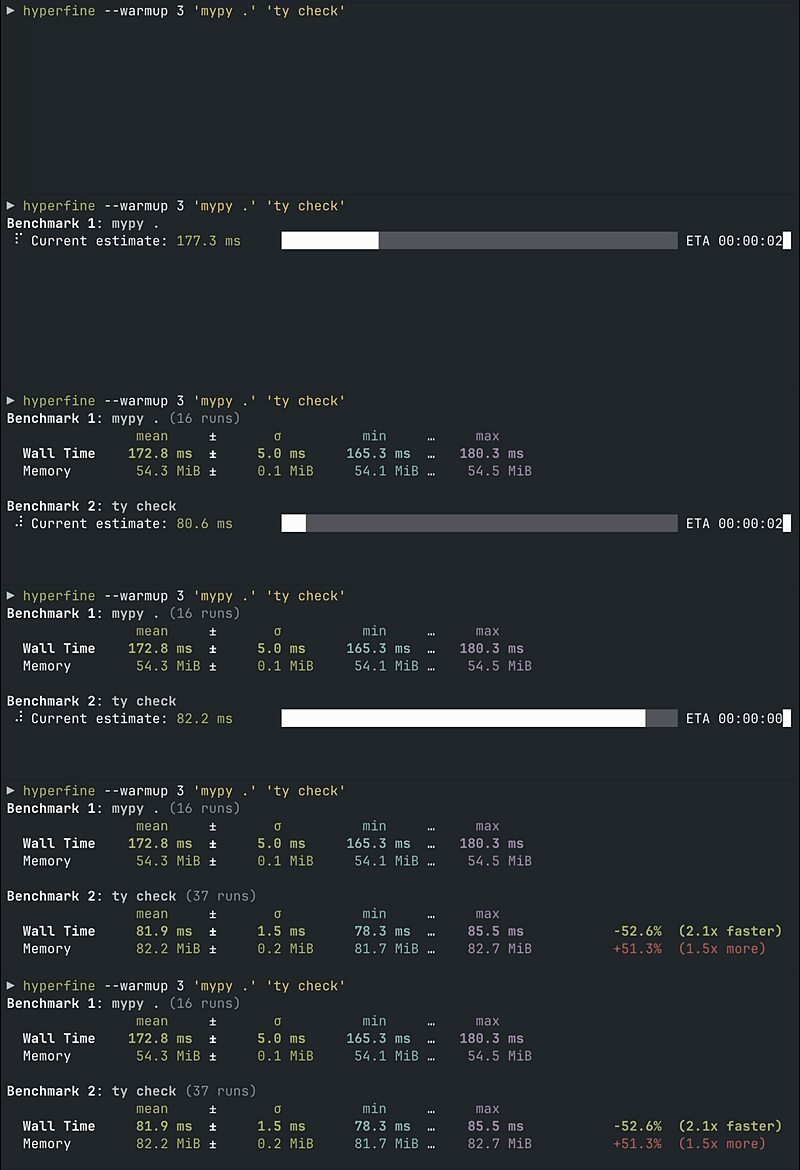
Runs a command many times and reports how long it really takes.
▶Repo detailsthe review · specs · pros & cons · install
What it is
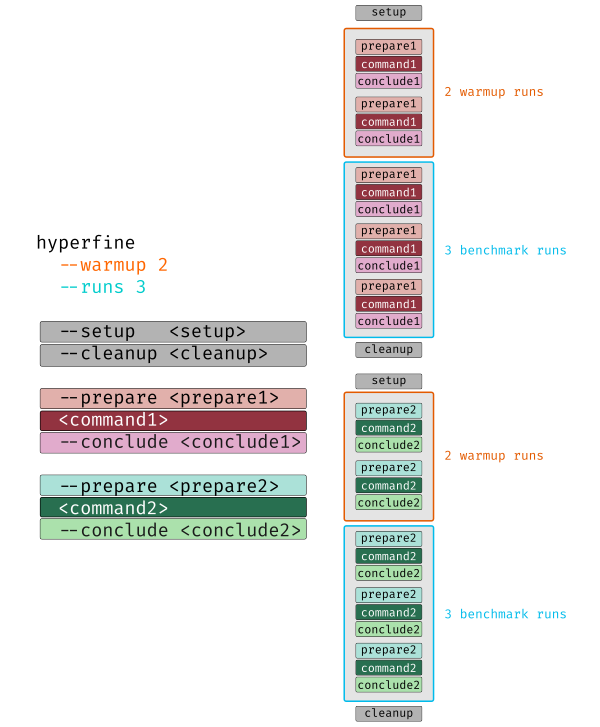
hyperfine is a command-line benchmarking tool written in Rust. It handles warm-up runs, statistical outliers, a progress display, and export to JSON, CSV, Markdown and other formats.
What it is good for. Anyone who has said "that feels slower now" and had nothing to point at. It settles an argument about two commands, two settings or two versions of a program in about a minute, with a number and a margin instead of an impression.
- Dual MIT and Apache-2.0, both files present and read. It is packaged for Ubuntu, Debian, Fedora, Alpine, Arch, openSUSE, Void, macOS, FreeBSD, OpenBSD, Windows and conda.
- It handles the parts people get wrong by hand: warm-up runs, shell startup overhead, and a warning when results are too scattered to trust.
- Eight years old and still moving. Version 2.0.0 landed on 7 October 2026, the day before this edition.
- The README installs the wrong version. Its "for the latest version" instructions for Ubuntu hardcode
hyperfine_1.20.0_amd64.deb, while the current release is 2.0.0, and the 1.x command line is not the 2.x one. - Version 2.0.0 is a breaking release and was one day old when this was written. Commands now run without an intermediate shell by default,
--time-unit,--sort,--referenceand--reference-nameare gone, and the JSON export moved to a new shape, so anything readingresults[i].meanmust be updated. - The Apache licence file is the unfilled template and names no copyright holder, while the MIT file names one and stops at 2022. No memory, disk or processor figure is published, and the Ubuntu package link is 64-bit Intel only.
- google/benchmark
The same statistics-first timing, as a C++ library compiled into a program rather than a tool that times whole commands.
Track this in Scout - bheisler/criterion.rs
Statistics-driven benchmarking of Rust functions inside a project's own test harness.
Track this in Scout - Gabriella439/bench
The closest match in shape, timing arbitrary commands with statistics; a much smaller Haskell program, last code 2 September 2025.
Track this in Scout
brew install hyperfine             # macOS
sudo apt install hyperfine         # Debian or Ubuntu, usually an older version
cargo install --locked hyperfine   # needs Rust 1.76 or newer

2,866 stars · MIT · v3.7.1 (27 Sep 2026) · Track this in Scout
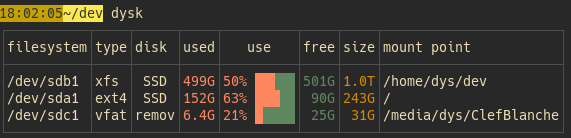
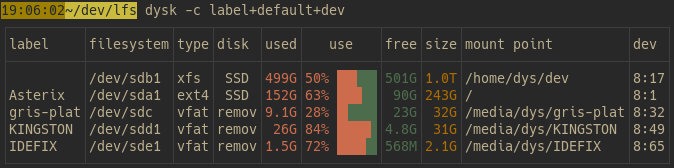
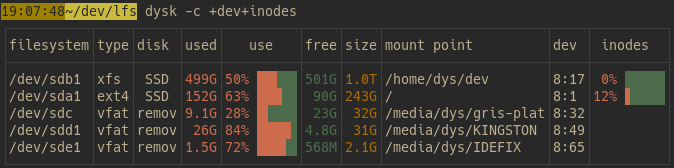
Lists every mounted disk and how full it is, as a readable table.
▶Repo detailsthe review · specs · pros & cons · install
What it is
dysk is a small command-line tool written in Rust that replaces df. It was previously called lfs, and its author also writes the file browser broot.
What it is good for. Anyone who has run df -h, squinted at the output, and still not been sure which line is the real disk. It is the two-minute check before a backup, before a large download, or when something is quietly filling up and nobody knows what.
- MIT, plain and unmodified, with the holder named: "Copyright (c) 2018 Denys Séguret".
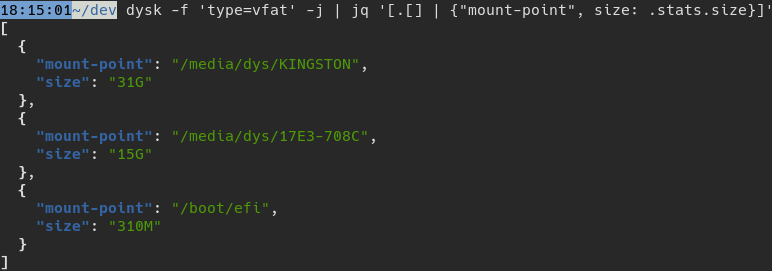
- A filter and sort expression language, so one command can show only the disks that matter instead of every temporary mount the system invents.
- Twenty open issues and zero open pull requests, with code landing eight days before this edition.
- The old package name still works and is years behind.
cargo install lfsfetches version 2.10.0 of January 2025 instead of 3.7.1, and nothing warns about it. - Three statements of which systems it supports, all different. GitHub's own description calls it "A linux utility", the README says "Linux, Mac, and Windows (experimental)", and the install page says Linux and Mac with Windows experimental.
- The published release is one commit behind the branch, no minimum Rust version is stated anywhere, and at 2,866 stars it is only 134 short of this report's 3,000-star gem line, so it may not count as a gem for long.
- muesli/duf
A df replacement that draws mounted filesystems as a formatted table, written in Go and without a filter expression language.
Track this in Scout - bootandy/dust
A Rust tool answering the other question, which folders are using the space, by walking a tree.
Track this in Scout - imsnif/diskonaut
An interactive terminal treemap that can also delete files; last code 7 March 2024.
Track this in Scout
cargo install --locked dysk # needs a Rust toolchain from rustup
Checked, and left out
Nothing to show for this edition. Recording the repositories that were checked and rejected began with Edition No. 4, and every edition from there on has the list.
Coming tomorrow