
Edition No. 22 · 16 Sep 2026
Twelve repositories for running a server, drawing a picture and reading a log
A log reader you can query with SQL, two ways to draw a picture, and four projects with fewer than three thousand stars.
The web version carries the English / Русский switch. The Russian text is in the file radar-2026-09-16-ru.md, delivered into the chat on the day. This archive stays English only.
A log file is a wall of lines. When something breaks at eleven at night, you scroll. Today's second entry does something else with it. It reads the timestamps, works out which lines belong to which request, and then lets you ask questions in SQL, the same language you use on a database. "Which ten addresses asked for the most pages today" becomes one short query against a text file that was never a database. That is the most interesting true thing in today's twelve, so it is the title.
There is no theme. Twelve repositories, picked on how good they are, across nine of the sixteen areas. Design and interface had not appeared in either of the last two editions, and that is where today's reach was aimed. Four of the twelve have fewer than three thousand stars.
We aim for twelve every day. Some candidates fall out while we check them — those are listed at the end, with the reason.
Two things worth knowing
A third project has announced it is leaving GitHub for Codeberg. Edition 20 found gallery-dl and audiowaveform both carrying a note that active development had moved to Codeberg, and called it a pattern worth watching. Today it turned up again, in a place nobody was looking: tiffany352/rink-rs, a units calculator listed under entry #8 as a comparison, opens with the line "Repo moving to Codeberg." The practical effect is small and real. The GitHub page keeps working, so nothing looks wrong from outside, but if you want to report a problem or see what is being worked on, you are knocking on the wrong door.
Not one of today's twelve carries a licence that restricts what you can do commercially. Ten are MIT, Apache-2.0, BSD or a mix of those. One is MPL-2.0, which only asks you to share changes to the project's own files. One uses the PostgreSQL licence, which is as permissive as MIT. That is unusual here. Edition 19 carried five entries with a licence warning, Edition 20 carried five, and Edition 21 carried two. Today there are none, and it happened by accident rather than by hunting for it.
If you only do three things
- tstack/lnav (#2) — tonight, five minutes, one command, nothing left running afterwards. You point it at a log file and it colours the errors, folds the repeated lines away, and merges several files into one timeline. Then you press one key and ask it questions in SQL. It is the cheapest thing on this page and it changes every debugging session you will have from now on.
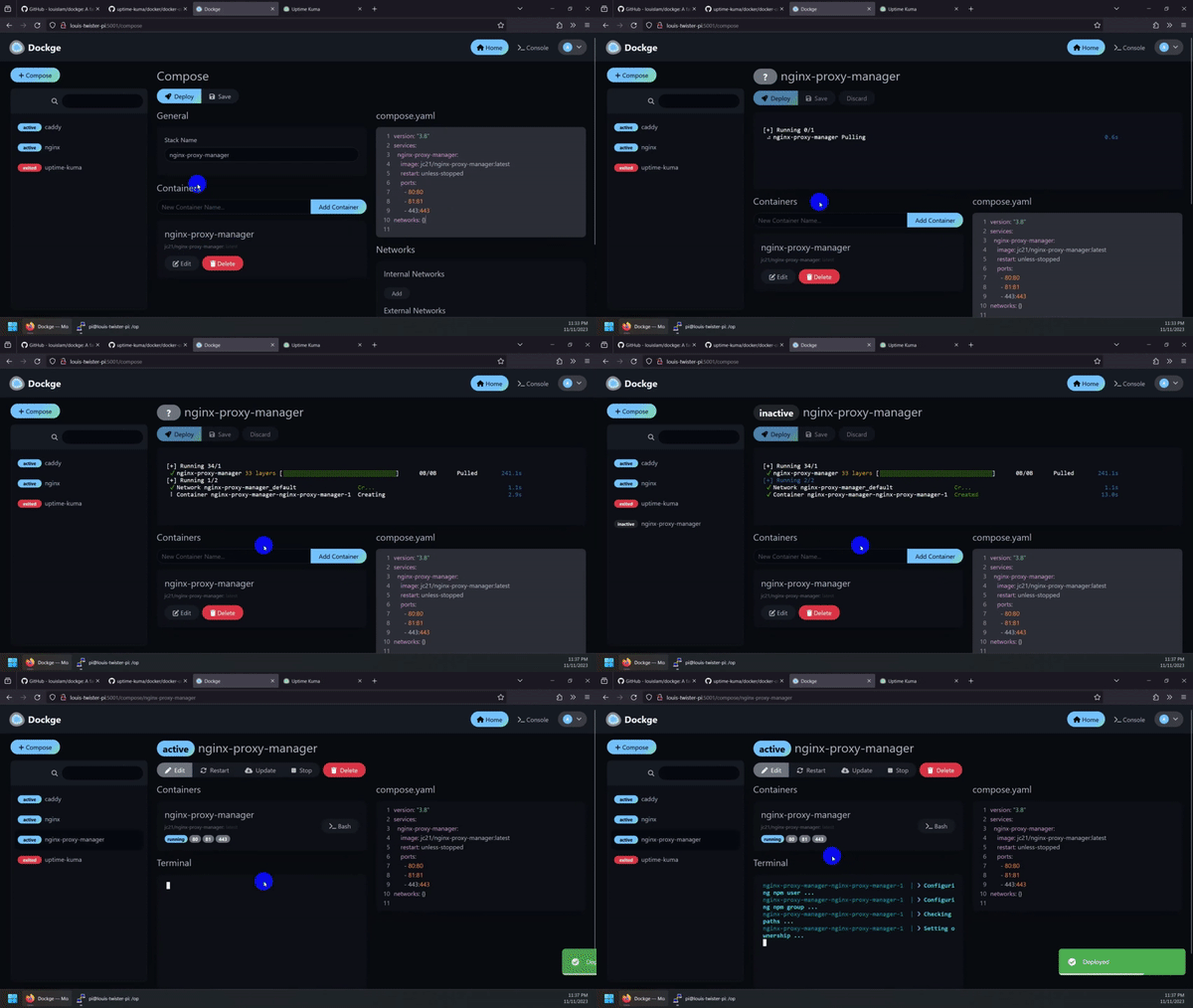
- louislam/dockge (#1) — this weekend, about an hour. Every program you run in a container on your server becomes a card on a web page, with a start button, a stop button and its live output. You can edit the settings file in the browser and press one button to apply it. On a phone, from anywhere.
- dagger/container-use (#11) — an hour, and it matters most to the people who build with a coding assistant. Each assistant gets its own sealed box with its own copy of the files. It cannot touch your real folder, you can read exactly what it did, and you keep or throw away its work with one command.
Every link in one place
| # | Repository | Official site or docs | Stars | Licence | Latest |
|---|---|---|---|---|---|
| 1 | louislam/dockge | dockge.kuma.pet | 24.1k | MIT | 1.5.0 (30 Mar 2026) |
| 2 | tstack/lnav | lnav.org | 10.6k | BSD-2-Clause | v0.14.1 (5 Sep 2026) |
| 3 | kanidm/kanidm | kanidm.com | 5.4k | MPL-2.0 | v1.11.2 (11 Sep 2026) |
| 4 | GraphiteEditor/Graphite | graphite.art | 27.1k | Apache-2.0 | no numbered releases; the moving latest-stable tag read 4 Feb 2026 |
| 5 | jgraph/drawio | drawio.com | 7.9k | Apache-2.0 | v31.4.5 (8 Sep 2026) |
| 6 | tconbeer/harlequin | harlequin.sh | 6.4k | MIT | v2.14.0 (14 Sep 2026) |
| 7 | darold/pgFormatter 💎 | sqlformat.darold.net | 2.0k | PostgreSQL licence | v5.11 (4 Sep 2026) |
| 8 | sharkdp/numbat 💎 | numbat.dev | 2.6k | Apache-2.0 or MIT | v1.24.0 (23 Aug 2026) |
| 9 | beancount/fava 💎 | beancount.github.io/fava | 2.5k | MIT | no GitHub releases; 1.30.16 on PyPI (18 Aug 2026) |
| 10 | lexiforest/curl-impersonate 💎 | curl-impersonate.readthedocs.io | 2.7k | MIT | v2.2.2 (1 Sep 2026) |
| 11 | dagger/container-use | container-use.com | 4.0k | Apache-2.0 | v0.4.2 (19 Aug 2026) |
| 12 | nkaz001/hftbacktest | hftbacktest.readthedocs.io | 4.2k | MIT | rust-v0.9.4 and py-v2.4.4 (10 Dec 2025) |
You can run SQL queries on your log file
Twelve repositories, checked and reviewed. Every version verified against the GitHub API and dated.

24.1k stars · MIT · 1.5.0 (2026-03-30), read from /releases/latest; the date showed no year and falls in the past, so 2026 · Track this in Scout
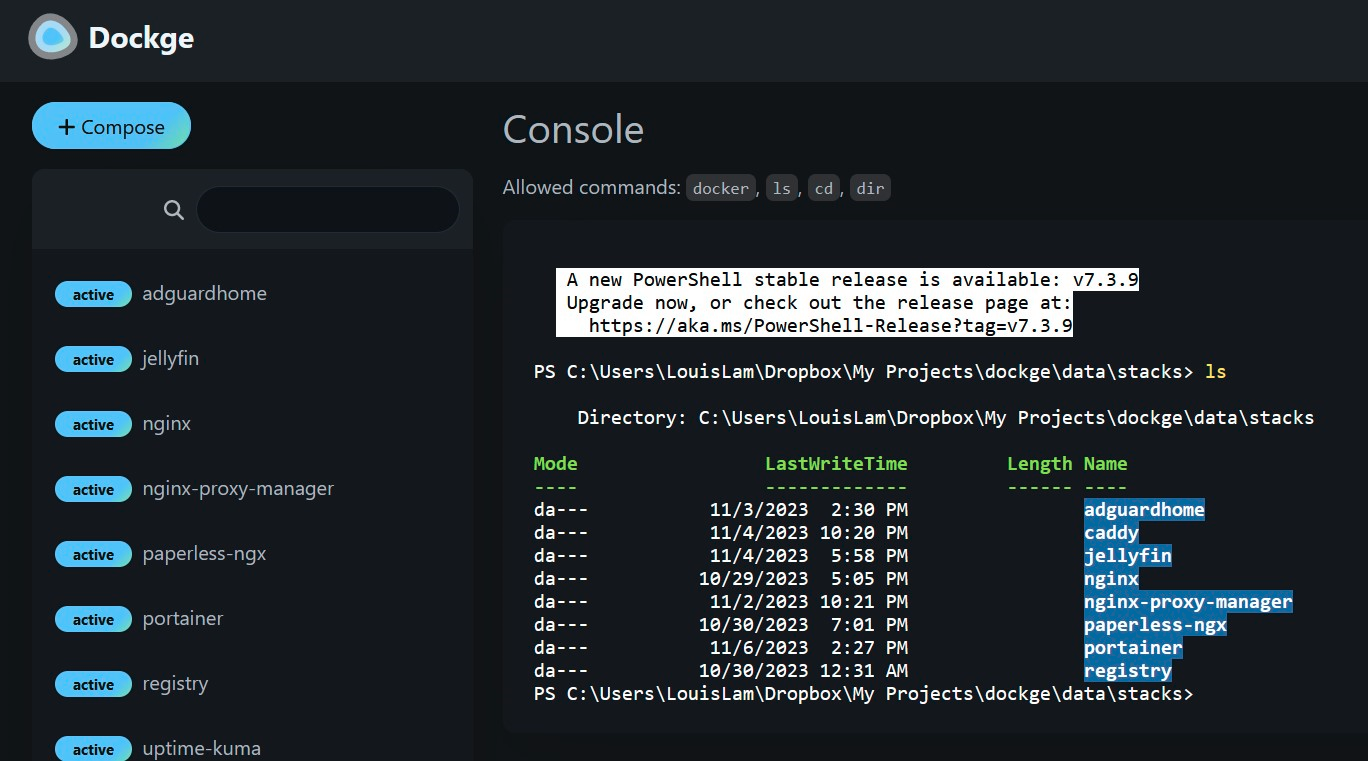
A web page that starts, stops, edits and watches every Docker Compose stack on your server.
▶Repo detailsthe review · specs · pros & cons · install
What it is
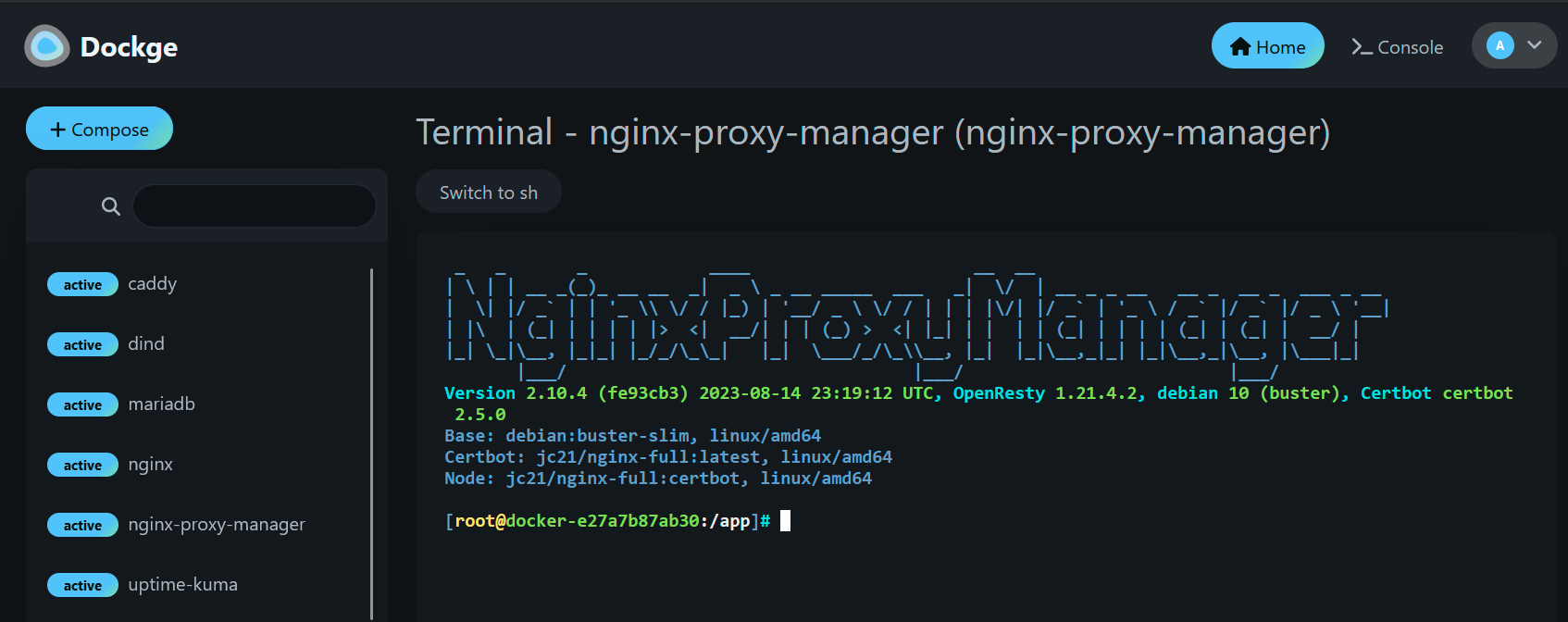
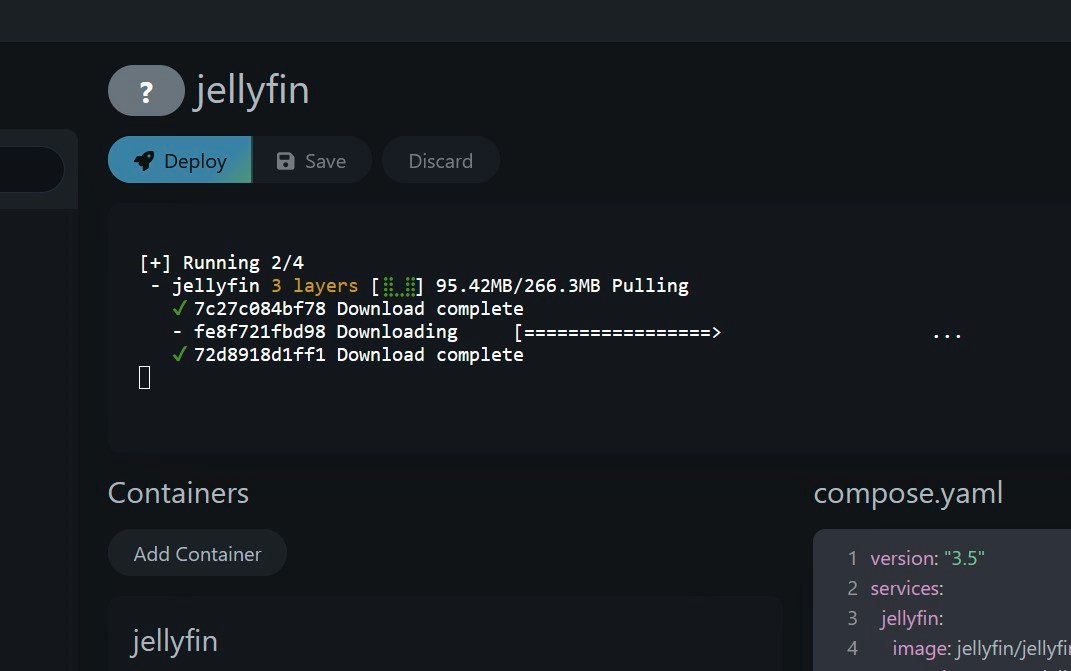
A self-hosted manager for Docker Compose stacks. Docker is a way to run a program inside its own sealed box, so it cannot break anything else on the server, and Docker Compose is the settings file that describes a group of those boxes. Dockge reads the compose files you already have, gives each stack a screen with live output, and writes your edits back to the same files on disk. It is by the same author as Uptime Kuma, which was Edition 7 #1.What it is good for. Any solo builder who runs more than two things on one server. The problem it removes is the gap between noticing something and fixing it. Restarting a stuck container stops being a laptop job and becomes three taps on a phone. It is also a good way to see what is actually running on a server you set up four months ago. Grasppy's Hetzner server now carries a long list of containers from twenty-one editions of this radar, and this is the screen that makes that list visible in one place.
- It edits your real compose files rather than hiding them in its own database, so nothing is trapped if you remove Dockge later.
- The live output window is on the same screen as the buttons, so you see the error the moment a restart fails.
- MIT licence, which puts no conditions on using it for a business.
- It manages Docker Compose stacks and nothing else. Containers you started by hand with
docker runwill not appear. - It needs access to the Docker socket, which is the same as giving it full control of the server. Never put it on the open internet without a login page in front of it.
- One person maintains it, and the newest release is from March 2026. That is recent enough, but it is a single-maintainer project and worth knowing before you depend on it.
- portainer/portainer
Manages containers through a web page as well, and covers far more than Compose files, which makes it heavier to learn and heavier to run.
Track this in Scout - jesseduffield/lazydocker
The same job in a terminal window instead of a browser, so it is faster to open and useless from a phone.
Track this in Scout - moghtech/komodo
Builds and deploys across many servers at once, so it is the answer when one server becomes five.
Track this in Scout
```bash On your server, as a user who can run docker: sudo mkdir -p /opt/stacks /opt/dockge cd /opt/dockge sudo curl https://raw.githubusercontent.com/louislam/dockge/master/compose.yaml --output compose.yaml sudo docker

10.6k stars · BSD-2-Clause · v0.14.1 (2026-09-05), read from /releases/latest; the date showed no year and falls in the past, so 2026 · Track this in Scout
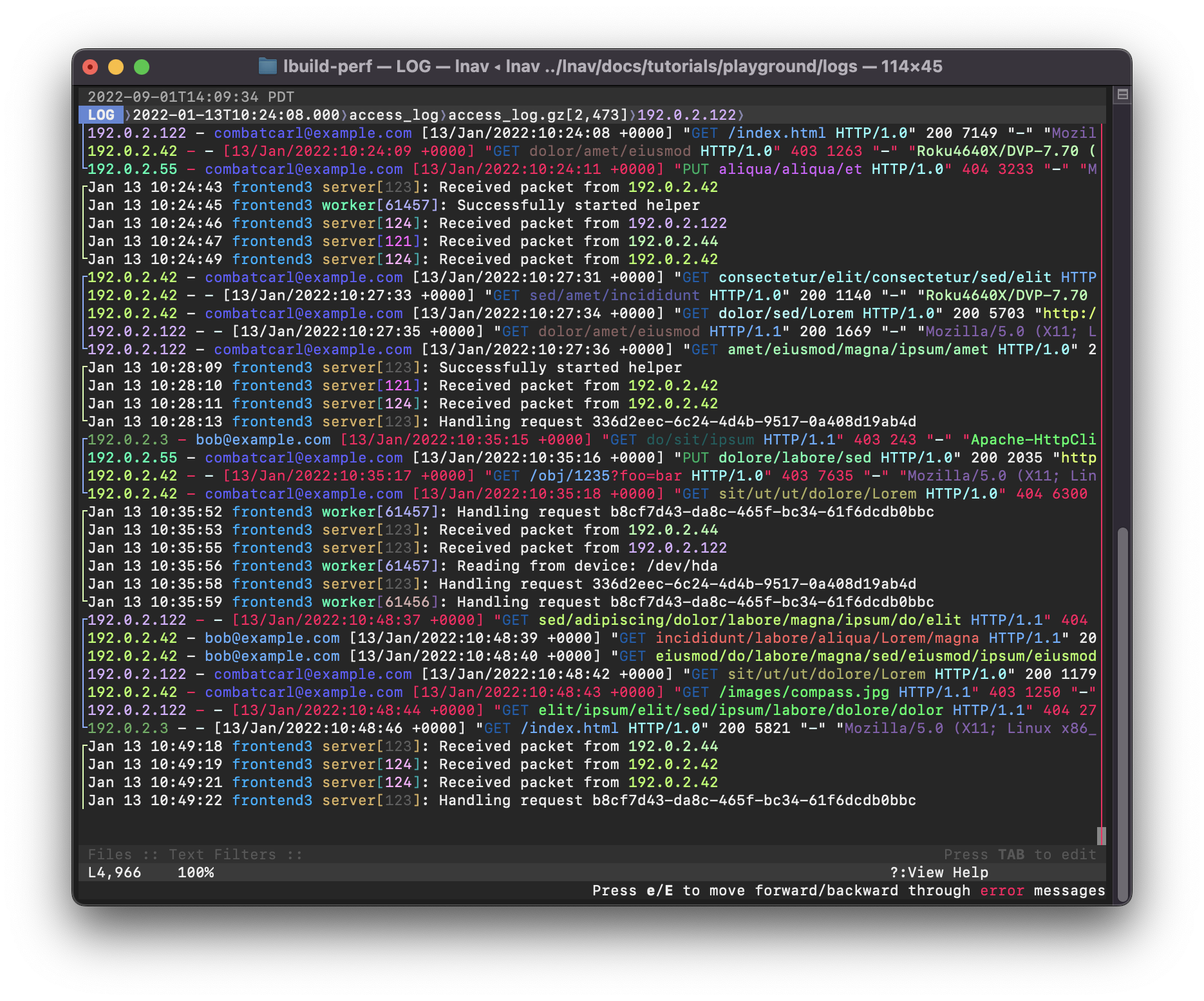
A log reader that merges files into one timeline by their timestamps and lets you query them with SQL.
▶Repo detailsthe review · specs · pros & cons · install
What it is
A terminal program that opens log files and directories of log files. It detects the format of the common ones on its own, including nginx, Apache, syslog and JSON lines, and builds an in-memory SQLite table out of what it parses. SQL is the ordinary language for asking questions of a database, and pressing ; inside lnav gives you a prompt where you can write it against your own log lines.What it is good for. Anyone who has ever opened a log file at midnight. The problem it removes is the reading. Instead of scrolling for the error, you filter to it; instead of counting by eye, you ask for a count. Compressed files are opened without unpacking them first, which matters when the thing you need is in last week's rotated log. For Grasppy this is the tool that answers "which requests were slow yesterday" straight from the nginx log, without adding anything to the server. It pairs with GoAccess (Edition 8 #4), which draws the traffic report, and with Dozzle (Edition 18 #2), which shows the live output of a container.
- It works on files you already have, with nothing to set up and nothing left running afterwards.
- It merges several files into one timeline by their timestamps, which is exactly what you want when a request crosses two services.
- The SQL prompt turns questions that were guesswork into answers with numbers.
- It is a terminal program. There is no web page and no way to share a view with somebody else.
- A log format it does not recognise is shown as plain text until you write a small format file for it, and that takes an hour the first time.
- It reads what is on the machine you run it on. It is not a place to collect logs from several servers.
 allinurl/goaccess
Reads the same web server logs but produces a traffic report rather than a reading window, so it answers how many while lnav answers what happened.
Track this in Scout amir20/dozzle
Shows the live output of running containers in a browser, which lnav cannot do, but it does not query history.
Track this in Scout- rcoh/angle-grinder
Filters and counts log lines from the command line with its own small query language; its newest release is from March 2025.
Track this in Scout
# Debian or Ubuntu:
sudo apt install lnav
# macOS:
brew install lnav
# Or take one static binary from:
#   https://github.com/tstack/lnav/releases/latest
# Read one file:
lnav /var/log/nginx/access.log
# Read every log in a folder, compressed ones included:
lnav /var/log/nginx/
# Inside lnav, press ';' and then ask a question:
#   ;SELECT c_ip, count(*) AS hits FROM access_log
#    GROUP BY c_ip ORDER BY hits DESC LIMIT 10

5.4k stars · MPL-2.0 · v1.11.2 (2026-09-11), read from /releases/latest; the date showed no year and falls in the past, so 2026. That release fixes a moderate LDAP bind issue described on its own page · Track this in Scout
One identity server with its own embedded storage, speaking OAuth2, OpenID Connect and LDAP, with passkeys as the normal way in.
▶Repo detailsthe review · specs · pros & cons · install
What it is
An identity management server written in Rust. It speaks OAuth2 and OpenID Connect for modern applications and LDAP for older ones, and it ships as a single service with its own embedded database rather than a stack of parts. It supports passkeys, one-time codes, groups, and rules about which group may enter which application.What it is good for. A solo builder whose server has quietly grown five private screens: a container manager, a log viewer, a monitoring page, a database tool, an invoice app. The problem it removes is five sets of credentials and no way to revoke them at once. When somebody stops helping you, you switch off one account instead of remembering five. This ledger already holds two answers to the same question, and you should pick one: Logto (Edition 11 #4) is aimed at signing in the customers of your product, and Pocket ID (Edition 18 #4) is the small passkey-only option. Kanidm sits between them and is stricter than either about security defaults.
- One program, with its own storage. There is no separate database, cache or queue to run and back up.
- Passkeys are treated as the normal way in rather than an extra, and the project takes a hard line on weak settings.
- MPL-2.0, which only asks you to publish changes you make to the project's own files. Building a paid product around it is fine.
- It refuses to run without HTTPS and a valid certificate, so there is no five-minute version to try.
- The strict defaults mean some older applications simply will not connect, and the answer is usually to change the application.
- It is smaller than Authentik or Authelia, so there are fewer step-by-step guides when you get stuck.
- goauthentik/authentik
Does the same job with a much larger feature list and a friendlier admin screen, at the cost of running several containers instead of one.
Track this in Scout - authelia/authelia
Sits in front of your web server and asks for a second factor before letting anyone through, which is simpler but gives applications less to work with.
Track this in Scout  pocket-id/pocket-id
Passkeys only, and deliberately small; the right choice if you want sign-in and nothing else.
Track this in Scout
sudo mkdir -p /opt/kanidm/data
# Write /opt/kanidm/server.toml with your domain, your origin URL,
# and the paths to your certificate and key. The exact fields are listed at
#   https://kanidm.github.io/kanidm/stable/server_configuration.html
sudo docker run -d --name kanidm \
  -p 443:8443 \
  -v /opt/kanidm:/data \
  docker.io/kanidm/server:latest
# Recover the first administrator account:
sudo docker exec -i -t kanidm kanidmd recover-account admin

27.1k stars · Apache-2.0 · no numbered releases at all; the only GitHub tag is a moving one called latest-stable, which read 4 February 2026 when checked. The project's own blog's newest post is September 2025 · Track this in Scout
A browser-based 2D graphics editor whose node-based engine keeps every step of a drawing editable afterwards.
▶Repo detailsthe review · specs · pros & cons · install
What it is
A 2D graphics editor written in Rust and compiled to run in the browser. Its drawing engine is node-based, which means the picture is a chain of operations rather than a finished bitmap, and any operation in the chain can be edited afterwards. It handles vector drawing, raster painting and procedural generation in the same document, and desktop builds for Windows, macOS and Linux are at release candidate stage.What it is good for. Anyone who makes repeated visual work and is tired of redoing it. Thumbnails, social images, diagrams with a house style. The problem it removes is the second version: because the steps are kept, changing the colour or the text does not mean redrawing the picture. Penpot (Edition 12 #4) remains the right answer for interface design work you intend to hand to a developer. This is the right answer for illustration and generated artwork.
- Nothing to install. You open a web page and start drawing, and your work stays on your own machine.
- Every step is editable forever, which makes a family of similar images cheap after the first one.
- Apache-2.0, and there is no paid tier at all.
- The project calls itself alpha. Expect missing features and file formats that may change.
- It cuts no numbered releases. The only tag on GitHub is a moving one called
latest-stable, which read 4 February 2026 when we checked, and the newest post on the project's own blog is from September 2025. The project is well short of the eighteen-month line and is not being called dormant, but we could not prove more recent work from here. - A browser tab has limits. Very large documents will be slower than a desktop program.
 penpot/penpot
Aimed at interface design for teams, with components and developer handoff, so it is the better tool for product screens and the worse one for illustration.
Track this in Scout- excalidraw/excalidraw
A whiteboard with a hand-drawn look, far simpler and far faster for a rough sketch, with none of the editable-steps idea.
Track this in Scout - SVG-Edit/svgedit
A plain vector drawing editor that also runs in the browser and can be embedded in your own page; its newest release is from December 2023.
Track this in Scout
# Nothing to install. Open the site and go to the editor:
#   https://graphite.art
# To run your own copy you need Rust and Node.js:
git clone https://github.com/GraphiteEditor/Graphite.git
cd Graphite/frontend
npm install
npm start
# The exact build steps, which do change, are in the README:
#   https://github.com/GraphiteEditor/Graphite#readme





7.9k stars · Apache-2.0 · v31.4.5 (2026-09-08), read from /releases/latest; the date showed no year and falls in the past, so 2026 · Track this in Scout
The diagram editor behind diagrams.net, which runs entirely in the browser and can be self-hosted.
▶Repo detailsthe review · specs · pros & cons · install
What it is
A client-side diagram editor written in JavaScript. Client-side means the drawing happens in your browser and the server only sends the page, so a self-hosted copy never sees your content. It has shape libraries for flowcharts, network diagrams, org charts, database schemas and cloud architecture, and it saves to a .drawio file, to SVG, or to a PNG image that carries the editable diagram inside it.What it is good for. Any solo builder who needs a picture for documentation, a pitch or a video. The problem it removes is the licence and the account: the free website is genuinely free, and when a diagram is sensitive you run the same program yourself. For the YouTube channel it is the fastest way to make an architecture diagram that does not look like a whiteboard photograph. Mermaid (Edition 12 #10) stays the better choice for a diagram that must live inside your documents as text.
- Very large shape libraries, which is what actually makes a diagram quick to draw.
- The PNG it exports carries the source inside it, so a picture you find in an old folder is still editable.
- Apache-2.0 for the whole editor, with no paid features held back.
- The desktop application lives in a second repository,
jgraph/drawio-desktop, so the releases you want may not be the ones on this page. - The user interface is dense. Everything is there, which also means everything is on screen.
- Working on one diagram with another person at the same time is not built in; that depends on where the file is stored.
 mermaid-js/mermaid
Draws the diagram from a few lines of text instead of by hand, which is better inside documents and worse when the layout matters.
Track this in Scout- plantuml/plantuml
Also builds diagrams from text, with a long history and strong support for formal software diagrams, and it needs Java to run.
Track this in Scout - tldraw/tldraw
An infinite canvas you put inside your own application, so it is a building block for developers rather than a program you open; production use needs a paid licence key.
Track this in Scout
# Use it with nothing installed:
#   https://app.diagrams.net
# Desktop application, from the separate repository:
#   https://github.com/jgraph/drawio-desktop/releases/latest
# Your own copy on your own server:
sudo docker run -d --name drawio -p 8080:8080 -p 8443:8443 jgraph/drawio
# Then open http://<your-server-address>:8080

6.4k stars · MIT · v2.14.0 (2026-09-14), read from /releases/latest; PyPI still showed 2.13.0 on 16 September, which is the less common direction · Track this in Scout
A full SQL editor that runs inside a terminal window, with a schema sidebar, autocompletion and query history.
▶Repo detailsthe review · specs · pros & cons · install
What it is
A terminal application for writing and running SQL. It has a schema sidebar, a multi-tab query editor, a scrollable results grid, query history, and support for several databases through adapters: DuckDB, SQLite, PostgreSQL, MySQL and others. A companion command called hsql runs queries without the screen, for use in scripts.What it is good for. Anyone who works on a database over a remote connection, where a desktop program is not an option. The problem it removes is typing table names from memory. Grasppy's data is in PostgreSQL on a Hetzner server, and this is what turns a session there into something closer to a real editor. Edition 21 gave you pspg, which makes the output of the standard psql client readable in two minutes of setup. This is the larger answer: pspg improves what you already use, and Harlequin replaces it.
- The schema sidebar and autocompletion together remove most of the guessing in an unfamiliar database.
- One program covers SQLite, DuckDB, PostgreSQL and MySQL, so you learn one set of keys.
- MIT licence, and installation is a single command with
uv.
- It is a bigger commitment than a pager. If all you want is readable output from
psql, pspg costs two minutes and this costs an afternoon of getting used to it. - Each database needs its own adapter installed, and forgetting the extra is the usual first-run problem.
- When we checked, GitHub showed v2.14.0 and PyPI still showed 2.13.0. That direction is unusual and it normally settles within a day.
- dbcli/pgcli
Replaces the standard PostgreSQL prompt with one that completes names as you type, and stays a prompt rather than becoming a screen.
Track this in Scout  okbob/pspg
Not an editor at all: it makes the tables your existing client prints readable, with frozen headings and search.
Track this in Scout
```bash

2.0k stars · PostgreSQL licence · v5.11 (2026-09-04), read from /releases/latest; the release notes state the full date, September 4 2026 · Track this in Scout
Lays out an unreadable SQL query so a person can read it, from the command line or as a web page.
▶Repo detailsthe review · specs · pros & cons · install
What it is
A SQL formatter written in Perl, by the author of pgBadger, which was Edition 18 #6. It understands PostgreSQL syntax properly, including the parts most formatters get wrong, and it can also colour the output as HTML for a web page. It runs as a command, as a filter in an editor, or as a small web page you host yourself.What it is good for. Anyone whose SQL is written by somebody else, and today that often means a coding assistant. The problem it removes is a review you skip because the text is unreadable. You build everything with Claude Code, so a large share of Grasppy's queries arrive fully formed, and running them through this before they are committed is the difference between reading them and trusting them. It also makes the slow queries that pgBadger (Edition 18 #6) names legible when you go to look at them.
- One command, instant, and it can edit the file in place so it fits into saving a file.
- It knows PostgreSQL specifically, so it does not mangle the parts that are not standard SQL.
- The PostgreSQL licence is as permissive as MIT, and there is a public demo page if you only need it once.
- It formats and nothing else. It will not tell you a query is wrong or slow.
- It is a Perl program, which is already on most Linux servers but is one more thing on a Mac.
- Its own defaults may not match your house style, and getting the settings right takes a few tries.
- sqlfluff/sqlfluff
Formats SQL and also checks it against rules you choose, which is more useful in a team and much slower to set up.
Track this in Scout - tconbeer/sqlfmt
Formats to one fixed style with almost no settings, in the way Black formats Python, and is aimed at dbt projects.
Track this in Scout - sql-formatter-org/sql-formatter
A JavaScript formatter covering many database dialects, which suits putting a formatter inside your own web page.
Track this in Scout
# Debian or Ubuntu:
sudo apt install pgformatter
# Or from source; it is a Perl program with no dependencies to speak of:
git clone https://github.com/darold/pgFormatter.git
cd pgFormatter
perl Makefile.PL
make && sudo make install
# Format a file, replacing it:
pg_format -i my_query.sql
# Or paste a query into the demo page:
#   http://sqlformat.darold.net/

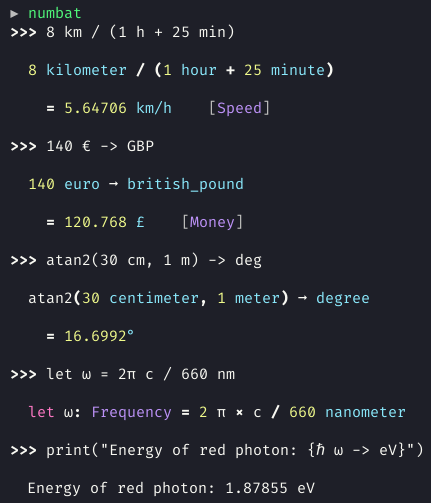
2.6k stars · Apache-2.0 or MIT · v1.24.0 (2026-08-23), read from /releases/latest; the repository's own summary page showed the older v1.23.0, so the release page was believed · Track this in Scout
A calculator that understands physical units and refuses sums whose units do not make sense.
▶Repo detailsthe review · specs · pros & cons · install
What it is
A small programming language for scientific calculation, with physical dimensions built into its type system. That means a mistake in units is caught before the sum runs, not after. It ships as a terminal program called numbat, and the same language runs in the browser at numbat.dev. It knows the SI units, imperial units, data sizes, currencies with live rates, and a large library of physical constants.What it is good for. Anyone who does arithmetic where the units matter and a mistake is expensive. Server capacity, transfer times, storage growth, the cost of an API call multiplied out to a month. The problem it removes is the wrong answer that looks right. You ask a question in plain units and get an answer in the units you asked for, and a unit error becomes an error message rather than a number you act on.
- Unit errors are caught, which is the whole point and is genuinely rare in calculators.
- It reads almost like English, so
8 GB / 45 MB/s -> minutesworks as written. - Dual Apache-2.0 and MIT, and there is a full web version if you do not want to install anything.
- It is a calculator, not a spreadsheet. There is nothing to save, share or print.
- Currency rates come from an online source, so that part needs a network connection.
- Learning its small language takes twenty minutes if you want more than one-line sums.
- Qalculate/libqalculate
A much larger desktop calculator that also handles units, symbolic algebra and plotting, with a window rather than a prompt.
Track this in Scout - printfn/fend
The same idea in a smaller package, with arbitrary precision arithmetic and no language to learn.
Track this in Scout - tiffany352/rink-rs
Another unit-aware calculator in Rust, with a large unit database; its README says the repository is moving to Codeberg.
Track this in Scout
# macOS:
brew install numbat
# With Rust installed:
cargo install numbat-cli
# Debian or Ubuntu: take the .deb from
#   https://github.com/sharkdp/numbat/releases/latest
# Nothing to install at all:
#   https://numbat.dev
# Then:
numbat
# and type:  8 GB / 45 MB/s -> minutes

2.5k stars · MIT · no GitHub releases at all, which is a determination rather than a gap; PyPI shows 1.30.16 (2026-08-18) with the year stated in full · Track this in Scout
Turns a plain text Beancount ledger into a website with balances, charts and a filter that narrows every page at once.
▶Repo detailsthe review · specs · pros & cons · install
What it is
A web interface for Beancount, which is a double-entry accounting system where your books are a text file you edit yourself. Double-entry means every amount is recorded twice, once where it came from and once where it went, so the books have to balance. Fava adds income statements, balance sheets, charts over time, a query screen, and an editor that checks the file as you type.What it is good for. A solo founder who wants their own books without a subscription and without handing their finances to a website. The problem it removes is the gap between having the data and being able to see it. Edition 20 recommended hledger and said plainly that it has no bank connection and no screen, and that you type the entries yourself. Fava is the answer to the second half of that. It works with Beancount rather than hledger, so the two are a choice rather than a pair: hledger has its own web interface, and Beancount plus Fava is the more polished of the two.
- Your books stay a text file you can read in any editor, and this only reads it.
- The filter at the top narrows every page at once, which makes "what did this quarter actually cost" a ten-second question.
- MIT licence, nothing to pay, and it runs on your own machine.
- You still type every transaction. Nothing here connects to a bank.
- You have to learn Beancount's format first, and that is an evening of reading.
- It is a viewer for one file on one machine. It is not built for two people using it at once.
 simonmichael/hledger
The same plain-text accounting idea with its own web interface included, so it is one project where this is two.
Track this in Scout- firefly-iii/firefly-iii
Keeps your finances in a database behind a web application instead of a text file, which is easier to start and harder to take with you.
Track this in Scout  actualbudget/actual
Aimed at deciding where money will go before you spend it, rather than recording where it went.
Track this in Scout
```bash python3 -m venv venv source venv/bin/activate pip install fava

2.7k stars · MIT · v2.2.2 (2026-09-01), read from /releases/latest; the date showed no year and falls in the past, so 2026 · Track this in Scout
A build of curl whose TLS and HTTP/2 handshakes match a real browser's, so pages that refuse automated visitors answer normally.
▶Repo detailsthe review · specs · pros & cons · install
What it is
A patched build of curl, the standard command-line tool for fetching a web page. The patches change how it negotiates the encrypted connection and how it opens an HTTP/2 session, so the fingerprint a website measures matches a real browser instead of a script. It ships wrapper commands named after each browser and version, and this repository is an actively maintained fork of the original project with more browsers and more build targets.What it is good for. Anyone whose research or monitoring keeps hitting a wall. The problem it removes is a page that works in your browser and fails in your script, for no reason you can see. Twenty-one editions have handed you scrapers and research tools — yt-dlp, Firecrawl, crawl4ai, trafilatura, changedetection.io — and every one of them fails the same way against a site that filters on the handshake. This is the layer underneath all of them. For competitor research for the YouTube channel it is often the difference between a page you can read and a page you cannot.
- It solves a specific problem that nothing else in this ledger addresses, and it solves it completely.
- There is a Python library,
curl_cffi, that gives the same fingerprints through code that looks likerequests. - MIT licence, and prebuilt binaries mean you do not have to compile curl yourself.
- Making requests look like a browser can break a website's terms of service. Read them, and be careful with rate limits.
- Browser fingerprints change with each browser release, so this needs updating to stay convincing.
- It only handles the connection. A site that requires JavaScript to render its content still needs a real browser.
- lwthiker/curl-impersonate
The original project this one forked from, covering fewer browser versions and fewer build targets.
Track this in Scout - lexiforest/curl_cffi
The same fingerprints as a Python library, which is what you want inside a program rather than at a prompt.
Track this in Scout - FlareSolverr/FlareSolverr
Runs a real browser behind a small server to get past challenge pages, which is heavier and works where a handshake alone is not enough.
Track this in Scout
# Prebuilt builds for Linux and macOS:
#   https://github.com/lexiforest/curl-impersonate/releases/latest
# They give you one command per browser:
curl_chrome131 https://example.com
# Or run it from a container with nothing installed:
docker run --rm lexiforest/curl-impersonate curl_chrome131 https://example.com
# From Python, the same fingerprints in a requests-like library:
python3 -m venv venv
source venv/bin/activate
pip install curl_cffi




4.0k stars · Apache-2.0 · v0.4.2 (2026-08-19), read from /releases/latest; the date showed no year and falls in the past, so 2026 · Track this in Scout
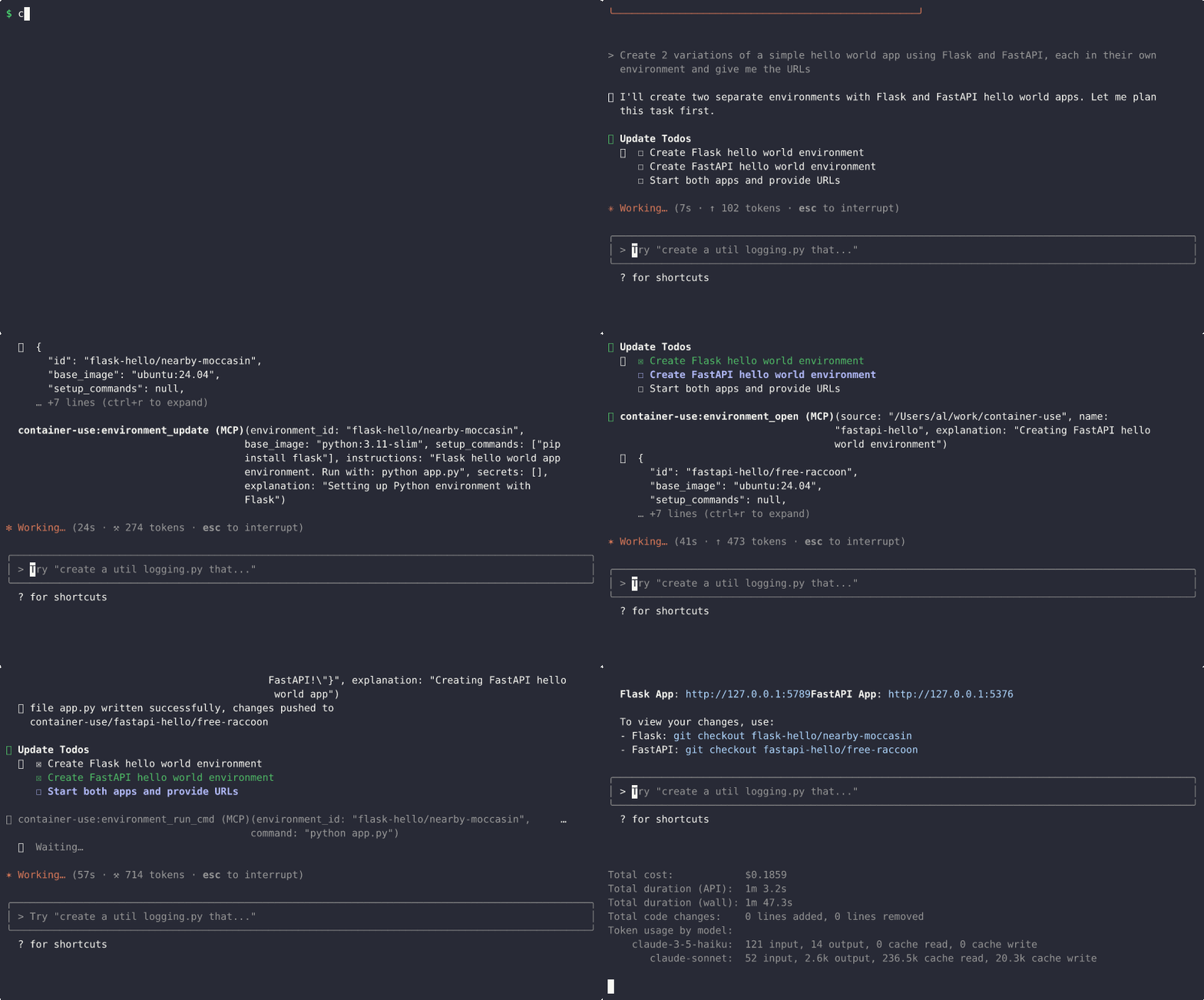
Gives each coding agent its own container with its own copy of the repository, plus a full log of every command it ran.
▶Repo detailsthe review · specs · pros & cons · install
What it is
A tool and an MCP server from the makers of Dagger. MCP is the standard way an assistant is given extra tools. Each task an agent starts gets a fresh container with a copy of your repository inside it, and the work is recorded as a git branch plus a full log of every command. You inspect an environment while it is running, and cu checkout brings its branch into your own repository when you are happy.What it is good for. Anyone who builds with a coding assistant and has learned to be nervous. The problem it removes is the review you cannot do: at the moment an assistant edits your files, you only see the result. Here you see the commands, the installed packages and the running process, and the work is a branch you can discard. You build everything with Claude Code, so this is the one entry today that changes how the building itself happens rather than adding another thing to run. Edition 19 gave you ccmanager, which runs several assistants side by side; this gives each of them its own machine.
- An assistant cannot damage your working folder, because it never has it.
- Every environment leaves a git branch and a complete command log, so you can see exactly what happened.
- Apache-2.0, and it works with any assistant that speaks MCP.
- The project calls itself experimental and says so on its own front page. Expect changes between versions.
- It needs Docker and the Dagger engine, which is a real amount of machinery for one person's laptop.
- Several agents at once means several containers at once, and that costs disk, memory and model spend.
 kbwo/ccmanager
Runs several assistant sessions side by side across git worktrees, which organises the people rather than sealing off the machine.
Track this in Scout- e2b-dev/E2B
Provides sandboxes for AI-generated code as a service with its own SDKs, aimed at code your product runs rather than code you review.
Track this in Scout - microsandbox/microsandbox
Runs untrusted code in small virtual machines rather than containers, which is stricter isolation and heavier to start.
Track this in Scout
# macOS or Linux:
curl -fsSL https://raw.githubusercontent.com/dagger/container-use/main/install.sh | bash
# or:
brew install dagger/tap/container-use
# Tell Claude Code about it:
claude mcp add container-use -- cu stdio
# Then, while an agent is working:
cu list             # which environments exist
cu log <id>         # every command that agent ran
cu checkout <id>    # bring its branch into your repository

4.6k stars · MIT · rust-v0.9.4 (2025-12-10) · Track this in Scout
Latency- and queue-aware backtesting with full order-book simulation — the right shape for a scalping strategy, where naive backtests flatter hardest.
▶Repo detailsthe review · specs · pros & cons · install
What it is
A high-frequency trading backtesting library written in Rust with a Python interface. It replays full order-book data rather than candles, tracks where your order sits in the queue at each price level, and applies configurable delays for sending an order and receiving a response. The same code can then be used to run the strategy live.What it is good for. Anyone testing a strategy whose profit per trade is small. The problem it removes is a backtest that looks profitable and is not, because it quietly assumed a perfect fill. ScalpingMate is exactly that case: a scalping strategy on EUR/USD lives or dies on fills and delay, and Edition 21's PyBroker, which is good at telling you how much of a result is luck, does not model either. Two honest cautions. Its data tooling is built around cryptocurrency exchanges, so OANDA data means writing your own conversion. And it is the heaviest thing on this page.
- Queue position and latency are modelled properly, which is the whole difference between a fast strategy on paper and in the market.
- The Rust core is fast enough to replay months of order-book data.
- MIT licence, and the same code path runs the live strategy, so the test and the real thing cannot drift apart.
- You supply the data, in its format. For forex that is a real project before you test anything.
- It is built for order-book venues, and its examples are cryptocurrency exchanges.
- The newest release is rust-v0.9.4 and py-v2.4.4 from 10 December 2025, and the year was confirmed on PyPI. That is nine months, which is well inside the line, but it is the quietest project in today's twelve.
 edtechre/pybroker
Tests strategies with machine learning and tells you how much of a result is luck, and models neither queue position nor delay.
Track this in Scout kernc/backtesting.py
Much simpler and much faster to learn, working on candles rather than the order book.
Track this in Scout nautechsystems/nautilus_trader
A full trading platform where the same code backtests and trades live, covering many asset classes and taking weeks to learn.
Track this in Scout
python3 -m venv venv
source venv/bin/activate
pip install hftbacktest
# The Rust crate, if you want the fast path:
cargo add hftbacktest
# It ships no data. You convert your own order-book recordings
# into its format first; the guide is at
#   https://hftbacktest.readthedocs.io
Checked, and left out
These were opened for this edition and did not make it, with the reason.
ghostfolio/ghostfolio - ALIVE: 3.70.1, 14 September 2026, read from /releases/latest. 9.3k stars, AGPL-3.0. Self-hosted wealth and portfolio management. Left out because Fava took the single money slot. New to the ledger, queued.
ghostfolio/ghostfolio - ALIVE: 3.70.1, 14 September 2026, read from /releases/latest. 9.3k stars, AGPL-3.0. Self-hosted wealth and portfolio management. Left out because Fava took the single money slot. New to the ledger, queued.
frappe/books - UNVERIFIED, and explicitly NOT called dormant. 4.9k stars, AGPL-3.0, free desktop accounting software. Newest release v0.36.0 carries the yearless date '06 Nov', which would fall in the future, so the year is unknown; no registry page settles it and the repository is an Electron application with no PyPI or npm entry to check. The release page itself states 120 commits have landed since. New to the ledger, recorded as unverified. Needs a sweep from the Mac.
frappe/books - UNVERIFIED, and explicitly NOT called dormant. 4.9k stars, AGPL-3.0, free desktop accounting software. Newest release v0.36.0 carries the yearless date '06 Nov', which would fall in the future, so the year is unknown; no registry page settles it and the repository is an Electron application with no PyPI or npm entry to check. The release page itself states 120 commits have landed since. New to the ledger, recorded as unverified. Needs a sweep from the Mac.
GetPublii/Publii - ALIVE: v.0.47.9-build-17481, 23 July 2026. 7.3k stars, GPL-3.0. A desktop program that builds and uploads a static website with no server to run. Left out because the twelve were full. New to the ledger, queued.
GetPublii/Publii - ALIVE: v.0.47.9-build-17481, 23 July 2026. 7.3k stars, GPL-3.0. A desktop program that builds and uploads a static website with no server to run. Left out because the twelve were full. New to the ledger, queued.
muety/wakapi - ALIVE: 2.18.0, 14 September 2026. 4.4k stars, MIT. Self-hosted coding-time statistics, compatible with WakaTime clients. Left out because the twelve were full. New to the ledger, queued.
muety/wakapi - ALIVE: 2.18.0, 14 September 2026. 4.4k stars, MIT. Self-hosted coding-time statistics, compatible with WakaTime clients. Left out because the twelve were full. New to the ledger, queued.
Chartbrew/chartbrew - ALIVE: v5.3.1, 31 July 2026. 4.1k stars. Builds live dashboards from APIs and databases. LICENCE NOTE PRINTED FOR THE READER RATHER THAN USED AS A DISQUALIFIER: the repository carries two licence files, one of them the Functional Source License, so it is not plain open source. Left out because the twelve were full. New to the ledger, queued.
Chartbrew/chartbrew - ALIVE: v5.3.1, 31 July 2026. 4.1k stars. Builds live dashboards from APIs and databases. LICENCE NOTE PRINTED FOR THE READER RATHER THAN USED AS A DISQUALIFIER: the repository carries two licence files, one of them the Functional Source License, so it is not plain open source. Left out because the twelve were full. New to the ledger, queued.
usememos/memos - ALIVE: v0.30.0, 26 July 2026, MIT, 62.5k stars. Left out because no documents-and-knowledge slot was taken today. Stays queued.
usememos/memos - ALIVE: v0.30.0, 26 July 2026, MIT, 62.5k stars. Left out because no documents-and-knowledge slot was taken today. Stays queued.
arikchakma/maily.to - ALIVE: @maily-to/core published to npm 3 February 2026, MIT, 4.0k stars. Overlaps Edition 21 #8 email-builder-js almost exactly. Stays queued so the two can be compared properly in one entry.
arikchakma/maily.to - ALIVE: @maily-to/core published to npm 3 February 2026, MIT, 4.0k stars. Overlaps Edition 21 #8 email-builder-js almost exactly. Stays queued so the two can be compared properly in one entry.
dbcli/litecli - ALIVE: 1.17.1 on PyPI, 31 January 2026, BSD-3-Clause, 3.3k stars. Left out because Harlequin and pgFormatter took the two database slots. Stays queued.
dbcli/litecli - ALIVE: 1.17.1 on PyPI, 31 January 2026, BSD-3-Clause, 3.3k stars. Left out because Harlequin and pgFormatter took the two database slots. Stays queued.
Coming tomorrow