In simple English
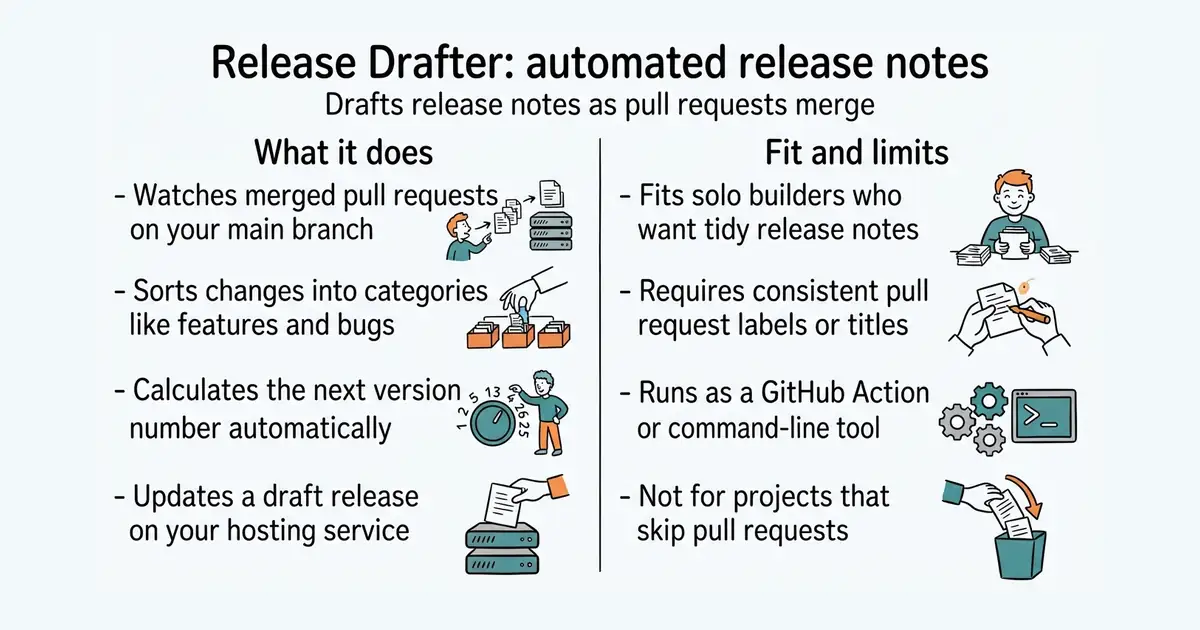
This tool writes your release notes for you as you merge code. It watches your pull requests and sorts them into groups like features and bug fixes. It updates a draft release every time new code goes into your main branch. You can use it inside GitHub Actions or on other code hosting sites. It saves you from writing changelogs by hand before every public release.
What it is
A release automation assistant that compiles pull request titles, authors, and labels into formatted release notes. It runs as a GitHub Action or command-line tool, configuring how changes are grouped and how version numbers increase.
What it is good for
Solo builders who want professional release notes without spending time formatting git logs or remembering what changed since the last version.
- Updates your release draft automatically on every merge.
- Groups pull requests by labels or conventional commit types.
- Calculates your next version number based on your changes.
- Requires a configuration file in your repository to set up categories and templates.
- Relies on consistent pull request titles or labels to group changes correctly.
- Limited by the features and rate limits of your code hosting platform's API.
Writing release notes and changelogs manually before every deployment.
GitHub Actions for running automated workflows on code changes.
- changesets/changesets12k stars
Manages versioning and changelog generation for multi-package repositories.

- mkdocs/mkdocs23k stars
Turns a folder of Markdown files into a documentation website, controlled by one settings file.
- squidfunk/mkdocs-material28k stars
Turns a folder of Markdown files into a searchable documentation website, with every formerly sponsor-only feature now included.
- halo-dev/halo40k stars
A self-hosted website and blog platform, written in Java, with a marketplace of themes and plugins.
npm install -g release-drafter
release-drafter