5,854 stars · MIT · v0.9.135 (2026-10-01) · Track this in Scout
A scheduled job runner with a web interface, keeping the output and timing of every past run across one or several servers.
▶Repo detailsthe review · specs · pros & cons · install
What it is
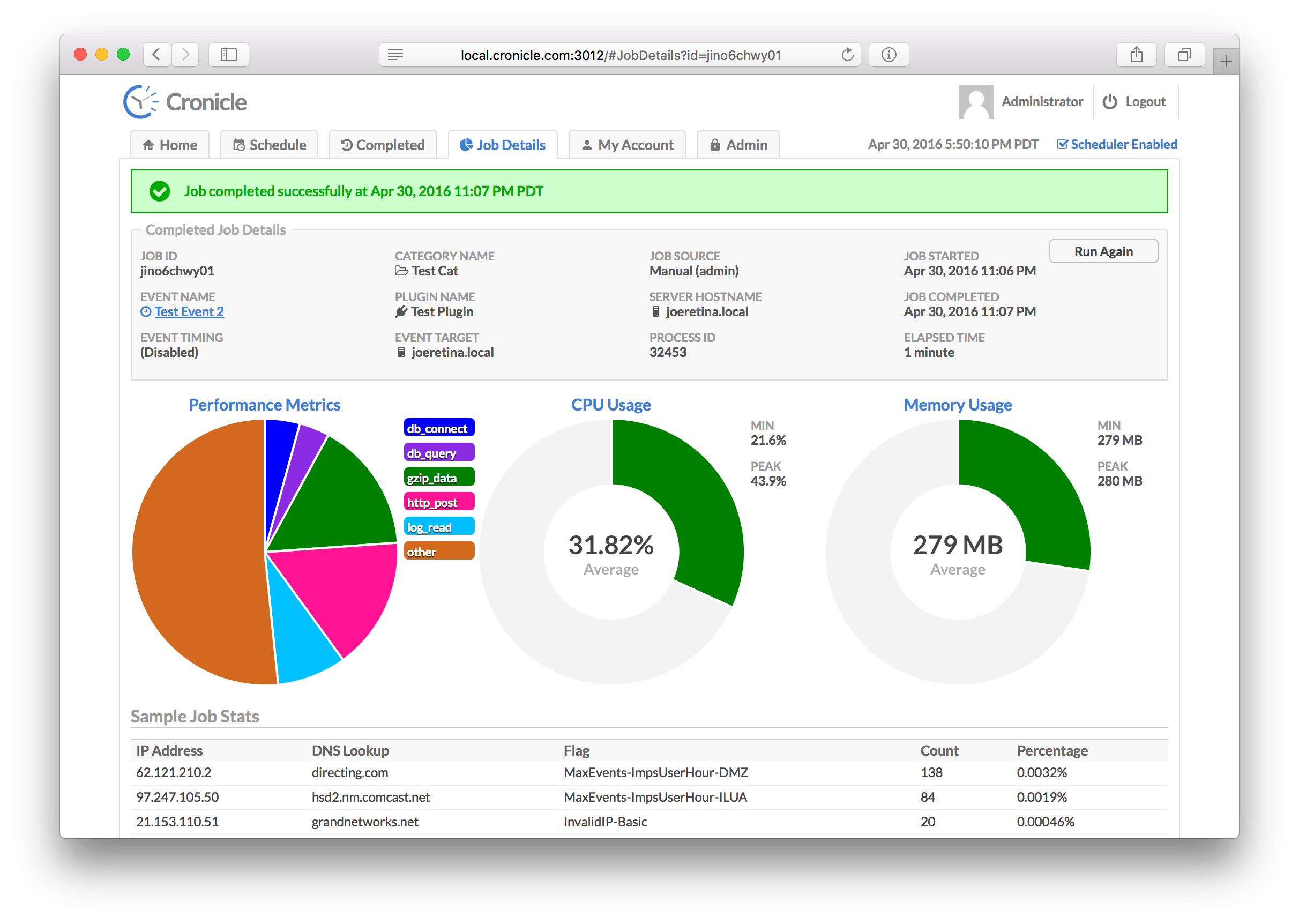
Cronicle is a Node.js application that schedules and runs commands, with a master server and optional additional servers. It keeps the output and timing of every run, supports catch-up for missed jobs, and has a user and permission system of its own.
What it is good for. Anyone with a handful of nightly scripts and no record of whether last Tuesday's actually ran. It is the thing cron never gave you: the output, the history, and a message when the exit code was not zero. Ten years of release notes behind it, which for software you leave running unattended is worth more than it sounds.
- Alive and shipping. Version 0.9.135 was released on 1 October 2026 and the code was last touched the same day, with releases roughly weekly through August, September and October 2026.
- It has a login system by default, and self-registration by guests is off.
- It runs jobs across several servers from one screen, with per-job memory and processor limits — the memory limit defaults to one gigabyte per job.
- ⚠ The ships-with password is
admin/admin. The documentation says to change it "as soon as possible", which is to say that until you do, anyone who reaches port 3012 is an administrator. - ⚠ The documented quick install pipes a script from the internet straight into Node, as root:
curl -s https://raw.githubusercontent.com/jhuckaby/Cronicle/master/bin/install.js | node. The manual route is in the documentation and is the safer one. - It needs Node.js 22.12.0 or later, runs on Unix-like systems only, and there are 318 open issues against 15 open pull requests. No memory, processor or disk figure is published for the server itself. One oddity, reported rather than explained:
package.jsonon the default branch reads version 0.9.134 while the newest tag is v0.9.135, and the changelog read at that tag has no 0.9.135 entry.
- rundeck/rundeck
The same idea of a web interface over jobs and access control, built on the Java virtual machine and aimed at larger operations runbooks.
Track this in Scout - distribworks/dkron
The closest direct match, a distributed scheduler with a web page shipped as a single Go binary with built-in clustering.
Track this in Scout - pixlcore/xyops
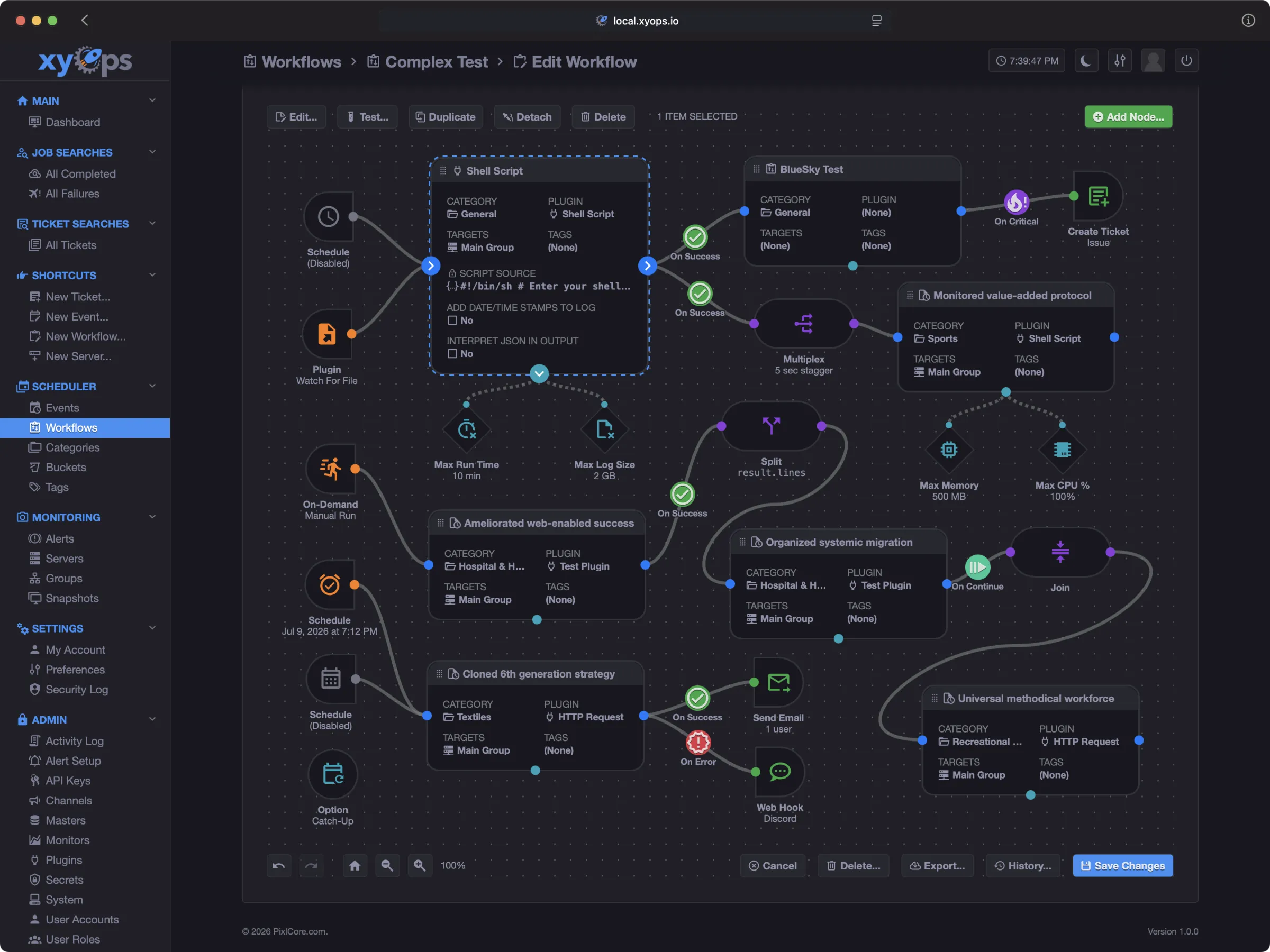
The same author's newer and broader workflow-automation and server-monitoring system, BSD-3-Clause; its star count could not be settled and its relationship to Cronicle is not stated in the repository.
Track this in Scout
# Node.js 22.12.0 or later is required
node --version
sudo mkdir -p /opt/cronicle
cd /opt/cronicle
sudo curl -L https://github.com/jhuckaby/Cronicle/archive/v0.9.135.tar.gz \
  | sudo tar zxvf - --strip-components 1
sudo npm install
sudo node bin/build.js dist
sudo /opt/cronicle/bin/control.sh setup
sudo /opt/cronicle/bin/control.sh start