In simple English
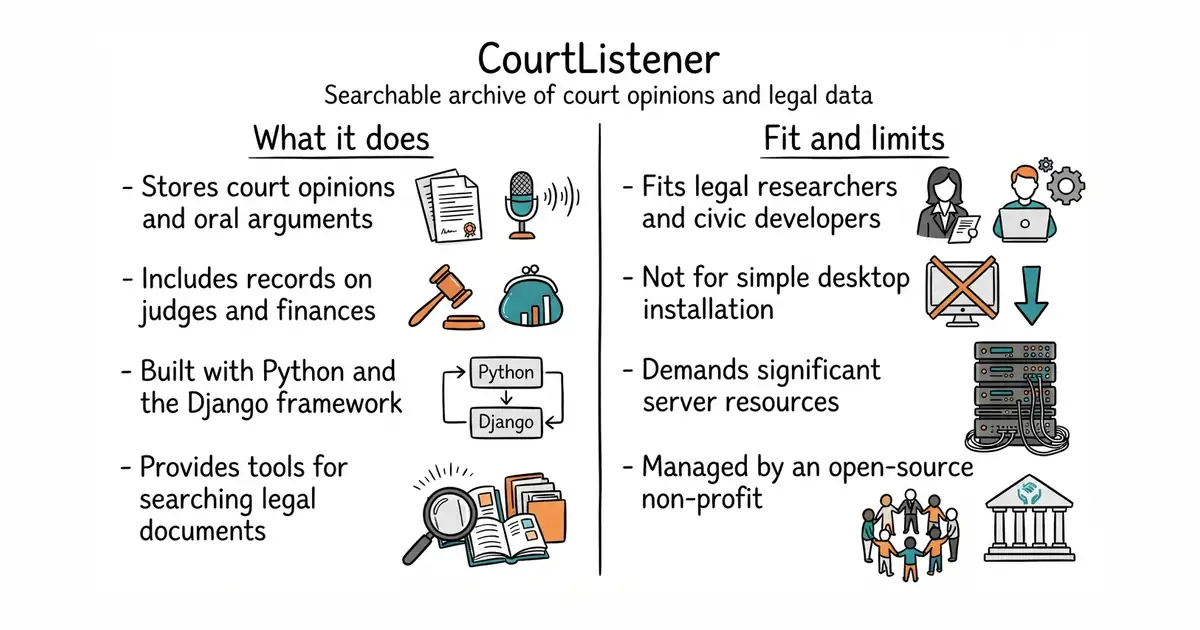
This tool is a massive database for United States court records. It stores court opinions, oral arguments, and financial records for judges. Lawyers, journalists, and researchers can search through these documents to find legal precedents. Running the system yourself requires technical skill and powerful hardware. The project is free to use and managed by a non-profit organization.
What it is
CourtListener is the main software repository for a public legal search engine and database. It is written in Python using the Django web framework and includes custom configuration scripts for servers.
What it is good for
This is useful for legal researchers, civic hackers, and developers who want to host a private copy of American court records or build applications on top of public legal data.
- Provides access to millions of court records and legal opinions.
- Active community with welcoming maintainers who assign issues to volunteers.
- Fully open-source codebase under the Affero GPL licence.
- Very complex setup with many moving parts and external data dependencies.
- Large database needs substantial server memory and storage space.
- Custom licence places restrictions on modified versions run as a network service.
Paid legal research databases and manual court record searches
PostgreSQL
- Future-Scholars/paperlib2.3k stars
A desktop library for research papers that looks up the title, authors and year of a dropped document itself, and leaves the files in an ordinary folder.
- mozilla/pdf.js54k stars
A PDF reader written in JavaScript that renders documents inside a web page with no plugin.
- Hack-with-Github/Awesome-Hacking123k stars
An index of 81 curated security reading lists, with one line on each.
To run this project yourself, follow the developer guide in the official wiki at https://wiki.free.law/c/courtlistener/dev-guide.