2.3k stars · GPL-3.0 · release-electron-3.1.12 (2025-09-28) · Track this in Scout
A desktop library for research papers that fills in the details itself.
▶Repo detailsthe review · specs · pros & cons · install
What it does
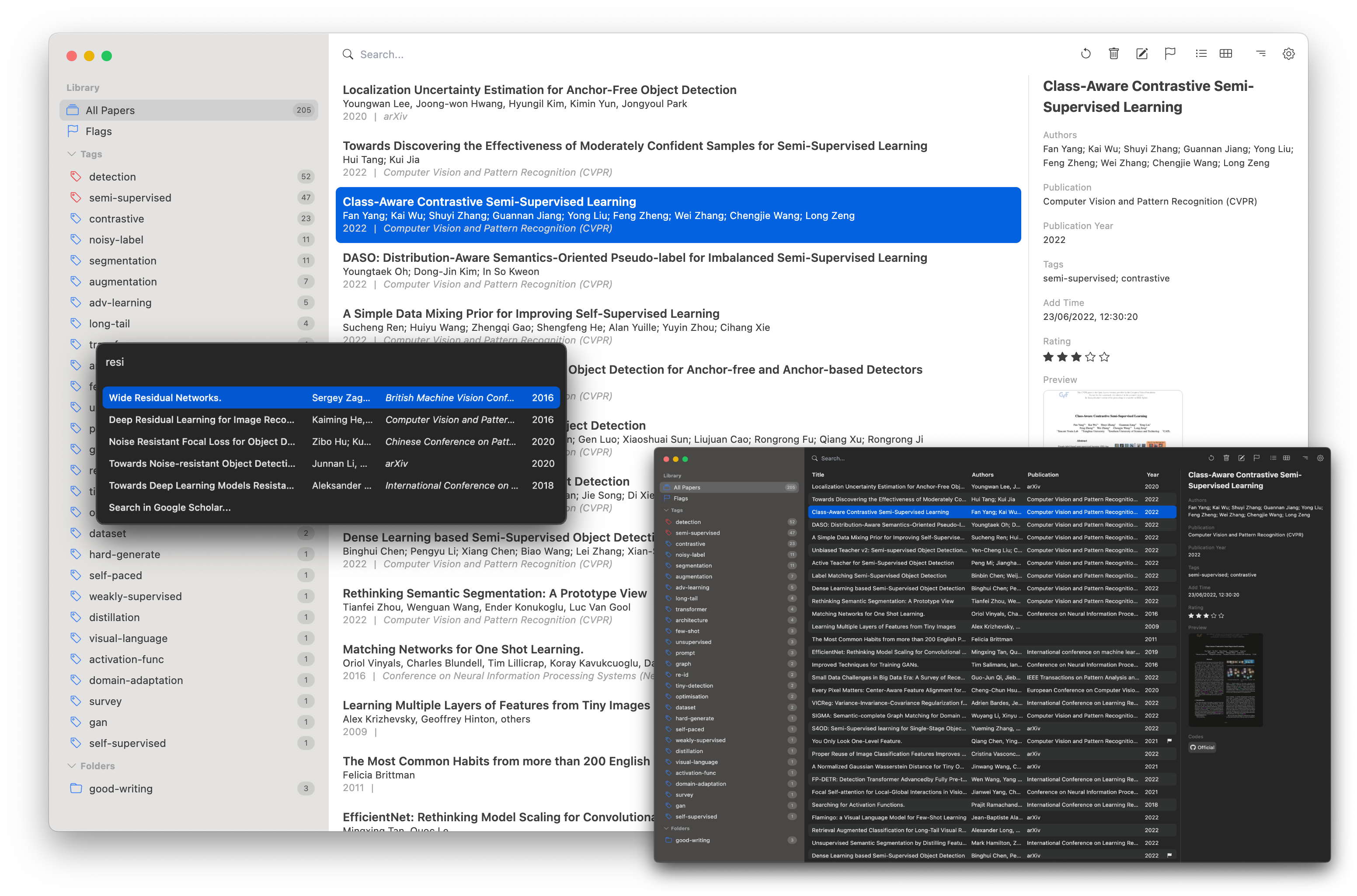
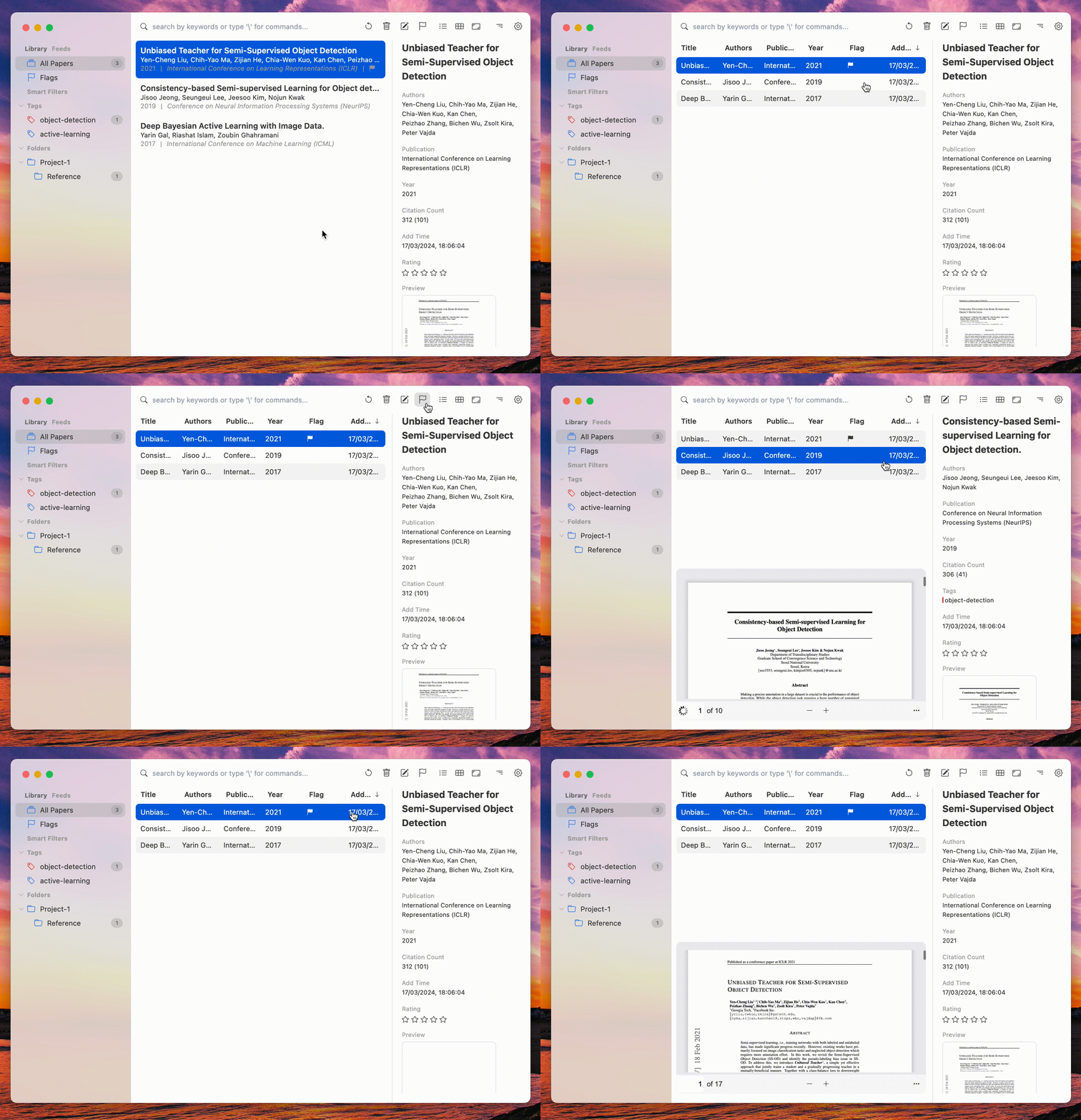
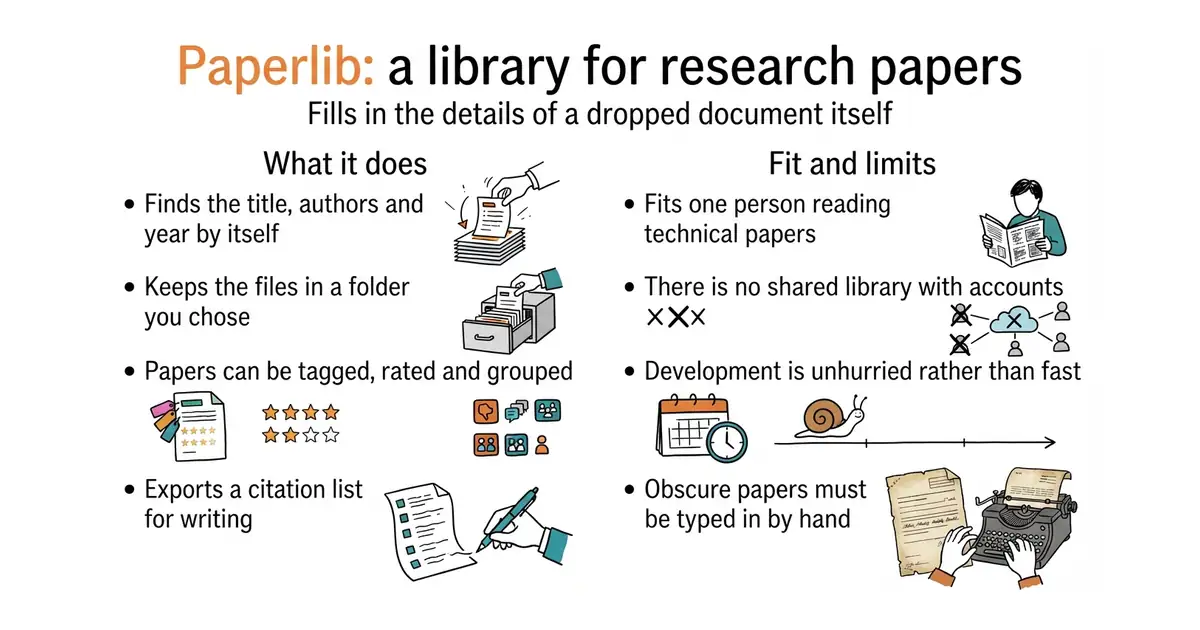
You drop a PDF in and it searches public catalogues to find the matching paper, then fills in the title, authors, publication and year. It keeps the files in a folder you choose, so the library is not locked inside the program. Papers can be tagged, grouped into folders, rated and marked as read. A built-in reader shows the PDF with highlights and notes beside it. It exports citations in BibTeX and plain styles for pasting into a document, and a plugin system adds integrations with editors and other tools. It runs on Windows, macOS and Linux, and can sync a library through a cloud folder. It is not a shared workspace: there is no built-in multi-person library with permissions, so a research group wanting one account per person needs one of the bigger tools below.
Why it matters
Who it suits. A student, a researcher, or anyone reading technical papers alone who wants the metadata filled in automatically and the files left as files. The deliberate simplicity is the appeal: it does one job without the weight of the established tools. Skip it if a group needs a shared library with accounts, or if the writing happens in Word and a deep word-processor integration matters.
Verdict. Worth the twenty minutes if the PDF folder has become unusable, with one caveat about how alive it is. Code was pushed on 1 April 2026, which is six months before this edition and comfortably inside the line we draw at eighteen months, but it is not a project shipping every week. The newest release on the page is version 3.1.12 of the desktop application, dated 28 September with no year shown, so the exact release date could not be settled from the page. Treat it as maintained but unhurried, and keep a copy of the library folder, which is easy because the files stay where you put them. The two established alternatives are zotero/zotero from Edition 44, which is far more capable and much heavier, and JabRef/jabref from Edition 56, which keeps its whole library in one plain BibTeX file and suits anyone who wants the data in text.
- Fills in the details of a dropped PDF automatically, which is the tedious part of the job.
- The files stay in a normal folder you chose, so nothing is trapped inside the application.
- Much lighter and simpler than the two well-known reference managers.
- No shared library with separate accounts, so a research group will outgrow it.
- Development is unhurried, and the newest release date is not stated clearly on the page.
- Automatic lookup fails on obscure or unpublished papers, and then the details are typed by hand.
 zotero/zotero
AGPL-3.0, covered in Edition 44; much more capable, with word-processor plugins and group libraries, and correspondingly heavier to run and to learn.
Track this in Scout JabRef/jabref
MIT, covered in Edition 56; keeps the entire library in one plain BibTeX file, which suits anyone who wants their references as readable text.
Track this in Scout
It is a desktop application.