In simple English
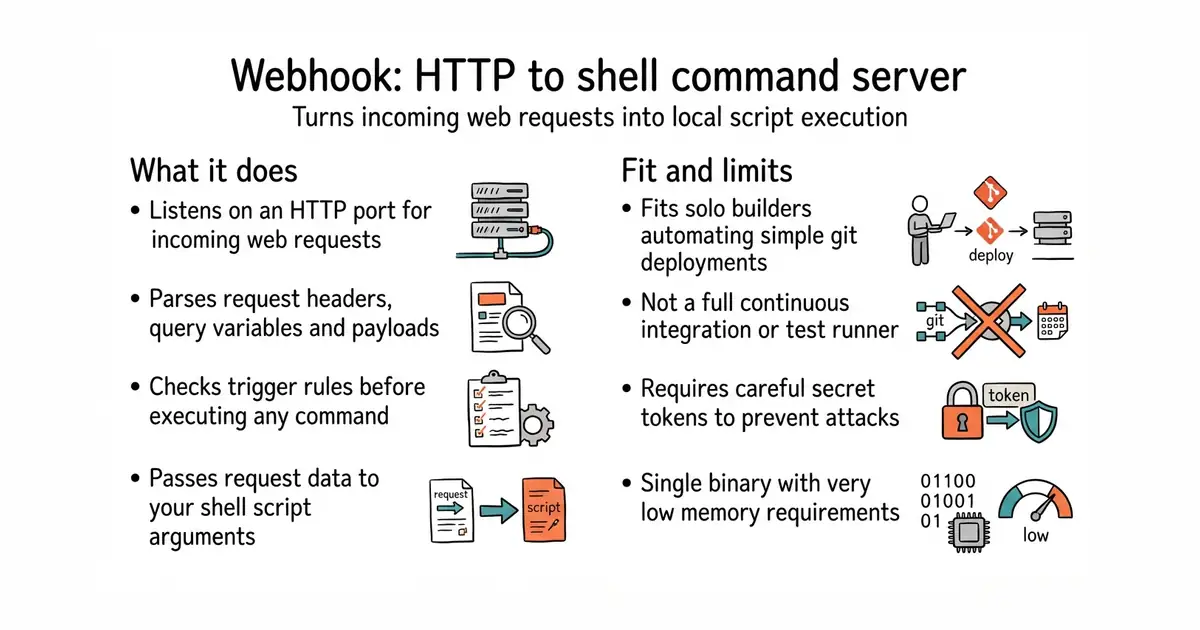
You built a small web app or a blog. You want your server to pull new code whenever you push changes to GitHub. Writing a custom script for this takes too much time. This tool listens for web requests on your server and runs a command when a request arrives. It costs you nothing in money, but you must configure security rules carefully so strangers cannot run commands on your machine.
What it is
Webhook (a lightweight server program written in Go that turns incoming HTTP requests into shell commands) reads a configuration file mapping web addresses to scripts. It checks incoming data against rules before running your command.
What it is good for
Solo builders who want automated code deployments, server restarts, or remote task triggers without setting up heavy continuous integration systems.
- Runs as a single tiny binary with very low memory use.
- Supports security rules like secret tokens and IP checks.
- Reads configuration in either JSON or YAML.
- Exposing shell commands to the web can create serious security risks if misconfigured.
- Does not handle queuing if many requests arrive at the same time.
- Requires manual setup of system service files for background running.
Writing custom Node.js or Python servers just to listen for GitHub push events.
Nginx (a web server used as a reverse proxy to handle HTTPS and forward requests to local ports).
- harness/harness39k stars
A container-native continuous integration platform that triggers workflows from git pushes.

- vectordotdev/vector23k stars
One collector that gathers logs and numbers from machines and sends them to one or more monitoring services.
- bluewave-labs/Checkmate11k stars
A self-hosted monitor that checks whether sites and services answer, records response times and sends alerts.
- statping-ng/statping-ng2.0k stars
A single-file status page and uptime checker that works with SQLite, PostgreSQL or MySQL.
sudo apt-get install webhook