73.2k stars · AGPL-3.0 · v1.0.2 (2026-04-25), read from /releases/latest, where the tag is labelled ODP for Open Data Platform; the GitHub date carried no year and falls in the past, so it is this year · Track this in Scout
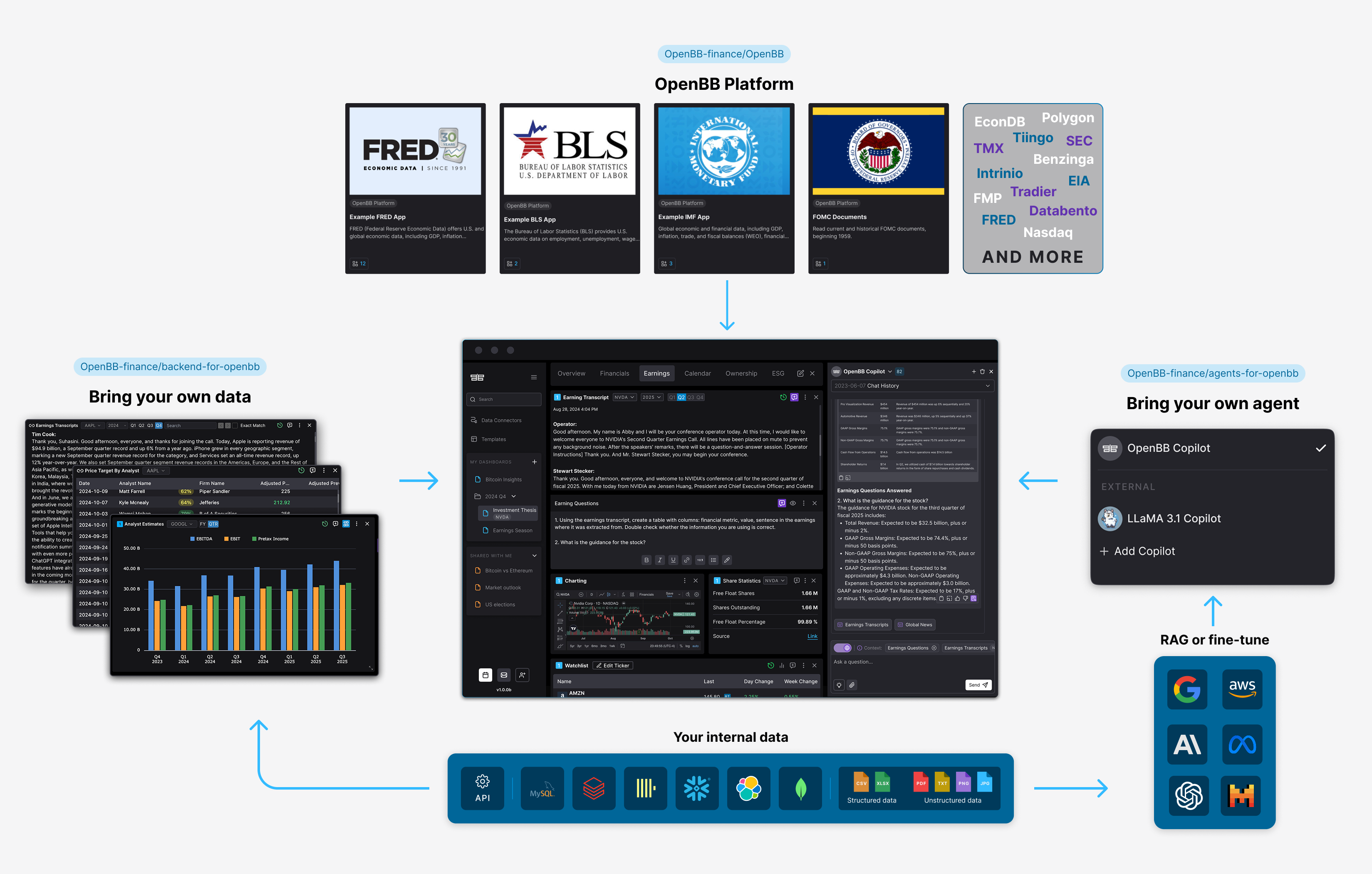
One Python interface in front of many financial data providers, so the answer comes back in the same shape whichever source it came from.
▶Repo detailsthe review · specs · pros & cons · install
What it is
An open data platform for market and economic information. You install a Python package and call it: one command for a share's price history, another for a company's income statement, another for an economic series. Each source is an extension, so adding a paid provider you already have is installing one more package and setting a key.What it is good for. Anyone doing research on markets who is tired of writing a new reader for every source. The problem it removes is the glue code. A short line about ScalpingMate: it trades one currency pair through OANDA and gets its prices there, and what this adds is the surrounding picture — interest-rate decisions, economic releases, and the calendar of the days when a strategy tends to behave differently.
- One shape of answer across many providers, so changing source does not mean rewriting the analysis.
- Several providers work with no key and no account at all, so the first hour costs nothing.
- Very large and very active, with 73,200 stars and a working Python interface rather than only a terminal.
- AGPL-3.0 licence. Running it for research is fine. Building a product that other people use on top of it brings real conditions.
- It is a big install with many dependencies. Use a virtual environment and expect it to take a while.
- Free data sources have limits and gaps, and none of them are meant for live trading decisions.
- ranaroussi/yfinance
Reads one source, Yahoo Finance, and it is a much smaller install when that one source is all you need.
Track this in Scout - microsoft/qlib
A platform for building and testing machine-learning trading models rather than for fetching data.
Track this in Scout - TA-Lib/ta-lib-python
Calculates the 150-odd standard indicators on price data you already have, which is the step after this one.
Track this in Scout
python3 -m venv venv
source venv/bin/activate
pip install openbb
# In Python:
#   from openbb import obb
#   df = obb.equity.price.historical("AAPL", start_date="2026-01-01").to_df()
#   print(df.tail())
# Add a provider you have a key for, for example:
pip install openbb-fmp