
Edition No. 40 · 4 Oct 2026
Twelve repositories for images, fonts, audio tags and plain-text money
Two of today's twelve ship a licence with the copyright line never filled in, and one of them has 95,920 stars.
4 October 2026. No theme, on purpose. Twelve repositories across nine of the sixteen areas, three hidden gems, no repeats.
We aim for twelve every day. Some candidates fall out while we check them — those are listed at the end, with the reason.
Three things worth knowing, separate from the recommendations
- A licence file can be a blank form. Two of today's twelve ship the stock Apache 2.0 text with the copyright line never filled in — Copyright [yyyy] [name of copyright owner] — and one of them has 95,920 stars. A third, TagLib, ships a Mozilla Public Licence 1.1 whose Exhibit A is entirely unfilled. The licences still work. They simply name nobody as the party granting them, which is exactly what somebody doing diligence needs. - Not one of today's twelve licence files was in the same place as another project's. The paths that answered were main/LICENSE, master/LICENSE, main/LICENSE.txt, master/LICENSE.md, main/LICENSE.txt again after two not-founds, stable/LICENSE on a branch called neither main nor master, COPYING.LGPL and COPYING.MPL side by side with no plain licence file at all, and three files under a licenses/ directory. Reading the file rather than the summary is the only way to know what any of them say. - A date with no year is not a date, and today it was wrong three times by three different amounts. htmlq's "03 Jan" is 2022, four years and nine months ago — the second-largest such error this archive has recorded. shiori's "26 Sep" is 2025, twelve months. chaskiq's "14 Nov" is 2023, nearly three years. Every one was settled against a second source, and not one of the three projects is dead: all three pushed code within the last five months.
If you only do three things
- charmbracelet/freeze (#3) — two minutes, one command. It turns a piece of code, or the output of a command, into a real image file that is actually readable. No screenshot, no cropping, no window chrome.
- kellyjonbrazil/jc (#6) — five minutes, one command, and the gold of this edition. It converts the output of about 180 ordinary command-line tools into JSON, so a script can read the answer instead of guessing at the text.
- mgdm/htmlq (#7) — ten minutes. It pulls one piece out of a web page using a CSS selector, the way
jqpulls one piece out of JSON.
Every link in one place
| # | Repository | Website | Stars | Licence |
|---|---|---|---|---|
| 1 | OpenCut-app/OpenCut | opencut.app | 91,893 | MIT |
| 2 | thedotmack/claude-mem | claude-mem.ai | 95,920 | Apache-2.0 |
| 3 | charmbracelet/freeze | none in the sidebar | 4,866 | MIT |
| 4 | Yqnn/svg-path-editor | yqnn.github.io/svg-path-editor | 5,331 | Apache-2.0 |
| 5 | fonttools/fontbakery 💎 | fontbakery.readthedocs.io | 706 | Apache-2.0 |
| 6 | kellyjonbrazil/jc | kellyjonbrazil.github.io/jc | 8,691 | MIT |
| 7 | mgdm/htmlq | none in the sidebar | 7,583 | MIT |
| 8 | go-shiori/shiori | none in the sidebar | 11,573 | MIT |
| 9 | taglib/taglib 💎 | taglib.org | 1,460 | LGPL-2.1 or MPL-1.1 |
| 10 | supervc-stack/VectorChord 💎 | docs.vectorchord.ai | 1,809 | AGPL-3.0 or Elastic v2 |
| 11 | chaskiq/chaskiq | chaskiq.io | 3,562 | AGPL-3.0 plus Commons Clause |
| 12 | gnucash/gnucash | code.gnucash.org/website | 4,328 | GPL-2.0 or GPL-3.0, with exceptions |
No theme, on purpose. Twelve repositories across nine of the sixteen areas, three hidden gems, no repeats. Four of the twelve are new to the ledger; eight came out of the queued backlog. Design-and-interface and talking-to-customers were the two areas neither Edition 38 nor Edition 39 touched, and design-and-interface carries three entries. Two of the twelve are requests (ids 36 and 37) and the queue is now empty.
Twelve repositories, checked and reviewed. Every version verified against the GitHub API and dated.

91,893 stars · MIT (read from /blob/main/LICENSE, plain unmodified text, "Copyright 2026 OpenCut") · v0.3.0 (2026-04-15; the GitHub page shows the date with no year and the year was settled by the ungh releases mirror) · Track this in Scout
A free video editor that runs in a browser or installs on a computer, built as an open alternative to CapCut.
▶Repo detailsthe review · specs · pros & cons · install
What it is
OpenCut is a timeline video editor written for the web, with a desktop build alongside it. The project began in June 2025 and has collected 91,893 stars since, which is one of the fastest climbs in this archive.
What it is good for. Anyone who cuts short videos and does not want a subscription, a watermark, or an account. It is also for people who are uneasy about uploading unreleased footage to somebody else's computer: a local copy keeps the files where they are.
- MIT licence, read from the file at
/blob/main/LICENSE. It is the plain unmodified text and the copyright line is filled in: "Copyright 2026 OpenCut". Nothing restricts commercial use. - Three ways to run it from one codebase: a web version, an API, and a desktop build.
- Code was pushed on 24 September 2026, and the newest release is v0.3.0 of 15 April 2026. The release date has no year on the GitHub page; it was settled against the ungh mirror.
- The README has no
git cloneline at all, and no download link for a finished build. Setting it up means installing a tool calledprotoby piping a script from the internet into a shell, then running three separate development servers. - 276 open issues and 102 open pull requests, on a project fifteen months old.
- The README says a ground-up rewrite is in progress, with the new build going to a different address. So the code in the repository today is not the application the live site serves, and there is no published figure for memory or disk — video editing is heavy on both.
- mltframework/shotcut
A mature desktop video editor doing the same timeline work; GPLv3 rather than MIT, with installers for all three platforms and no browser version.
Track this in Scout - OpenShot/openshot-qt
The long-standing free desktop editor; easier to install than OpenCut and slower to render, with no web version at all.
Track this in Scout
bash <(curl -fsSL https://moonrepo.dev/install/proto.sh)
proto use
moon run web:dev          # browser version, http://localhost:5173
moon run api:dev          # API, http://localhost:8787
moon run desktop:dev      # desktop build

95,920 stars · Apache-2.0 (read from /blob/main/LICENSE; stock unmodified text, BUT the appendix copyright line is left as the template "Copyright [yyyy] [name of copyright owner]" and no holder is asserted anywhere in the file) · v13.29.0 (2026-10-04; the GitHub page shows "03 Oct" with no year and the year was settled by registry.npmjs.org, which timestamps 13.29.0 at 2026-10-04) · Track this in Scout
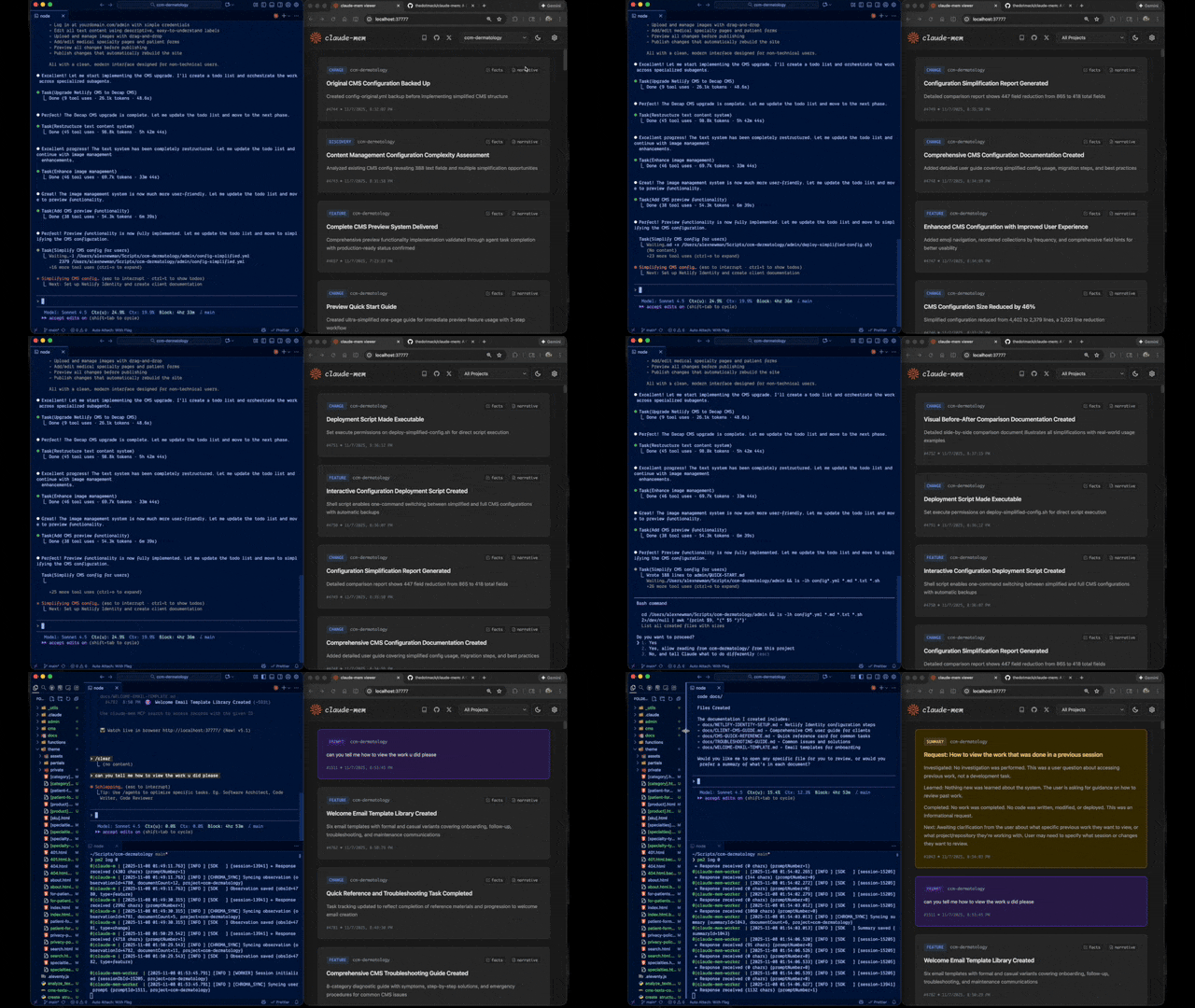
It gives a coding assistant a memory that survives closing the window, stored in a local SQLite file.
▶Repo detailsthe review · specs · pros & cons · install
What it is
claude-mem is a plug-in for Claude Code that stores session context in a local SQLite database (a database that is one ordinary file, with no server to run) and restores it on the next session. It is thirteen months old and already at version 13.
What it is good for. Anyone who works with a coding assistant across several days on the same codebase and is tired of explaining the same decisions every morning. It is less useful to someone who opens an assistant for one question and closes it.
- One command,
npx claude-mem install, and it is also listed in the Claude Code plug-in marketplace. - Apache-2.0, read from the file at
/blob/main/LICENSE, and the text is the plain unmodified licence with no added conditions. - Code was pushed on 4 October 2026, the morning this edition was written, and version 13.29.0 reached the npm registry on the same day.
- This is the fact this edition is named after. The Apache licence file is the stock text, and the copyright line was never filled in. It still reads
Copyright [yyyy] [name of copyright owner]. On a project with 95,920 stars, nobody is named as the person or company granting the licence. The licence still works, but anyone doing legal checks before using it commercially has nothing to point at. - Version 13 in thirteen months, with 13.24.1 and 13.29.0 landing inside one month. Pinning a version is advisable, and expect breaking changes.
- It installs a second program runtime called Bun on its own, writes a local database, and offers an optional cloud sync. 52 open pull requests against 32 open issues means more changes are waiting than problems are.
 mem0ai/mem0
A memory layer for AI applications in general rather than for one assistant, and a library you write code against rather than a plug-in you install.
Track this in Scout- doobidoo/mcp-memory-service
The same idea delivered as an MCP server, so it works with any assistant that speaks that protocol, and correspondingly more to set up.
Track this in Scout
npx claude-mem install

4,866 stars · MIT (read from /blob/main/LICENSE, plain unmodified text, "Copyright (c) 2024 Charmbracelet, Inc") · v0.2.2 (2025-04-01; the GitHub page shows "01 Apr" with no year and the year was settled TWICE, by pkg.go.dev and by the ungh releases mirror — so the newest release is eighteen months old while code was pushed 2026-09-16) · Track this in Scout
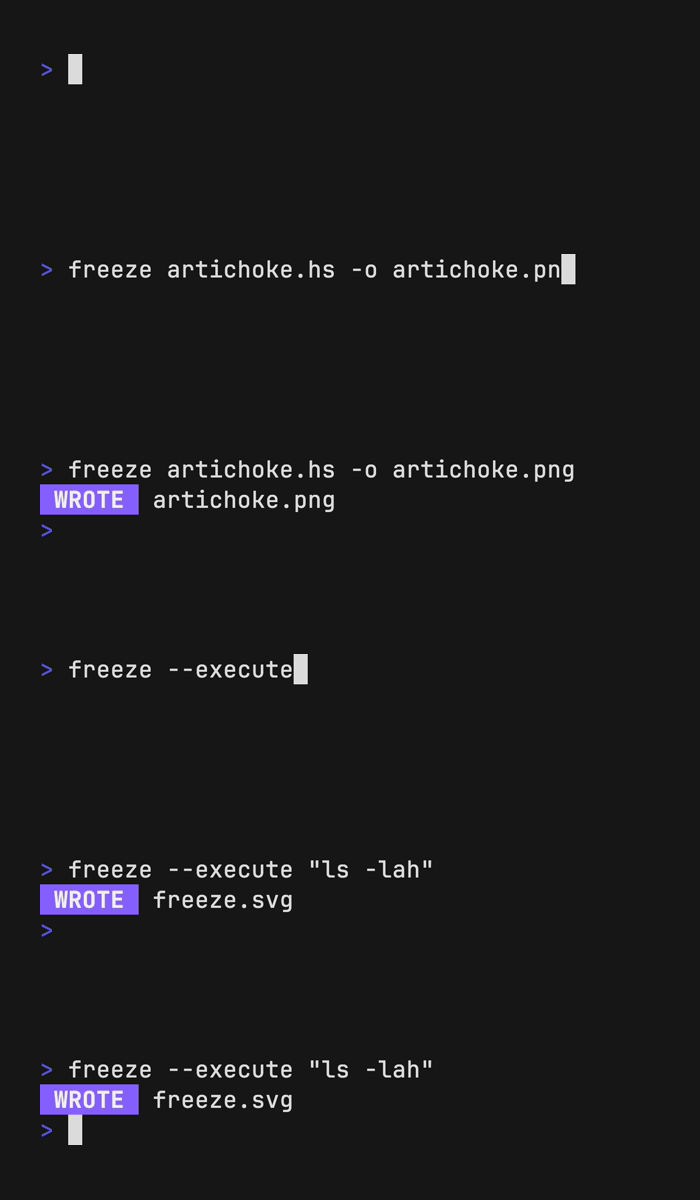
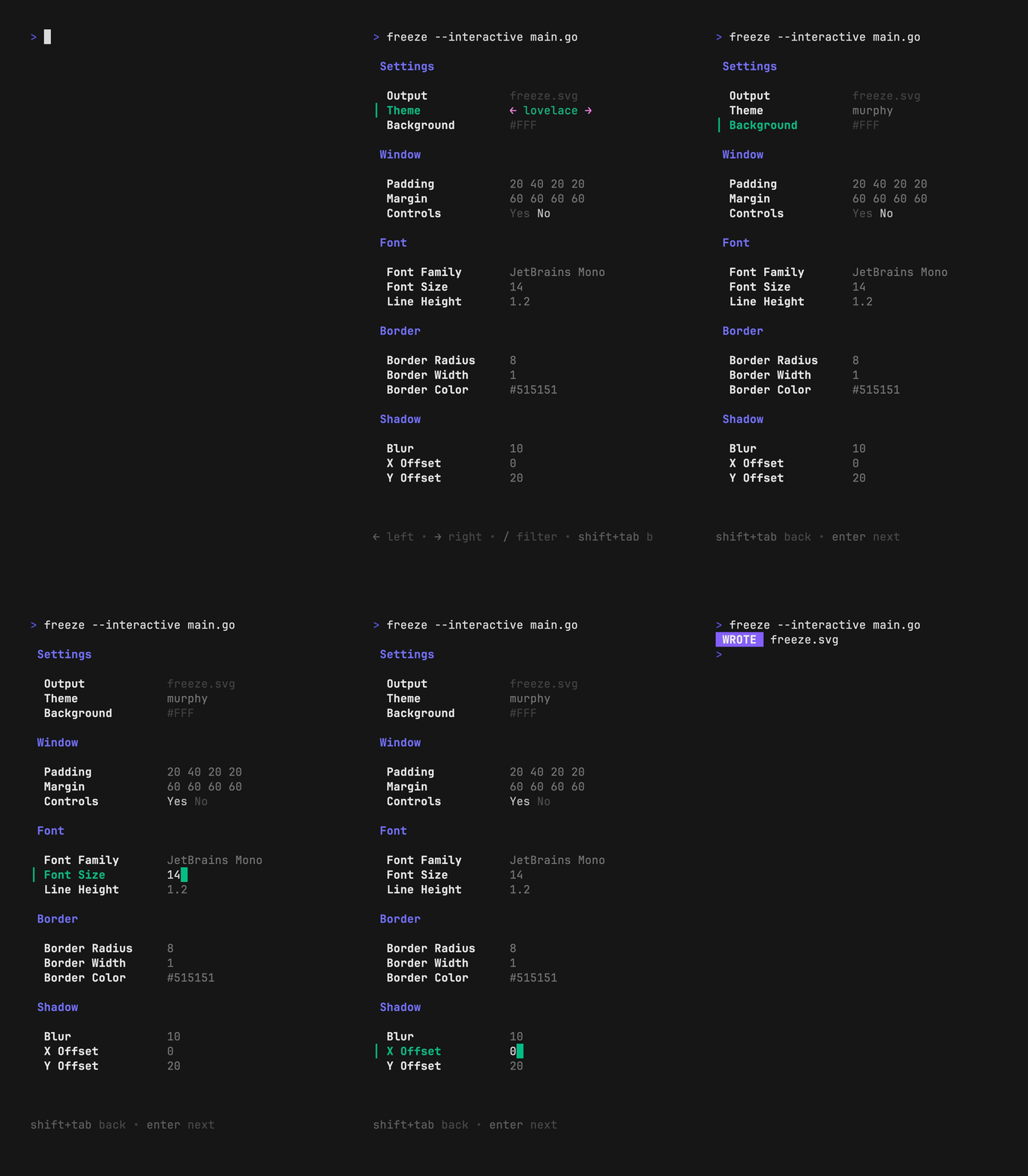
Makes a clean image of code or terminal output from the command line, with syntax colouring.
▶Repo detailsthe review · specs · pros & cons · install
What it is
freeze takes a file, or the output of a command, and writes a PNG, WebP or SVG of it with syntax colouring and optional window decoration. It is from the same group that makes the terminal tools vhs and gum.
What it is good for. Anyone who writes documentation, posts about code, teaches, or files bug reports with a snippet in them. It replaces the habit of taking a photo of a terminal window.
- MIT, read from the file at
/blob/main/LICENSE, plain and unmodified, "Copyright (c) 2024 Charmbracelet, Inc". - It installs from Homebrew, Arch, Nix, and as a plain downloaded binary, with Debian and RPM packages too. No runtime to install first if you take the binary.
- Code was pushed on 16 September 2026, three weeks before this edition.
- The newest release, v0.2.2, is dated 1 April 2025 — eighteen months old. The date carries no year on the GitHub page; it was settled twice, against pkg.go.dev and against the ungh mirror. The project is not dead. The downloadable binary is simply a year and a half behind the code, and the only way to get the newer code is
go install, which needs a Go toolchain. - Making a PNG needs fonts present and a working terminal environment. On a server with no desktop, font rendering surprises are common, and no memory or disk figure is published.
- 49 open issues and 29 open pull requests on a small team.
- carbon-app/carbon
The browser page that made this idea popular; prettier output, but you paste into a web form instead of running a command, so it cannot go in a script.
Track this in Scout - Aloxaf/silicon
The same job in Rust, rendering fonts itself rather than relying on the system, but it has taken no code since 26 September 2024.
Track this in Scout  charmbracelet/vhs
The moving version from the same authors: a script of keystrokes becomes an animated GIF of a terminal session.
Track this in Scout
brew install charmbracelet/tap/freeze
go install github.com/charmbracelet/freeze@latest
yay -S freeze
nix-env -iA nixpkgs.charm-freeze

5,331 stars · Apache-2.0 (read from /blob/master/LICENSE, plain unmodified text, "Copyright 2020 Yann Armelin" — the template placeholder IS filled in, unlike entries #2 and #5 of the same edition) · no GitHub releases at all — a determination, not a gap. The only published version is the side library svg-path-editor-lib 1.0.4 on npm, whose number does not track the editor, and the registry record carried no date · Track this in Scout
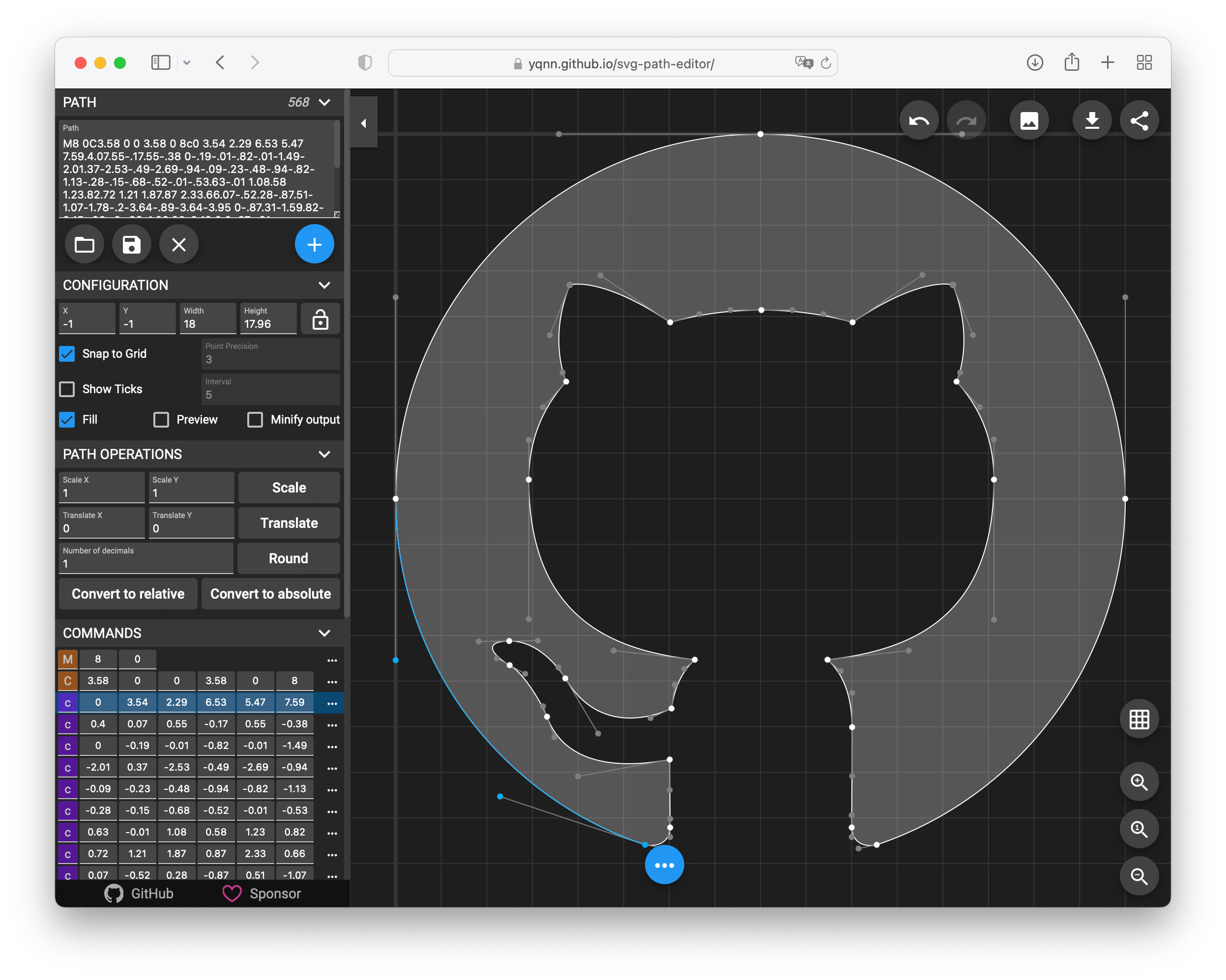
A web page for editing the path data inside an SVG by dragging its points, with the work done in the browser.
▶Repo detailsthe review · specs · pros & cons · install
What it is
svg-path-editor is a single-purpose editor for the d attribute of an SVG path. It shows every command in the path as a row you can edit, and every point as a handle you can drag, and it keeps the two in step.
What it is good for. Anyone who has an icon or a logo that is nearly right. A designer handing over an SVG, a developer fixing a shape that does not quite line up, somebody converting absolute coordinates to relative ones to make a file smaller. The situation it fits is specific: the SVG file exists, and the program that made it is not to hand.
- Nothing to install. The hosted page at yqnn.github.io/svg-path-editor is the product, and the work happens in the browser.
- Apache-2.0, read from the file at
/blob/master/LICENSE, plain text with the holder filled in: "Copyright 2020 Yann Armelin". - Code was pushed on 18 June 2026. It does one thing and it has done it for six years.
- No GitHub releases at all, ever. That is a determination and not a gap — we looked, and there are none. The only published version is a side library,
svg-path-editor-lib1.0.4 on npm, and its number does not track the editor. There is nothing to pin. - Running your own copy needs Node.js 18.13 or newer and an Angular build. For most people the hosted page is the only realistic route, which means depending on somebody else's free hosting.
- 24 open issues and 3 open pull requests, with one author and no published support or security policy.
- SVG-Edit/svgedit
A whole browser-based SVG drawing program rather than a path editor; far more capable and far more to learn.
Track this in Scout - alexjlockwood/ShapeShifter
Built for animating between two SVG paths rather than editing one, so it is the tool to reach for when the shape has to move.
Track this in Scout - methodofaction/Method-Draw
A cleaner fork of svgedit with a simpler screen, but it has taken no code since 7 May 2024.
Track this in Scout
git clone https://github.com/Yqnn/svg-path-editor.git
cd svg-path-editor
npm install
npm start

706 stars · Apache-2.0 (read from /blob/main/LICENSE.txt after /blob/main/LICENSE returned 404; stock unmodified text, and the appendix copyright line is left as the template "Copyright [yyyy] [name of copyright owner]" — the same fault as entry #2 of the same edition) · v1.1.0 (2025-10-02; the GitHub page shows "02 Oct" with no year and the year was settled TWICE, by the PyPI project page and by the ungh releases mirror — so the newest release is about twelve months old) · Track this in Scout
It runs a long quality checklist against a font file and prints every fault it finds.
▶Repo detailsthe review · specs · pros & cons · install
What it is
fontbakery is a font quality-assurance tool with hundreds of individual checks, grouped into profiles for different publishers. At 706 stars it is the smallest project in this edition.
What it is good for. A type designer, or a small studio shipping a typeface, or anyone building a web font from an open source family and wanting to know it is well formed before it goes out. It is not a tool for people who only use fonts.
- 706 stars, and it is the reference implementation of a standard almost nobody else publishes. The checks are the ones a major font library actually enforces.
- Apache-2.0, read from the file at
/blob/main/LICENSE.txt, plain unmodified text with no added conditions. - Installs with one
pipcommand and produces a readable report rather than a pass or fail.
- It is slowing down, and its own authors say what replaces it. The last code landed on 4 November 2025, eleven months ago, which is inside the eighteen-month line this report uses — so it is explicitly not being called dead. But fonttools/fontspector, from the same group, describes itself in its own GitHub description as the "successor to fontbakery", is a Rust rewrite, and pushed code on 3 October 2026. 299 open issues against 4 open pull requests says the backlog is not being worked.
- The licence names nobody, the same fault as entry #2: the Apache appendix still reads
Copyright [yyyy] [name of copyright owner]. - The install documentation is wrong about its own requirement: the docs say Python 3.6 or newer, and the published package demands 3.9 or newer. One group of checks also needs a third-party binary downloaded by hand and moved into
/usr/local/bin. No memory or disk figure is published.
- fonttools/fonttools
The library underneath, for reading and writing font files; it changes fonts where fontbakery only inspects them.
Track this in Scout - googlefonts/gftools
The build and packaging scripts that sit beside the checks, for preparing a family for publication.
Track this in Scout - googlefonts/fontdiffenator
Compared two versions of a font and reported what moved, but it was archived by its owner on 18 April 2024 and superseded by diffenator2.
Track this in Scout
python3 -m venv venv
source venv/bin/activate
pip install fontbakery
fontbakery check-universal MyFont-Regular.ttf

8,691 stars · MIT (read from /blob/master/LICENSE.md on the default branch, plain unmodified text, "Copyright (c) 2020 Kelly Brazil" — holder named) · v1.26.0 (2026-09-19; the GitHub page shows "19 Sep" with no year and the year was settled by the PyPI project page, with 1.25.7 of 18 Jun 2026 behind it) · Track this in Scout
Converts the output of about 180 command-line tools into JSON, YAML or Python dictionaries.
▶Repo detailsthe review · specs · pros & cons · install
What it is
jc is both a command-line tool and a Python library. You pipe something into it, or call it with a parser name, and it hands back structured data instead of formatted text. It has been maintained since October 2019.
What it is good for. Anyone who writes shell scripts and has lost an afternoon to a tool that changed its spacing. It is also the quickest way to query system information from a script without learning each tool's own output format — disks, network interfaces, package lists, log files, certificates, and about 175 more.
- 🥇 The gold of this edition. One
pipcommand, no configuration, and it immediately removes a whole class of fragile code. - MIT, read from the file at
/blob/master/LICENSE.md, plain unmodified text, "Copyright (c) 2020 Kelly Brazil". The copyright holder is named. - Packaged everywhere: pip, Homebrew, apt, dnf, pacman, zypper, Nix, Gentoo and FreeBSD ports. The newest version, 1.26.0, is dated 19 September 2026. GitHub shows that date without a year; PyPI settled it.
- With about 180 parsers, the shape of what one parser returns can shift between minor versions. A script that reads a particular key can break on upgrade, and a wrong parse is silent rather than an error.
- There is no screen and nothing to click. The value only appears when the output is piped into something that queries it, which usually means learning
jqas well. - 23 open issues and 12 open pull requests is thin coverage spread across 180 parsers. Needs Python 3.6 or newer.
- jqlang/jq
The tool jc is usually piped into; it queries JSON but cannot produce it from ordinary command output, so the two are partners rather than alternatives.
Track this in Scout - mikefarah/yq
The same querying idea for YAML, XML and more, and it can also convert between those formats.
Track this in Scout - jpmens/jo
Works in the opposite direction, building JSON from values you supply on the command line rather than parsing a tool's output.
Track this in Scout
pip3 install jc
brew install jc
sudo apt-get install jc
sudo dnf install jc

7,583 stars · MIT (read from /blob/master/LICENSE.md after /blob/master/LICENSE returned 404; plain unmodified text, "Copyright (c) 2019 Michael Maclean") · v0.4.0 (2022-01-03 — THE YEAR TRAP: the GitHub page shows "03 Jan" with no year, which read forward is this year, and crates.io settled it as 3 January 2022, four years and nine months ago. The SECOND-LARGEST date error in this archive after ta-lib's nine years) · Track this in Scout
Pulls parts out of an HTML page using CSS selectors, the way a JSON query tool pulls parts out of JSON.
▶Repo detailsthe review · specs · pros & cons · install
What it is
htmlq reads HTML on its input, applies a CSS selector, and prints the matching elements, their text, or one of their attributes. It is a single Rust program with no server and no configuration.
What it is good for. Anyone who checks a page from a script: watching a published version number, pulling the links out of an index page, extracting a table into something a spreadsheet can read. The situation it fits is a page that has no API and no feed.
- MIT, read from the file at
/blob/master/LICENSE.mdafter/blob/master/LICENSEreturned not-found. Plain unmodified text, "Copyright (c) 2019 Michael Maclean". - It pairs directly with
curlon one side andjqon the other, so it slots into pipelines that already exist. - Code was pushed on 27 May 2026.
- The release is four years and nine months old, and this is the second-largest date error this archive has recorded. The GitHub page shows v0.4.0 as "03 Jan" with no year. Read forward, that is this year. The crates.io registry settled it: 3 January 2022. So the binary that installs is more than four years behind the code on the main branch. The project is not dead — the code moved five months ago — but what you install is old.
cargo install htmlqneeds a Rust toolchain installed first, and the README never says so.- 37 open issues and 6 unmerged pull requests on a one-maintainer tool. It reads and prints; it cannot log in, wait for JavaScript, or follow pagination.
- ericchiang/pup
The Go program that did this first and is still widely recommended, but it has taken no code since 2 May 2024.
Track this in Scout - benibela/xidel
Far more powerful, with XPath, XQuery and the ability to follow links and submit forms, and correspondingly much more to learn.
Track this in Scout
brew install htmlq
pkg install htmlq
scoop install htmlq
cargo install htmlq        # needs Rust installed first

11,573 stars · MIT (read from /blob/master/LICENSE on the default branch, plain unmodified text, "Copyright (c) 2018-present Radhi Fadlillah") · v1.8.0 (2025-09-26 — THE YEAR TRAP: the GitHub page shows "26 Sep" with no year, which read forward would have made it eight days old, and pkg.go.dev settled it as 26 September 2025, twelve months) · Track this in Scout
A self-hosted bookmark manager that keeps an offline copy of each saved page.
▶Repo detailsthe review · specs · pros & cons · install
What it is
Shiori is a single Go program with a web interface and a command-line interface. It stores bookmarks with tags and an archived copy of the page, in SQLite by default and in PostgreSQL, MariaDB or MySQL if you prefer.
What it is good for. Anyone whose research lives in two hundred browser tabs and whose "read later" list has rotted. It is especially useful for links to documentation and blog posts, which vanish or move more often than people expect.
- MIT, read from the file at
/blob/master/LICENSE, plain unmodified text, "Copyright (c) 2018-present Radhi Fadlillah". - It runs as one binary or one container, with SQLite needing no separate database to install.
- Code was pushed on 10 July 2026, and hosted copies start at around a dollar a month if you would rather not run it yourself.
- The newest release is twelve months old, not eight days old, and reading the date wrongly is easy. The GitHub page shows v1.8.0 as "26 Sep" with no year. pkg.go.dev settled it: 26 September 2025. Fixes merged since then exist only on the main branch, behind 92 open issues and 27 open pull requests, so you choose between an old binary and unreleased code.
- The documented source install no longer works. The docs say
go get -u -v github.com/go-shiori/shioriwith a Go 1.14.1 floor, andgo getstopped installing programs several Go versions ago. Anyone following the README gets an error. - Archived page copies grow without limit and no disk or memory figure is published. Supporting four databases also means migrations are a real maintenance cost.
- sissbruecker/linkding
The same job in Python with a tidier interface and a more active release train, but a heavier development setup.
Track this in Scout - wallabag/wallabag
Leans towards reading rather than filing: it saves the article text for comfortable reading later, with mobile apps.
Track this in Scout - Kovah/LinkAce
A PHP bookmark archive with link checking that tells you when a saved page has died.
Track this in Scout
docker pull ghcr.io/go-shiori/shiori
docker run -d -p 8080:8080 -v shiori-data:/srv/shiori \
  --name shiori ghcr.io/go-shiori/shiori serve

1,460 stars · ⚠ TWO LICENCE FILES AND NO PLAIN LICENSE OR COPYING IN THE ROOT AT ALL: /blob/master/COPYING.LGPL is the stock unmodified LGPL v2.1 of February 1999, and /blob/master/COPYING.MPL is Mozilla Public Licence 1.1 — NOT 2.0 — whose Exhibit A is left as an unfilled template ("The Original Code is ______", "The Initial Developer of the Original Code is ______"). Neither file names a TagLib copyright holder · v2.3.2 (2026-09-05; the GitHub page shows "05 Sep" with no year and the year was settled by the ungh releases mirror, publishedAt 2026-09-05T05:05:29Z) · Track this in Scout
The C++ library that reads and writes the metadata inside audio files across MP3, MP4, FLAC, Ogg and more.
▶Repo detailsthe review · specs · pros & cons · install
What it is
TagLib handles the tag formats of MP3, MP4, FLAC, Ogg, WAV, AIFF, WMA and more behind one interface. It has been maintained in this repository since March 2011, and at 1,460 stars it sits well under the hidden-gem line while being one of the most widely deployed libraries in this edition.
What it is good for. Anyone writing something that touches an audio collection — a player, a tagger, a library organiser, a conversion script. It is the reason a program can open a FLAC and an MP3 without knowing anything about either format.
- 1,460 stars for a library that ships inside a very large number of music players. Code was pushed on 2 October 2026, two days before this edition.
- It can both read and write, unlike several of the smaller alternatives, and version 2 added a cleaner interface.
- The newest release, v2.3.2, is dated 5 September 2026. The GitHub page gives that date without a year; the ungh mirror settled it.
- The licence is two licences, and one of them is a blank form. There is no
LICENSEand noCOPYINGin the root at all. Instead there areCOPYING.LGPL, the plain unmodified LGPL version 2.1, andCOPYING.MPL, which is Mozilla Public Licence 1.1, not 2.0 — and its Exhibit A is left as an unfilled template: "The Original Code is _____." and "The Initial Developer of the Original Code is ___." Neither file names a TagLib copyright holder. You choose which licence to take, and under the MPL side the fields a redistributor is meant to rely on are empty. - There is no simple install. You run CMake with a C++17 compiler, and you must supply
utf8cppyourself. On Windows that means Visual Studio Build Tools 2022 and vcpkg. - Version 2 moved to C++17 and an external dependency, so anything built against version 1 needs porting. No memory or disk figure is published.
 quodlibet/mutagen
The same job in pure Python with nothing to compile, but GPL-2.0-or-later rather than LGPL, which matters if you ship a closed program.
Track this in Scout- MediaArea/MediaInfoLib
Reports far more about a media file, including video, but it is about inspecting rather than editing tags.
Track this in Scout - mono/taglib-sharp
The .NET port, for the same work from C#, but it has taken no code since 31 May 2025.
Track this in Scout
sudo apt install cmake g++ libutfcpp-dev zlib1g-dev
cmake -DCMAKE_INSTALL_PREFIX=/usr/local -DCMAKE_BUILD_TYPE=Release .
make
sudo make install

1,809 stars · ⚠ THREE LICENCE FILES AND HALF OF IT IS NOT OPEN SOURCE: /blob/main/LICENSE is only a dual-licence chooser notice and NAMES NO COPYRIGHT HOLDER; licenses/LICENSE.AGPLv3 is one option; licenses/LICENSE.ELv2 is the Elastic License v2, licensor not named, carrying the restriction "You may not provide the software to third parties as a hosted or managed service, where the service provides users with access to any substantial set of the features or functionality of the software." ELv2 is not an OSI licence · 1.1.1 (2026-02-28, settled ONLY by the ungh releases mirror — there is no vchord crate on crates.io and the Docker Hub tags are date-stamped rather than version-stamped, so NO PACKAGE REGISTRY CONFIRMED THE YEAR and the edition says so) · Track this in Scout
A disk-friendly vector index for PostgreSQL built on RaBitQ, so similarity search is not limited by memory.
▶Repo detailsthe review · specs · pros & cons · install
What it is
VectorChord is a PostgreSQL extension implementing a disk-friendly vector index, built on a method called RaBitQ. It is the successor to the same team's earlier pgvecto.rs.
What it is good for. Anyone adding search-by-meaning to an application that already has a PostgreSQL database, especially where the collection is larger than the memory budget. If your collection is small, plain pgvector is simpler and enough.
- 1,809 stars, and it comes as a ready-made PostgreSQL container image, so trying it is one command.
- Disk-based indexing is the real difference: memory stops being the limit on how much you can search.
- Code was pushed on 6 August 2026, and it supports PostgreSQL versions 14 through 18.
- Half of this licence is not open source, and the restriction is the one that matters for a business. There are three licence files.
/blob/main/LICENSEis only a notice telling you to choose, and it names no copyright holder.licenses/LICENSE.AGPLv3is one option.licenses/LICENSE.ELv2is the Elastic Licence version 2, which says: "You may not provide the software to third parties as a hosted or managed service, where the service provides users with access to any substantial set of the features or functionality of the software." So running it inside your own application is fine, and offering it to customers as a managed database is not — unless you take the AGPL side, which then obliges you to publish source. No licensor is named in either file. - The repository moved owner and the install instructions did not follow. It is now
supervc-stack/VectorChord, renamed fromtensorchord/VectorChord, and nothing on the page announces it. The README still pulls container images from the old owner's registry and still gives an email address at the old company's domain. If that registry is ever retired, the documented install breaks. - The release year could not be confirmed by any package registry: there is no
vchordcrate on crates.io, and the Docker images are tagged by date rather than by version. Version 1.1.1 is dated 28 February 2026 on the strength of a second GitHub mirror alone. No memory or disk figure is published for a disk-based index, which is an odd gap.
 pgvector/pgvector
The plain, permissively licensed PostgreSQL vector extension that most people start with; simpler, and it keeps its index in memory.
Track this in Scout- tensorchord/pgvecto.rs
This project's own predecessor, whose README now tells users to migrate to VectorChord and which has taken no code since 26 February 2025.
Track this in Scout
docker run --name vectorchord-demo \
  -e POSTGRES_PASSWORD=mysecretpassword \
  -p 5432:5432 -d \
  ghcr.io/tensorchord/vchord-postgres:pg18-v1.1.1

3,562 stars · ⚠ NOT PLAIN OPEN SOURCE, and the path matters: /blob/main/LICENSE and /blob/main/LICENSE.md BOTH returned 404, and /blob/main/LICENSE.txt is AGPL-3.0 with a COMMONS CLAUSE PREPENDED — "The grant of rights under the License will not include, and the License does not grant to you, the right to Sell the Software", with Sell defined to include fees for hosting or consulting and support where the value derives substantially from the software. A paid commercial licence is offered alongside · 2.0.3 (2023-11-14 — THE YEAR TRAP: the GitHub page shows "14 Nov" with no year, which read forward would have made it 2025, and the ungh releases LIST settled it as 14 November 2023, nearly three years, after ungh's own /releases/latest returned 403 for this repo) · Track this in Scout
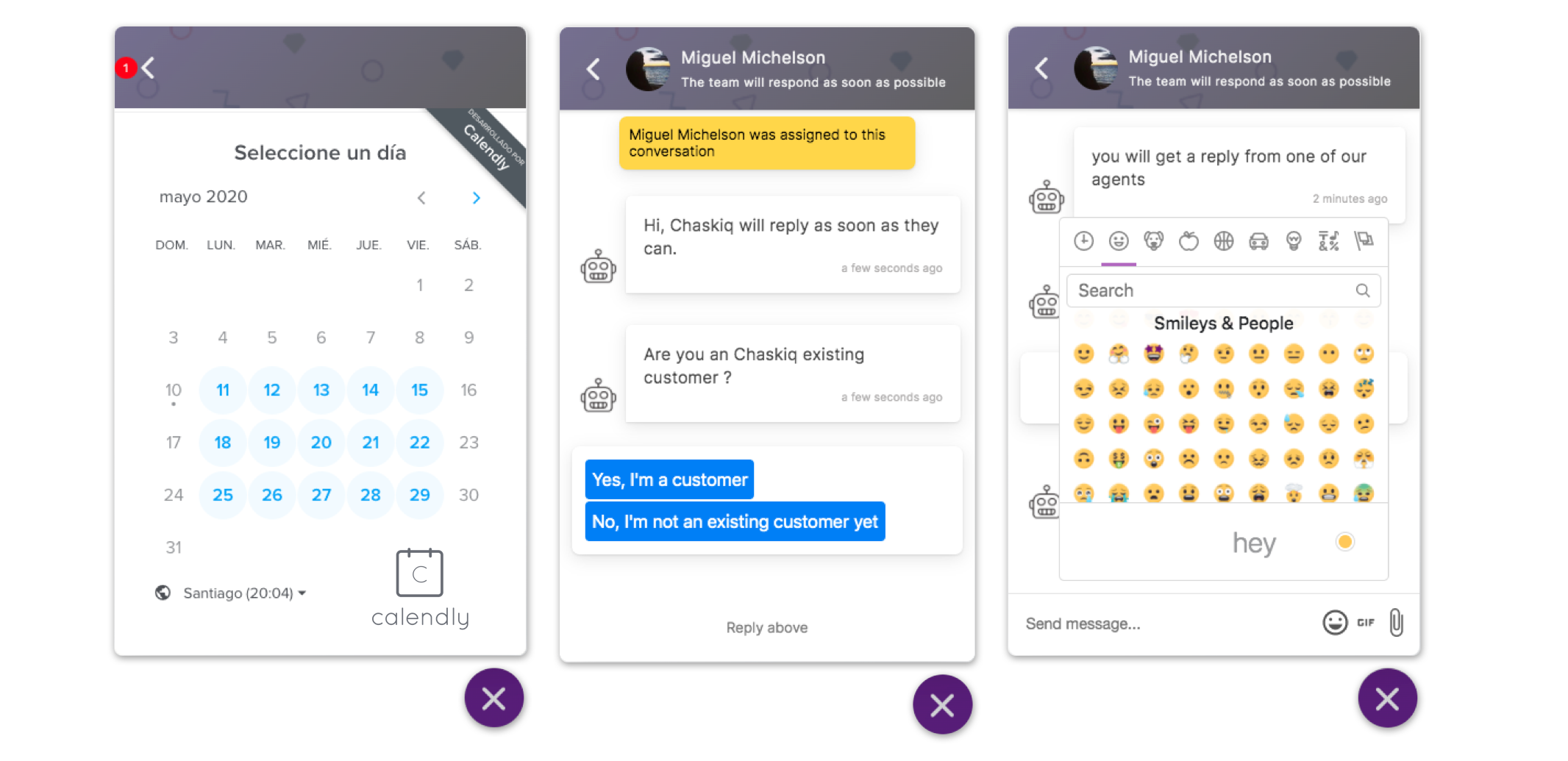
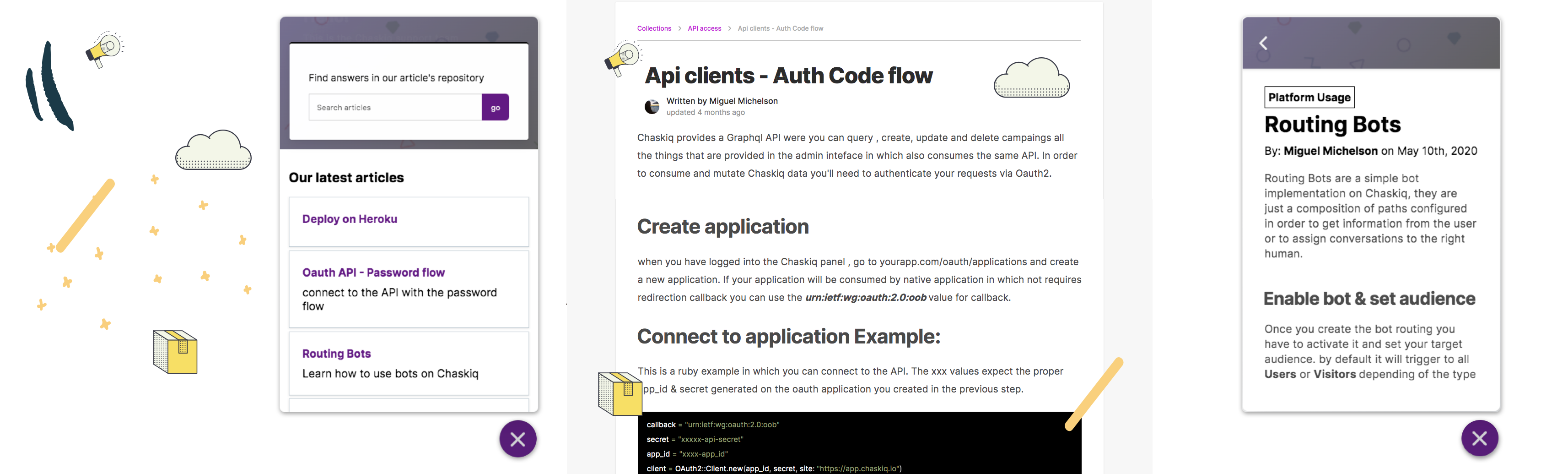
Self-hosted live chat, a shared support inbox, in-app messages, campaigns and help articles in one installation.
▶Repo detailsthe review · specs · pros & cons · install
What it is
Chaskiq is a Ruby on Rails and React application offering live chat, a shared inbox, in-app messages, campaigns and articles. It has been developed since May 2018 and is positioned against Intercom, Drift and Crisp.
What it is good for. A small team that wants to talk to visitors on its website and does not want a per-seat monthly bill or customer conversations held by a third party. The situation it fits is one where somebody is genuinely available to answer: an unattended chat bubble is worse than none.
- It covers an unusually wide range for one installation — chat, inbox, campaigns, in-app messages and articles together.
- Code was pushed on 30 June 2026, so the project is active.
- A paid commercial licence exists for anyone who needs to escape the restriction described below, which at least makes the position clear rather than ambiguous.
- The licence is not what a quick look suggests, and finding it took three attempts.
/blob/main/LICENSEand/blob/main/LICENSE.mdboth return not-found. The file is/blob/main/LICENSE.txt, and it is AGPL-3.0 with a Commons Clause added on top: "The grant of rights under the License will not include, and the License does not grant to you, the right to Sell the Software." "Sell" is defined to include charging a fee for hosting, consulting or support where the value comes substantially from the software. So you may run it; you may not build a business on running it for other people. This is the seventh time this archive has found a licence that a sidebar summary would have got wrong. - The newest release is nearly three years old and the published container images are two years old. Version 2.0.3 shows as "14 Nov" with no year on GitHub; the ungh mirror dated it 14 November 2023. The images on Docker Hub are tagged by commit, and
latestwas last updated on 17 October 2024. Running this means running from the main branch. - The README contains no install commands at all — they are in separate guides elsewhere. The stated requirements are Ruby 2.6 or newer, PostgreSQL 10 or newer and Redis 2.6 or newer, which are all very old floors with no upper bound given, and no memory figure is published for a four-part stack. 64 open issues, 18 open pull requests.
 chatwoot/chatwoot
The same idea, much larger and much more actively released, under a plain MIT licence with no selling restriction.
Track this in Scout freescout-help-desk/freescout
A shared inbox for a support address rather than a chat widget; lighter to install, with several features sold as paid modules.
Track this in Scout- papercups-io/papercups
The Elixir alternative people still recommend, but its own README declares maintenance mode and it has taken no code since 15 February 2024.
Track this in Scout
git clone https://github.com/chaskiq/chaskiq.git
cd chaskiq
docker compose up -d


4,328 stars · ⚠ A COMPOUND LICENCE IN ONE FILE, and the page summary says only "GPL": /blob/stable/LICENSE — on a default branch called `stable`, with NO COPYING in the root — holds the full GPL version 2 text plus the project's own notes stating it is "licensed under the GNU General Public License, Version 2, or (at your option) Version 3", that some files are "Version 2 and/or Version 3", that there is a special exception permitting linking with the OpenSSL library, and that "Some of the source files are in the public domain." No single project-wide copyright holder is named · 5.17 (2026-09-27 — one of the few repositories today whose release date CARRIES ITS YEAR on the page, so no second source was needed) · Track this in Scout
Desktop double-entry accounting for a person or a small business, with invoicing, budgets and investment tracking.
▶Repo detailsthe review · specs · pros & cons · install
What it is
GnuCash is a long-running desktop accounting program for Linux, FreeBSD, OpenBSD, macOS 10.13 and later, and Windows 11. It does double-entry bookkeeping, invoicing, scheduled transactions, budgets and investment tracking, with reports.
What it is good for. Anyone who has outgrown a spreadsheet and does not want a monthly subscription or an account with a company that can change its prices. It suits a sole trader or a very small business that files its own returns, and anyone who wants their own books on their own disk.
- Version 5.17 was released on 27 September 2026, a week before this edition. This is one of the few repositories here whose release date carries its year on the page, so no second source was needed.
- Real double-entry accounting with invoices and investments, from a project that has shipped continuously for over twenty years. Distribution packages exist for most Linux systems, and there are installers for macOS and Windows.
- Online price quotes are available through an optional Perl component, so a share portfolio can be valued without manual typing.
- One licence file contains three different licensing situations, and the summary word on the page is "GPL".
/blob/stable/LICENSE— on a default branch calledstable, notmainormaster, and there is noCOPYINGin the root — holds the full GPL version 2 text plus the project's own notes. Those notes say the software is "licensed under the GNU General Public License, Version 2, or (at your option) Version 3", that some files are "Version 2 and/or Version 3", that there is a special exception permitting linking with the OpenSSL library, and that "Some of the source files are in the public domain." Anyone combining code with it has to track which rule applies to which file. No single project-wide copyright holder is named. - Building from source is the hardest job in this edition: CMake, a full GNOME development stack, libxml2, SWIG 2.0.10 or newer and a C++11 compiler, with the README deferring the detail to another file. There is no
README.mdat all, only a plainREADME, and no single install command anywhere. - You cannot judge the backlog from GitHub. There are 51 open pull requests and the issues tab reads zero, which means bug tracking happens somewhere else. We did not verify where, so the real backlog is unknown. The website linked in the sidebar is also served over plain HTTP. No memory or disk figure is published. One more note worth recording: the ungh mirror reports the last code push as 22 August 2026, which cannot be right, because release 5.17 shipped on 27 September. The mirror is stale on this row and nothing was written into our own recency field from it.
 firefly-iii/firefly-iii
The same job as a web application you host, so it is reachable from a phone; AGPL-3.0, and it needs a web server and a database.
Track this in Scout actualbudget/actual
Envelope budgeting rather than double-entry bookkeeping, with a much friendlier screen and no invoicing.
Track this in Scout- ledger/ledger
The original plain-text accounting program: your books are a text file and the tool reports on it, with no interface at all.
Track this in Scout
sudo apt install gnucash
Checked, and left out
These were opened for this edition and did not make it, with the reason.
zammad/zammad
zammad/zammad — verified in full, queued rather than left out for a fault: no GitHub releases at all, Docker Hub tag 7.2.0-0022 of 2026-10-02 is the version to trust, plain AGPL-3.0 at develop/LICENSE, 430 open issues, and its own docs contradict themselves on memory (6 GB on the hardware page against 4 GB on the Docker page).
tinytag/tinytag
tinytag/tinytag — verified in full, queued: 842 stars, a gem, MIT at master/LICENSE with the holder named, 2.3.2 of 7 Sep 2026 settled by PyPI, code 3 Oct 2026, and a confirmed rename from devsnd/tinytag. Held back because three audio entries in one edition would have been too many and because it is read-only by design.
fonttools/fontspector
fonttools/fontspector — 113 stars, Apache-2.0, code 3 Oct 2026, named by its own description as the successor to entry #5. Too early to recommend on its own; queued so it is not rediscovered as new.
googlefonts/fontdiffenator
googlefonts/fontdiffenator — 86 stars, archived by its owner 18 Apr 2024, last code 14 Dec 2023. not-qualified.
methodofaction/Method-Draw
methodofaction/Method-Draw — exactly 3,000 stars, no code since 7 May 2024, about 29 months, no archived banner. not-qualified.
Coming tomorrow