
Edition No. 38 · 2 Oct 2026
Twelve repositories for writing code, keeping notes and letting people in
A single sign-on project changed both its owner and its name, and only its own repository says so.
A single sign-on project with 2,260 stars changed both its owner and its name, and the only place that says so is the repository itself. It is entry #8 today. Everything else in this edition is ordinary good software: two coding agents, a web framework, a note language server, a file browser, a music tagger, a feed reader, a shop, a spreadsheet database, a SQLite client and a JSON filter.
We aim for twelve every day. Some candidates fall out while we check them — those are listed at the end, with the reason.
Three things worth knowing, separate from the recommendations
- A project can change company and name, and only its own repository will mention it. boxyhq/jackson is now ory/polis. The old address still forwards, so nothing visibly breaks, and the licence file now reads "Copyright 2025 Ory Corp". The README states the former name in its first paragraph. Nothing outside the repository announces it, which means every older tutorial names a project that no longer exists under that name.
- Four candidates were researched and then found to have run here already, and all four were caught before a single entry was written. owncast/owncast ran in Edition 16, pentacent/keila in Edition 17, simonw/llm in Edition 7 and hledger in Edition 20. That equals yesterday's count. The check that catches them is a search of our own records by repository name against the final list of twelve, run before any writing starts.
- A release date and a code date can be nineteen months apart. metabrainz/picard last cut a release on 17 February 2025 and last changed its code on 30 September 2026. GitHub showed that release date as "17 Feb" with no year at all, and the Python package index supplied the missing year. A yearless date is not a date until a second source confirms it, in either direction.
If you only do three things
- ynqa/jnv (#12) — two minutes, one command. You type a filter for a JSON file and see the answer change as you type. Then you copy the finished filter into a script.
- dbcli/litecli (#11) — five minutes, on a database file that already exists. It completes table and column names as you type, so you stop guessing what the columns are called.
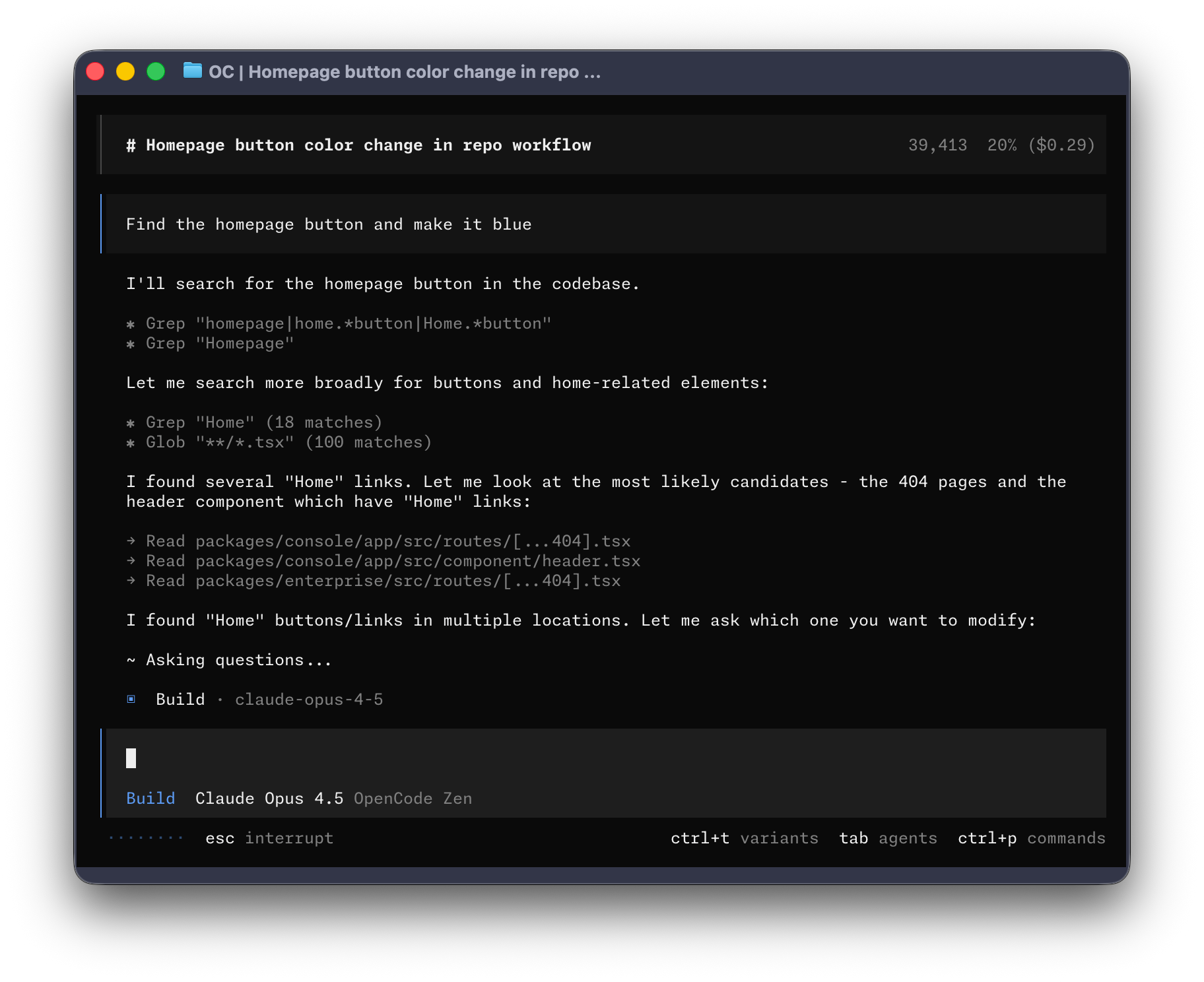
- anomalyco/opencode (#1) — half an hour, and the gold of the edition. A coding assistant that runs in a terminal window, reads the files in a folder, and makes the changes you ask for. It is MIT licensed and works with many model providers.
Every link in one place
| # | Repository | Project site | Stars | Licence |
|---|---|---|---|---|
| 1 | anomalyco/opencode | https://opencode.ai | 211,380 | MIT |
| 2 | cline/cline | https://cline.bot | 69,156 | Apache-2.0 |
| 3 | Neoteroi/BlackSheep 💎 | https://www.neoteroi.dev/blacksheep/ | 2,359 | MIT |
| 4 | Feel-ix-343/markdown-oxide 💎 | https://oxide.md | 2,251 | Apache-2.0 |
| 5 | mickael-kerjean/filestash | https://www.filestash.app | 14,724 | AGPL-3.0 |
| 6 | metabrainz/picard | https://picard.musicbrainz.org | 5,243 | GPL-2.0-or-later |
| 7 | miniflux/v2 | https://miniflux.app | 9,682 | Apache-2.0 |
| 8 | ory/polis 💎 | https://www.ory.com | 2,260 | Apache-2.0 |
| 9 | medusajs/medusa | https://www.medusajs.com | 35,982 | MIT plus a separate enterprise licence |
| 10 | nocodb/nocodb | https://www.nocodb.com | 65,101 | Sustainable Use License — not open source |
| 11 | dbcli/litecli | https://litecli.com | 3,310 | BSD-3-Clause |
| 12 | ynqa/jnv | https://github.com/ynqa/jnv | 6,117 | MIT |
No theme, on purpose. Twelve repositories across ten of the sixteen areas, three hidden gems, no repeats. Four new to the ledger, eight promoted from the queued backlog. coding-agents-and-dev-tools was the one area neither Edition 36 nor Edition 37 touched, and it carries two entries.
Twelve repositories, checked and reviewed. Every version verified against the GitHub API and dated.

211,380 stars · MIT (read from /blob/dev/LICENSE, unmodified, 'Copyright (c) 2025 opencode') · v1.18.34 (30 Sep 2026, read from /releases/latest; npm opencode-ai 1.18.34 confirms the version) · Track this in Scout
A coding assistant that runs in a terminal and edits the files in the folder you start it in.
▶Repo detailsthe review · specs · pros & cons · install
What it is
A terminal program that connects to many different AI model providers and acts as an agent, meaning it can read files, write files and run commands rather than only answering questions. It is written to be provider-neutral, so the same tool works with several paid services and with models you run yourself.
What it is good for. Anyone who writes code without a colleague to review it, and anyone who works mostly in a terminal rather than in a graphical editor. It suits repetitive work across many files, where asking a chat window forty times would be slower than describing the job once. It is also the right shape for someone who does not want to install a particular editor just to get an assistant.
- Plain MIT licence, read from the LICENSE file, with nothing added to it.
- It is not tied to one AI company, so a price rise at one provider does not strand you.
- It is busy. Code landed on the morning this edition was written, and release v1.18.34 is three days old.
- 4,700 open issues and 1,600 open pull requests. That is by far the largest board of any project in this edition, and it means a bug you report may wait a long time.
- Every request costs money at the AI provider. A long session on a large folder is a real bill, and nothing in the tool caps it.
- It runs commands and edits files directly. Use it on a folder that is already in version control, so you can undo what you do not like.
- openai/codex
Another terminal coding agent, far more popular at 127,393 stars, but built by one model provider around its own models rather than being neutral between them.
Track this in Scout - google-gemini/gemini-cli
The same idea from Google, at 107,165 stars, with a generous free tier and the same single-provider limit.
Track this in Scout  Aider-AI/aider
Covered in Edition 25. It commits each change to git as it goes, which makes undoing one step easier, but its last code landed in May 2026 rather than this week.
Track this in Scout
curl -fsSL https://opencode.ai/install | bash

69,156 stars · Apache-2.0 (read from /blob/main/LICENSE, unmodified, 'Copyright 2026 Cline Bot Inc.') · GitHub /releases/latest serves desktop-v0.0.42 (2 Oct 2026), a per-package tag for the separate desktop app; npm 'cline' 3.0.67 is the command-line tool · Track this in Scout
A coding agent that runs inside VS Code or a JetBrains editor, and also as a terminal command.
▶Repo detailsthe review · specs · pros & cons · install
What it is
An agent published in three shapes: an editor extension, a command-line tool, and a library other programs can call. The company behind it is Cline Bot Inc., and the code is Apache-2.0, read from the LICENSE file.
What it is good for. Anyone who already works in a graphical editor and wants the assistant beside the file rather than in a separate window. The step-by-step approval it asks for suits people who want to read each change before it lands. The library version suits anyone who wants to put the same agent inside their own tooling.
- Apache-2.0, unmodified, "Copyright 2026 Cline Bot Inc." read from the file.
- It asks before it acts, so a wrong instruction does not quietly rewrite twenty files.
- Three shapes from one project: editor, terminal and library.
- The latest release on GitHub is not the product most people install.
/releases/latestserves a tag calleddesktop-v0.0.42, published on 2 October 2026, which versions the separate desktop application. The command-line tool is published on the npm registry asclineat version 3.0.67. One repository, several version numbers, and the loudest one is the least important. - 730 open issues and 525 open pull requests.
- Model requests cost money at the provider, as with every tool of this kind.
- RooCodeInc/Roo-Code
A fork of the same lineage at 24,300 stars, with more switchable modes for different jobs, but its last code landed in May 2026.
Track this in Scout - continuedev/continue
36,054 stars and the same editor-panel shape, more focused on code completion as you type and less on running commands.
Track this in Scout  aaif-goose/goose
Covered in Edition 29. It runs on the machine rather than inside an editor, and it is now maintained under the Linux Foundation.
Track this in Scout
npm install -g cline

2,359 stars · MIT (read from /blob/main/LICENSE, unmodified, 'Copyright (c) 2021-present Roberto Prevato') · 2.6.3 (4 Jun 2026, confirmed by PyPI) · Track this in Scout
A fast Python web framework with request validation, authentication and API documentation included.
▶Repo detailsthe review · specs · pros & cons · install
What it is
An ASGI framework, which means it is built for the modern Python standard that lets one program handle many visitors at once without blocking. It reads the data a visitor sends into Python dataclasses or Pydantic models automatically, so the checking of incoming data is written once rather than in every handler.
What it is good for. Anyone building a Python web service who finds the biggest framework in that field heavier than the job needs. It suits a small team that wants speed and built-in authentication without assembling five libraries. The very small issue board also matters: a project with three open issues is a project whose author answers.
- Plain MIT licence, read from the file, "Copyright (c) 2021-present Roberto Prevato".
- Three open issues and four open pull requests, on a project created in November 2018. That is the quietest board in this edition by a wide margin.
- Python 3.10 to 3.14, including PyPy, so it is not stuck behind a language version.
- It is the second choice in a field with one very large first choice, so there are fewer tutorials, fewer answers online and fewer people who have hit your problem already.
- Release 2.6.3 is dated 4 June 2026 and the newest code is 16 June 2026. Three and a half months between a release and today is comfortably inside our bar, and the project is explicitly not called quiet, but nothing new has shipped this summer.
- It is a library. There is nothing to open and look at, so the payoff only arrives once you have written something with it.
- fastapi/fastapi
The first choice in this field at 102,354 stars, with far more documentation and far more third-party help, and a heavier dependency list.
Track this in Scout - Kludex/starlette
The small foundation that FastAPI is built on, at 12,592 stars. It does less on purpose, so you assemble more yourself.
Track this in Scout - sanic-org/sanic
18,639 stars and an older answer to the same speed question, with its own server built in rather than relying on a separate one.
Track this in Scout
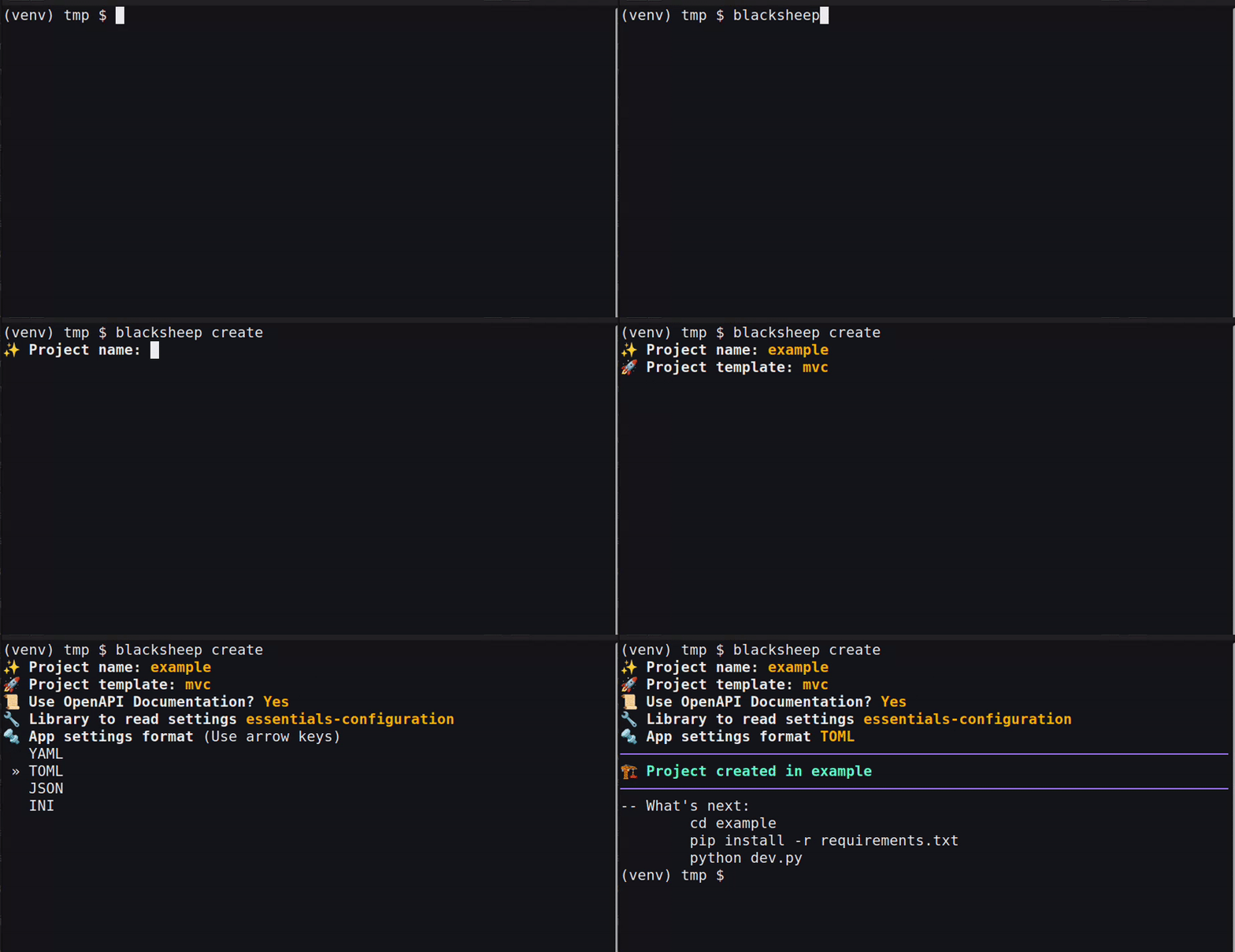
python3 -m venv venv
source venv/bin/activate
pip install blacksheep


2,251 stars · Apache-2.0 (read from /blob/main/LICENSE, unmodified, 'Copyright 2024 Felix Zeller.') · v0.25.12, read from /releases/latest as '29 Jun' with NO YEAR and not settled — the project is not on crates.io under this name, so no independent date exists · Track this in Scout
A language server that gives a folder of Markdown notes links, backlinks, daily notes and completion inside your editor.
▶Repo detailsthe review · specs · pros & cons · install
What it is
A language server, which is a small background program that editors talk to in a standard way so that one tool can serve many editors. This one reads a folder of Markdown files and answers the editor's questions about them: what this link points at, what points here, what names could complete this.
What it is good for. Anyone who keeps notes as plain files and does not want to adopt an application that owns them. It suits people who already live in Neovim, Zed, Helix or VS Code and would rather not switch windows to look something up. It is also the cheapest way to try the linked-notes habit, because there is nothing to import and nothing to export.
- Plain Apache-2.0, read from the file, "Copyright 2024 Felix Zeller."
- Five editors supported: Neovim, VS Code, Zed, Helix and Kakoune.
- It does not change your notes. Remove it and you still have a folder of Markdown files.
- The newest release reads "29 Jun" with no year, and no second source could settle it. The project is not on the Rust package index under this name, so there is no independent date. We state it as unsettled rather than guess. What is proven is the code: it landed on 1 August 2026, two months ago.
- 36 open issues against 69 open pull requests. More waiting changes than waiting problems is unusual, and it suggests contributions arriving faster than they are reviewed.
- Installing from source needs the Rust toolchain. The ready-made routes are Homebrew and Windows package manager only.
- artempyanykh/marksman
3,285 stars and the closest match of all: the same kind of language server for the same kind of notes, written in F#, but its last code landed in February 2026.
Track this in Scout  zk-org/zk
Covered in Edition 29. It is a command-line tool rather than an editor service, so it searches and creates notes from a shell instead of completing names as you type.
Track this in Scout silverbulletmd/silverbullet
Covered in Edition 33. The opposite trade: a whole web application over the same Markdown files, which you run as a service rather than inside an editor.
Track this in Scout
brew install markdown-oxide

14,724 stars · AGPL-3.0 (read from /blob/master/LICENSE, unmodified standard text) · no GitHub releases at all — a determination, not a gap; the documented install is a docker-compose.yml plus the image machines/filestash · Track this in Scout
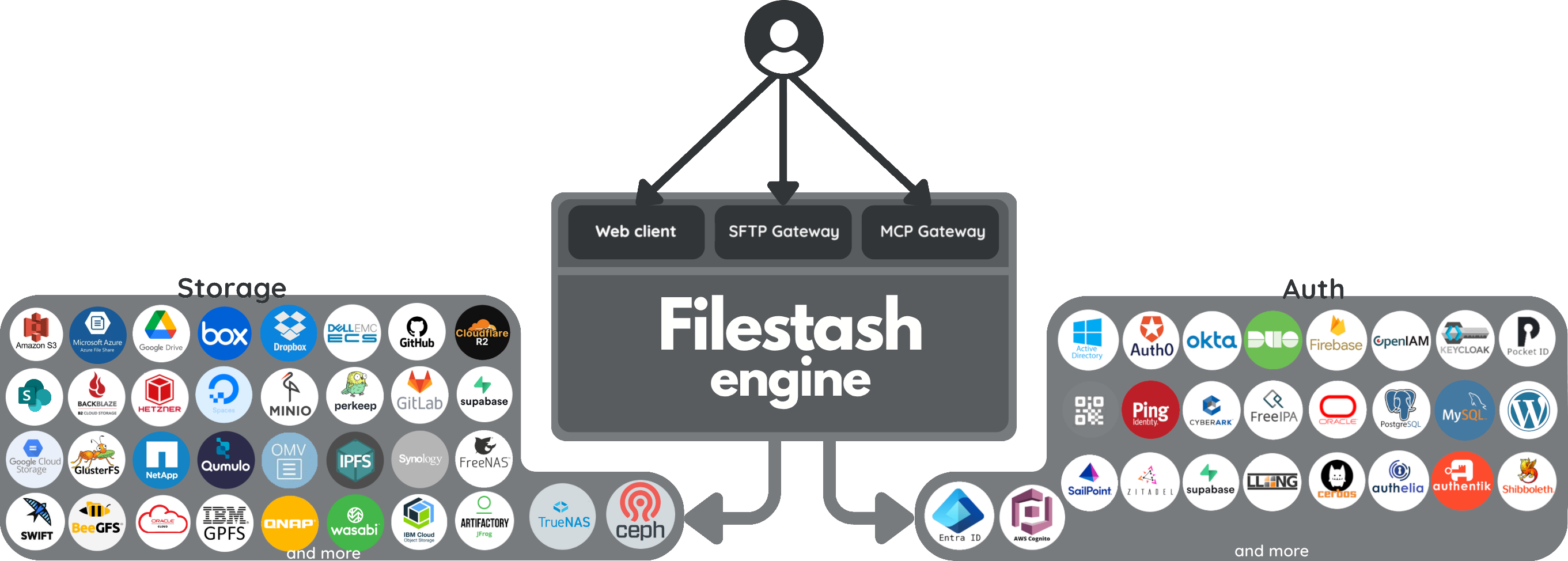
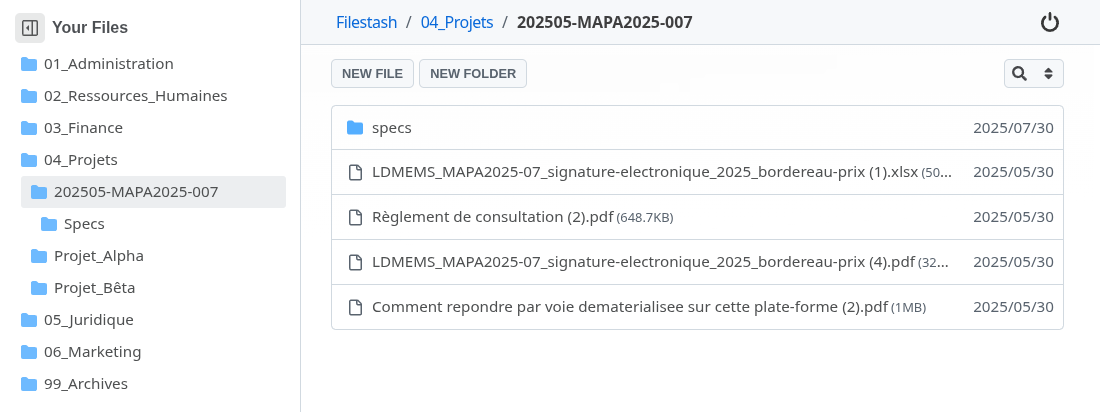
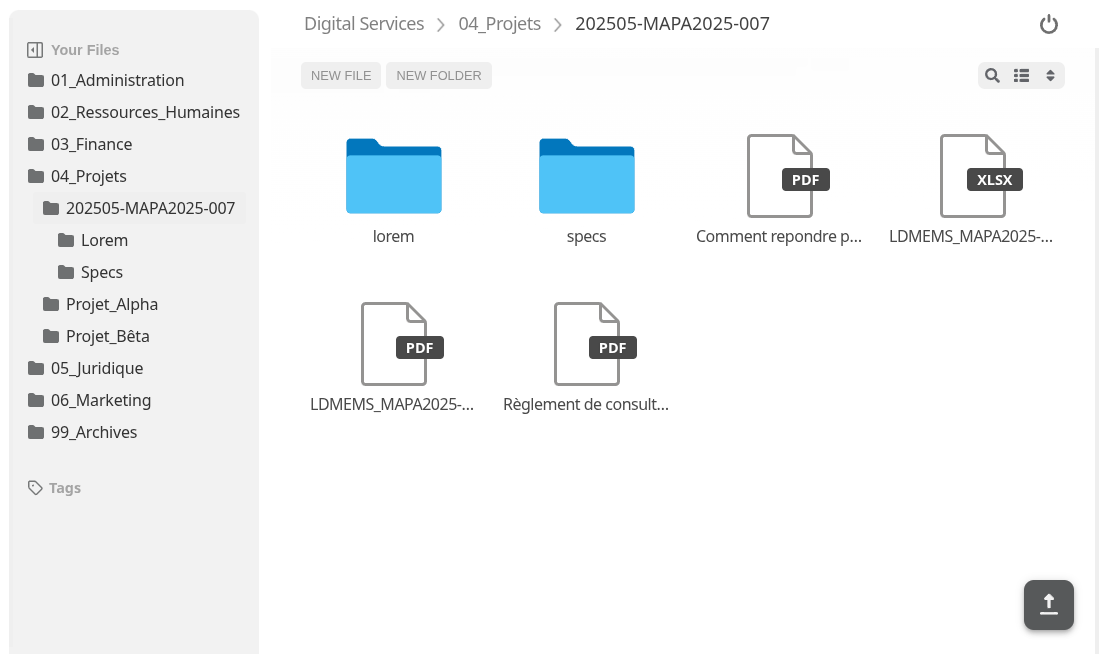
One web interface in front of many different file storage systems at once.
▶Repo detailsthe review · specs · pros & cons · install
What it is
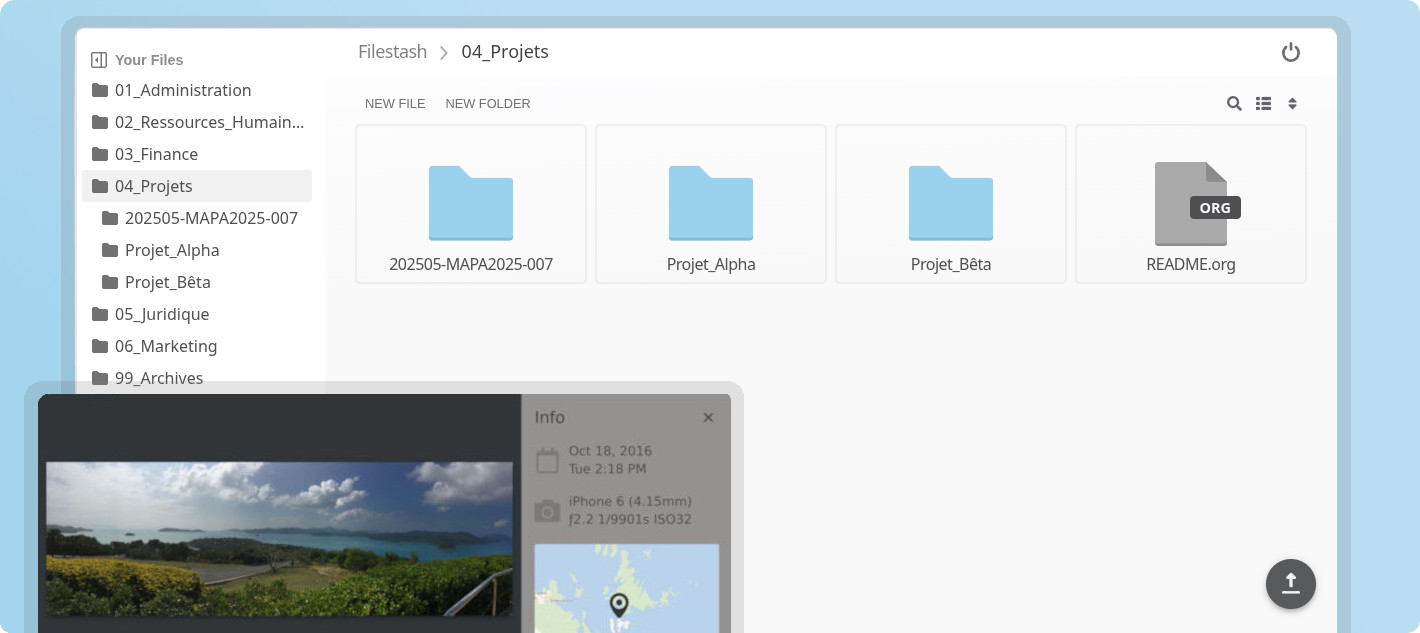
A file manager that runs as a service and connects outward to storage you already pay for, rather than holding the files itself. It can read and write over SFTP, FTP, WebDAV, S3-compatible storage, Google Drive, Dropbox and more, and it previews documents, images and video in the browser.
What it is good for. Anyone who has files spread across several places and wants one address that reaches all of them. It suits giving a non-technical colleague a browser page instead of a file transfer program and a password. It is also the live answer to a problem this report raised in Edition 35, which covered a very popular web file manager that was archived by its owner on 31 August 2026 and will get no more security fixes. Filestash is maintained: its last code landed on 25 September 2026.
- Plain unmodified AGPL-3.0, read from the LICENSE file.
- Many storage systems through one page, which is the whole point and is rare.
- It holds nothing. If you remove it, the files are still exactly where they were.
- AGPL-3.0 is the strictest common open-source licence. If you offer a modified version of this software to other people over a network, you have to publish your changes.
- There is a paid side. The project's own README points commercial users at a support contract on its pricing page. The software is free; help is not.
- It publishes no GitHub releases at all. That is a decision rather than a gap, but it means there is no version number to pin, and the installation route the documentation gives is a Docker Compose file rather than a single command.
- sigoden/dufs
10,828 stars and one downloaded file. It serves and receives files over HTTP and WebDAV with access control, and it does one folder rather than many remote storage systems.
Track this in Scout - drakkan/sftpgo
12,612 stars. It is a server rather than a client: it offers SFTP, FTP and WebDAV to other people, with cloud storage behind it, and its web page is for administration rather than browsing.
Track this in Scout  rclone/rclone
Covered in Edition 36. The same long list of storage systems, as a command-line copy tool, so it is better for moving files in bulk and has no browser interface.
Track this in Scout
docker compose up -d

5,243 stars · GPL-2.0-or-later (read from the repository; the licence file is the GPL-2 notice) · release-2.13.3, read from /releases/latest as '17 Feb' with no year and dated 17 February 2025 by PyPI — nineteen and a half months, against code on 30 Sep 2026 · Track this in Scout
Identifies music files against the MusicBrainz database and writes the correct details into them.
▶Repo detailsthe review · specs · pros & cons · install
What it is
A desktop program, available for Windows, macOS and Linux, that reads audio files and matches them against MusicBrainz, a public and freely licensed music database. It can identify a file by its audio content rather than by its existing name, which is what makes it useful on a badly labelled collection.
What it is good for. Anyone with a music collection assembled over many years from many sources, where half the files are named "track03". It suits people who run their own music server, because every such server reads the details from inside the files, so fixing the files fixes the server. Edition 37 covered a simpler Linux-only tag editor that shows the files as a spreadsheet grid; this is the one that knows what the recording is.
- It identifies files by their sound, not only by their existing text, so it works on files with no useful names at all.
- Plugins exist for extra jobs, and the program ships with a plugin system rather than needing a rebuild.
- Its last code landed on 30 September 2026, two days before this edition.
- Its newest release is nineteen and a half months old and the year was nearly read wrongly. GitHub shows
release-2.13.3dated "17 Feb" with no year. The Python package index dates the same version to 17 February 2025. So the release is old while the code is two days old. The project is busy and is explicitly not called dead, but anyone installing a packaged version is installing something from early 2025. - An automatic match can be wrong, and it writes into your files. Work on a copy the first time, or keep a backup.
- Building from source is a real job: Python 3.10 or newer, PyQt 6.6.1 or newer, Mutagen, PyYAML, pygit2, gettext and a compiler.
 puddletag/puddletag
Covered in Edition 37, 640 stars, and its own licence file credits code taken from Picard. It shows files as a spreadsheet grid for bulk hand-editing, and it does not identify the recordings itself. Linux only.
Track this in Scout beetbox/beets
Covered in Edition 36, 15,560 stars. The same MusicBrainz matching from a command line, built around importing and organising a whole library rather than editing files one by one.
Track this in Scout- quodlibet/mutagen
1,966 stars, and Picard's own dependency. It is the Python library that reads and writes the tags, with no interface and no matching, for anyone who wants to script this themselves.
Track this in Scout
python3 -m venv --system-site-packages .venv
source .venv/bin/activate
pip install -r requirements.txt -r requirements-build.txt
python3 setup.py build_locales
python3 setup.py build_ext -i
python3 tagger.py

9,682 stars · Apache-2.0 (stated in the README and shown on the repository page) · 2.3.3 — 24 Jul 2026 on GitHub /releases/latest and 23 Jul 2026 on pkg.go.dev; the one-day difference is printed rather than resolved silently · Track this in Scout
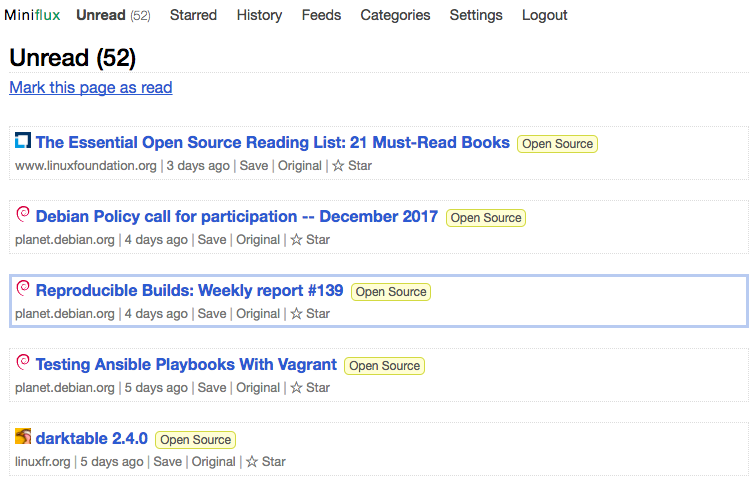
A feed reader you run yourself, built as one small program plus a PostgreSQL database.
▶Repo detailsthe review · specs · pros & cons · install
What it is
A reader for RSS, Atom and JSON Feed, which are the standard formats a website uses to publish a machine-readable list of its new articles. It is written in Go and ships as one static file, meaning the whole program is a single download with nothing to install alongside it.
What it is good for. Anyone who wants to follow fifty sites without fifty browser tabs, and anyone who has noticed that a social feed shows them a fraction of what they asked to see. It suits people who care about being tracked: it strips trackers out of article content and can fetch the full text of an article itself. It is also the right size for a small machine, which matters if you are paying for it monthly.
- Plain Apache-2.0, which is permissive and puts no condition on how you use it.
- Its own README states that it uses "a couple of MB of memory and a negligible amount of CPU, even with several hundreds of feeds." That is a published figure, not a claim about being lightweight.
- Official Debian and RPM packages, pre-built binaries and container images on three registries, so there is an install route for almost any machine.
- PostgreSQL only. Its README says so plainly. There is no SQLite option, so a database server is part of the job even for one person.
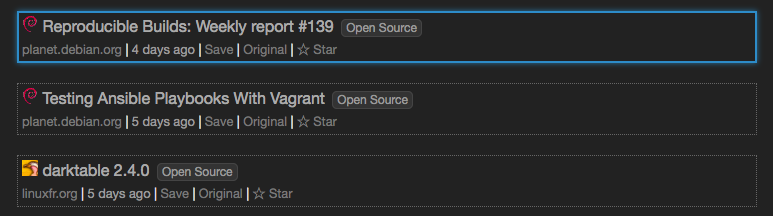
- It is deliberately plain. There are no recommendations, no social features and no clever grouping, and some people want those.
- Release 2.3.3 is dated 24 July 2026 on GitHub and 23 July 2026 on the Go package index. The one-day difference is almost certainly a time-zone edge, and we print it rather than pick one silently. The newest code is 12 September 2026.
- FreshRSS/FreshRSS
15,838 stars, a PHP application with more features and more settings, and it will run on ordinary shared web hosting where this one will not.
Track this in Scout - nkanaev/yarr
3,920 stars and one downloaded file with the database inside it, so it is far easier to start and does not scale to many readers.
Track this in Scout  rss-bridge/rss-bridge
Covered in Edition 28. It solves the other half of the problem by making a feed for a site that removed its own, then you read it in something like this.
Track this in Scout
docker run -d \
  -p 80:8080 \
  --name miniflux \
  -e "DATABASE_URL=postgres://miniflux:*password*@*dbhost*/miniflux?sslmode=disable" \
  -e "RUN_MIGRATIONS=1" \
  -e "CREATE_ADMIN=1" \
  -e "ADMIN_USERNAME=*username*" \
  -e "ADMIN_PASSWORD=*password*" \
  docker.io/miniflux/miniflux:latest

2,260 stars · Apache-2.0 (read from /blob/main/LICENSE, unmodified, 'Copyright 2025 Ory Corp') · v26.2.0 (20 Mar 2026, read from /releases/latest; the version number carries its own year) · Track this in Scout
Translates a company's own single sign-on into the ordinary modern login your application already understands.
▶Repo detailsthe review · specs · pros & cons · install
What it is
A service that sits between a customer's corporate identity system and your application. It accepts SAML, the standard large organisations use, and also OpenID Connect, and it presents the result to your application as an OAuth 2.0 or OpenID Connect login. It also supports SCIM, a standard for a company to create and remove user accounts in your system automatically when staff join or leave.
What it is good for. Anyone selling software to businesses who has been asked for "SSO" and found out what that means. It removes the need to learn SAML, which is the whole value. It also brings a supporting standard with it, so the customer's staff list stays correct without anyone sending spreadsheets.
- Plain unmodified Apache-2.0, read from the LICENSE file. Nothing is added and nothing is carved out.
- It brings its own database choice. The README says it supports MySQL, MariaDB, PostgreSQL, MongoDB, Redis and PlanetScale, so it fits beside most existing setups.
- A very quiet board for a project of this size: 25 open issues and 9 open pull requests.
- The project changed hands and the only place that says so is the repository. Its own README reads: "Ory Polis - formerly known as BoxyHQ Jackson - bridges or proxies a SAML login flow to OAuth 2.0 or OpenID Connect." The licence file carries "Copyright 2025 Ory Corp". The practical effect is that every tutorial, blog post and search result written before the change uses the old name, and anyone looking for "SAML Jackson" has to work this out for themselves.
- Release v26.2.0 is dated 20 March 2026, more than six months ago, although code landed on 27 July 2026. The version number carries its own year, which is how we settled the date.
- The install instructions in the repository are for local development only. The README points at the company's own documentation site for running it in earnest, and the company sells a hosted version of the same thing. That is an honest arrangement, not a trap, but the free route is the less signposted one.
- keycloak/keycloak
37,100 stars and far larger. It is a complete identity system you host, so it can replace your logins entirely rather than translating someone else's, and it is a much bigger thing to run.
Track this in Scout - ory/hydra
17,495 stars, from the same company. It issues OAuth 2.0 and OpenID Connect tokens and expects you to supply the user management, which is the opposite half of the job.
Track this in Scout  authelia/authelia
Covered in Edition 32. It puts one login and a second factor in front of services you run, which is about protecting your own things rather than accepting a customer's company login.
Track this in Scout
git clone https://github.com/ory/polis.git
cd polis
npm install
npm run dev

35,982 stars · MIT (read from /blob/develop/LICENSE, unmodified, 'Copyright (c) 2021 Medusajs') plus a separate ENTERPRISE-LICENSE.md in the repository — open core · v2.21.2 (28 Sep 2026, read from /releases/latest; npm create-medusa-app 2.21.2 confirms the version) · Track this in Scout
The order and payment machinery of an online shop, with the customer-facing pages left to you.
▶Repo detailsthe review · specs · pros & cons · install
What it is
A commerce platform written in TypeScript that exposes everything through an API, which means other programs talk to it over the web rather than it drawing pages itself. It ships an administration interface for staff and leaves the storefront as a separate project you choose.
What it is good for. Anyone selling something whose rules do not fit a hosted shop service: unusual pricing, several currencies, a subscription, a marketplace, or a sales process with its own steps. It suits a team that already builds web front ends and wants the commerce rules to be code they can read.
- Plain MIT licence, read from the LICENSE file, "Copyright (c) 2021 Medusajs".
- One command starts a working project, which is unusual for something this large.
- A real release schedule. Version v2.21.2 is dated 28 September 2026, four days before this edition.
- There is an enterprise licence file beside the MIT one. The repository carries
ENTERPRISE-LICENSE.md, so some part of what the company publishes needs a commercial agreement. The MIT core is genuinely MIT; read the second file before assuming everything is. - No storefront is included. Budget for designing and building the pages customers actually see, or for buying a ready-made one.
- One figure disagrees with itself and we are printing it rather than choosing. The GitHub page showed 36,500 stars while the mirror we use for exact counts gives 35,982. We have used the exact figure, following the same decision made for pikepdf in Edition 35.
- saleor/saleor
23,223 stars, the same API-first idea in Python with GraphQL, more mature in some areas and a heavier thing to run.
Track this in Scout - vendurehq/vendure
8,332 stars and the closest match in shape and language, and it has been renamed from vendure-ecommerce/vendure.
Track this in Scout - spree/spree
15,686 stars and the oldest of the four, built in Ruby on Rails, which is the better fit if that is the language your team already knows.
Track this in Scout
npx create-medusa-app@latest my-shop

65,101 stars · Sustainable Use License v1.0 (read from /blob/develop/LICENSE.md) — NOT open source · 2026.09.1 (29 Sep 2026, read from /releases/latest; the version number carries its own year) · Track this in Scout
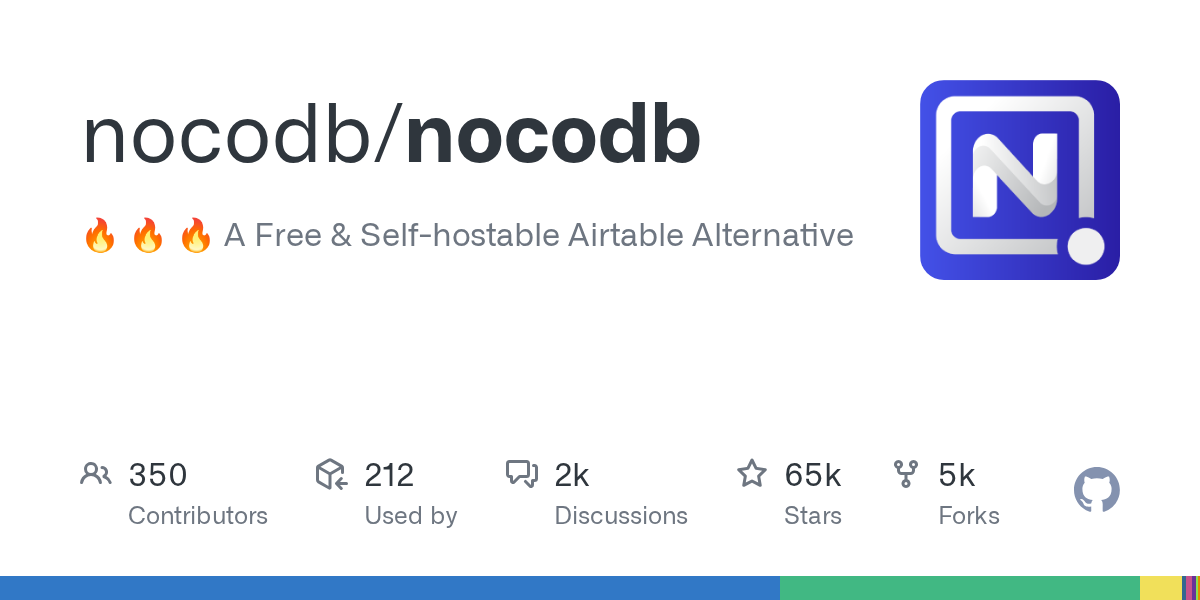
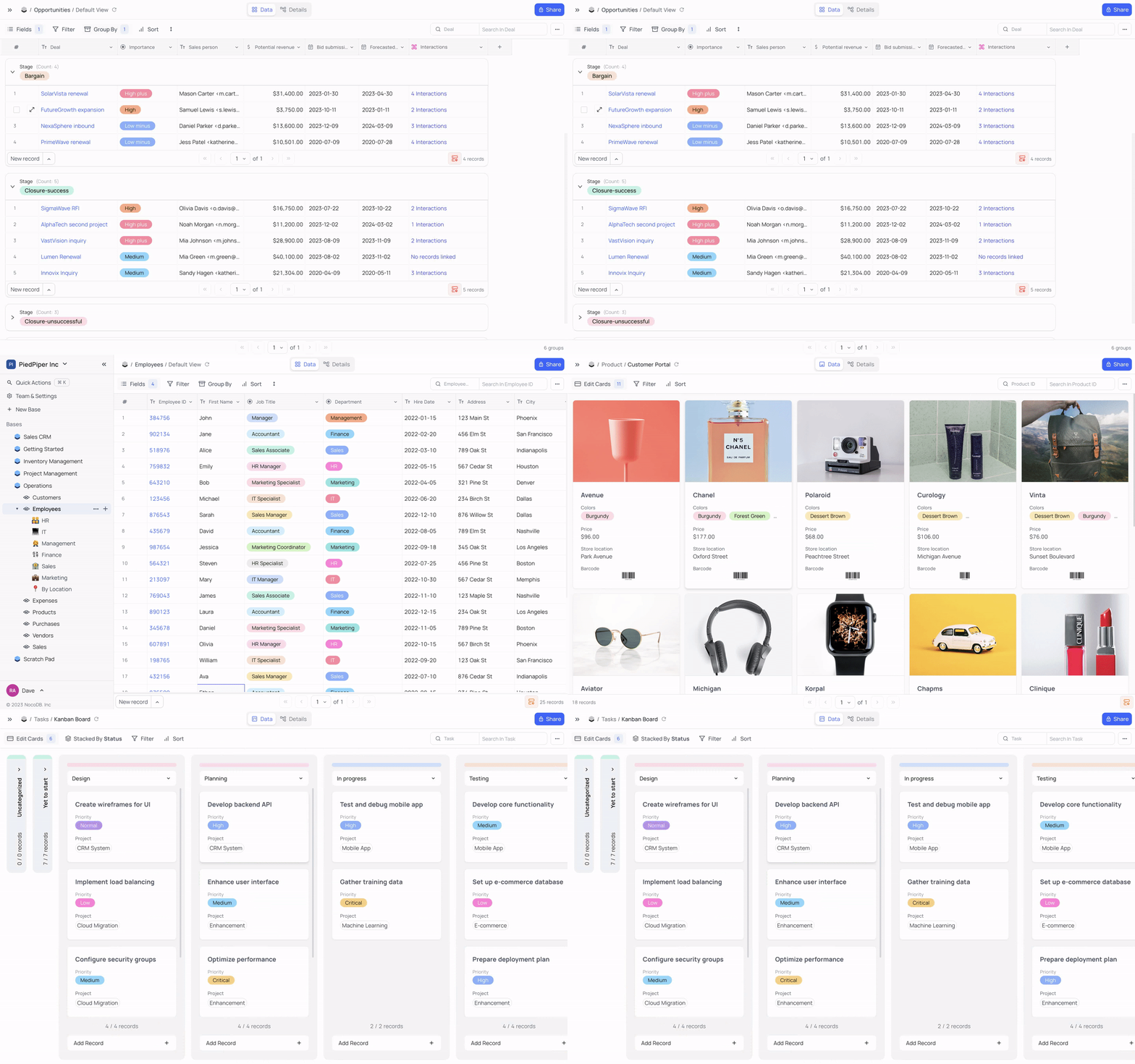
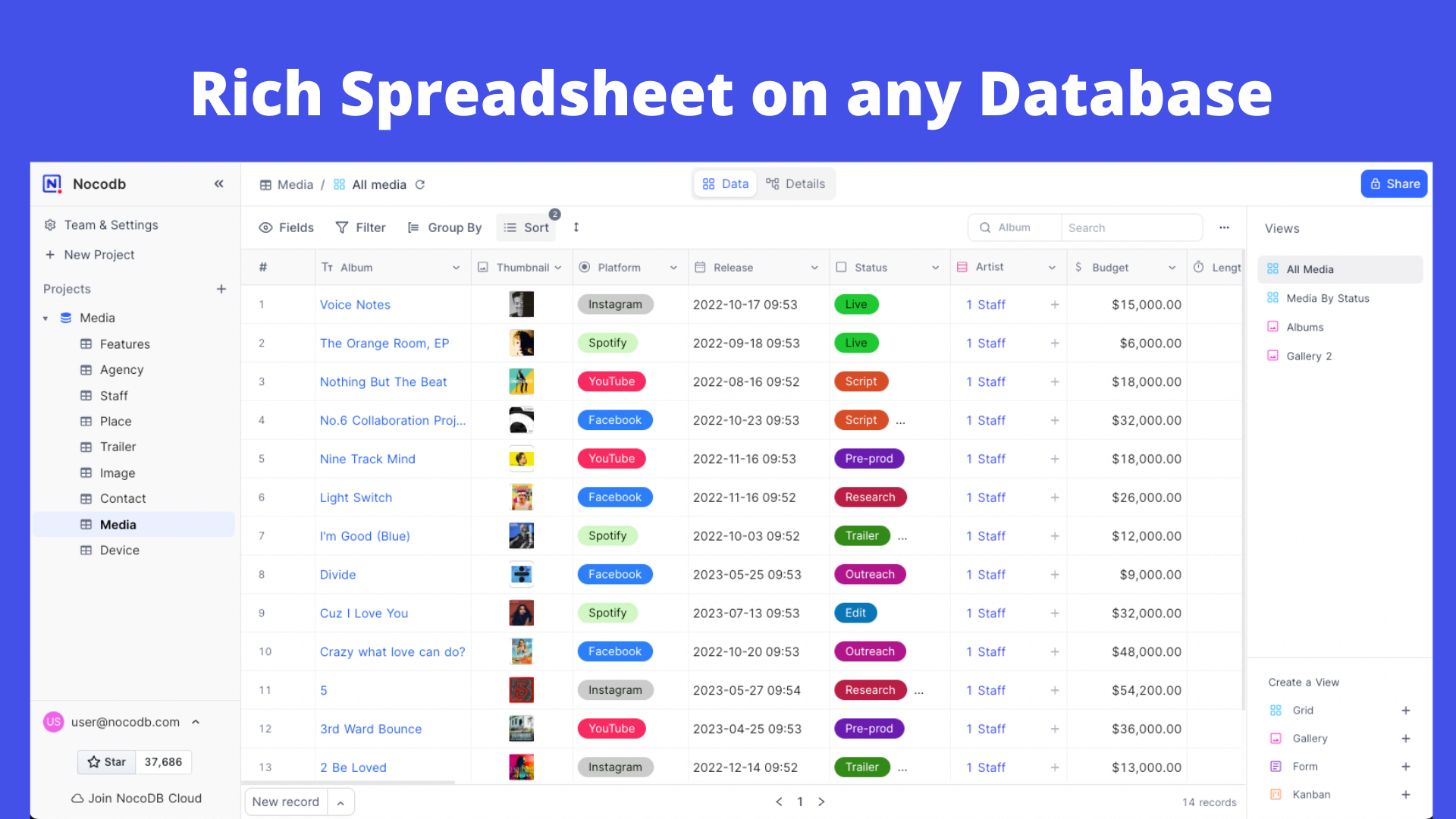
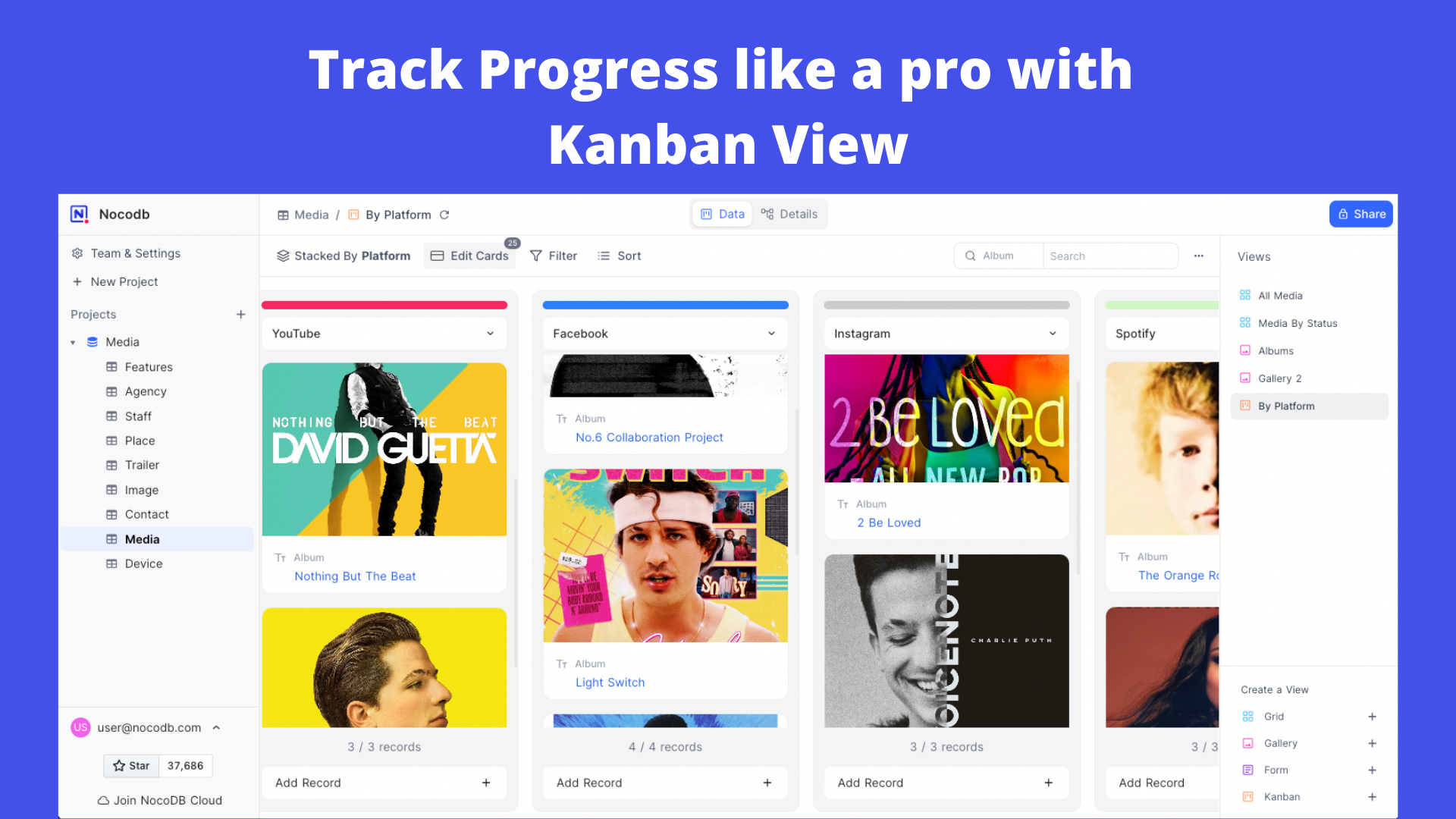
A spreadsheet-shaped interface and an automatic web interface over your own database.
▶Repo detailsthe review · specs · pros & cons · install
What it is
A web application that connects to an existing database, or brings its own, and presents the tables as editable grids with several other views. It also generates a REST interface over those tables, so the same data is reachable by code without anyone writing that code.
What it is good for. Anyone whose real data lives in a spreadsheet because the alternative looked too technical. It suits a small team that needs several people editing the same records with some structure, and it suits anyone who wants to stop paying monthly for a hosted version of exactly this. Edition 34 covered a different tool that wraps an existing database with an interface aimed at developers; this one is aimed at the person entering the data.
- It runs on an existing database rather than demanding its own, so existing data does not have to be copied in.
- Several views of the same records, including calendar and kanban, with no setup beyond choosing them.
- Very active. Release 2026.09.1 is dated 29 September 2026, and the version number carries its own year, which is how we dated it.
- It is not open source, and the licence is specific about why. The file is the Sustainable Use License, Version 1.0, at
LICENSE.md. Its own words: "You may use or modify the software only for your own internal business purposes or for non-commercial or personal use. You may distribute the software or provide it to others only if you do so free of charge for non-commercial purposes." Running it for your own work is allowed. Selling it, or offering it to customers as part of a paid service, is not. This is the same family of licence as n8n's. - 394 open issues and 310 open pull requests. That is the second-largest board in this edition.
- No memory or disk figure is published anywhere in the repository, and a tool of this shape with a real amount of data in it is not small.
- teableio/teable
21,847 stars and the closest match, built on PostgreSQL only, with a newer interface and a smaller plugin ecosystem.
Track this in Scout - apitable/apitable
15,627 stars, the same idea with a stronger emphasis on building small applications on top of the tables.
Track this in Scout  directus/directus
Covered in Edition 34. It also wraps an existing database, but it is aimed at developers and content teams rather than at spreadsheet users, and its licence is a different and stricter arrangement.
Track this in Scout
docker run -d --name noco -v "$(pwd)"/nocodb:/usr/app/data/ -p 8080:8080 nocodb/nocodb:latest


3,310 stars · BSD-3-Clause (read from /blob/main/LICENSE, unmodified, 'Copyright (c) 2018, dbcli'; LICENSE.txt returned 404) · 1.17.1 (31 Jan 2026, agreed by GitHub and PyPI) · Track this in Scout
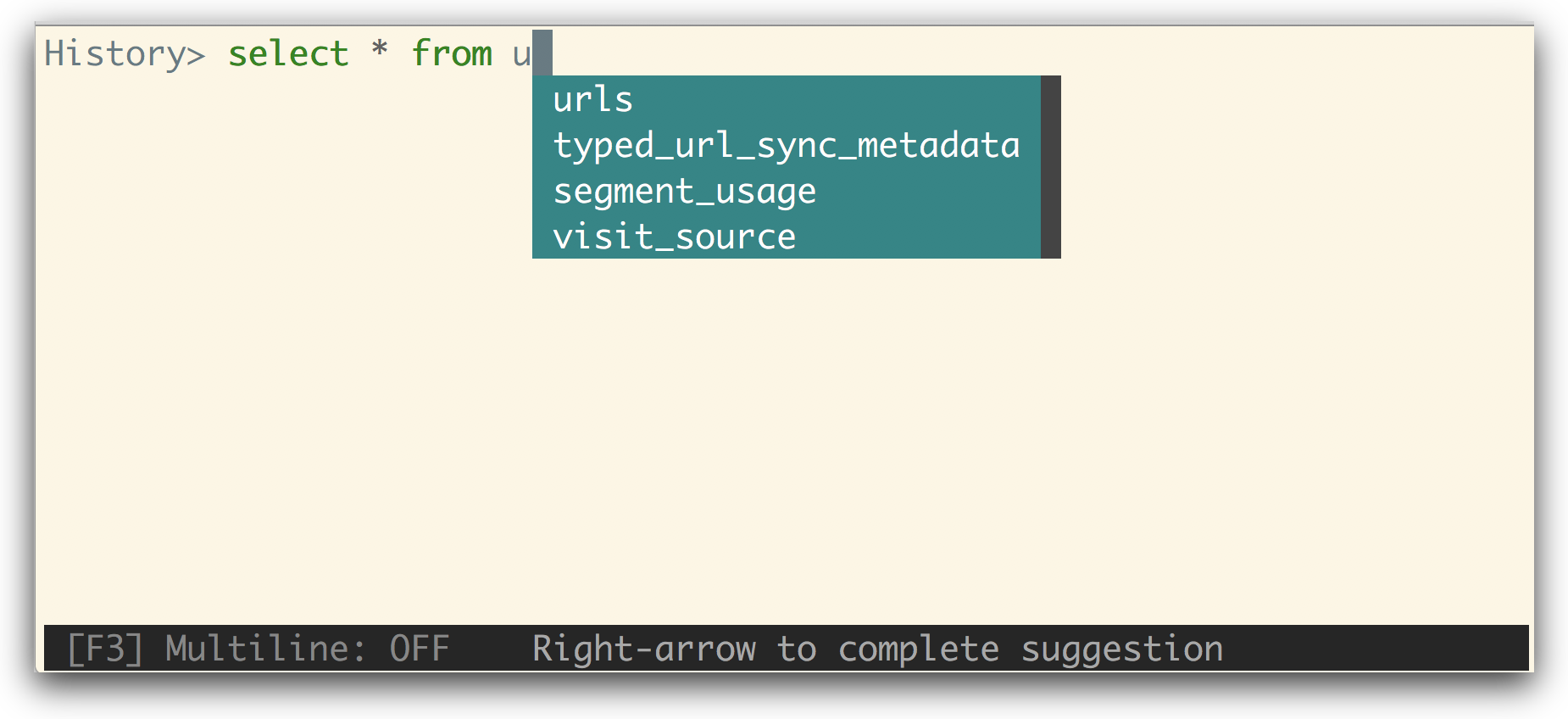
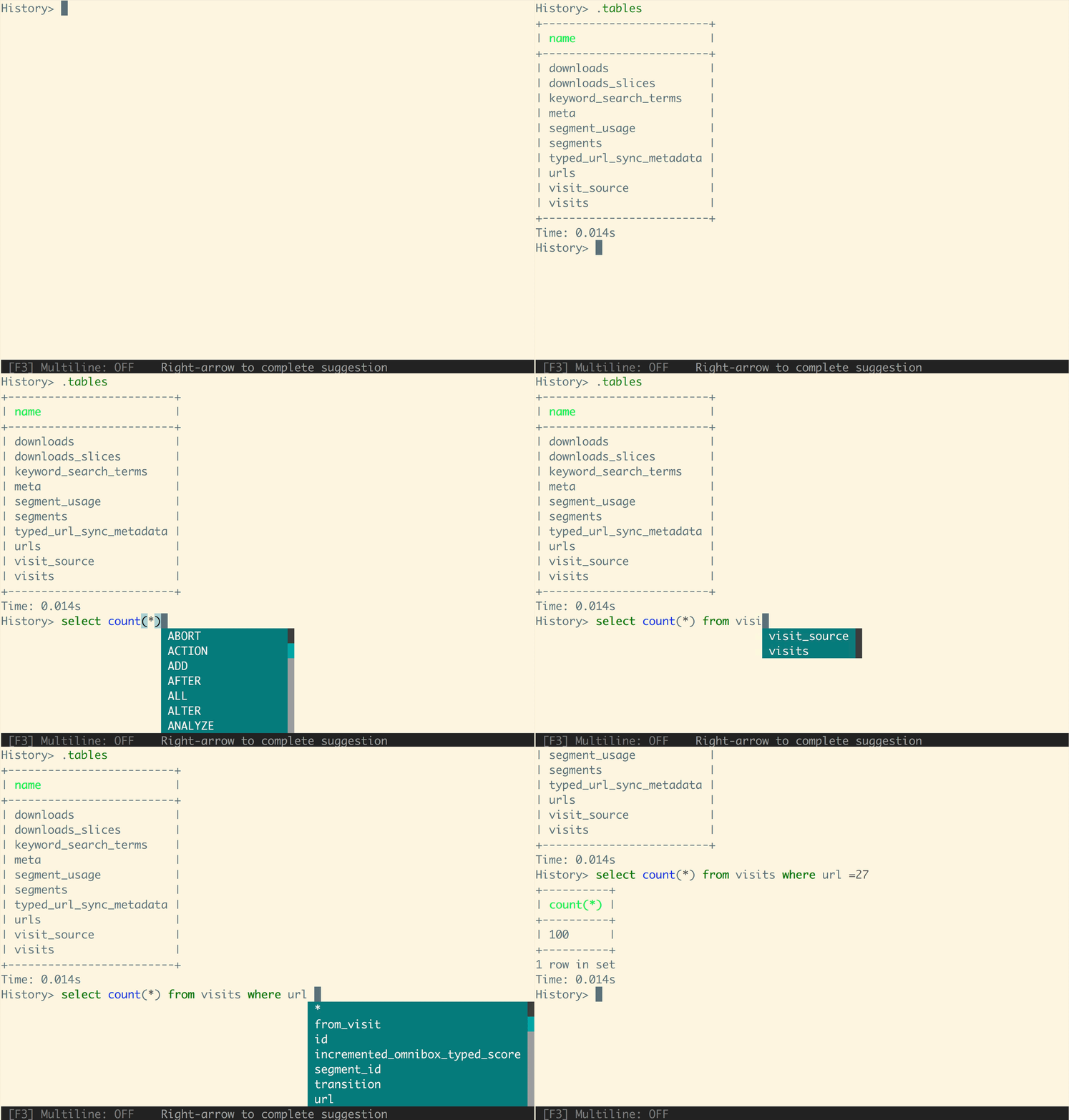
A SQLite command prompt that completes table and column names and colours your query.
▶Repo detailsthe review · specs · pros & cons · install
What it is
A command-line client for SQLite with auto-completion, syntax colouring and a saved history, from the same group that makes the equivalent tools for PostgreSQL and MySQL. It is a Python program and installs like any other.
What it is good for. Anyone who has a .db or .sqlite file and wants to look inside without installing a graphical program. It suits exactly the moment when you do not remember what the columns are called, which is most of the time on somebody else's database. It is also the fastest possible way to answer a question about an application's own data file.
- Plain unmodified BSD-3-Clause, read from the file, "Copyright (c) 2018, dbcli".
- Auto-completion is the whole point and it works on table names, column names and keywords, so you can explore a database you have never seen.
- Python 3.9 and newer, which means it installs on almost any machine still receiving updates.
- Release 1.17.1 is dated 31 January 2026 on both GitHub and the Python package index, and the newest code is 18 June 2026. Eight months since a release is a long gap, and the project is explicitly not called dead.
- It is a text prompt. If what you actually want is to click through rows, this is the wrong tool.
- You still need to know some SQL. It completes the names, not the question.
 tconbeer/harlequin
Covered in Edition 22, 6,288 stars. A full editor inside the terminal with panes and a results grid, which is more to learn and much better for long queries.
Track this in Scout simonw/sqlite-utils
Covered in Edition 8, 2,131 stars. The other half of the job: it builds and reshapes SQLite files from the command line rather than querying them interactively.
Track this in Scout- dbcli/pgcli
13,412 stars, the same tool for PostgreSQL from the same group, so what you learn in one carries straight over.
Track this in Scout
python3 -m venv venv
source venv/bin/activate
pip install litecli
litecli mydata.db

6,117 stars · MIT (read from /blob/main/LICENSE, unmodified, 'Copyright (c) 2024 jnv authors') · v0.7.1 (1 Apr 2026, confirmed by crates.io) · Track this in Scout
Write a jq filter for a JSON file and watch the result update as you type.
▶Repo detailsthe review · specs · pros & cons · install
What it is
A terminal program that loads a JSON file and gives you an editable filter line with a live preview of the output underneath. It uses the same filter language as jq, so anything you work out here runs unchanged in a script afterwards.
What it is good for. Anyone who deals with JSON from a web interface or a log file and writes jq filters by trial and error. It removes the loop of edit, run, read the error, edit again. Edition 33 covered a similar tool for the same job, and the difference is a matter of taste rather than of capability, which is worth saying plainly.
- Plain MIT licence, read from the file, "Copyright (c) 2024 jnv authors".
- Four install routes: Homebrew, Cargo, conda-forge and a container.
- Busy. The newest code landed on 24 September 2026.
- Release v0.7.1 is dated 1 April 2026, confirmed by the Rust package index, which is six months ago. The code is a week old, so this is a release gap and not a quiet project.
- It reads a file or a stream and shows you a result. It does not write files, chain steps or run anything.
- It is pre-1.0, so a later version may change how something behaves.
 noahgorstein/jqp
Covered in Edition 33, 2,845 stars. The same job with a different layout, and its last code landed in February 2026 rather than last week.
Track this in Scout- antonmedv/fx
20,644 stars and much more popular. It is a viewer you move through with arrow keys first and a filter tool second, so it suits looking at JSON more than writing a filter.
Track this in Scout - 01mf02/jaq
3,678 stars. Not interactive at all: it is a faster and stricter replacement for jq itself, which is what you reach for once the filter is written.
Track this in Scout
brew install jnv

Checked, and left out
These were opened for this edition and did not make it, with the reason.
owncast/owncast
owncast/owncast — already published (Edition 16), caught by the id check before any entry was written
pentacent/keila
pentacent/keila — already published (Edition 17), caught by the id check
simonw/llm
simonw/llm — already published (Edition 7), caught by the id check; its latest figure is corrected today
simonmichael/hledger
simonmichael/hledger — already published (Edition 20), caught by the id check; a rename to plaintextaccounting/hledger was recorded on the row
Textualize/toolong
Textualize/toolong — not-qualified, last code 5 August 2024, twenty-six months, no archived banner
getomni-ai/zerox
getomni-ai/zerox — alive at sixteen and a half months, inside the bar, stays queued and explicitly not called dead
litestar-org/litestar
litestar-org/litestar — could not be opened, HTTP 403 for the second day running
filebrowser/filebrowser
filebrowser/filebrowser — could not be opened, HTTP 429 twice; described in prose instead of listed unopened
Coming tomorrow