
Edition No. 26 · 20 Sep 2026
Twelve repositories for skills, sound, models and money
Three of them came from your own requests, and the most starred one installs as a single Markdown file.
20 September 2026. Twelve repositories, checked this morning. Three of them are the ones you asked for. One of them is a single text file that almost fifty thousand people have starred. And one of them, at 687 stars, answered a question this report has not been able to answer since 9 September.
We aim for twelve every day. Some candidates fall out while we check them — those are listed at the end, with the reason.
Two things worth knowing
This report could finally prove a project was alive, and it changed two of today's decisions.
Since 9 September this run has been unable to read GitHub's own interface for facts. Every repository returns an error saying GitHub access is not enabled for this session. So recency came only from PyPI for Python packages and npm for JavaScript ones, and anything with neither was written down as unverified — thirteen repositories are sitting in that state today, and the project's own notes call that label the more dangerous of its two past mistakes, because it looks careful and buries healthy projects.
Entry #12, ungh, answers the same question from the same sandbox, with no account. It changed two decisions this morning. Entry #2, ayghri/i-have-adhd, publishes no releases and has no package on npm. Under yesterday's method it would have gone to the list at the end as unverified, and one of your three requests would have been reported as unprovable. It pushed code on 19 September 2026. And mgunyho/tere, a terminal file browser found during today's research, showed the exact contradiction that has cost this report four entries in five editions: GitHub's release page shows version 1.6.0 with the date "15 Sep" and no year, which reads as 2026, while crates.io dates the same version September 2024. One call settled it. The code was last pushed on 9 March 2026, so the project is alive and the old release date is simply an old release date. It is queued rather than buried.
Two limits are worth stating. GitHub's own commit feed was tried first and is blocked to automated readers. And nothing was written into the ledger's pushed_at field today: that field belongs to the weekly sweep from Gennady's Mac, and a second source is a reason to re-check it, not to overwrite it.
Three of today's repositories answer to a name other than the one they were found under, and a fourth has left GitHub altogether.
Mozilla-Ocho/llamafile now redirects to mozilla-ai/llamafile (#4). karaokenerds/python-audio-separator now redirects to nomadkaraoke/python-audio-separator (#7). jcrist/msgspec, checked and queued today, now redirects to msgspec/msgspec. Three renames in one morning is the most this report has met in a day, and in every case the old address still works, which is precisely why nobody notices.
Separately, BookStack (#8), at 19,050 stars, now describes itself as "NOW MANAGED ON CODEBERG", and its official installation script is downloaded from codeberg.org rather than from GitHub. It is the fourth project this radar has caught moving off GitHub, after gallery-dl and audiowaveform in Edition 20 and rink-rs in Edition 22, and by a wide margin the largest. Its GitHub copy still took code on 20 September 2026, so from the outside everything looks normal. The practical consequence is small and real: if you want to report a bug, GitHub is the wrong door.
If you only do three things
- promptfoo (#5) — half a day, and it changes how you work with models. You write down what a good answer looks like, and it runs your prompt against every model you care about and marks the results. Grasppy sends text to a model and gets subtopics back. Today the only way you know whether a change made that better is by reading a few answers yourself. This turns that into a test you can run again.
- ungh (#12) — two minutes, nothing to install at all. One web address tells you when a GitHub project last received code, how many stars it has, and whether it has been shut down. No account, no key. This is the entry the edition's second finding is about, and it fixed a real problem in this report this morning.
- python-audio-separator (#7) — twenty minutes, and it is for the channel. One command splits a recording into separate tracks: the voice on its own, the music on its own. Background music that fought with your voice can now be turned down without touching the voice. Also one of today's four gems.
Every link in one place
| # | Repository | Website | Stars | Licence |
|---|---|---|---|---|
| 1 | alibaba/open-code-review | open-codereview.ai | 38.1k | Apache-2.0 |
| 2 | ayghri/i-have-adhd | skills.sh/ayghri/i-have-adhd | 49.0k | MIT |
| 3 | blader/humanizer | skills.sh/blader/humanizer | 49.6k | MIT |
| 4 | mozilla-ai/llamafile | docs.mozilla.ai/llamafile | 25.7k | Apache-2.0 |
| 5 | promptfoo/promptfoo | promptfoo.dev | 25.2k | MIT |
| 6 | bluenviron/mediamtx | mediamtx.org | 20.0k | MIT |
| 7 | nomadkaraoke/python-audio-separator | pypi.org/project/audio-separator | 1.4k | MIT |
| 8 | BookStackApp/BookStack | bookstackapp.com | 19.1k | MIT |
| 9 | bigcapitalhq/bigcapital | bigcapital.app | 3.9k | AGPL-3.0 |
| 10 | spliit-app/spliit | spliit.app | 2.9k | MIT |
| 11 | cybertec-postgresql/pgwatch | pgwat.ch | 866 | BSD-3-Clause |
| 12 | unjs/ungh | ungh.cc | 687 | MIT |
An agent skill with 49,000 stars is one Markdown file
Twelve repositories, checked and reviewed. Every version verified against the GitHub API and dated.

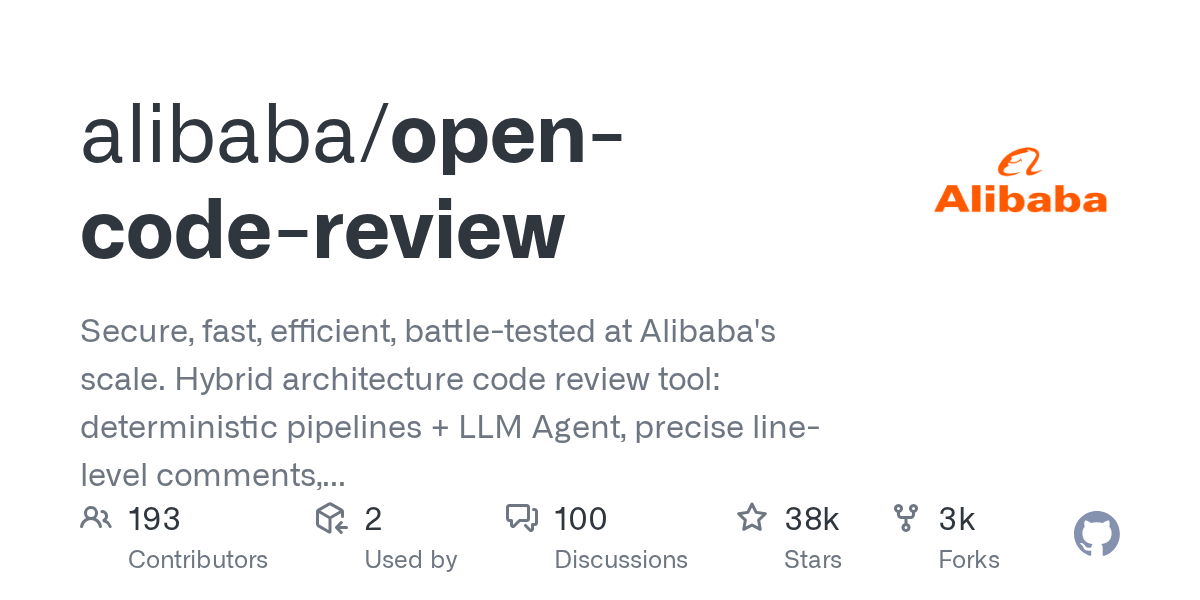
38.1k stars · Apache-2.0 · v1.12.7, read from /releases/latest, shown as '19 Sep' with no year and therefore 19 September 2026, with 3 commits to main since; ungh.cc confirms the release date as 2026-09-19 with the year present · Track this in Scout
A command-line code reviewer from Alibaba that mixes fixed rules with an AI model and leaves line-level comments on the change you just made.
▶Repo detailsthe review · specs · pros & cons · install
What it is
A command-line tool from Alibaba that combines fixed rules with an AI model. The fixed rules catch known classes of mistake in several languages, and the model reads the rest of the change and comments on it.What it is good for. Anyone who writes code without a colleague to review it. That is most solo builders. The fixed rules alone cover null-pointer mistakes, thread-safety problems, cross-site scripting and SQL injection, which are the four that cost the most when they get through. The project says plainly that it aims to report fewer things and be right more often, rather than list everything it suspects. You build Grasppy and ScalpingMate with Claude Code, so code arrives faster than you can read it; this is a second pair of eyes on exactly that.
- Apache-2.0, which is a permissive licence: you can use it in a commercial product with no conditions beyond keeping the notice.
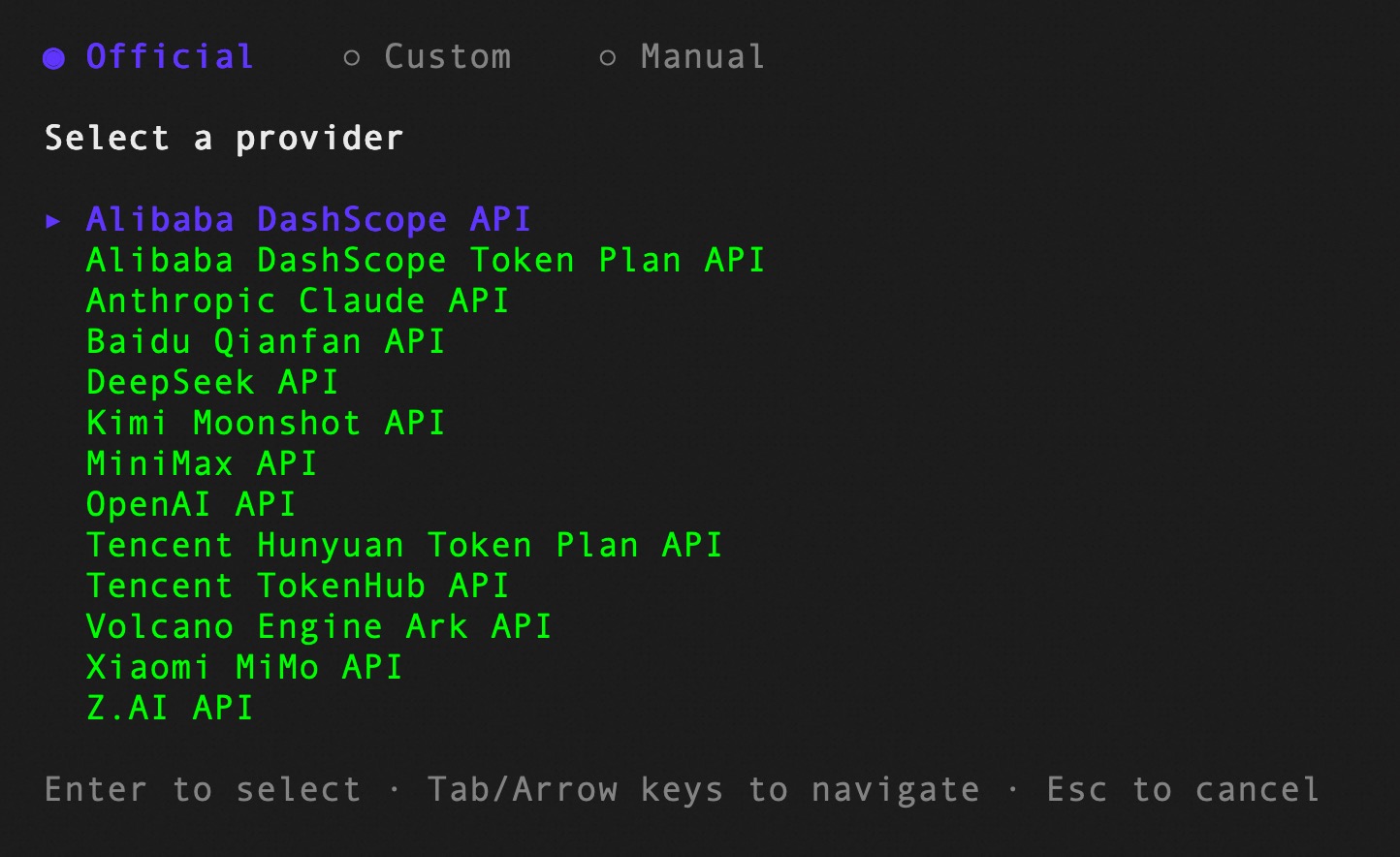
- It works with OpenAI and Anthropic models, and with your own endpoint, so you are not tied to one supplier.
- It ships as a plugin for Claude Code, Codex, Cursor and OpenCode, so it sits inside the tool you already use.
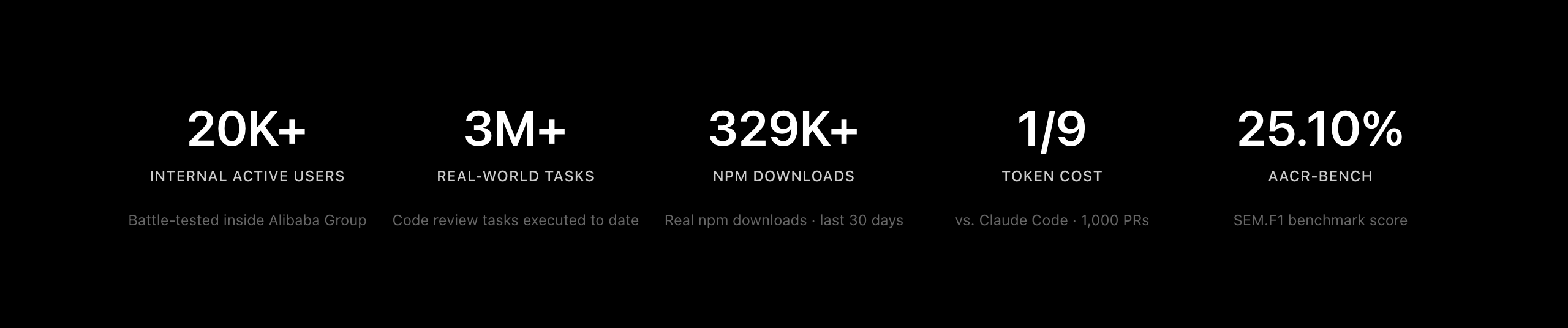
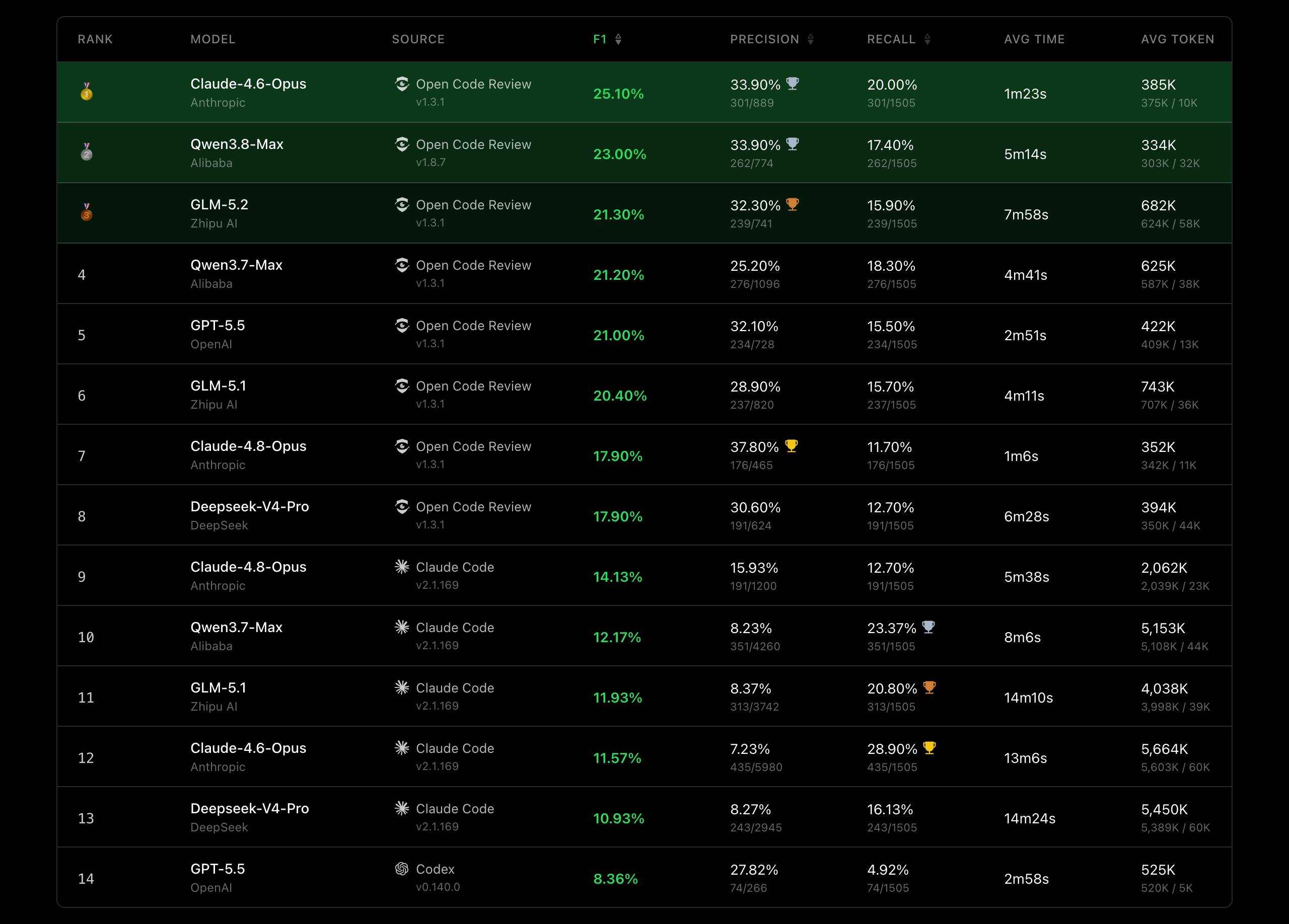
- Every review costs money at the AI provider. The project says it uses about one ninth of the words a general-purpose assistant would, but one ninth of something is not nothing.
- It needs Git version 2.41 or newer, and Node.js, before anything else.
- Choosing precision over coverage means it will miss real problems. It is a second reader, not a safety net.
- qodo-ai/pr-agent
It also reviews changes with a model and posts the comments, and it is built around pull requests on a hosting service rather than around your local working copy.
Track this in Scout - reviewdog/reviewdog
It posts review comments too, but it uses ordinary code-checking tools instead of a model, so it costs nothing to run and finds only what those tools find.
Track this in Scout
npm install -g @alibaba-group/open-code-review
ocr config provider      # choose OpenAI, Anthropic or a custom endpoint
ocr config model
cd /path/to/your/project
ocr review               # review what you have changed but not committed

49.0k stars · MIT · no GitHub releases at all — a determination, not a gap. package.json says 0.1.0 and is marked private, and there is no npm package. Code pushed 19 September 2026 at 16:44 UTC, proved via ungh.cc · Track this in Scout
An agent skill whose ten rules make a coding assistant put the answer first and the reasoning after.
▶Repo detailsthe review · specs · pros & cons · install
What it is
An agent skill: a folder of plain instructions that an assistant reads and follows. Its ten rules cover leading with the next action, numbering the steps of a task, restating the context each turn, and giving a real time estimate instead of a vague one.What it is good for. Anyone who reads assistant output all day and loses the point in it. The name refers to a way of organising information, taken loosely from The Adult ADHD Tool Kit and adapted for the way models write; you do not need to have anything to benefit from output that puts the answer first. English is your second language, so a long paragraph costs you more than it costs a native reader. This is the cheapest change on the page for that specific problem.
- MIT, free, and it adds nothing to run and nothing to pay for.
- It works across several assistants, because it ships plugin files for Claude Code, Codex, Cursor, OpenCode and Gemini from one source.
- Removing it is as fast as adding it, so trying it costs you a minute.
- It is instructions, not code, so how well it works depends on the model reading them. A weaker model will follow them loosely.
- It publishes no versions at all, so there is nothing to pin and nothing to roll back to. Its
package.jsonsays version 0.1.0. - Shorter answers mean less explanation. If you are learning something new, you may want the long version.
- anthropics/skills
Anthropic's own collection of skills for Claude, covering document handling and other specific jobs rather than the shape of the reply.
Track this in Scout  wshobson/agents
Published in Edition 4. A much larger marketplace of agents, skills and commands, where this repository is one narrow skill done carefully.
Track this in Scout
npx skills add ayghri/i-have-adhd

49.6k stars · MIT · v3.0.0, read from /releases/latest, shown as '06 Sep' with no year and therefore 6 September 2026. Code pushed 6 September 2026, proved via ungh.cc · Track this in Scout
An agent skill built around twenty-five named patterns of machine-sounding prose, which rewrites text to remove them while keeping the meaning.
▶Repo detailsthe review · specs · pros & cons · install
What it is
An agent skill built around twenty-five named patterns of artificial writing, grouped and ordered by how strong and how common each one is. You give it text and it gives back a rewrite, and it can match a sample of your own writing if you give it one.What it is good for. Anyone who publishes text that a model helped write. That is a large share of everything published now. The useful part is not the rewrite; it is the list. Once you have read the twenty-five patterns you start catching them while you write, which is worth more than the tool. If you draft posts for grasppy.com or scripts for the channel with a model, this is the step between the draft and the publish button.
- MIT, free, and there is nothing to run: it is a Markdown file the assistant reads.
- It can match your voice from samples you provide, rather than flattening everything into one house style.
- The pattern list is readable on its own and teaches you something.
- It rewrites, so it can change your meaning. Read the result rather than pasting it straight out.
- It is tuned for English. It will not help the Russian half of your channel.
- Removing the signs of machine writing is not the same as making the writing good. A clear, wrong sentence is still wrong.
 vale-cli/vale
Published in Edition 10. It checks prose against rules you write yourself, and it reports problems instead of rewriting anything.
Track this in Scout- amperser/proselint
It checks English prose against advice from well-known editors, and it is about weak writing in general rather than machine writing in particular.
Track this in Scout
npx skills add blader/humanizer --global

25.7k stars · Apache-2.0 · 0.10.6, read from /releases/latest, shown as '15 Sep' with no year and therefore 15 September 2026. Code pushed 21 August 2026, proved via ungh.cc · Track this in Scout
It packs a language model and the program that runs it into one executable file that works on macOS, Linux and Windows without being installed.
▶Repo detailsthe review · specs · pros & cons · install
What it is
A project from Mozilla that packs llama.cpp and a model into a single executable file that runs on macOS, Linux and Windows without being installed. It also ships whisperfile, which does the same trick for speech-to-text.What it is good for. Anyone who wants to try a model without accounts, keys or bills, and anyone who cannot send text to another company. A lawyer, a doctor and a founder with an unreleased product all have the same problem, and this is the shortest answer to it. It is also the easiest way to hand someone a working demonstration: one file, one command.
- Apache-2.0, and the file runs on three operating systems without being installed or configured.
- Nothing you type leaves the machine, so private text stays private.
- It works without a graphics card, though a graphics card makes it much faster.
- Windows will only run a file under 4 GB, so a larger model needs the separate program plus the model weights as two pieces.
- A capable model is several gigabytes to download, and on a laptop without a graphics card it answers slowly.
- The repository has moved:
Mozilla-Ocho/llamafilenow redirects tomozilla-ai/llamafile. Old links still work, so guides written last year point at the old name.
- ollama/ollama
The best-known way to run models locally. It installs a background service and manages a library of models, which is more convenient and less portable than one file.
Track this in Scout - ggml-org/llama.cpp
The engine inside llamafile, used directly. More control, more flags, and you supply the model weights yourself.
Track this in Scout - mudler/LocalAI
It runs models of several kinds behind an API that looks like OpenAI's, so existing code can point at it without changes.
Track this in Scout
curl -LO https://huggingface.co/mozilla-ai/llamafile_0.10/resolve/main/Qwen3.5-0.8B-Q8_0.llamafile
chmod +x Qwen3.5-0.8B-Q8_0.llamafile
./Qwen3.5-0.8B-Q8_0.llamafile


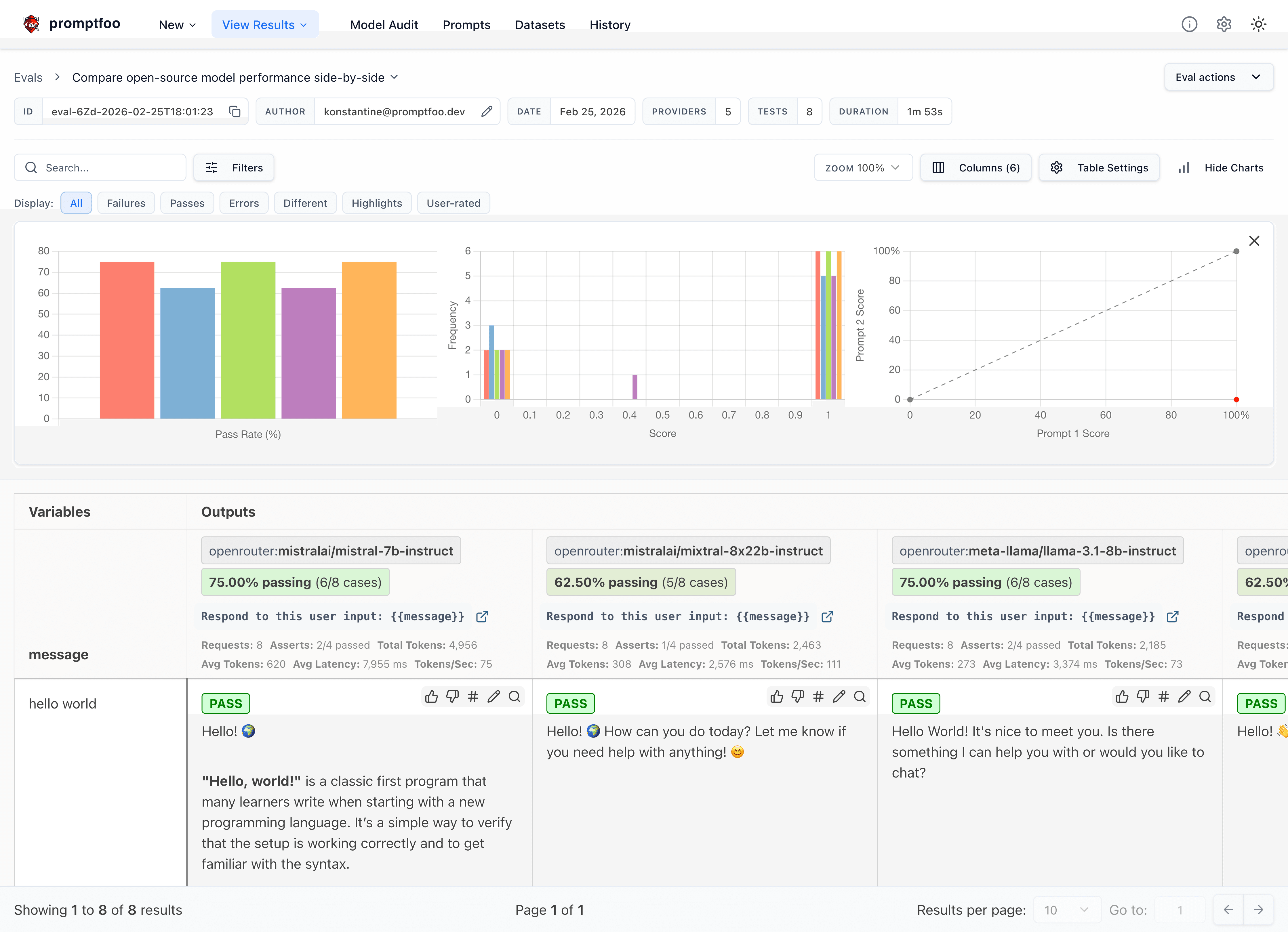
25.2k stars · MIT · 0.123.1, read from /releases/latest, shown as '18 Sep' with no year and confirmed by the changelog heading (2026-09-18); the npm registry agrees at 0.123.1. Code pushed 17 September 2026, proved via ungh.cc · Track this in Scout
A test runner for prompts: you describe what a good answer looks like once, and it grades every model and every prompt against that description.
▶Repo detailsthe review · specs · pros & cons · install
What it is
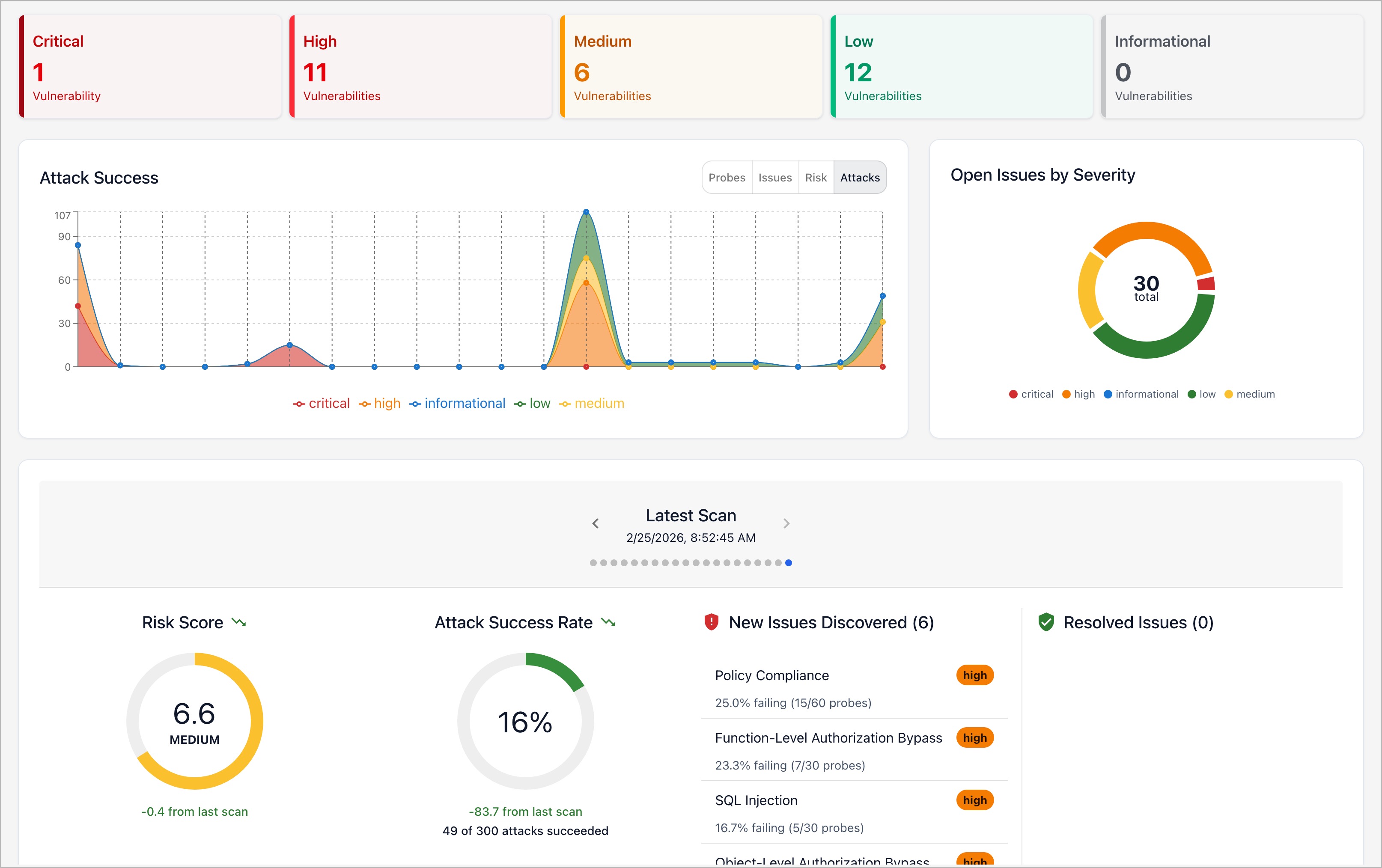
A command-line tool that reads a small settings file listing your prompts, your test cases and your checks, then runs them across more than sixty model providers and shows the results side by side. It also has a mode that attacks your own AI feature, looking for ways to make it misbehave.What it is good for. Anyone whose product depends on a model behaving. Right now, changing a prompt is a change with no test behind it, which is the one part of a modern product that nobody tests. This makes it ordinary: write the check, run it, see the number. Grasppy turns a long chat into subtopics, and the quality of that map is the product. This is the tool that tells you whether a change to that prompt helped.
- MIT, runs on your own machine, and the settings file is plain text you keep in your project.
- It compares providers directly, which is how you find out that a cheaper model is good enough for one of your steps.
- It fits into an automatic build, so a change that makes answers worse can fail before it reaches anyone.
- Every run costs money at each provider you test, and comparing five models costs five times as much.
- The checks are only as good as you write them. "Is the answer sensible" is not a check; "does it contain exactly five subtopics" is.
- The red-teaming half is a large subject on its own, and it is easy to start there and never write an ordinary test.
- confident-ai/deepeval
A Python library for the same job, written to look like ordinary unit tests, which suits you better if your checks live inside a Python project.
Track this in Scout - huggingface/lighteval
It measures models against standard public benchmarks rather than against your own prompts, so it answers which model is stronger and not whether your prompt is working.
Track this in Scout
npx promptfoo@latest init --example getting-started
cd getting-started
export OPENAI_API_KEY=sk-your-key-here
npx promptfoo@latest eval
npx promptfoo@latest view      # opens the results in your browser


20.0k stars · MIT · v1.21.0, read from /releases/latest, shown as '05 Sep' with no year and therefore 5 September 2026, with 25 commits to main since. Code pushed 29 August 2026, proved via ungh.cc · Track this in Scout
A single zero-dependency program that accepts live video and audio over one protocol and hands it out over several others, and can record and play back as well.
▶Repo detailsthe review · specs · pros & cons · install
What it is
A single program, written in Go, that reads and publishes live streams over RTSP, RTMP, WebRTC, SRT, HLS and several other protocols, and can proxy, record and play them back. It has no dependencies and no interpreter to install.What it is good for. Anyone with a camera and somewhere to put the picture. Security cameras, a workshop feed, a low-latency preview for a live show, a stream you do not want to hand to a platform. If you have ever tried to get a camera's RTSP feed to appear in a browser, this is the piece that was missing.
- MIT, one executable file, no dependencies, and it runs on Linux, Windows and macOS.
- It reads one protocol and serves several, which removes a whole class of conversion work.
- It can record to disk and play back, so it is a recorder as well as a server.
- It serves the stream and does nothing else. There is no page, no chat, no accounts.
- Live video is expensive to move. Ten viewers at a decent quality will be the largest line on your hosting bill.
- It opens a lot of ports, and putting it on the open internet without thinking about that is a mistake.
- ossrs/srs
A larger media server of the same kind, older and with more knobs, and correspondingly more to read before it works.
Track this in Scout - AlexxIT/go2rtc
Aimed squarely at cameras in a home automation setup, with the lowest possible delay as its main goal.
Track this in Scout  owncast/owncast
Published in Edition 16. It gives you the whole viewer experience, a page and a chat, where this gives you only the stream.
Track this in Scout
./mediamtx


1.4k stars · MIT · 0.47.0 on PyPI, published 27 August 2026, year present. Code pushed 27 August 2026, proved via ungh.cc · Track this in Scout
One command that splits a recording into separate tracks, running the pre-trained separation models from the Ultimate Vocal Remover project.
▶Repo detailsthe review · specs · pros & cons · install
What it is
A command-line tool and a Python library that runs the pre-trained separation models from the Ultimate Vocal Remover project. It supports several model families, can combine two models for a better result, and handles long files by working through them in pieces.What it is good for. Anyone who records over music, or who has a recording where two things are fighting. A podcast where the intro music is too loud under the first sentence. An interview with an air conditioner in the background. A video where you want the voice for subtitles and the music for nothing. Your channel records in two languages over the same backing, so this is the step that lets you fix one without touching the other.
- MIT, free, and it downloads the models for you on the first run.
- It runs on a plain processor, and it also uses an NVIDIA graphics card or an Apple M-series chip if you have one.
- It is both a command and a library, so it fits into a script as easily as into your hands.
- The first run downloads a model, and the cache directory it uses by default is a temporary one, so a restart can mean downloading it again.
- It needs Python 3.10 or newer, and its own notes say Python 3.14.1 does not work.
- Separation is never perfect. A quiet voice under loud music comes back with artefacts, and no model fixes that.
- adefossez/demucs
One of the best-known separation models, used directly rather than through a wrapper, and it offers one family of models where this offers several.
Track this in Scout - deezer/spleeter
The tool from Deezer that made this possible for everyone. It is faster and older, and the newer models separate more cleanly.
Track this in Scout - Anjok07/ultimatevocalremovergui
The window-and-buttons version, from the project whose models this uses. Easier for one file, no good in a script.
Track this in Scout
python3 -m venv venv
source venv/bin/activate
pip install "audio-separator[cpu]"
audio-separator /path/to/recording.wav

19.1k stars · MIT · v26.05.5, read from /releases/latest, shown as '14 Sep' with no year and therefore 14 September 2026. Code pushed 20 September 2026, proved via ungh.cc; default branch is development · Track this in Scout
A self-hosted documentation site organised as shelves, books, chapters and pages, with full-text search and per-page permissions.
▶Repo detailsthe review · specs · pros & cons · install
What it is
A PHP application that stores documentation in an ordinary structure a person can hold in their head, with a page editor, full-text search, permissions and a comment on each page. It has been going for ten years and it is deliberately plain.What it is good for. Anyone who has notes in six places. A solo founder writing down how the server is configured, what the deploy steps are, what a customer asked for in March. The organising idea is the whole point: most wikis give you a flat pile of pages and a search box, and this gives you a shape, which is what makes you able to find something you wrote a year ago.
- MIT, which is unusually permissive for a product of this size, and there is no paid edition holding features back.
- Search covers the text of every page, and the structure means you can also just walk to what you want.
- It is boring in the good sense: ten years old, still shipping, no reinvention between versions.
- It is a PHP application, so you need PHP 8.2 or newer, MySQL 8.0 or MariaDB 10.6, and a web server. Shared hosting is not supported.
- There is no live collaborative editing. Two people on one page at once is not what it does.
- The project has moved to Codeberg. The GitHub page now says "NOW MANAGED ON CODEBERG", and the official install script is downloaded from codeberg.org. GitHub still receives the code, so nothing looks wrong from outside, but the issue tracker you would use is the wrong door.
- outline/outline
A faster, more modern knowledge base with real-time collaborative editing, and it ships under the Business Source License, which is not plainly open source.
Track this in Scout - docmost/docmost
A newer alternative to Confluence and Notion with collaborative editing, under AGPL-3.0, and a much younger project.
Track this in Scout - requarks/wiki
Wiki.js, a Node.js wiki with a wide choice of storage and login options, under AGPL-3.0, and heavier to set up.
Track this in Scout
wget https://codeberg.org/bookstack/devops/raw/branch/main/scripts/installation-ubuntu-26.04.sh
chmod a+x installation-ubuntu-26.04.sh
sudo ./installation-ubuntu-26.04.sh



3.9k stars · AGPL-3.0 · v0.25.41, read from /releases/latest, shown as '17 Sep' with no year and therefore 17 September 2026. Code pushed 29 August 2026, proved via ungh.cc; default branch is develop · Track this in Scout
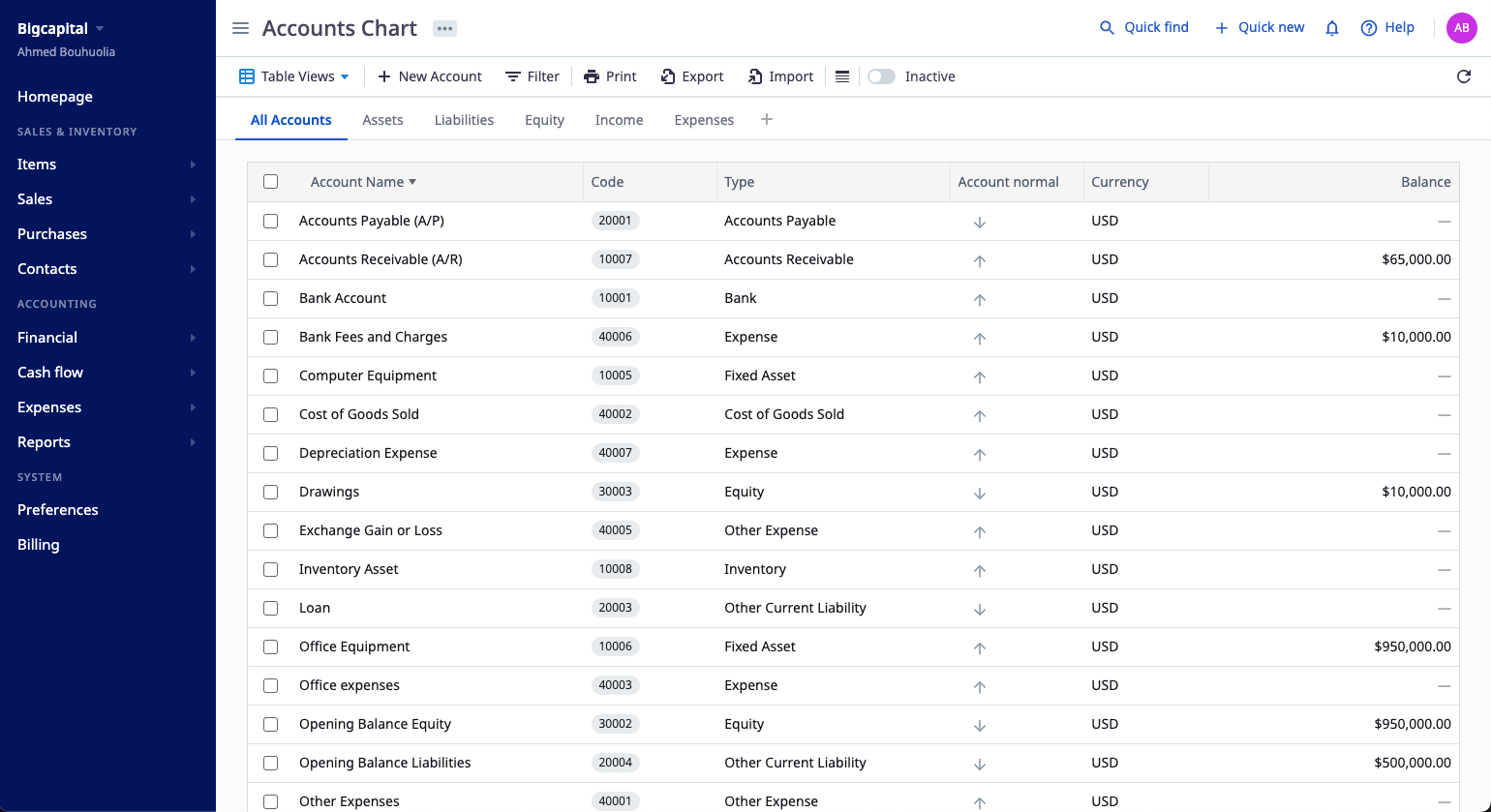
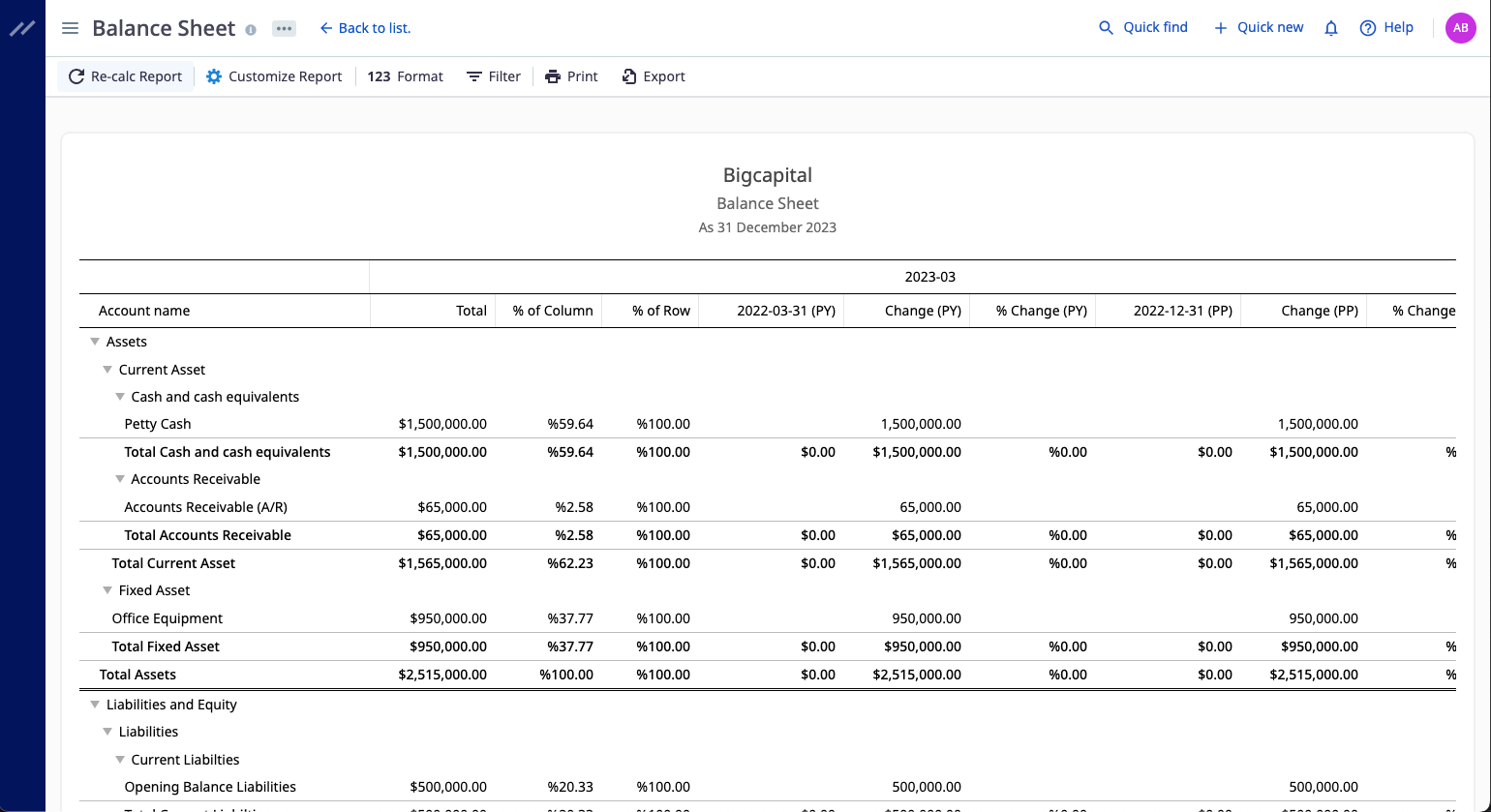
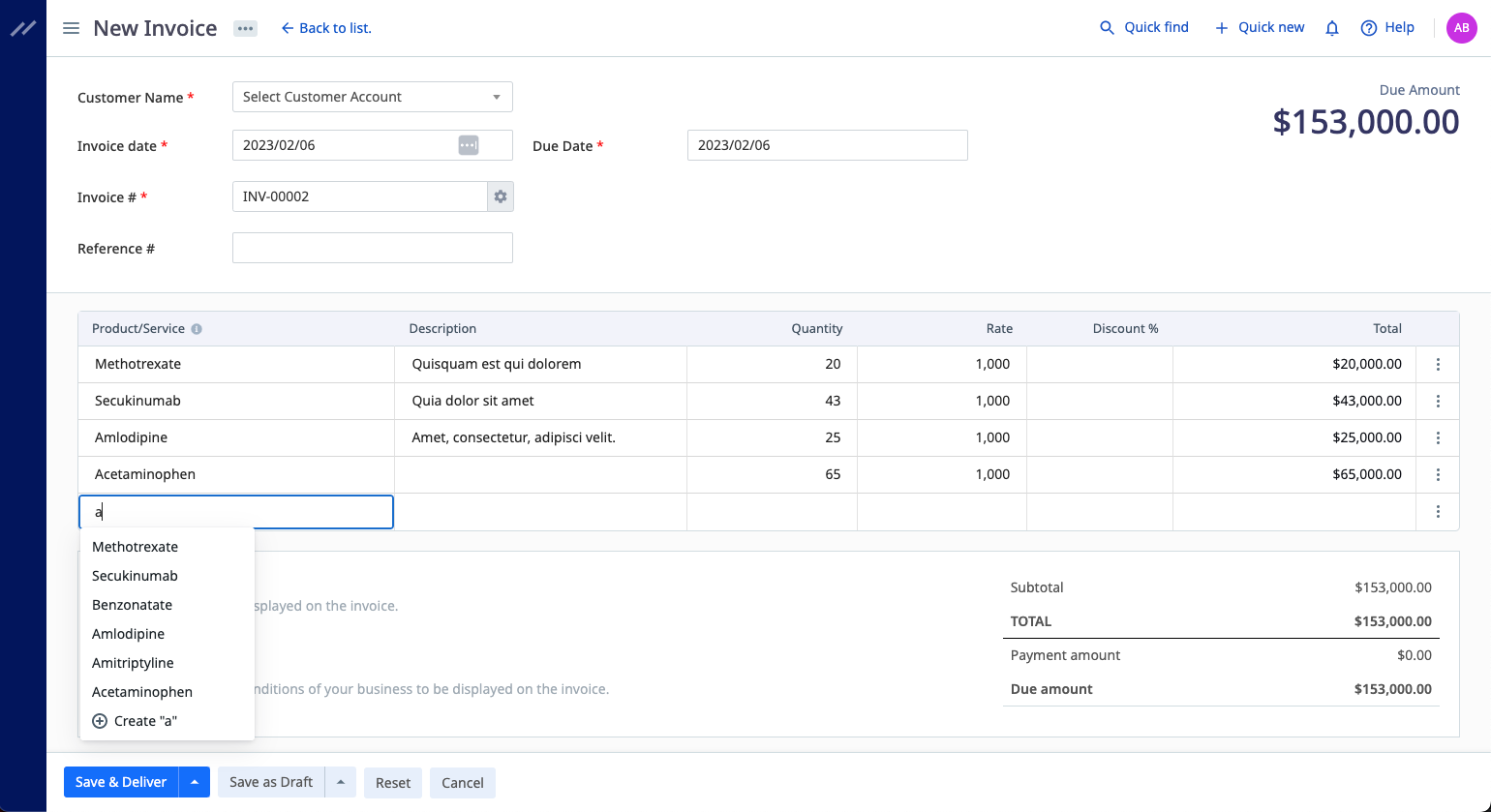
Double-entry accounting for a small business that you host yourself, with invoicing, bills, inventory and the standard financial statements.
▶Repo detailsthe review · specs · pros & cons · install
What it is
A web application for small-business accounting, with a chart of accounts, invoicing, bills, expenses, inventory and the standard statements. There is a paid hosted version from the same people, and the code is AGPL-3.0.What it is good for. A founder or a freelancer whose books currently live in a spreadsheet and a folder of PDFs. This radar has covered payments (Polar, Lago, Hyperswitch), invoices (InvoiceShelf), usage metering (OpenMeter), personal budgeting (Actual), a plain text ledger (hledger) and what you hold (Ghostfolio). None of those is a set of business accounts. This is.
- Real double-entry accounting with the standard reports, rather than a list of transactions with charts on top.
- It handles the whole sales cycle: quote, invoice, payment, and the customer record behind them.
- There is a hosted version if you would rather not run it, and the same code underneath.
- AGPL-3.0. Running it for your own business is fine. If you build a product on it and offer that product as a service, you owe your changes to your users.
- Accounting software is only as good as the person entering the data, and it will not stop you recording something in the wrong place.
- It is a multi-service application. Read the project's Docker guide before starting; this is an evening, not ten minutes.
- firefly-iii/firefly-iii
Personal finance rather than business accounting: it tracks your own accounts and budgets and does not do double-entry books for a company.
Track this in Scout - akaunting/akaunting
Small-business accounting of the same shape, and it ships under the Business Source License, so it is not plainly open source.
Track this in Scout - frappe/erpnext
A whole enterprise system with accounting inside it, under GPL-3.0, and far more than one person needs.
Track this in Scout
git clone https://github.com/bigcapitalhq/bigcapital.git
cd bigcapital


2.9k stars · MIT · 1.26.0, read from /releases/latest, shown as '16 Sep' with no year and therefore 16 September 2026. Code pushed 3 September 2026, proved via ungh.cc · Track this in Scout
A small self-hosted web application that tracks what each person in a group spent and settles who owes whom, with no sign-up at all.
▶Repo detailsthe review · specs · pros & cons · install
What it is
A small web application that tracks expenses inside a group and settles the balances. It stores its data in PostgreSQL, ships as a container image, and can scan a receipt into an expense if you give it a model key.What it is good for. Anyone splitting costs who does not want a commercial app holding the record. A shared flat, a trip, a family, two founders paying for each other's subscriptions. The no-account design is the good decision here: the barrier to getting five people to use a tool is usually the sign-up, and there isn't one.
- MIT, and a free hosted version exists at spliit.app if you never want to run anything.
- No accounts and no app to install. A group is a link, so everybody can use it in a minute.
- The self-hosted version is one container plus PostgreSQL, which is as small as this kind of thing gets.
- A group is a link, which means anyone with the link can see and change it. That is the price of no sign-up.
- Receipt scanning and file attachments need extra services and keys, so the simple install is the plain version.
- At 2,904 stars it is small, and small means a smaller group of people to fix it if something breaks.
- oss-apps/split-pro
The same idea and the same self-hosted promise, and it does have accounts, which is better for a group you keep for years.
Track this in Scout  actualbudget/actual
Published in Edition 20. It is for planning your own money rather than settling up with other people, so the two sit beside each other rather than competing.
Track this in Scout
docker compose up -d

866 stars · BSD-3-Clause · v6.0.0, read from /releases/latest, shown as '15 Sep' with no year and therefore 15 September 2026. NOTE: the README's production instructions still say git checkout v5.0.0, and both figures are printed in the edition. Code pushed 27 August 2026, proved via ungh.cc; default branch is master · Track this in Scout
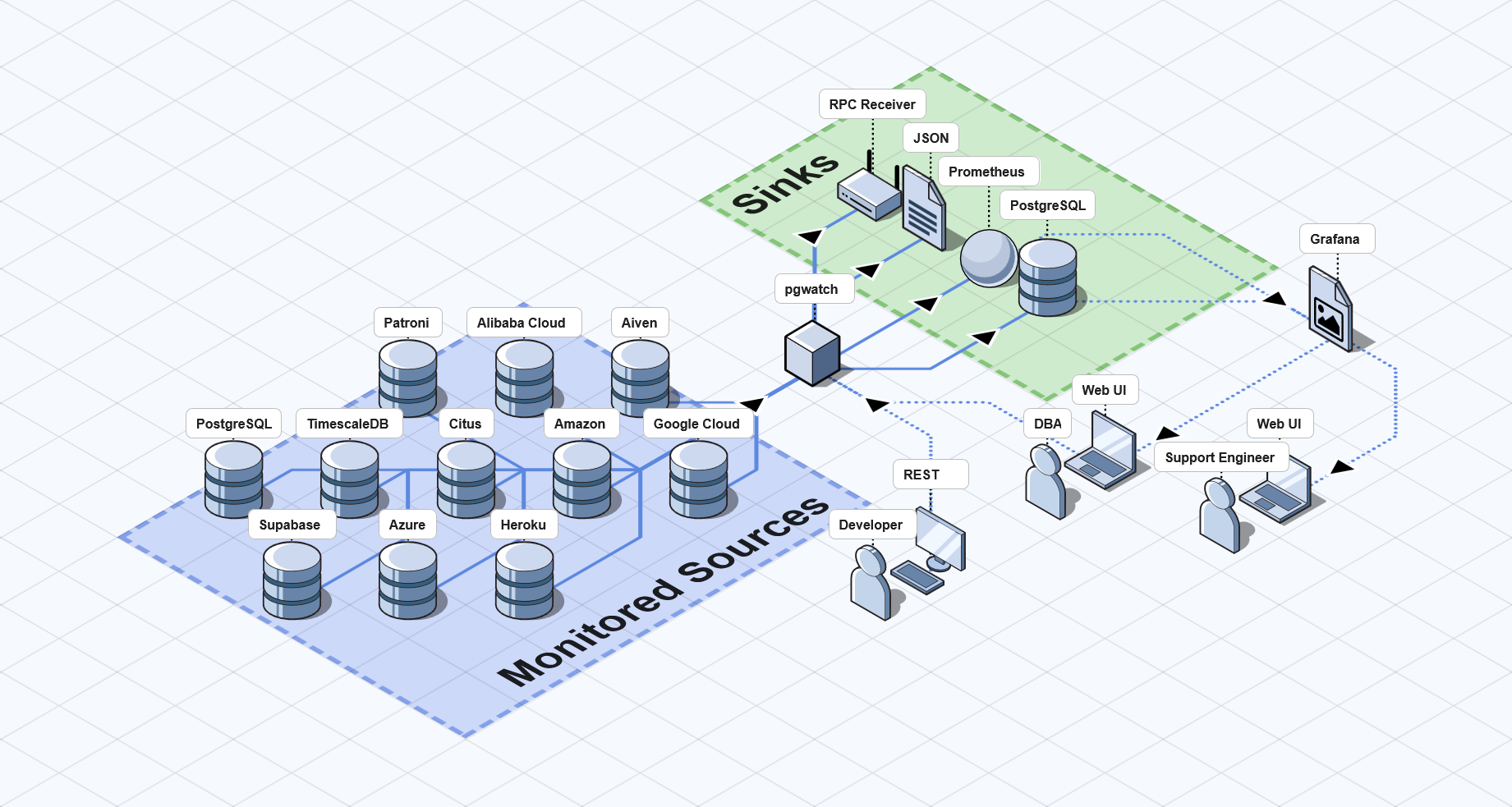
A monitoring service that collects PostgreSQL metrics continuously, stores them in a PostgreSQL database of its own, and shows them through Grafana dashboards that arrive ready-made.
▶Repo detailsthe review · specs · pros & cons · install
What it is
A monitoring service written in Go that collects metrics from one or many PostgreSQL databases, stores them in a PostgreSQL database of its own, and shows them through Grafana dashboards that come with it. There is a demo image that starts everything in one command.What it is good for. Anyone running PostgreSQL in production without a monitoring bill. This completes a chain five editions have been building. Edition 18 gave you pgBadger, which reads yesterday's log and names the slow queries. Edition 20 gave you pev2, which explains why one query is slow. Edition 23 gave you HypoPG, which tests an index before you build it. Edition 24 gave you Dexter, which finds the index for you. All four look at one moment. This one watches all the time, so you see the shape of the week. Grasppy's data lives in PostgreSQL on one server, which is exactly the case this is for.
- BSD-3-Clause, which is permissive with no conditions on commercial use.
- Dashboards arrive ready-made, so you get a useful screen without designing one.
- One command starts a complete demonstration, so you can see what it looks like before you commit.
- It brings Grafana and a second PostgreSQL database with it, so this is three moving parts, not one.
- It stores metrics forever unless you tell it not to, and a busy database produces a lot of them.
- The README's production instructions still tell you to check out
v5.0.0, while the newest tag isv6.0.0of 15 September 2026. Read both before you copy the commands.
 dalibo/pg_activity
Published in Edition 23. It shows you what the database is doing this second in a terminal, and it keeps no history at all.
Track this in Scout- prometheus-community/postgres_exporter
It publishes the same kind of numbers for Prometheus to collect, and it gives you no storage and no dashboards, so it suits you only if you already run Prometheus.
Track this in Scout  darold/pgbadger
Published in Edition 18. It reads the database's own log file and writes one report, which answers what happened rather than what is happening.
Track this in Scout
docker run --detach --name pgwatch-demo \
  -p 5432:5432 -p 3000:3000 -p 8080:8080 -e PW_TESTDB=true \
  cybertecpostgresql/pgwatch-demo

687 stars · MIT · no GitHub releases at all — a determination, not a gap, confirmed by opening /releases. Code pushed 1 September 2026, proved by the service itself · Track this in Scout
A free unauthenticated mirror of the parts of the GitHub API most people want, answered from one web address with no account, no key and caching in front.
▶Repo detailsthe review · specs · pros & cons · install
What it is
A small hosted service from the UnJS group that mirrors the parts of GitHub's API most people want, with caching, no authentication and no rate limit of its own. It covers repository details, contributors, file trees, READMEs, releases, branches, organisations, star counts and users.What it is good for. Anyone who writes a script that needs to know something about a GitHub project. A dashboard of the tools you depend on. A page on your site that shows a star count. A check that warns you when a dependency stops receiving code. Setting up a token for a five-line script is the friction this removes. It is also how this report proved four things this morning, which is the second finding below.
- MIT, free, no account, no key, and the answer is small and plain.
- It answers from places a GitHub token often cannot reach, including restricted build environments.
- The endpoints are obvious enough to guess: the project name goes straight into the address.
- It is somebody else's service with 687 stars. If it stops, your script stops. Do not put it in the path of anything that must work.
- Answers are cached, so a number can be a little behind. That is fine for a date and wrong for a live counter.
- Not every endpoint answered during this run. The repository endpoint worked every time; the latest-release endpoint answered for one project and refused for two others.
- octokit/octokit.js
GitHub's own official library. It does everything, and it wants a token and a build step where this wants a web address.
Track this in Scout - cli/cli
The gh command. It is the right answer at a terminal you have logged into, and the wrong one inside a script running somewhere without a login.
Track this in Scout
curl https://ungh.cc/repos/bluenviron/mediamtx
curl https://ungh.cc/repos/bluenviron/mediamtx/releases/latest

Checked, and left out
These were opened for this edition and did not make it, with the reason.
huggingface/lighteval - ALIVE. 2,547 stars, MIT, code pushed 17 September 2026
huggingface/lighteval - ALIVE. 2,547 stars, MIT, code pushed 17 September 2026 (proved via ungh.cc). It measures models against standard public benchmarks across several backends. Promptfoo took the single evaluation place because it tests YOUR prompt rather than ranking models, and the two answer different questions. It would have been a fifth hidden gem. New to the ledger, queued.
sandreas/m4b-tool - ALIVE. 1,554 stars, MIT, release v0.5.2 dated 13 February 2026 with seven commits since, code pushed 18 April 2026
sandreas/m4b-tool - ALIVE. 1,554 stars, MIT, release v0.5.2 dated 13 February 2026 with seven commits since, code pushed 18 April 2026 (proved via ungh.cc). A command-line tool that merges, splits and chapterises audiobook files. Audio-and-video already carried two entries. New to the ledger, queued.
msgspec/msgspec - ALIVE. 4,120 stars, BSD-3-Clause, PyPI 0.21.1 of 12 April 2026, code pushed 18 September 2026
msgspec/msgspec - ALIVE. 4,120 stars, BSD-3-Clause, PyPI 0.21.1 of 12 April 2026, code pushed 18 September 2026 (proved via ungh.cc). A very fast serialisation and validation library for Python, a natural fit beside FastAPI. RENAMED: jcrist/msgspec now redirects to msgspec/msgspec, recorded as renamed_from. At 4,120 stars it is NOT a hidden gem. New to the ledger, queued.
mgunyho/tere - ALIVE, and explicitly NOT unverified. 1,800 stars, EUPL-1.2, code pushed 9 March 2026
mgunyho/tere - ALIVE, and explicitly NOT unverified. 1,800 stars, EUPL-1.2, code pushed 9 March 2026 (proved via ungh.cc). A terminal file browser that changes the shell's directory when you leave it. Its GitHub release page shows v1.6.0 with the yearless date '15 Sep', which by the yearless rule reads as 2026, while crates.io dates the same version September 2024. Under the method used up to yesterday this contradiction would have produced a fourteenth unverified row; ungh settled it in one call. New to the ledger, queued.
TecharoHQ/anubis - ALIVE. 21,676 stars, MIT, code pushed 24 August 2026
TecharoHQ/anubis - ALIVE. 21,676 stars, MIT, code pushed 24 August 2026 (proved via ungh.cc). It makes a visitor's browser perform a small proof-of-work before a page is served, which stops most AI scrapers. Edition 21 #12 gave ai.robots.txt, which only ASKS them to stay away; this is the one that refuses, and the pair deserves a full entry rather than a place taken by accident. New to the ledger, queued.
Coming tomorrow