In simple English
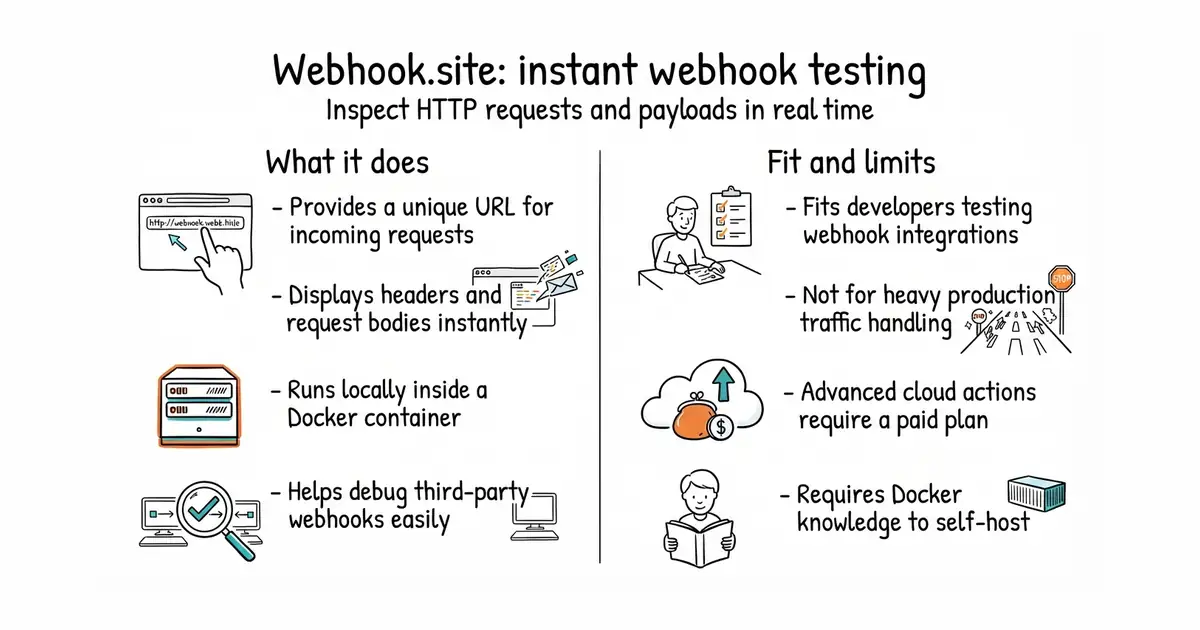
This tool gives you a unique web address. When any service sends a message to that address, you see it on your screen right away. You can use it to test incoming data from payment apps or contact forms. It helps you see what data your software receives without setting up a real server. You can run it on your own computer or server using Docker. The basic version is free to run yourself.
What it is
A self-hosted web application that receives HTTP requests and displays them in real time. It provides an easy way to inspect headers, query strings and payloads sent by external webhooks.
What it is good for
Solo builders who need to debug webhook integrations locally without exposing their development machines to the public internet.
- Shows incoming HTTP requests instantly on your screen.
- Runs easily inside a Docker container on your own server.
- Helps you debug integrations without a public web server.
- Advanced cloud features like custom scripts are missing from the open-source version.
- Requires some basic knowledge of Docker to run yourself.
- Custom licence terms apply rather than a standard open-source agreement.
manually logging incoming HTTP requests in development
Docker (a way to run a program inside its own sealed box, so it cannot break anything else on your server)
- botpress/botpress15k stars
The command-line tool, software kit and integrations for the Botpress cloud service, rather than a chatbot you host.
- heyform/heyform9.0k stars
A form and survey builder you can run yourself, with conversational one-question-at-a-time forms.
- Notifuse/notifuse2.2k stars
Self-hosted newsletters, automations and transactional email, built on a delivery service you supply.
docker run -d -p 80:80 webhooksite/webhook.site