9k stars · AGPL-3.0 · v3.0.4 (2026-10-15) · Track this in Scout
A form and survey builder you can run yourself, with conversational one-question-at-a-time forms.
▶Repo detailsthe review · specs · pros & cons · install
What it does
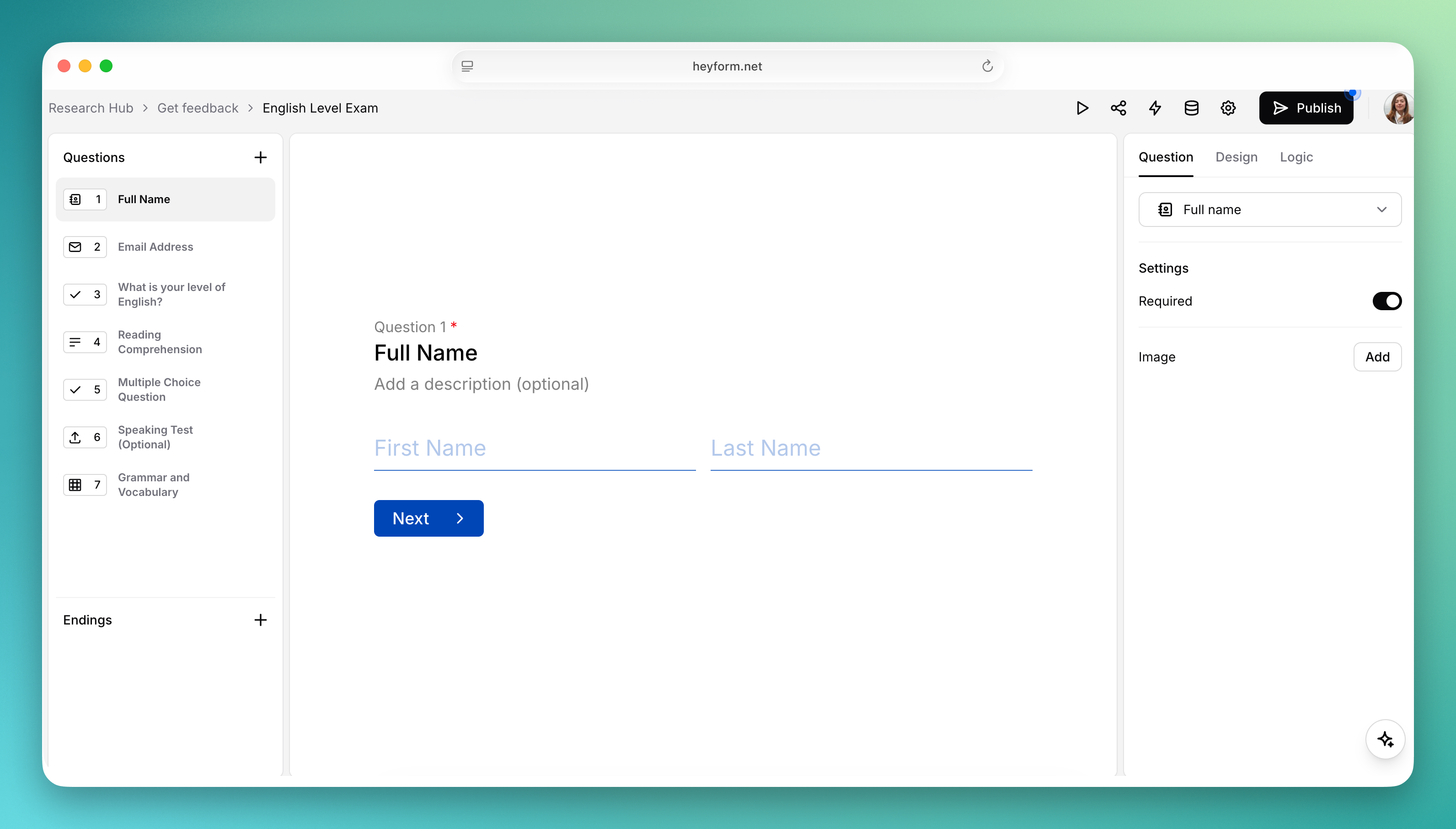
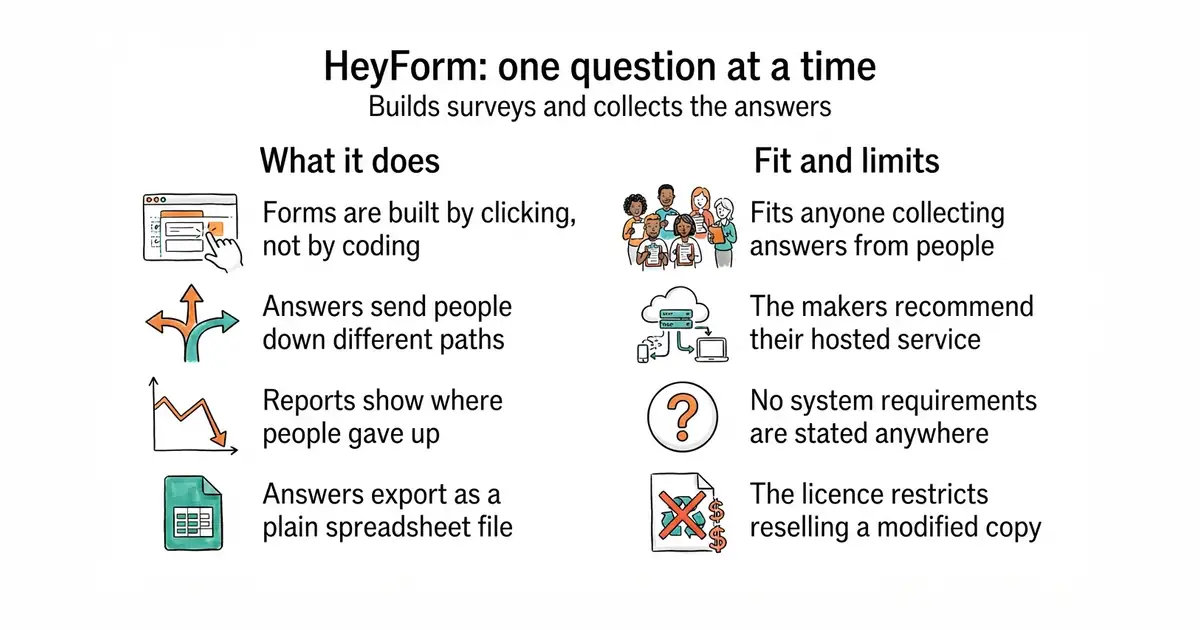
A form is assembled from blocks in a visual editor: text, email, phone number, dates, file uploads and picture choices among them. Conditional logic sends people down different paths depending on what they answered, and a form can redirect to a chosen address when it finishes. Appearance is adjustable, including fonts, colours, backgrounds and custom CSS, and forms can be saved as reusable templates. Results come with analytics, including how many people dropped out and where, and they export as CSV. Integrations cover webhooks, analytics services, marketing platforms, Zapier and Make.com, and sign-in can be handed to an identity provider through OpenID Connect, with Authelia, Authentik and Keycloak named. It is AGPL-3.0, which matters if you plan to modify it and offer it to others as a service. The project's own README recommends the hosted service over running it yourself, citing reliability, backups, security and maintenance, and it states no system requirements on the repository page at all.
Why it matters
Who it suits. Anyone collecting answers from people who wants the answers to stay in their own hands. It suits a longer form most of all, because asking one question at a time measurably reduces the number of people who give up halfway. It also suits anyone already running containers, since the repository ships the files needed for that. Skip it if a form is a once-a-year need, where a hosted service costs less than the attention this will take.
Verdict. A capable form builder with a real self-hosting path, and the version numbers suggest a project in good order: v3.0.4 was released on 15 October 2026 and code was pushed four days later. Read two things before committing. First, the maintainers themselves say the hosted service is the better choice for most people, which is unusually candid and worth believing: a form that takes orders or job applications should not go down because nobody patched it. Second, the repository page states no requirements, so the real install cost is only discoverable in the external documentation, which is a gap when you are trying to decide. The AGPL licence is a constraint if you intend to build a product on top and not publish your changes.
- Conversational forms with conditional logic, built by clicking rather than coding.
- Drop-out analytics and CSV export, so the answers are usable outside the tool.
- Identity-provider sign-in through OpenID Connect, with three named providers.
- The maintainers recommend their hosted service over self-hosting, and say why.
- No system requirements are stated on the repository page; you have to go to the documentation to find them.
- AGPL-3.0, which is a genuine constraint if you plan to offer a modified version as a service.
 formbricks/formbricks
AGPL-3.0 per its README, aimed at surveys and in-product questions rather than standalone forms, with more emphasis on asking people inside an application.
Track this in Scout baptisteArno/typebot.io
The same conversational shape with a wider block set, but its licence is a Functional Source Licence rather than an open-source one, so read the terms. Edition 2 covered it.
Track this in Scout- surveyjs/survey-library
MIT, a library rather than an application: you render the form inside your own code and store the answers yourself, so there is no service to run.
Track this in Scout
git clone https://github.com/heyform/heyform.git
cd heyform
cp .env.example .env     # then edit the values in .env
docker compose up -d