In simple English
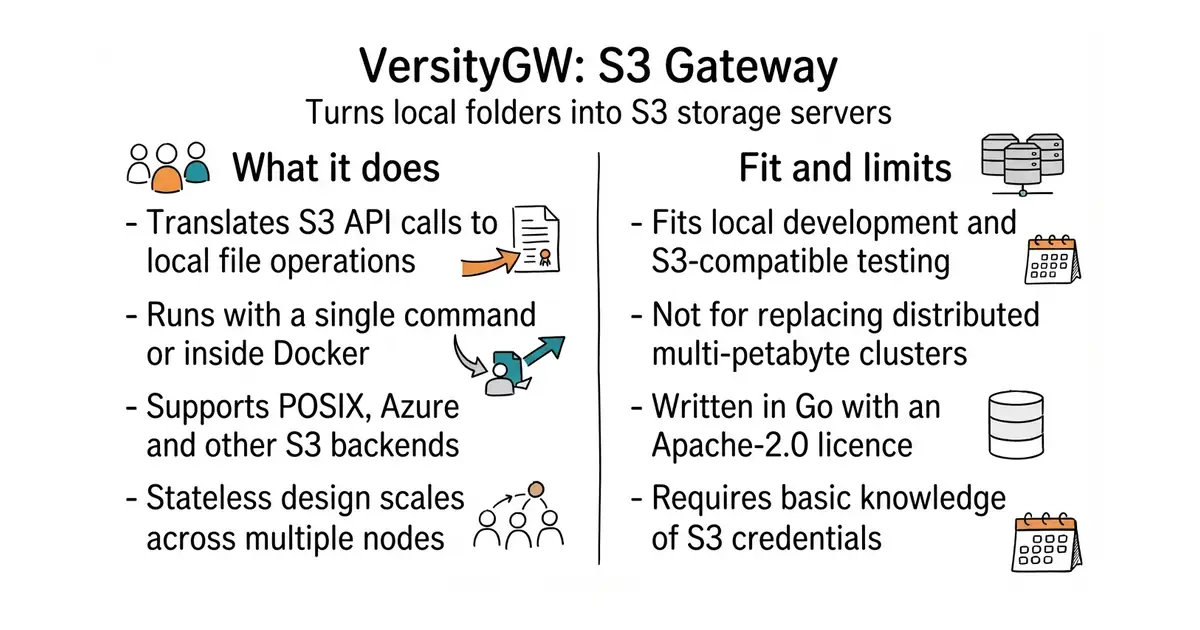
This tool turns any normal folder on your computer into an S3-compatible storage server. It speaks the same language as Amazon S3, so your existing apps can talk to it without changes. You can run it with a single command to test things locally or scale it up in production. It is stateless, which means you can run many copies of it behind a load balancer. It costs you only the server time and storage you already have.
What it is
Versity S3 Gateway is a high-performance server written in Go that translates standard S3 API (Application Programming Interface, a set of rules letting different software programs talk to each other) requests into local filesystem operations or other storage backends. It supports multiple backends including POSIX file storage, Azure Blob Storage, and other S3 providers.
What it is good for
Solo builders who want to test S3-dependent applications locally without paying for cloud storage or running complex storage systems. It also lets you serve static websites directly from your buckets and manage files through an optional web interface.
- Runs anywhere with a single binary or Docker (a way to run a program inside its own sealed box, so it cannot break anything else on your server) container.
- Supports multiple storage backends including local POSIX files, Azure, and S3.
- Stateless design makes it easy to scale across multiple instances.
- Requires familiarity with command-line tools and S3 configuration.
- Managing user accounts and access keys requires manual configuration or flat JSON files.
- Running production clusters adds operational overhead for load balancing and monitoring.
MinIO or cloud-based S3 storage for local development
AWS CLI
- seaweedfs/seaweedfs36k stars
SeaweedFS is a distributed file system with S3 support, while Versity Gateway acts as a pure stateless translation gateway.

mkdir /tmp/vgw /tmp/vers
ROOT_ACCESS_KEY="testuser" ROOT_SECRET_KEY="secret" ./versitygw --port :10000 --iam-dir /tmp/vgw posix --versioning-dir /tmp/vers /tmp/vgw