In simple English
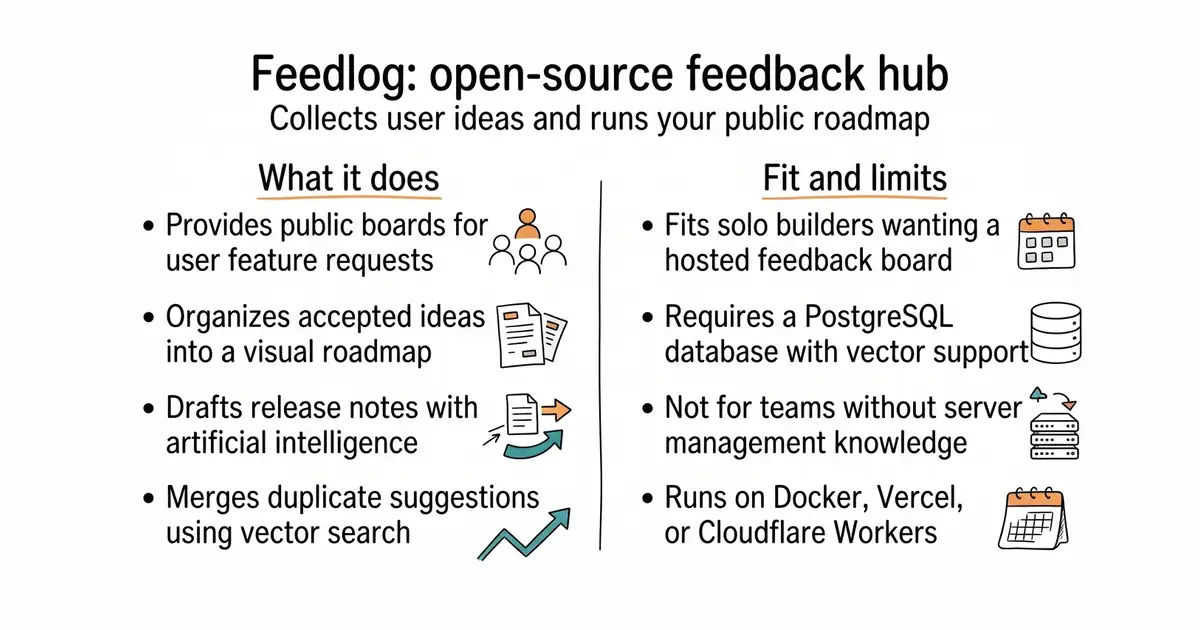
When you build software, people ask for new features all the time. Keeping track of those requests in chat messages or messy spreadsheets gets hard very fast. This tool gives you a dedicated website where users can post ideas and vote on what they want next. You can turn those ideas into a public roadmap and publish release notes when you ship. It runs on your own server or a free cloud account, so nobody else owns your data.
What it is
Feedlog is a self-hosted feedback and roadmap application built with the Nuxt web framework (a set of tools for building fast websites using Vue). It connects to a PostgreSQL database (an open-source system for storing structured records safely) and includes vector search features to group similar user requests together automatically.
What it is good for
Solo builders and small teams who want a professional feedback board and roadmap without paying monthly subscription fees to third-party services.
- Runs on Docker, Vercel, or Cloudflare Workers.
- Includes AI tools to merge duplicate feature requests.
- MIT licence allows free use and modification.
- Requires a PostgreSQL database with the vector extension enabled.
- You must manage your own software updates and backups.
- Email setup needs an external provider like Resend for password resets.
Paid feedback boards like Canny or Featurebase, and manual bug trackers in spreadsheets.
PostgreSQL with the pgvector extension for storing and searching idea embeddings.
- botpress/botpress15k stars
The command-line tool, software kit and integrations for the Botpress cloud service, rather than a chatbot you host.
- heyform/heyform9.0k stars
A form and survey builder you can run yourself, with conversational one-question-at-a-time forms.
- Notifuse/notifuse2.2k stars
Self-hosted newsletters, automations and transactional email, built on a delivery service you supply.
git clone https://github.com/linkcraftstudio/feedlog.git && cd feedlog
echo "BETTER_AUTH_SECRET=$(openssl rand -hex 32)" > .env
echo "SYSTEM_ADMIN_EMAILS=you@example.com" >> .env
docker compose up -d