8.7k stars · MIT · 3.4.0 of 2026-10-16, read from the PyPI project page, which is the authority for a Python tool; requires Python >=3.10. NO GITHUB RELEASES AT ALL — a determination: /releases/latest renders 'There aren't any releases here.' · Track this in Scout
A Python framework for writing crypto trading strategies, testing them against past prices, and running them live.
▶Repo detailsthe review · specs · pros & cons · install
What it does
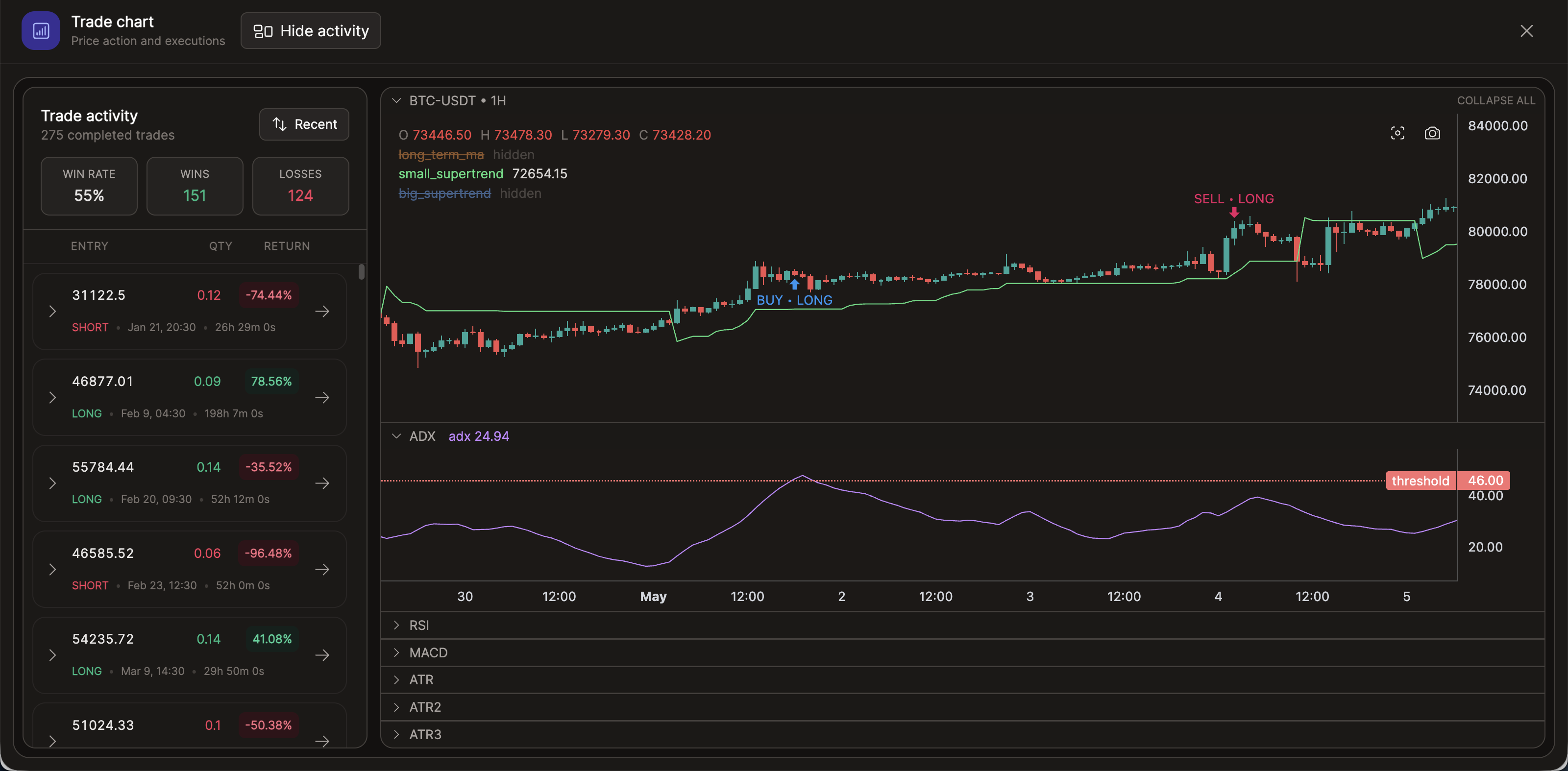
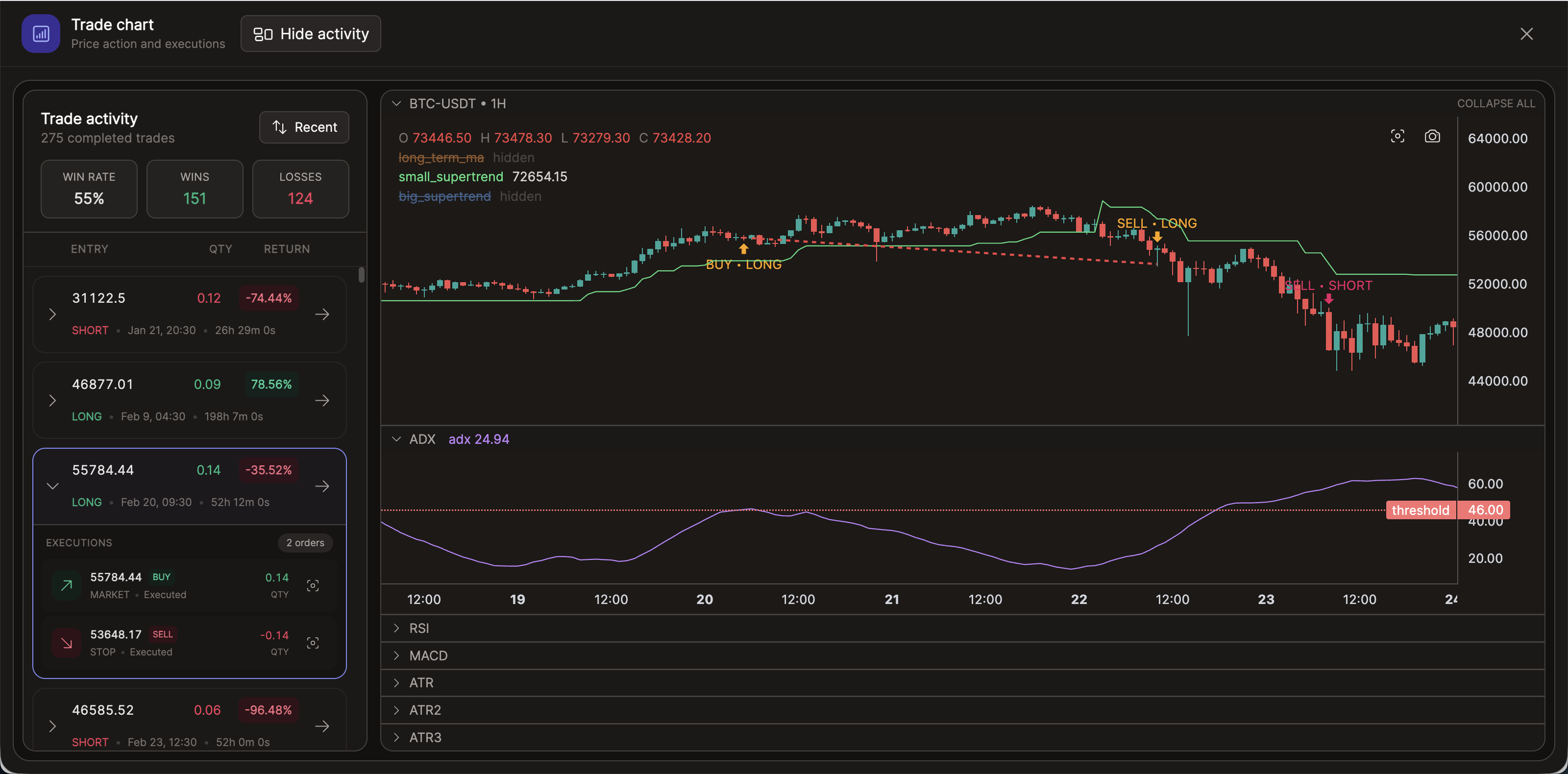
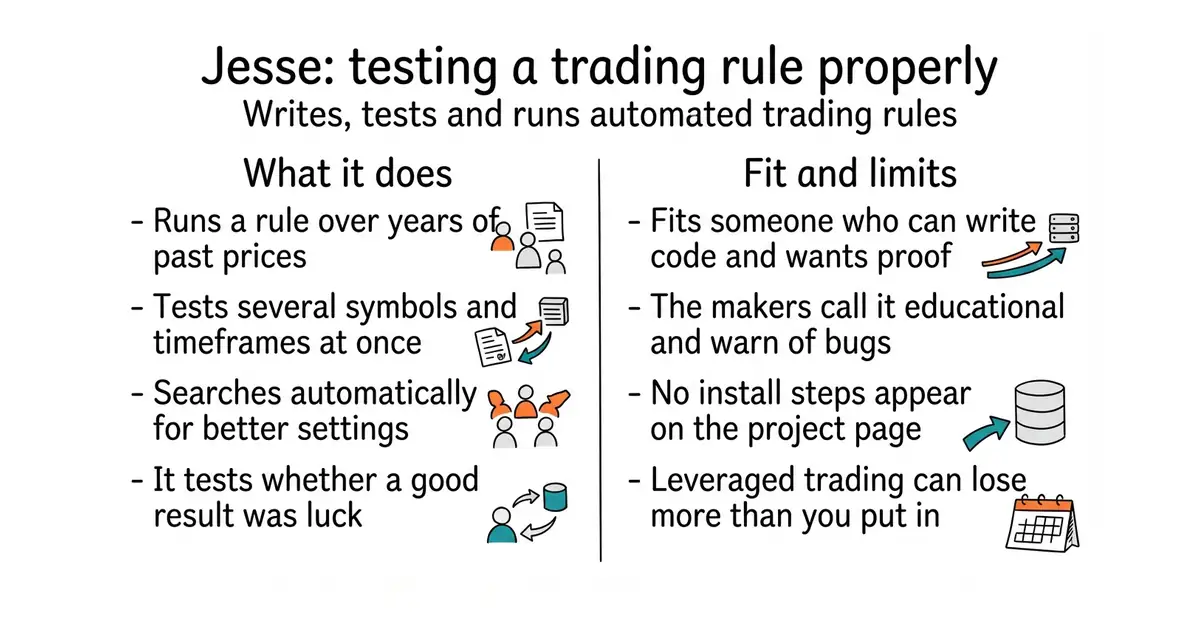
You write a strategy as a Python class and the framework handles the rest of the machinery. Backtesting runs it over historical prices, and the project states it does so without look-ahead bias, meaning the strategy cannot accidentally see prices from the future. It supports several symbols and several time frames in one test, which matters because a rule that works on one pair often fails on another. Parameter tuning uses Optuna to search for better settings, with work spread across cores through Ray. Results come with interactive charts, Monte Carlo analysis and significance testing, which is a way of asking whether a result is luck. There is a research interface for scripts and notebooks, indicators implemented in Rust for speed, a machine-learning path using scikit-learn, and a Model Context Protocol server so an AI assistant can drive it. Live and paper trading are both supported, with alerts to Telegram, Slack and Discord. Reinforcement learning is listed as coming soon and is therefore not available. It supplies no market data service of its own, and the repository page names no specific exchanges.
Why it matters
Who it suits. Someone who can write Python, wants to test a trading idea properly, and understands that a good backtest is not a prediction. It suits research most of all: the look-ahead protection, the multi-symbol tests and the significance testing exist because the common way to fool yourself is to find a rule that fits the past and nothing else. Skip it entirely if you cannot write Python, and skip it if you would be trading money you need, because the project's own disclaimer says the software is for educational purposes and may contain bugs.
Verdict. The best-built thing in its category today, and the tooling around honesty is what sets it apart: Monte Carlo analysis and rule significance testing are features for doubting your own result, which most frameworks in this field do not bother to ship. Version 3.4.0 reached PyPI on 16 October 2026, it needs Python 3.10 or newer, and code was pushed on 19 October 2026, so it is actively developed. Two practical points. It publishes no GitHub releases at all, so PyPI is the place to read version history. And the repository page gives no install steps and names no exchanges, so the real shape of a live setup only becomes clear in the documentation at docs.jesse.trade. Nothing in this entry is financial advice, and the project is explicit that its authors take no responsibility for trading results.
- Backtesting stated to be free of look-ahead bias, across several symbols and time frames at once.
- Monte Carlo analysis and significance testing, which exist to challenge a good-looking result.
- MIT, with an active release line and indicators written in Rust for speed.
- You must be able to write Python. There is no visual strategy builder.
- No GitHub releases and no install steps on the repository page; both live in external documentation.
- The project's own disclaimer calls it educational, warns of possible bugs, and accepts no responsibility for results. Leveraged crypto trading can lose more than you put in.
 freqtrade/freqtrade
The largest project in this category, also Python and also crypto, with a Telegram interface and a big strategy community; its About sidebar links a licence file without naming the licence. Edition 29 covered it.
Track this in Scout nautechsystems/nautilus_trader
LGPL-3.0, a Rust-based engine aimed at professional use across asset classes rather than crypto alone, with much more machinery and a steeper start. Edition 17 covered it.
Track this in Scout hummingbot/hummingbot
Apache-2.0, built around market making and arbitrage rather than writing your own directional rules, so the strategies ship with the tool.
Track this in Scout
python3 -m venv venv
source venv/bin/activate
pip install jesse        # needs Python 3.10 or newer