In simple English
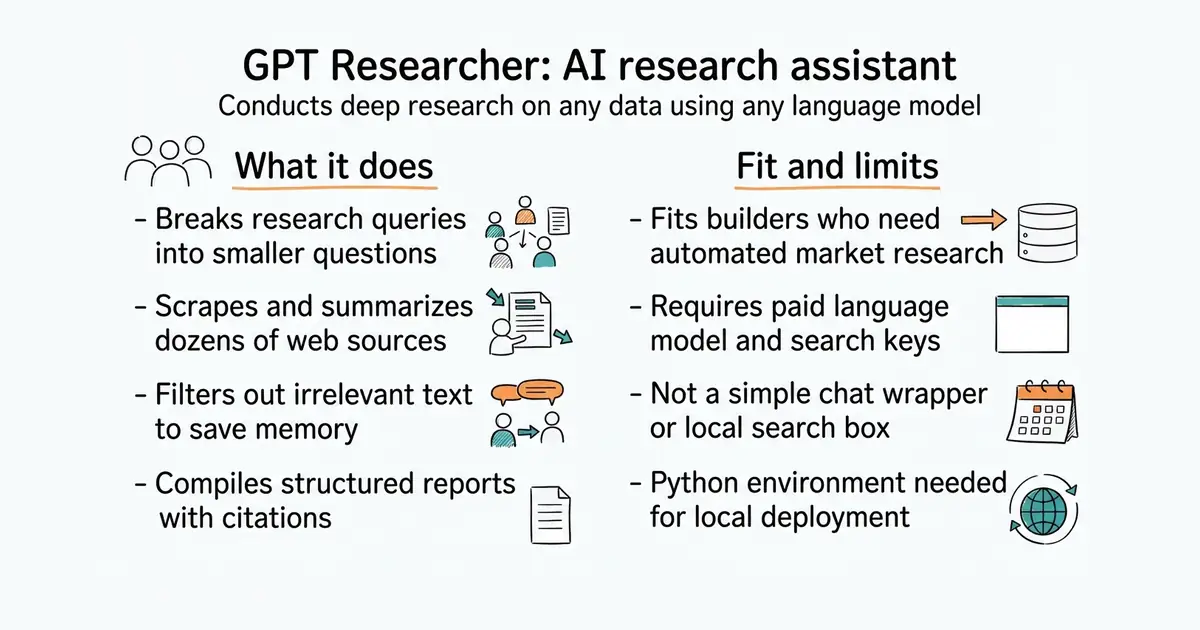
This tool acts as an automated research assistant that browses the web and reads your local documents. You give it a topic, and it breaks the question down into smaller pieces. It then searches multiple sources, filters out the noise, and writes a detailed report with citations. You need your own language model keys, and running large deep research runs will cost money in API fees. It saves you hours of manual reading and writing work.
What it is
An open-source multi-agent system written in Python that plans, coordinates, and executes deep research tasks across the web and local files. It gathers dozens of sources, filters relevant passages, and compiles comprehensive reports.
What it is good for
Solo builders who need to quickly gather comprehensive, cited market research, technical background on unfamiliar topics, or competitor analysis without spending days reading web pages manually.
- Produces structured, long-form research reports with source citations.
- Can search both live web pages and your own local files.
- Supports a wide variety of language model providers and frontends.
- Requires paid API keys for language models and search providers to function.
- Complex multi-agent workflows can be difficult to debug when they fail.
- Setup requires familiarity with Python environments and environment variables.
Manual web searching, bookmarking, and writing research reports by hand.
LangChain, Docker, FastAPI
- ggml-org/llama.cpp132k stars
A C and C++ library and command-line tool for running language models locally.
- EleutherAI/lm-evaluation-harness14k stars
Runs standard question sets against a language model and reports the scores.
- mudler/LocalAI50k stars
Serves text, vision, speech, image and video models from one self-hosted service that imitates the paid interfaces.
git clone https://github.com/assafelovic/gpt-researcher.git
cd gpt-researcher
pip install -r requirements.txt
python -m uvicorn main:app --reload