In simple English
This tool adds an artificial intelligence assistant directly inside a web page. Users can type or speak plain sentences to fill forms or click buttons. It reads the text of the page instead of taking heavy pictures. You need an API key for a language model to power the brain. It costs nothing for the software itself, but you pay for the language model calls.
What it is
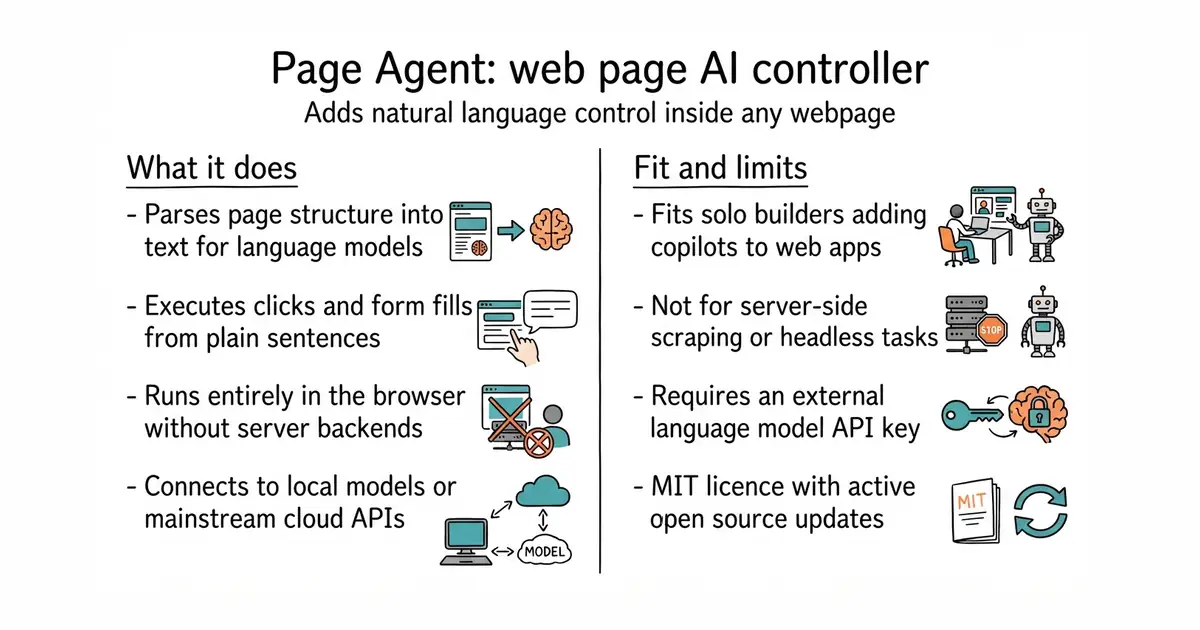
A client-side TypeScript library that parses the document object model (the underlying structure of a webpage) into text for a language model to control. It executes actions directly inside the browser without requiring a separate backend service or a headless browser runner.
What it is good for
Solo builders who want to add an intelligent copilot to their web application or turn complex administrative forms into simple chat commands.
- Runs entirely in the browser without requiring a Python backend or a headless browser setup.
- Reads page text directly instead of expensive screenshots, saving bandwidth and processing time.
- Includes an optional browser extension and server protocol support for multi-page tasks.
- Requires writing JavaScript code to integrate the library into an existing web project.
- Depends on external language model APIs, which incur ongoing usage costs.
- Complex multi-step web tasks can occasionally fail if the page structure changes unexpectedly.
manual form filling and custom browser automation scripts
OpenAI API or another compatible language model
- browser-use/browser-use119k stars
Automates browser actions using AI, but runs on the server with Python instead of inside the client webpage.

- ggml-org/llama.cpp132k stars
A C and C++ library and command-line tool for running language models locally.
- EleutherAI/lm-evaluation-harness14k stars
Runs standard question sets against a language model and reports the scores.
- mudler/LocalAI50k stars
Serves text, vision, speech, image and video models from one self-hosted service that imitates the paid interfaces.
npm install page-agent