In simple English
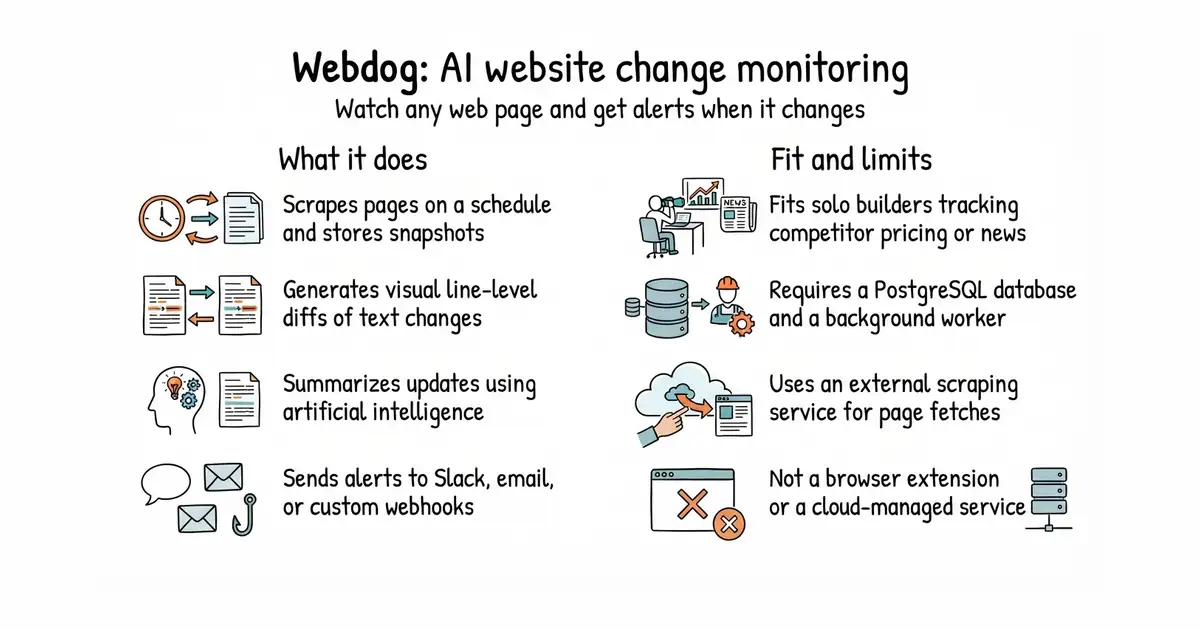
This tool watches websites for you and tells you when they change. You can track pricing pages, product updates, or competitor blogs without checking them by hand. It sends alerts to your email, Slack, or webhook when something updates. It runs on your own server and uses an external web scraping service. You will need a free API key and some technical skill to set it up.
What it is
A self-hosted website monitoring application built with Next.js and TypeScript. It uses a background worker to scrape pages on a schedule and compare them against older versions.
What it is good for
Solo builders who want to track competitor pricing changes, product releases, or documentation updates without writing custom scraping scripts.
- Tracks site links, page content, and product prices.
- Sends clean visual diffs so you can see exact line changes.
- Filters out routine noise using optional artificial intelligence.
- Requires a running PostgreSQL database and a background worker process.
- Depends on an external scraping API for page data.
- Needs Docker and command-line knowledge for local setup.
Writing custom cron jobs with curl and diff to check for page updates.
PostgreSQL (for storing snapshots and alerts).
- dgtlmoon/changedetection.io35k stars
A popular self-hosted change detection tool that supports many notification channels and scraping engines.
- restyled-io/restyled.io153 stars
Automates code formatting checks rather than website change monitoring.


- cybertec-postgresql/pg_timetable1.4k stars
A job scheduler for PostgreSQL whose jobs and schedules live in the database itself.
- PrefectHQ/prefect24k stars
Adds scheduling, retries and a run history to Python functions you already have.
git clone https://github.com/context-dot-dev/webdog.git
cd webdog
npm install
cp .env.example .env
npm run db:up
npm run db:push
npm run dev