In simple English
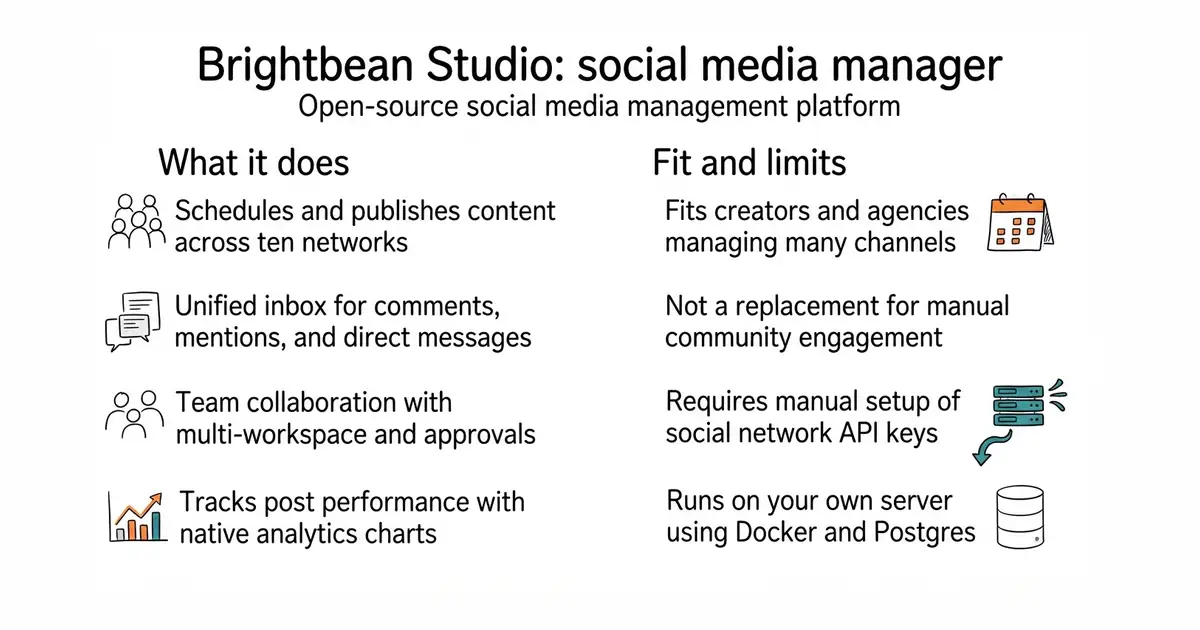
Brightbean Studio is a self-hosted tool that helps you plan, schedule, and publish content to multiple social networks from one dashboard. It connects directly to the official APIs of platforms like Facebook, Instagram, LinkedIn, and TikTok. It acts as an open-source alternative to paid services such as Buffer and Hootsuite. You can run it on your own server for free, without paying monthly subscription fees or dealing with per-user limits. Setup requires some technical knowledge of server deployment, environment variables, and Docker.
What it is
Brightbean Studio is an open-source, self-hosted social media management platform built with Python, Django, and HTMX. It provides a multi-workspace dashboard with scheduling calendars, approval workflows, a unified inbox, and performance analytics.
What it is good for
Solo builders and small agencies who manage multiple social media accounts and want to replace expensive monthly SaaS subscriptions with their own self-hosted scheduling stack.
- No per-seat, per-channel, or per-workspace limits.
- Direct first-party API integrations without aggregator middlemen.
- Includes a visual calendar, team approval workflows, and a unified social inbox.
- Requires technical setup and maintenance on your own server or hosting provider.
- Must manually create developer apps and configure API credentials for each social network.
- Uses the AGPL-3.0 licence, which has strict rules if you modify and host it as a commercial service.
Buffer, Hootsuite, and Sendible
Docker and PostgreSQL
- gitroomhq/postiz-app37k stars
Another open-source social media scheduling tool with multi-platform support.

- PrefectHQ/prefect24k stars
Adds scheduling, retries and a run history to Python functions you already have.
- alirezamika/autoscraper8.1k stars
A Python scraper that learns what to extract from one example you give it.
git clone https://github.com/brightbeanxyz/brightbean-studio.git
cd brightbean-studio
cp .env.example .env
docker compose up -d --build
docker compose exec app python manage.py createsuperuser