In simple English
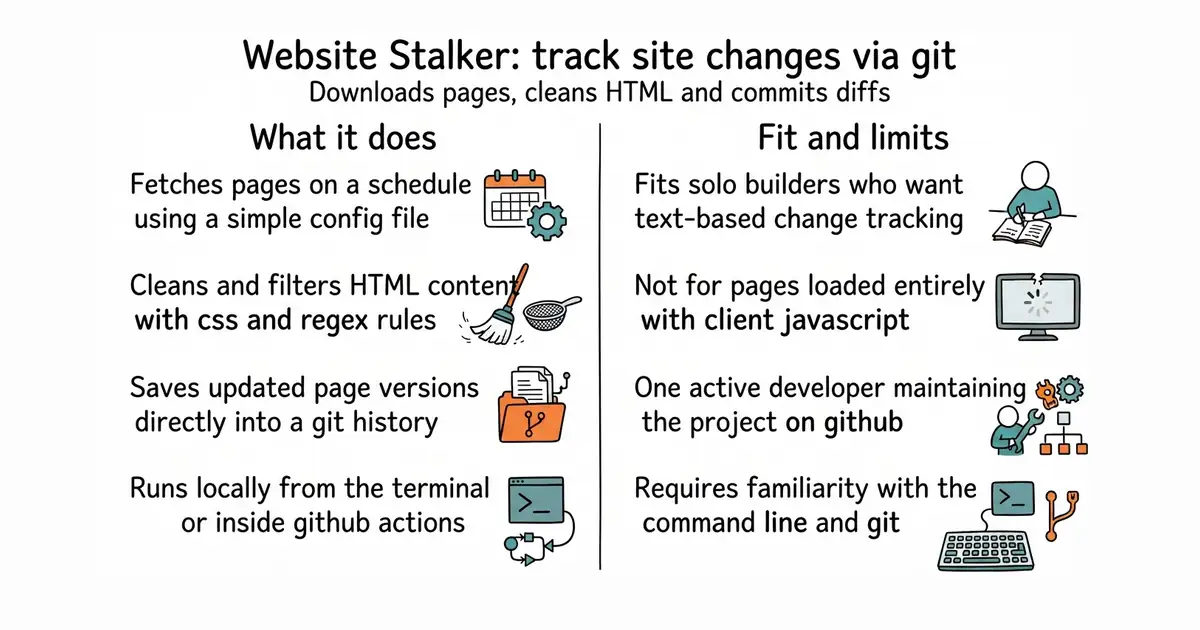
This tool downloads web pages on a schedule and checks them for new text. When something changes, it saves the new version into a git history so you can see what happened. You list your favorite websites in a simple text file. It strips out messy code and advertising before checking, so you only see real updates. You run it on a server or your own computer using a command.
What it is
Website Stalker is a command-line utility written in Rust (a programming language that runs fast and uses very little memory) that monitors web pages and records changes as git commits. It includes a pipeline system to clean, sort, and filter HTML before saving.
What it is good for
Solo builders who want to track competitor updates, pricing changes, or documentation releases without paying for an external monitoring service.
- Saves every change into a standard git repository for easy inspection.
- Powerful cleaning filters remove unimportant tags and styling noise.
- Runs locally or inside GitHub Actions without needing a dedicated database.
- Requires comfort with the command line and editing YAML configuration files.
- Dynamic pages built entirely with client-side JavaScript may not parse correctly.
- Frequent requests to third-party sites can trigger rate limits or blocks.
Paid website monitoring services and manual browser refreshes
Git for version control and cron for scheduling regular checks
- dgtlmoon/changedetection.io35k stars
A popular self-hosted change detector with a web interface instead of a command-line workflow.
- thp/urlwatch3.1k stars
A classic command-line tool that monitors web pages and sends alerts through various notification channels.


- PrefectHQ/prefect24k stars
Adds scheduling, retries and a run history to Python functions you already have.
- alirezamika/autoscraper8.1k stars
A Python scraper that learns what to extract from one example you give it.
cargo install website-stalker