3.6k stars · Apache-2.0 · 7.4.1 (2026-10-22) · Track this in Scout
A feed reader you run yourself, which collects new articles from the sites you follow.
▶Repo detailsthe review · specs · pros & cons · install
What it does
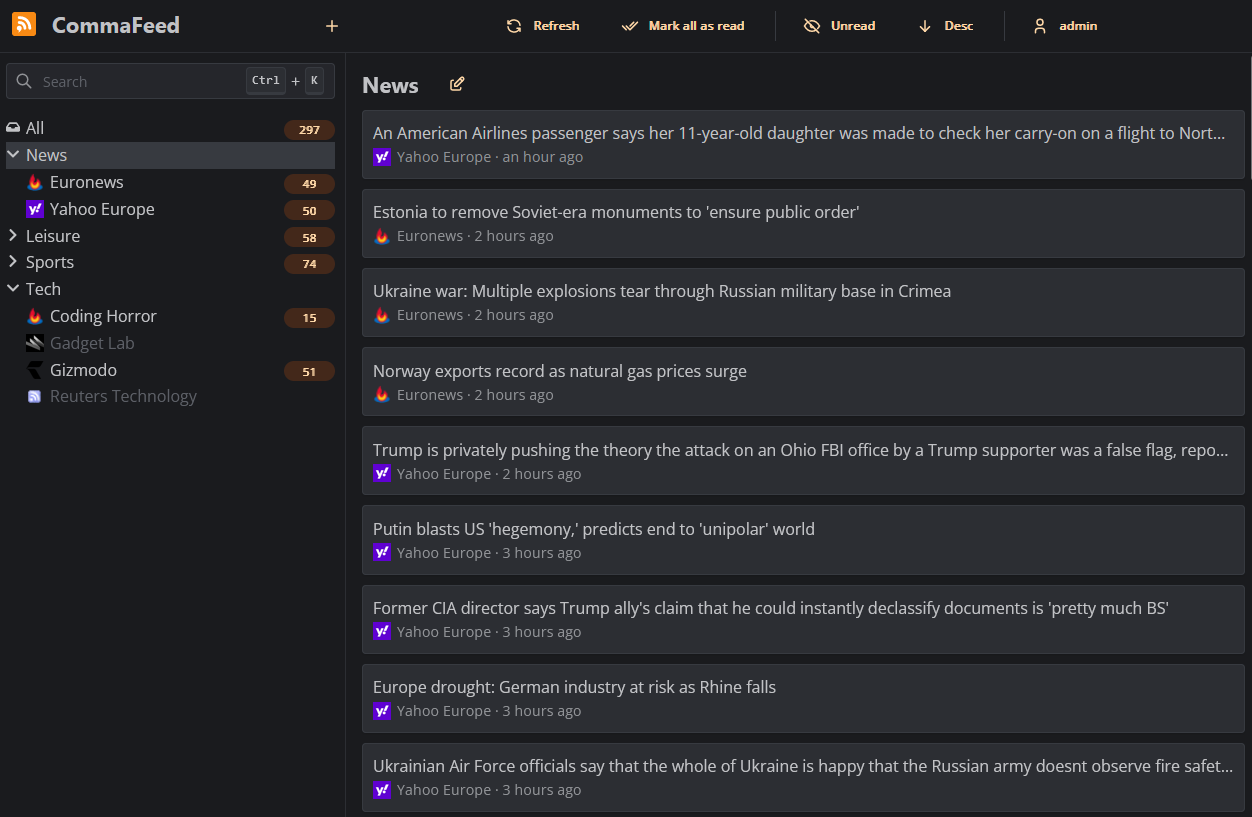
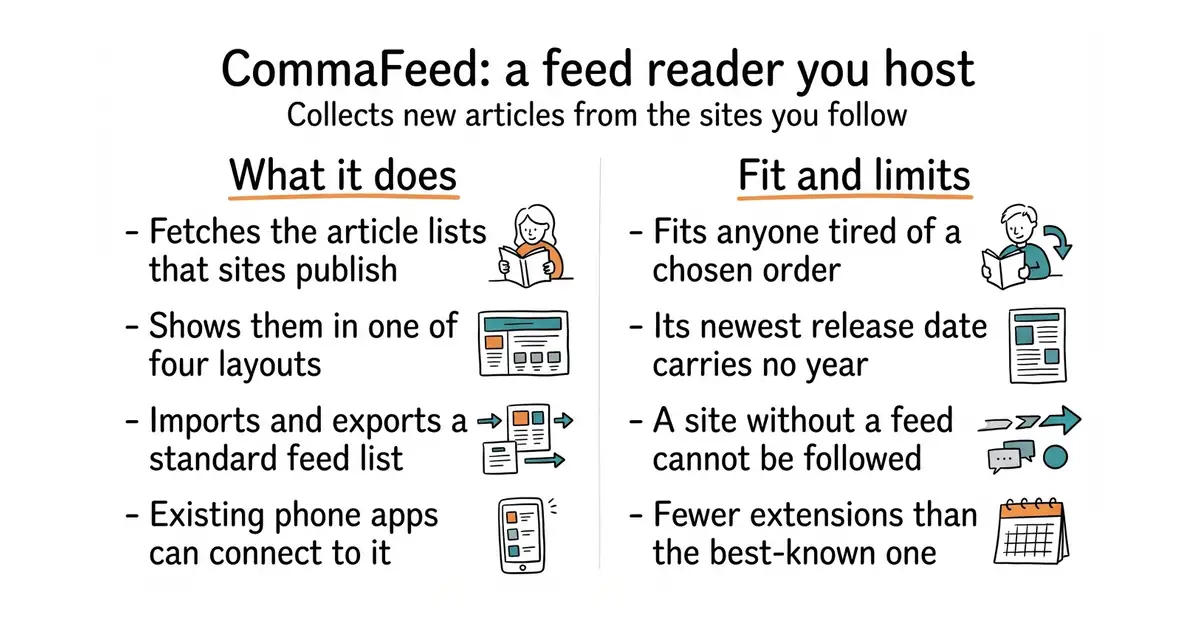
It fetches RSS and Atom feeds, which are the plain lists of new articles that most news sites, blogs and project pages publish. It keeps what it has fetched and shows it in one of four layouts, with light and dark themes and a design that works on a phone. Keyboard shortcuts cover the reading loop, and feeds can be grouped into categories. It imports and exports the standard OPML file, so a list of feeds can be moved in from another reader and out again later. It speaks both the Fever and Google Reader interfaces, which is what lets existing phone apps connect to it instead of needing one of its own. Rules can mark items read automatically, and push notifications can announce new ones. It stores data in H2, PostgreSQL, MySQL or MariaDB. It is not a read-it-later service and not a newsletter inbox: it reads feeds, and a site with no feed is invisible to it.
Why it matters
Who it suits. Anyone who follows a list of sites and is tired of an algorithm choosing the order. The Google Reader and Fever interfaces are the practical reason to pick this one: the phone app you already like will probably connect to it. Skip it if the sites followed are all on social platforms with no feeds, and skip it if the appeal of a reader is that somebody else keeps it running.
Verdict. Worth ten minutes, and the lightest install of the self-hosted readers. It is Apache-2.0, which is unusually permissive for software of this kind, and it supports four databases including the built-in file one, so a first try needs nothing but the container. The date on this one could not be pinned exactly and that is worth stating plainly: the newest release is 7.4.1, shown as "22 Oct" with no year, and the code-date mirror refused this repository today. Either reading of that date — two days ago or twelve months ago — is well inside the eighteen months we require, so the project qualifies either way, but the exact day is unsettled. The two better-known alternatives are both heavier: FreshRSS/FreshRSS is AGPL-3.0, has more extensions and more users, and wants PHP and a web server; miniflux/v2 is Apache-2.0, deliberately minimal, a single program, and requires PostgreSQL.
- Speaks the Google Reader and Fever interfaces, so existing phone apps connect to it.
- Runs on a built-in file database, so a first trial needs nothing else installed.
- Apache-2.0, with no paid tier held back and no feature carved out.
- The newest release date cannot be pinned to a year from the page, only to a window.
- A site without a feed cannot be followed, and fewer sites publish one every year.
- Fewer extensions and a smaller community than the best-known alternative.
 FreshRSS/FreshRSS
AGPL-3.0, the same job with many more extensions and a larger community, and it wants PHP, a web server and a database rather than one container.
Track this in Scout miniflux/v2
Apache-2.0, a deliberately minimal reader that is one small program with no JavaScript in the reading view; it requires PostgreSQL and offers far fewer options on purpose.
Track this in Scout
docker run --name commafeed \
  -p 8082:8082 \
  -v commafeed-data:/commafeed/data \
  athou/commafeed:latest