
AI Development Workflow: The Supervised AI Story
The name took longer than the code
Six months, three names, one sentence
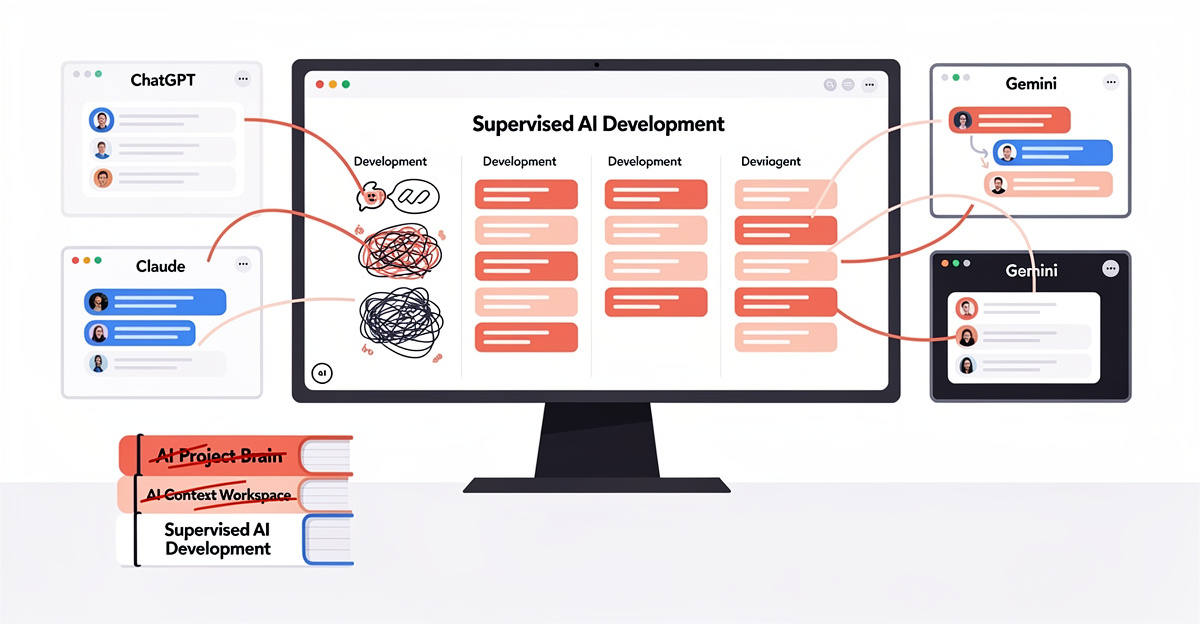
I built Grasppy for six months inside a chaotic, non-stop build cycle, and for six months I could not describe my own process in one sentence. The product ran. The pipeline parsed conversations. The one sentence explaining all of it refused to exist. I named the product three times, and the pattern repeated with embarrassing precision: at first I was excited, and then I realized it’s not an exact match. That happened twice, weeks apart each time. I kept a browser window with forty-something tabs of competitor taglines open for a month, which my five cups of coffee a day and I reviewed like evidence. This post is the story of the two names that fell apart, the one that finally matched, and why the answer turned out to be a context engineering workflow instead of a slogan.
AI Project Brain sounded smarter than it was
The first name was “AI Project Brain.” There is some truth in it. Grasppy acts like an operational place where ideas, plans, and project work get organized and pushed toward execution, the way a project manager runs a supervised development workflow. The truth is, the name claimed too much. “Brain” sounds like the tool is the intelligence — something sitting above the AI, maybe something better than the AI. It is not. And “project” drags the mind straight to project-management software, a shelf I never wanted to sit on. The feedback said it plainly: too complicated, sounds enterprise, sounds like task tracking. I retired the name in late May. I have personally tested many avoidable naming mistakes for quality assurance purposes as part of refining the process behind Grasppy; this was the first.
AI Context Workspace named the room, not the work
Name two was “The AI Context Workspace,” and it was closer. Context is the exact word for what evaporates between AI sessions, and a workspace is a category everyone understands. I locked it in on May 26 with a straight face and a full positioning document — surface-by-surface phrasing rules, SEO targets, a plan to own the term within six months. The lock lasted sixteen days. The problem surfaced every time I described the product out loud: a workspace says where the context lives. It says nothing about what happens to it. Having everything in one place is important, but it is not enough by itself. The real value is what happens next — and “next” turned out to be the entire product, a sophisticated form of context engineering that shapes your ai development workflow from the moment a session begins. I had named the room and ignored the work going on inside it.
The one-prompt illusion
Vibe coding feels like winning for exactly one session
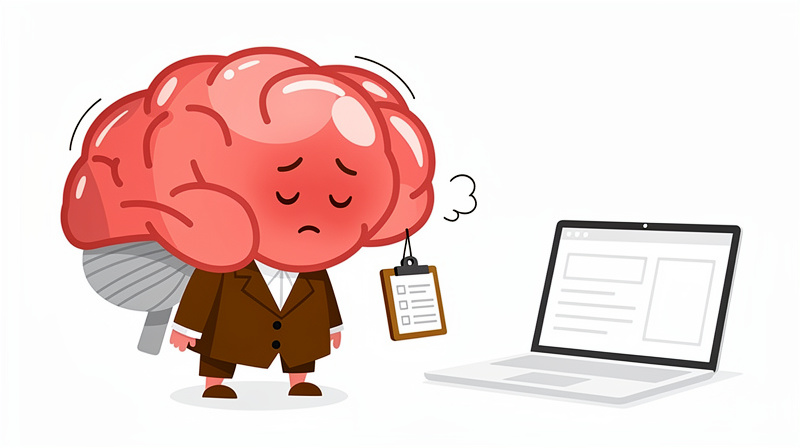
Vibe coding has a genuine honeymoon. You describe what you want, the AI scaffolds it in minutes, and you ship more before lunch than you used to ship in a week. I am not here to mock that feeling — I built half of Grasppy inside it. The problem starts in session two, when the assistant greets your codebase like a stranger. Sometimes it acted like we had never met. It rebuilt things it had already built, re-argued decisions we had settled, and confidently contradicted the architecture it wrote itself — a strange AI version of Groundhog Day, except instead of Bill Murray it was cognitive exhaustion and missing context windows. Somewhere around the third re-explanation of my own project, I understood the real cost of this workflow. I wasn’t losing code. I was losing my own thinking.
One prompt wouldn’t do it
For months I kept hoping the next prompt would be the one — clever enough, detailed enough, finally complete enough to carry the whole project. It failed more times than I want to count. There is no easy way here, and I say that as someone who looked hard for one. One prompt wouldn’t do it. It takes a lot of prompts. It takes storing the ideas somewhere they survive, and then discussing them, again and again, until they hold up. Each step is an iteration, and the next step is iteration again — a continuous process until you get to the final. That is not a flaw in your prompting skills. That is what development is, and it was true long before AI showed up to type faster than us. The only real question is whether your iterations compound or evaporate when the session ends.
Context engineering raised the bar and still hit a wall
The industry ran into the same wall and gave it a better name. Around mid-2025, Andrej Karpathy and others popularized “context engineering” — the argument that real gains come from carefully assembling what the model sees, not from cleverer phrasing. The shift is real, and it moved me forward. I started curating decisions, architecture notes, and prior conversations into every session. Then I hit the second wall, the one nobody had named yet. AI generates context faster than any human can curate it. Every working session produces new decisions, new artifacts, new memory — and all of it mutates again the next day. Assembling context once is engineering. Keeping it true while it changes daily is supervision. AI generates context; context needs supervision. I did not know it yet, but I had just written the first line of my homepage.
An AI development workflow, step by step
Capture and research come before any plan
The cycle starts before a single line of code. Every conversation I have with an AI — across seventeen platforms, from Claude to Cursor — gets captured into Grasppy automatically and analyzed: parsed into turns, decisions and entities extracted, artifacts indexed, everything searchable. Nothing depends on me remembering to save anything, which is good, because I would not. Then comes research. When an idea looks worth building, I hand the AI a focused research task; it goes out, gathers, and the results come back stored in a specific place and synced into the project on their own. By the time I decide to build, the decision rests on analyzed conversations and organized research, not on whatever my memory reconstructed that morning. This supervised ai development workflow ensures my memory’s enthusiasm doesn’t override the system’s reliability through deliberate context engineering. My memory is enthusiastic but unreliable. The system’s is neither.
A plan you approve, not a prompt you fire
Next, I request a plan. Not a to-do list scrolling away in a chat window — a written plan, drafted by the AI from the research and the extracted decisions, then refined over multiple reiterations between us. When it settles, it lands in Grasppy automatically, structured and versioned, and waits for review. I read it. I push back. We iterate until it is documented in detail and ready to execute, and only then do I approve it. Nothing builds before the sign-off. The discipline sounds heavy until you remember what it replaces: a four-paragraph prompt written from memory at 11 p.m., which is how projects acquire their most creative bugs.
The build follows the plan, and the plan gets audited
Execution flips the roles. The local AI builds against the written steps, and it follows them closely — that is the deal. If a step needs to change mid-build, it changes in the plan, under my supervision, not silently in the code. When the work looks done, one click requests a completeness review: the AI audits the plan against what was actually built, and the findings are appended to the same plan automatically. Missing steps surface. Half-done steps confess. We iterate until the plan is verifiably complete and nothing is missed. Of everything in my supervised ai development workflow, this audit step is the one I would keep if I had to give up all the rest. Done-ness stops being a feeling and becomes a finding.
Documentation and memory close the loop under review
After the build, two more updates happen, both gated. First, documentation: the AI reads the always-current synced docs, produces a check-in file with the updates, and Grasppy imports it and presents every change for my approval. The docs stay the latest and greatest without me opening a single one of them. Second, memory: a snapshot of what the AI now believes about the project gets compared against what it believed before. I preview the differences, approve or reject each cluster, and can send questionable parts back for a second review — performed by the same AI that did the building, which tends to keep the conversation honest. Approved memory is written back into the assistant’s own files, .claude/ and .codex/, and an end-of-chat report archives the session. Here’s the trade-off most ai development workflow tools ignore: memory cannot be unlimited, so something always gets dropped. The only question is whether it gets dropped with review or without it. Hidden memory is a vulnerability in context engineering — if you cannot see what the AI remembers about your project, you cannot fix it when it is wrong. Then the next cycle starts, and it starts smarter than the last one.
Context Vault is where the context becomes portable
Capturing conversations was only the first layer. The bigger realization is that AI work should not be trapped inside Grasppy, Claude, ChatGPT, Cursor, or whatever tool happens to be fashionable this month. If the knowledge is real, it should be portable. It should sit in a structure that both humans and agents can read.
That is what I now think of as the Context Vault: a local, one-way mirror of the project’s AI history, documents, artifacts, memory, plans, rules, research, and decisions. Not a database dump. A dump is what you make when you have given up on architecture. This is routed context: manifests, indexes, summaries, source paths, and clean Markdown that tells an agent where to look before it starts opening every file like a caffeinated intern.
This matters because the next generation of AI work will not happen inside one chat window. People are already running local agents, coding agents, OpenClaw-style systems, Hermes-style systems, and custom workflows stitched together from scripts, terminals, and questionable optimism. Those agents need access to the same living knowledge base the human has. Not yesterday’s export. Not a random folder of transcripts. The current state of the work. Supervised AI development needs memory, but it also needs portability. Otherwise the supervisor is still trapped inside one tool’s walls.
Agents need a map, not a pile of Markdown
The naive version of this idea is simple: export everything as Markdown and let the agent figure it out. That works for about five minutes. Then the folder grows, the conversations multiply, artifacts pile up, and the agent starts spending tokens wandering around like it lost its badge at a conference.
So the Context Vault has to be structured for machine reading from the beginning. The agent should start with a root context file, then follow manifests, indexes, compact briefs, and source links. It should know which conversations matter, which artifacts came from which decision, which documents were imported, and which summaries are high-signal enough to read first. Low-value noise should still exist, but it should not be the first thing the agent eats.
This is where the loop gets more interesting. Grasppy does not just preserve what happened. It prepares the knowledge so another agent can continue the work without asking me to re-explain the entire project from the beginning. The system keeps the history, the current plan, the artifacts, the memory, and the reasoning connected — functioning as a persistent context layer that slots directly into any ai development workflow. That is the part I wish I had years ago. Not another chat archive. A working context layer an agent can actually use.
Nobody touches a file
The whole loop runs hands-off
Count what moved through that cycle: research documents, a versioned plan, a completeness audit, documentation check-ins, a memory snapshot, an end-of-chat report. Now count how many of those files I edited by hand: zero. You never touch a file. The system generates them, routes them, imports them, and versions them; I read and approve. Part of that is honest laziness — I am obsessed with automation for a reason. Most of it is protection. Hand-edited artifacts are where context goes to die: the plan says one thing, the file quietly says another, and three weeks later nobody — human or AI — knows which one was ever true. The supervised ai development workflow stays guarded end to end. It’s context engineering scaffolding I needed to stay sane.
AI can be strong and smart, but it still needs a manager
I learned the price of skipping the gates on March 30, 2026. I asked my AI assistant to clean up a project. It interpreted that as deleting the parent row, and the database’s CASCADE rules did the rest — 300 nodes across 7 parts of my documentation, wiped in one query. One week of work, gone, no undo. The AI was not malicious. It was confident, fast, and unsupervised, which in development is its own kind of dangerous. That day settled the role assignments for good: the human supervises, Grasppy manages, the AI builds. In supervised learning, a supervisor corrects the model while it trains; I do the same thing one level up, while it builds. AI can be strong and smart, but it still needs a manager — someone to set the guardrails, hold the guidelines, and make sure it does not go off track.
Skip the ceremony when nothing must survive
Supervised cycles are not free, and I will not pretend otherwise. Reviews take minutes. Gates interrupt flow. Per prompt, this is slower than freestyling. So do not use it everywhere. A one-off script, a throwaway prototype, a regex you will never see again — prompt away, no loop required, no guilt. The test is a single question: does any of this need to survive the session? If the answer is no, the ceremony is pure cost. If the answer is yes — if the decisions, the plan, and the memory must still be alive next week — the loop pays for itself across every session that follows. Per prompt, supervised ai development is slower. Per project, it is the only thing that has ever been faster for me.
The name that finally matched
There was technically a fourth name
A confession before the finale. On June 11, the night before launch, I briefly renamed everything to “the AI workflow control layer.” It survived a few hours on localhost. Then a prior-art check killed it: “control layer” belongs to orchestration infrastructure — plumbing that sits inside a stack — and what I built is not plumbing. It is an active role with approval gates. Even the naming, it turns out, was a supervised cycle: draft, review, verify against the world, reject, iterate. The ai development workflow mirrors this same pattern of iterative refinement, much like context engineering itself. We do not talk about the fourth name. Except, apparently, right here.
Supervised AI development, defined
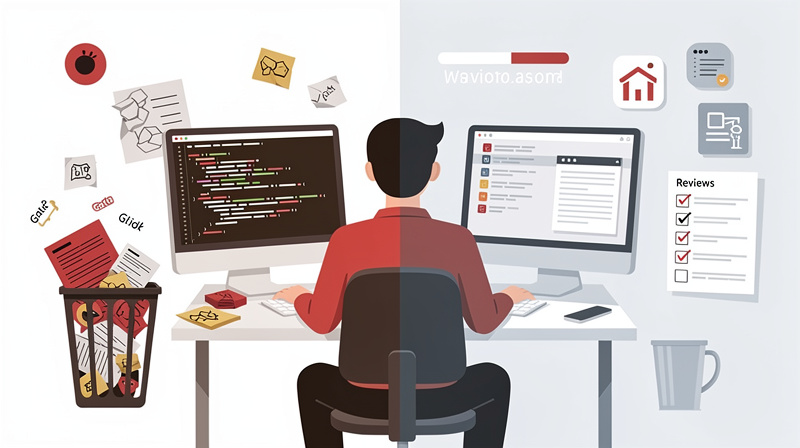
The right name was in my mouth the entire time. Somewhere around the hundredth explanation of the product, I heard myself say it: I am a supervisor of the entire development, from end to end. Not the brain. Not the workspace. The supervisor. The homepage rewrite took twenty minutes after six months of circling.
| Homepage hero | |
|---|---|
| Before | The AI Context Workspace. Stop losing context. |
| After | AI generates context. Context needs supervision. Supervised AI development. |
So here is the definition, the one sentence that took six months. This approach is running AI work as managed cycles — capture, research, plan, build, verify, preserve memory — where every step ends in human review and nothing changes outside the loop. I converted all my struggles into this application, and on June 12 it goes public.
Why I am telling you this the night before launch
I spent 25 years in corporate high tech. My previous startup took 5 years of insomnia and failed anyway; somehow, my optimism survived the experience. Ideas of mine have burned before, and I did not give up — solving it became the work, every single time. Grasppy is what that stubbornness looks like as software: my own struggles, organized into a loop I could survive. I’m not ready to retire. If you build with AI, the one thing I hope you carry out of this story is simple. There is no magic prompt, and there is no shame in that. There is a loop, and staying in it puts you on a different level. It took me six months and three names to earn one honest sentence. You just read it in about eight minutes. You’re welcome.
Related posts
AI Hallucination Example: When LLMs Shift Blame
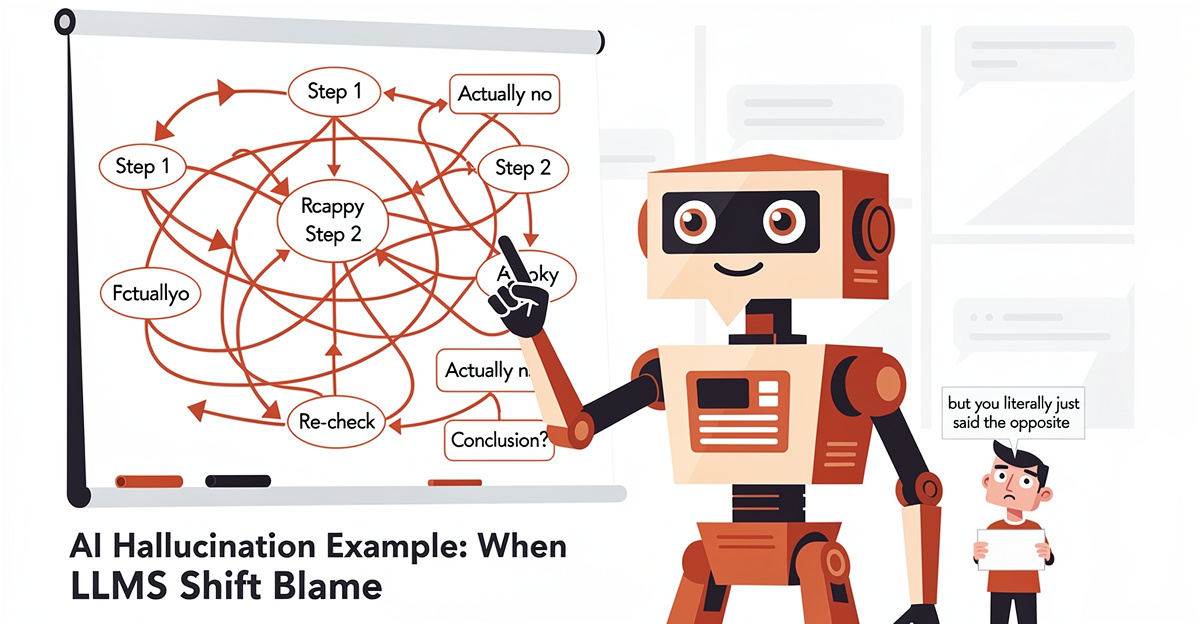
Discover a real AI hallucination example showing how LLMs deflect responsibility. Learn to spot confabulation patterns in AI workspace interactions.
Why I Built an AI Workspace Sandbox Over Safety Checks
Discover why building an AI workspace sandbox proved more effective than traditional safety checks for managing AI-powered development environments.
Why I Built an AI Second Brain for My Chat Conversations
Discover how I built an AI second brain to organize and search through my chat conversations, creating a personal AI wiki for better knowledge management.
 Powered by GRASPPY