640 stars · GPL-3.0-or-later (the file is the GPL notice plus attributions, not the licence text) · 2.5.0 (2025-07-27) — fourteen months; code 2026-03-30 · Track this in Scout
A spreadsheet-style grid for the metadata inside audio files, which is the only shape that makes bulk tag fixing fast, and it is Linux only.
▶Repo detailsthe review · specs · pros & cons · install
What it is
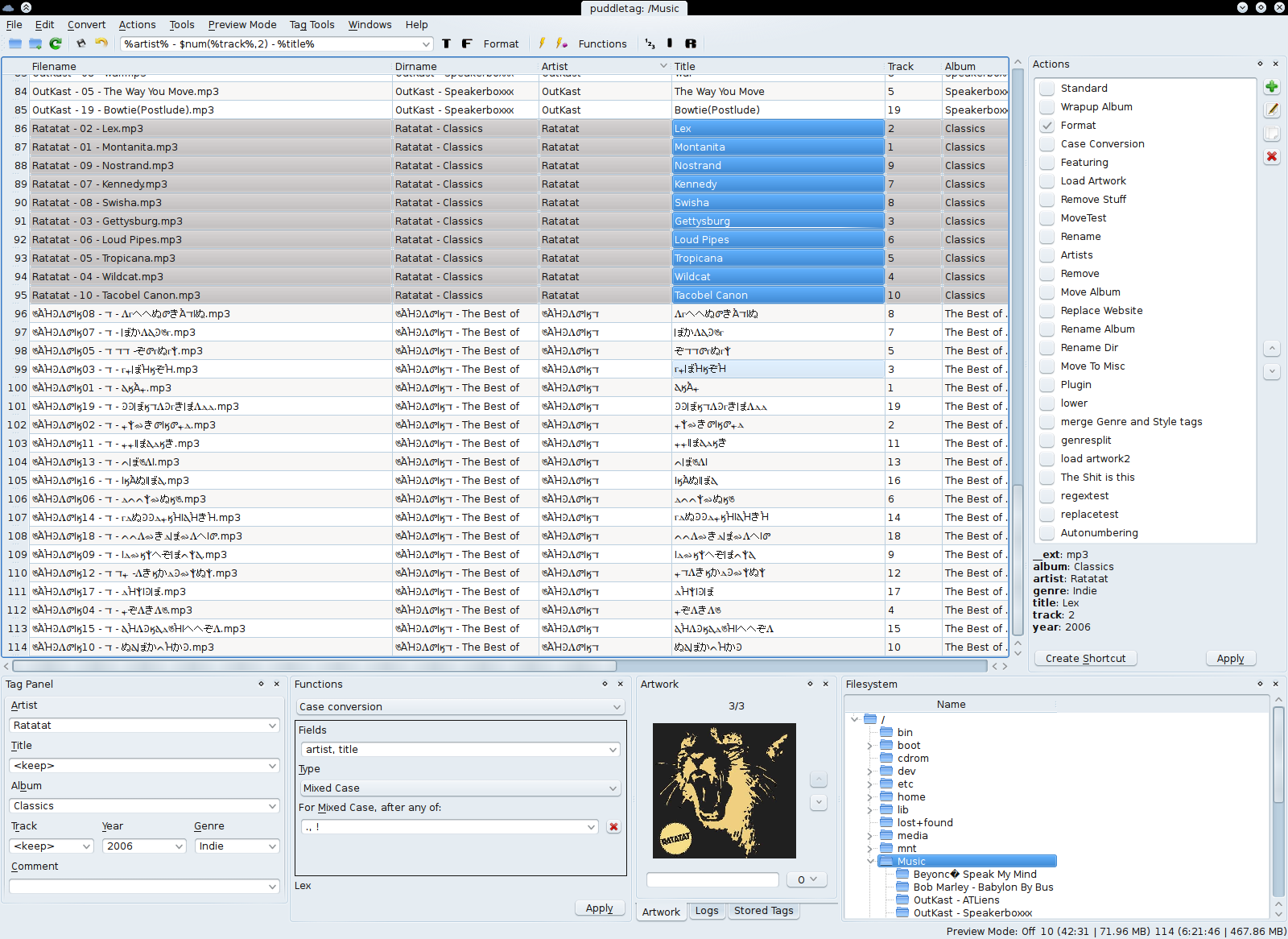
puddletag is a desktop program, written in Python with the Qt toolkit, that edits the metadata inside audio files. Its design copies a Windows program called Mp3tag, and the grid is the point: files are rows, labels are columns, and you edit in place.
What it is good for. Anyone with a large, untidy music collection and a Linux machine. The jobs it is built for are the bulk ones: renaming two hundred files from the labels they already carry, or filling the labels from the file names, or fixing one wrong album name across a whole folder. A tagger that shows one file at a time cannot do that work at any reasonable speed, and a music player's built-in editor certainly cannot. It also looks up missing information from public music databases.
- The grid. Seeing and editing many files at once is the entire reason this program exists, and nothing else on Linux does it in quite the same shape.
- Actions and functions can be saved and reapplied, so "take the filename, split it on the dash, put the first part in Artist" becomes a thing you do once and then reuse.
- It reads and writes the formats people actually have, through the Mutagen library, and can use acoustic fingerprinting through Chromaprint to identify files whose labels are empty.
- Linux only. The description says so: "Powerful, simple, audio tag editor for GNU/Linux". There is a line in the install notes asking for macOS help, which tells you where that stands.
- The release is fourteen months old and the newest code is six months old. Version 2.5.0 is dated 27 July 2025 — GitHub's latest-release page shows "27 Jul" with no year, and the repository page shows the year, so this is settled rather than guessed — and the release page says "37 commits to master since this release". The last code landed on 30 March 2026. Both are inside the eighteen-month line and it is not being called dead, but anyone installing the released version is installing something from last summer. 228 open issues against 11 pull requests, at 640 stars.
- The licence file is not the standard GPL text. It is the GPL version 3 notice followed by attributions, recording that the project contains code from Picard (GPLv2), from CDDB-py (GPLv2) and icons from the Oxygen Project (GPLv3). Nothing there restricts you further, but it does mean the project carries code from the very program listed as its closest alternative below. Installation also needs several system packages by hand rather than one command.
 metabrainz/picard
The official tagger of the MusicBrainz database and the strongest alternative: better at identifying unknown files, including by acoustic fingerprint, but it is a drag-files-in window rather than a grid, so bulk column editing is awkward.
Track this in Scout beetbox/beets
Edition 36 covered this: the same tidying job done from the command line and as a catalogue you can query, which is far more powerful for automation and has no grid to look at.
Track this in Scout- KDE/kid3
A mature KDE tag editor covering many formats and the third real option on Linux, but its GitHub copy is a mirror of invent.kde.org, so the star count shown there means nothing about the project's size.
Track this in Scout
# Debian or Ubuntu: the dependencies first
sudo apt install python3 python3-mutagen python3-configobj python3-pyparsing \
  python3-pyqt6 python3-pyqt6.qtsvg python3-unidecode
# then the program itself
pipx install puddletag
# packages also exist for Arch, Fedora, Gentoo and Nix
puddletag